The Moon Touched It. That Changes Everything.

There is a category of collectible that sits above everything else in the space memorabilia market. Above flown-to-orbit items. Above mission-worn gear. Above signed photographs and crew presentation pieces.
It is the lunar surface flown artifact.
Something that went to the Moon, landed on it, sat in the dust of another world, and came back.
When collectors first encounter this category, the usual response is disbelief. These things actually come to market? They do. Not often, not easily, and never cheaply — but they do. And when they surface, they represent the single most defensible store of value in the entire collectibles universe.
This guide is for the collector who is serious about understanding what lunar surface flown actually means, how provenance is established, how authentication works in this specialized tier, and what separates a legitimate piece from a story someone is selling.
What "Lunar Surface Flown" Actually Means
The terminology matters enormously here. The space memorabilia market uses several distinct categories, and conflating them is expensive.
The Hierarchy of Flown Designation
- Earth Orbital Flown — Carried aboard a mission that did not leave low Earth orbit. Mercury, Gemini, early Apollo Command Module-only missions. Significant, but foundational tier.
- Deep Space / Translunar Flown — Traveled to lunar orbit but did not land. Apollo 8, Apollo 10, Apollo 13 (translunar abort). A step above orbital, but the Moon's surface was not reached.
- Lunar Orbit Flown — Aboard a mission that entered lunar orbit. Still the Command Module perspective — closer, but not there.
- Lunar Surface Flown — This is it. Carried aboard the Lunar Module, touched down on the Sea of Tranquility, the Ocean of Storms, the Lunar Highlands. Sat in 1/6 gravity under a black sky. This is the designation that changes the conversation entirely.
Six missions made crewed lunar landings: Apollo 11, 12, 14, 15, 16, and 17. That is the universe. Twelve men walked on the Moon. The material culture that traveled with them to the surface and returned is finite in a way that no other collectible category can claim.
There will never be more Apollo lunar surface missions. The supply is permanently closed.
What Types of Items Were Carried to the Surface?

The first question most collectors ask is what kinds of objects actually made the trip. The answer is more varied than you might expect.
Mission-Documented Carry Items
NASA maintained flight manifests for many items, particularly those with official mission use. These include:
- Lunar Module checklists and cuff checklists (the spiral-bound cards worn on astronaut forearms during EVAs)
- Maps, charts, and traverse planning documents used on the surface
- Data cards and EVA planning sheets
- Optical instruments including cameras and lenses (some documented to specific surface use)
- Geological sample bags and containment pouches
- Small personal items authorized through NASA's Personal Preference Kit (PPK) program
Personal Preference Kit (PPK) Items
The PPK program is the primary source of the smaller lunar surface flown items that come to market. Each astronaut was allocated a small weight allowance for personal items. Flags, medallions, small cloth patches, first day covers, coins, and similar items were carried in these kits.
PPK items vary enormously in documentation quality. Some astronauts were meticulous about maintaining records and providing signed attestations. Others were not. The letter from the astronaut is critical — but it is not the only element of provenance.
Hardware and Components
Occasionally, actual hardware from the Lunar Modules or surface equipment appears. This tier requires the most rigorous provenance chain because the acquisition path from NASA property to private hands is legally and historically complex.
Did you know that for decades, NASA's own property accountability for flown hardware was inconsistently maintained?
The legal landscape around NASA hardware ownership shifted significantly in the 2000s and 2010s, with court cases and legislative clarification affecting what astronauts could legitimately retain and transfer. Any hardware piece requires specific legal provenance tracing, not just authentication of the object itself.
Provenance Is Not Optional. It Is the Product.
In most collectible categories, provenance enhances value. In lunar surface flown items, provenance is the value. Without it, you do not have a lunar surface flown artifact. You have an object with a story.
The provenance chain for a legitimate lunar surface flown item typically includes some combination of the following:
-
Astronaut Signed Letter of Provenance
- Ideally written close in time to the mission or transfer
- Specifies mission designation (e.g., Apollo 14), lunar surface designation (not just "flown"), and description of the item
- Later-signed letters are not disqualifying but require additional corroboration
-
Mission Documentation
- Flight manifest entries where they exist
- NASA PPK inventory records
- Mission photography that may show the item or its container aboard the LM
-
Chain of Custody Records
- Who owned it between the astronaut and the current seller?
- Prior auction records from major houses
- Gallery exhibition history
- Insurance appraisal records referencing the piece
-
Third-Party Specialist Authentication
- BAS (Beckett Authentication Services) with Roger Epperson REAL specialist review for signature components
- JSA (James Spence Authentication) — note the distinction between JSA Basic stamp and a full JSA LOA (Letter of Authenticity); for lunar surface flown items, you want the LOA, not the Basic
- PSA/DNA certification, with awareness of PSA's own certification-verification warnings regarding space memorabilia
- Zarelli specialist letter for space-specific authentication of the flown designation itself
No single element from this list is sufficient alone. The strongest lunar surface flown pieces carry multiple corroborating streams. When you see a piece offered with only one element of provenance, that is the conversation starter, not the conversation ender.
Authentication in the Space Memorabilia Market
The space memorabilia authentication market is more specialized and more fragmented than the sports or entertainment sectors. Understanding the landscape protects you.
The General Authenticators
PSA/DNA, JSA, and BAS are the three pillars of third-party authentication across memorabilia categories. All three operate in the space sector. However, their expertise in space-specific matters — particularly the flown designation — is uneven.
PSA has issued certification-verification warnings that collectors should take seriously: a PSA cert authenticates what it can evaluate (signature presence, ink type, paper characteristics) but does not independently verify mission-specific claims. A PSA-certified signed photograph of Buzz Aldrin is a PSA-certified signed photograph. It is not a PSA-verified lunar surface flown item.
JSA's full LOA (Letter of Authenticity) represents their deepest review level. For space signatures and provenance letters, the LOA is the standard. JSA Basic — the stamp-and-certification approach — addresses the signature only and says nothing about the flown claim.
BAS, and specifically the Roger Epperson REAL tier within BAS, is the recognized specialist standard for music memorabilia signatures. In the space sector, BAS operates with the same signature analysis rigor. For high-value lunar surface pieces, BAS authentication of the astronaut's provenance letter is a meaningful data point.
The Zarelli Standard
For the flown designation itself — the specific claim that an object reached the lunar surface — the Zarelli specialist letter represents the dedicated space-specific review layer. This involves evaluation of the provenance documentation, cross-referencing with mission records, and specialist assessment of whether the flown claim is supportable.
At the top tier of the market, a Zarelli letter is not a luxury. It is expected due diligence.
What Third-Party Authentication Cannot Do
No authenticator can look at a flag, a medallion, or a piece of equipment and determine from the object itself that it went to the Moon. The Moon did not leave a mark. Authentication in this category is fundamentally about documentation review, not object analysis.
This is why the provenance chain is the product — not the object.
Anyone who tells you they can authenticate a flown designation from the artifact alone is misrepresenting what authentication means in this context.
The Legal Dimension: NASA Property and Private Ownership

This is the topic that most dealer discussions gloss over. It should not be glossed over.
For much of the post-Apollo era, the legal status of NASA hardware retained by astronauts existed in an ambiguous space. The agency's property accountability systems were imperfect. Some items were formally gifted or authorized for retention. Others existed in a gray area.
The Stolen Property risk is real in this market. Collectors should be aware that NASA has, at various points, asserted ownership claims over items that had been in private hands for years. The most significant legal clarification came through legislation specifically addressing astronaut personal effects and PPK items — but hardware is a different and more legally fraught category.
Before acquiring any lunar surface flown hardware (as opposed to PPK personal items, flags, or covers), competent legal review of the title chain is not optional. This is a standard that the serious segment of the market has increasingly adopted.
For PPK items transferred directly from astronauts or their estates with clear documentation, the legal picture is generally cleaner — but "generally" is not "always," and the specifics matter.
The Six Landing Missions: A Collector's Overview
Not all lunar surface flown items carry equal collector weight. Mission designation matters significantly to the market.
| Mission | Landing Site | Crew (LM) | Collector Significance |
|---|---|---|---|
| Apollo 11 | Sea of Tranquility | Armstrong, Aldrin | Highest. First lunar landing. Armstrong's signature rarity drives extreme premiums. |
| Apollo 12 | Ocean of Storms | Conrad, Bean | Strong. Bean's artwork connection adds a secondary market layer. |
| Apollo 14 | Fra Mauro | Shepard, Mitchell | Strong. Shepard's historic status (first American in space, last moonwalker) creates significant demand. |
| Apollo 15 | Hadley-Apennine | Scott, Irwin | Significant. First J-mission, first rover use. Some market sensitivity around certain provenance issues historically associated with this mission. |
| Apollo 16 | Descartes Highlands | Young, Duke | Solid. Young's later Shuttle command adds breadth. Duke items are actively collected. |
| Apollo 17 | Taurus-Littrow | Cernan, Schmitt | Significant. Last lunar landing adds historical gravity. Cernan's status as last man on the Moon drives a collector following. |
Apollo 11 commands a category premium that is not merely sentimental. The historical singularity of the first Moon landing, combined with Neil Armstrong's well-documented reluctance to sign and the rarity of strong Armstrong-associated lunar surface material, creates a supply-demand dynamic unlike any other mission.
Apollo 15 deserves a specific note. Collectors aware of the market's history will know that the Apollo 15 crew faced controversy over postal covers carried to the surface and sold through a German dealer. This episode — which resulted in significant professional consequences for the crew — introduced a layer of provenance sensitivity to Apollo 15 material that sophisticated buyers factor in. This does not disqualify Apollo 15 items; it raises the documentation bar.
How to Research a Piece Before You Buy

The due diligence process for a lunar surface flown acquisition looks different from most collectible categories. Here is the practical sequence.
-
Establish the flown claim's source
- Who is making the claim? The astronaut directly? Their estate? A third-party with a chain of custody story?
- Is there a direct astronaut provenance letter? What is its date, specificity, and signature authentication status?
-
Cross-reference mission documentation
- NASA's historical records, while incomplete, can sometimes corroborate PPK inventories
- Academic and archival sources including mission reports and crew personal effects documentation
-
Trace the ownership chain
- Request full provenance documentation: prior auction catalogues, gallery records, insurance appraisals
- Any gap in the chain deserves a specific explanation, not a general assertion
-
Engage specialist authentication
- For significant acquisitions, the cost of a Zarelli specialist review and a full JSA LOA or BAS review of the provenance letter is a rounding error against the acquisition cost
- PSA cert for the signature component is additive, not substitutive
-
Consult legal counsel for hardware
- For any hardware piece, title chain review by counsel familiar with federal property law is not optional
-
Assess the seller
- How long have they been operating in this specific category?
- Do they have a track record with major auction houses and established collectors?
- Are they prepared to stand behind the provenance with contractual representation?
Market Context: Where These Pieces Trade
Lunar surface flown items appear at major auction houses, through specialist dealers, and occasionally through estate sales when astronaut families choose to sell privately.
The major auction market has been the most transparent pricing venue. Heritage Auctions, RR Auction, and Sotheby's have all handled significant lunar surface material. Auction records provide the most defensible comparable data for valuation.
The specialist dealer market offers the advantage of curated provenance review before pieces come to market — when the dealer is operating at the proper standard. It also offers the disadvantage of less price transparency, which cuts both ways depending on which side of a transaction you are on.
Private sales between collectors happen at the very top of the market. Pieces with extraordinary provenance and condition sometimes never reach public auction at all, moving through networks of established collectors and dealers with institutional-grade documentation.
If a lunar surface flown item is being offered to you privately at a price that seems accessible, why is it not at auction where competition would maximize the seller's return?
That is not a rhetorical question designed to scare you away from private market acquisitions. It is a real question that deserves a real answer before you proceed.
Red Flags
The lunar surface flown category attracts misrepresentation. Some of it is deliberate fraud. Some of it is optimistic provenance inflation by sellers who inherited an object with a family story and convinced themselves the story is documentation. Either way, the result for the buyer is the same.
Watch for these:
- Vague flown claims. "Flown on an Apollo mission" is not the same as "lunar surface flown on Apollo 14." Mission specificity is the minimum standard. If the seller cannot specify the mission, the lunar surface designation is not established.
- Astronaut letter without signature authentication. A letter claiming lunar surface provenance is meaningful. A letter that has not been signature-authenticated by a qualified third party is a document of unknown reliability. Do not accept one without the other.
- Single-source provenance. One astronaut letter, nothing else. On a piece priced at a meaningful level, single-source provenance is a starting point for deeper research, not a complete file.
- PSA or JSA Basic cert presented as full authentication. As discussed above: a PSA cert on an autograph does not authenticate the flown claim. A JSA Basic stamp is not a JSA LOA. These distinctions are not technicalities; they are the substance of what you are paying for.
- No chain of custody between astronaut and seller. "It came from the astronaut" followed by a gap of several decades and no paper trail is a provenance hole, not a provenance chain.
- Hardware without legal title review. Any piece described as hardware, equipment, or a spacecraft component offered without documentation of legal title transfer from NASA to the astronaut (or other authorized party) to the current owner requires legal review before acquisition.
- Reluctance to provide documentation for independent review. A seller with strong provenance will welcome third-party review. Resistance to independent authentication at a buyer's expense is information about the provenance.
- Unsigned estate pieces with family attribution. Families of deceased astronauts sometimes offer pieces with attribution to the astronaut's collection. Attribution is not provenance. The question is whether documentation exists confirming the flown designation during the astronaut's lifetime.
- Suspiciously complete provenance for obscure items. Fraud is not always missing documentation. Sometimes it is fabricated documentation. Provenance files that are unusually comprehensive for minor items — where one would not expect that level of record-keeping — deserve scrutiny as well as trust.
Bottom Line
Lunar surface flown artifacts are the apex of what the collectibles market can offer in terms of historical significance, finite supply, and defensible long-term value.
They are also the category where the gap between a legitimate piece and a convincing story is the hardest to see and the most expensive to get wrong.
The collector who approaches this market with patience, who builds relationships with specialist dealers and authentication professionals before needing them, who understands the provenance chain as the product rather than the backstory — that collector is positioned to acquire pieces that belong in a different conversation entirely from the rest of the memorabilia market.
The Moon touched it. That changes everything. But only when the documentation proves it.
At Gauntlet Gallery, we handle space memorabilia at the collector-grade standard: full provenance review, appropriate third-party authentication including Zarelli specialist letters for flown designation claims, and complete transparency about what is documented and what is not. We do not speculate about provenance. We document it.
If you are building a collection in this category or evaluating a specific acquisition, we are available for a direct conversation.
Frequently Asked Questions
Q: How many lunar surface flown items actually exist in the collector market?
No one knows the precise number, and that uncertainty is itself significant. NASA's PPK records were not comprehensively catalogued in a single accessible archive. Twelve astronauts walked on the Moon across six missions, each with a weight-limited personal kit. The total number of individual items that reached the surface and returned is finite, but the figure that has entered private hands through legitimate channels represents a small fraction of that universe. Auction history suggests the active market is thinner than most collectors initially assume.
Q: Is a signed flag from a moonwalker the same thing as a lunar surface flown flag?
No. A signed flag is a flag signed by an astronaut who walked on the Moon. A lunar surface flown flag is a flag that was physically carried to and from the lunar surface, documented as such, with provenance supporting that specific designation. The signature on the flag does not establish the flown designation. These are two different things, priced very differently, and the confusion between them is one of the most common misunderstandings in this market.
Q: What authentication do I actually need for a lunar surface flown item?
At minimum: a signature-authenticated astronaut provenance letter (JSA LOA or BAS review level, not JSA Basic), a Zarelli specialist letter reviewing the flown designation claim specifically, and a documented chain of custody from the astronaut to the current seller. For hardware, add legal title chain review. For PPK personal items from well-documented sources, the provenance letter plus specialist review plus chain of custody is the working standard. More corroboration is always better; the question is what represents sufficient due diligence for the price point.
Q: Why does Apollo 11 command such a premium over other lunar landing missions?
Three compounding factors. First, historical singularity: the first Moon landing occupies a place in human history that subsequent missions, however extraordinary, do not share. Second, Neil Armstrong's signature rarity: Armstrong was well-known for declining signing requests and limiting autograph distribution throughout his life, making any authenticated Armstrong signature among the scarcest in the broader memorabilia market. Third, collector demand concentration: Apollo 11 is the entry point for many non-specialist collectors who understand the significance of the first landing without deep knowledge of the full Apollo program, concentrating demand on this mission specifically.
Q: What happened with Apollo 15 and why does it matter to collectors?
The Apollo 15 crew carried postal covers to the lunar surface and, following the mission, sold them through a German stamp dealer without NASA authorization. The resulting controversy led to Congressional hearings and professional consequences for the crew members involved. The episode introduced a layer of provenance sensitivity specifically around Apollo 15 surface-flown covers: some covers from this mission have complicated ownership histories. This does not disqualify Apollo 15 material as a category, but it raises the documentation standard and means buyers should understand the specific history of any Apollo 15 cover they are evaluating.
Q: Can I insure a lunar surface flown artifact, and how is it appraised?
Yes, these items are insurable, and the specialized fine art and collectibles insurance market handles them. Appraisal requires a specialist appraiser with demonstrable expertise in space memorabilia — a general fine art appraiser is not adequate for this category. The appraisal process involves documentation review of the provenance file, not just object condition assessment. Insurance carriers at the serious level will want to see the authentication documentation as part of the underwriting process. The appraisal value and the market value can diverge, as they do in most specialty collectibles categories, so clarity on the purpose of the appraisal (insurance replacement value versus fair market value) matters when commissioning it.
Q: Are lunar meteorites related to this category?
Lunar meteorites — pieces of the Moon that arrived on Earth through natural impact ejection — are a distinct category, legally and scientifically separate from Apollo mission artifacts. They are not "lunar surface flown" in the collector sense because they were not carried by a human mission. They are scientifically verified Moon material, collectible in their own right, legally available for private ownership (unlike Apollo samples, which remain NASA property), and authenticated through geochemical analysis rather than provenance documentation. They operate in a different market with different authentication standards, pricing dynamics, and collector communities. The two categories occasionally appeal to the same collector, but they are not interchangeable designations.
Q: What is the single most important question to ask a seller of a lunar surface flown item?
Ask them to walk you through the complete chain of custody, document by document, from the moment the item returned from the Moon to the present day. Not a summary. Not an assurance. The actual documents, in sequence, with an explanation of each gap. How a seller responds to that request tells you most of what you need to know about the quality of what they are offering. A seller with strong provenance will welcome the question. The response to that single question is a more reliable signal than almost any other element of the transaction.
Shop Space memorabilia
Explore current pieces available from the gallery.
-
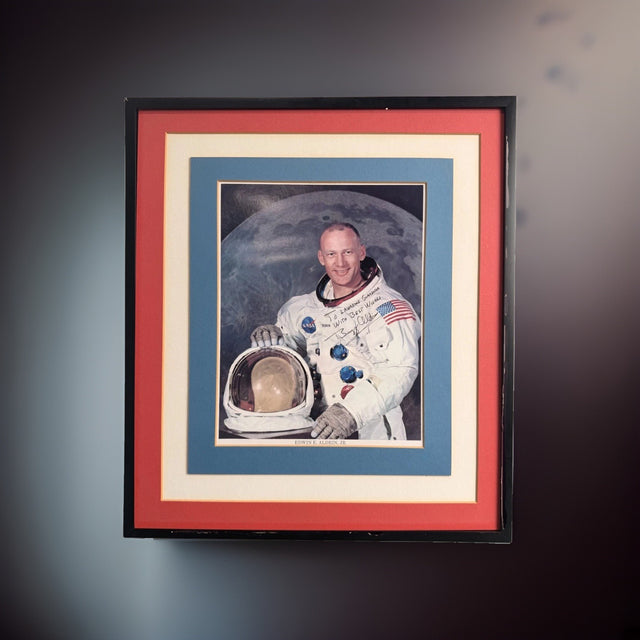
Buzz Aldrin Signed NASA 8x10 Color Photo Personalized Framed JSA LOA
$899.00 USD
-
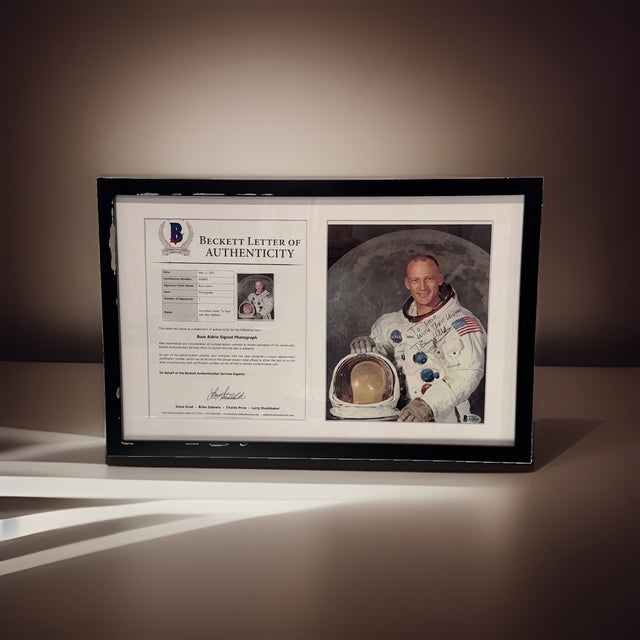
Buzz Aldrin Signed Inscribed Astronaut Photo Framed Beckett LOA A42843
$999.00 USD
-
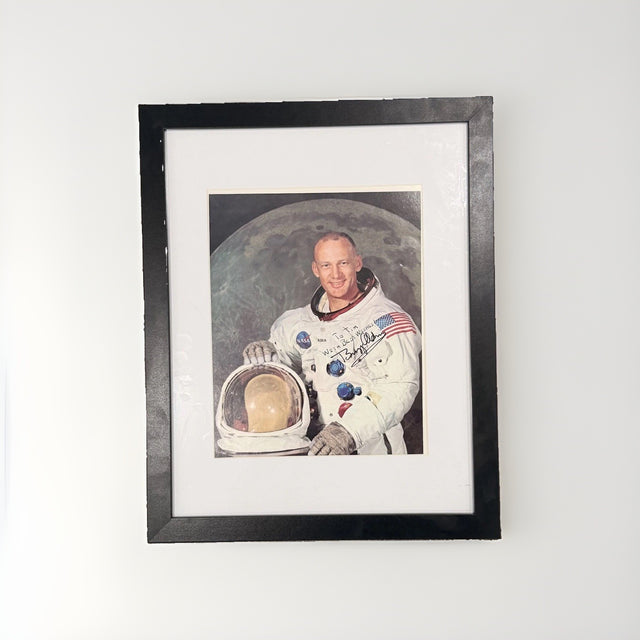
Buzz Aldrin Signed NASA Astronaut Portrait Inscribed To Tim Framed
$850.00 USD
-
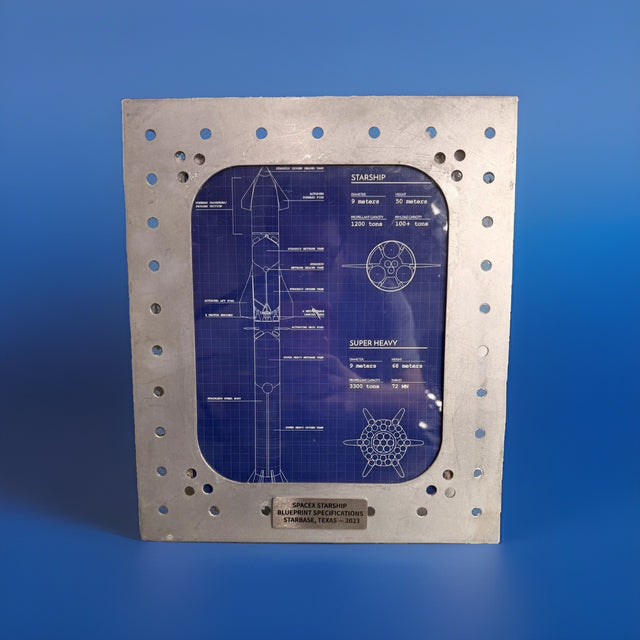
SpaceX Starship Super Heavy Blueprint Metal Display Panel Spacecraft Frame
$59.00 USD
-
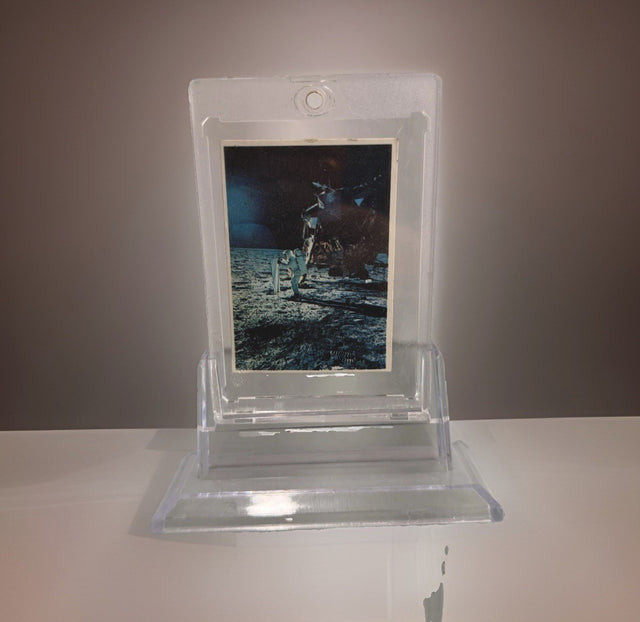
1969 Space Candy Buzz Aldrin Apollo 11 On The Moon Card #19 Taylor-Reed Display
$59.00 USD
-
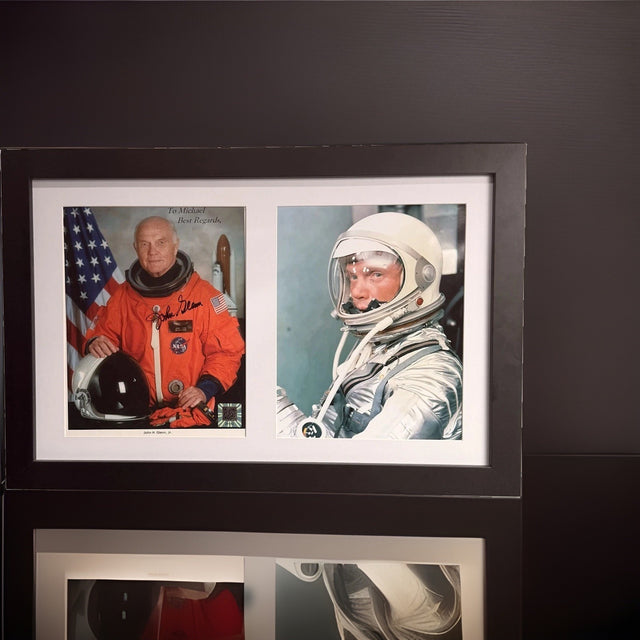
John Glenn Signed Autographed NASA Photo Display JSA Mercury Astronaut Framed
$199.00 USD
Browse the collection for current listings.