The Serial Number Is the Story

Every Robbins medallion tells two stories. The first is the one you can see: the design, the mission, the names of the crew stamped into silver or gold. The second story is invisible until you know where to look.
It lives in the serial number.
Get that number right and you can trace a medallion from a foundry in Attleboro, Massachusetts, to the surface of the Moon and back. Get it wrong — or worse, ignore it entirely — and you might be holding a beautiful piece of aerospace history that never left the ground. Or never left a gift shop.
We've handled enough flown space memorabilia at Gauntlet to say this plainly: Robbins medallions are one of the most misrepresented categories in the entire secondary market. Not because they're obscure. Because they're coveted. And because the difference between a flown example and a non-flown one can be enormous in both cultural significance and market value.
This is the guide we wish existed when we started.
Who Was Robert Robbins, and Why Does It Matter?
The Robbins Company of Attleboro, Massachusetts has been producing commemorative medallions and medals since the 19th century. They made military medals, fraternal insignia, and by the time the Space Age arrived, they were well-positioned to become the unofficial mint of human spaceflight.
Robert Leroy Robbins — the man, not just the company — developed a personal relationship with the astronaut corps. His company produced medallions for NASA missions starting in the Mercury era, but it was during Apollo that the program became something genuinely extraordinary.
The arrangement was simple in concept, complex in execution: the Robbins Company would produce a limited run of mission-specific medallions for each flight. A portion of those medallions would fly aboard the spacecraft as part of the crew's Personal Preference Kit, or PPK. The flown examples would be returned to the astronauts for distribution to family members, colleagues, and on rare occasions, the public market.
The remaining medallions — those that did not fly — were sold to the public, often through NASA gift shops, commemorative dealers, and directly through the Robbins Company itself.
Two categories. Vastly different stories. And the serial number is how you tell them apart.
Understanding the Serial Number System

The Basic Structure
Robbins medallions produced for the Apollo program (and related missions) were serialized. This is not a minor detail. It is the entire architecture of the authentication framework.
Each medallion has a serial number hand-engraved or stamped on its edge or reverse. The total production run for any given mission was divided into clearly documented tiers. Within those tiers, specific serial number ranges correspond to specific categories of medallion.
The critical point: serial numbers within the low range of the production run were typically designated as the flown examples. These were the pieces loaded into the crew's PPK bags, carried to the Moon or into lunar orbit, and returned to Earth.
The higher serial numbers correspond to the non-flown "presentation" or "public sale" medallions. These are genuine Robbins Company products. They are historically significant as commemoratives. But they did not fly.
So how do you know which range is which for any specific mission?
That's where the research gets serious.
Mission-by-Mission Variation
The serial number ranges were not standardized across all Apollo missions. Each flight had its own documented production parameters. The number of flown medallions varied. The total production run varied. The serial number cutoff between flown and non-flown examples varied.
This is not a system designed to be confusing. It's a system that evolved mission by mission as the program matured, as astronaut preferences changed, and as demand from the public shifted.
What this means for collectors: you cannot apply a rule from Apollo 11 to Apollo 14 and expect it to hold. You have to research each mission individually.
Primary reference sources for this research include the work of collector communities who have systematically catalogued known flown examples, cross-referenced with documentation from estate sales and astronaut family records. Robert Pearlman's collectSPACE community has contributed significantly to this cataloguing effort. The Smithsonian's National Air and Space Museum collection provides additional anchor points for authenticated flown examples.
Material Composition and Its Role
Most Robbins medallions for Apollo were produced in sterling silver. Some were produced in gold-filled or solid gold variants. The material itself can be a supporting data point.
Flown examples were almost exclusively silver. The astronauts flew silver. This is documented. If someone presents you with a gold Robbins medallion and claims it flew on an Apollo mission, that is a claim requiring extraordinary documentation — because gold variants were typically presentation pieces produced for high-level NASA officials, congressmen, and other dignitaries, not PPK cargo.
Material is not a primary authentication criterion. It's a supporting one. But it can be a fast filter when reviewing claims.
The PPK Chain: Provenance Is Everything
The serial number tells you a medallion was in the right range to have flown. It does not, by itself, prove that it flew.
This is the distinction that separates a serious collector from a casual buyer.
For a Robbins medallion to be properly authenticated as flown, you need the serial number to fall within the documented flown range for that specific mission, and you need a credible provenance chain connecting that specific medallion to an astronaut, crew member, or documented PPK distribution.
That chain typically looks like one of the following:
-
Direct astronaut provenance
- Medallion came directly from the astronaut or their estate
- Accompanied by a signed letter from the astronaut attesting to the piece's flight history
- Ideally supported by photographs of the astronaut with the medallion or documentation of the gifting event
-
Family estate provenance
- Medallion came from the estate of a named recipient (spouse, child, colleague)
- Estate documentation or legal inventory references the piece
- Supporting correspondence between astronaut and recipient
-
Institutional provenance
- Medallion previously held by a museum or research institution with acquisition records
- Deaccessioned with full documentation of original source
-
Auction house provenance with sourced documentation
- Major space memorabilia auctions (Heritage Auctions space category, RR Auction, Bonhams) have catalogued flown Robbins medallions with their provenance chains intact
- The auction catalogue entry itself becomes part of the provenance chain for future transactions
A serial number in the right range without any provenance chain is interesting. It is not authenticated.
And what happens when someone hands you a medallion in the right serial range with no paper behind it?
You treat it as potentially flown, not definitively flown. You price it accordingly. And you continue digging.
Third-Party Authentication: Who Is Doing This Work?

Space memorabilia authentication runs through a specific set of specialists. This is not the same market as sports memorabilia, and the authentication infrastructure reflects that.
The primary authentication services relevant to Robbins medallions are:
PSA/DNA
PSA has encapsulated and certified space memorabilia including medallions. Their space category certification verifies physical condition, attributes the item's description, and provides tamper-evident encapsulation. PSA's space category is credible for establishing that a piece is genuine Robbins Company manufacture. However, as PSA themselves note in their certification materials, their cert verifies the item within their system — you should always cross-reference the cert number through their online verification portal rather than trusting the holder alone. Counterfeit PSA slabs exist in the broader marketplace, as documented in FBI Operation Bullpen and subsequent market reporting.
Beckett Authentication Services (BAS)
BAS operates with a tiered structure. For music memorabilia, the Roger Epperson REAL designation within BAS represents the specialist tier. For space items, BAS provides general authentication services. Their grading and encapsulation process is rigorous, but for Robbins medallions specifically, the contextual knowledge of the space memorabilia market is a factor to weigh when evaluating any cert.
JSA (James Spence Authentication)
JSA offers both Basic certification and Letter of Authenticity (LOA). This distinction matters. A JSA Basic sticker on a medallion attests to signature authentication if there is a signed element. A full JSA LOA involves a more thorough review process and provides a more complete attestation. For space items, the LOA tier is the meaningful one.
The Zarelli Specialist Letter
For high-value or complex space memorabilia claims, a specialist letter from a recognized space memorabilia expert provides an additional layer. In the current market, Zarelli specialist letters function as a category-specific authentication layer that complements the major third-party services. When a flown Robbins medallion is being offered at significant value, a specialist letter addressing the provenance chain, serial number range documentation, and physical characteristics is appropriate due diligence.
The honest answer about third-party authentication for Robbins medallions: no single service has built the definitive Robbins-specific database. The field works through the combination of physical authentication, serial number research, and provenance documentation. Third-party certs support that framework; they don't replace it.
Mission Profiles: What to Know Before You Buy
Mercury and Gemini Era
Robbins medallions produced for Mercury and Gemini missions predate the formalized PPK system that became standard during Apollo. This does not mean flown examples don't exist — they do. But the documentation framework is thinner, the production records are less systematically preserved, and provenance claims require even more careful scrutiny.
Treat Mercury and Gemini Robbins medallions as a specialist category within a specialist category. If you're not already deep in this space, Apollo is the right place to build your knowledge base first.
Apollo: The Core of the Market
Apollo missions from Apollo 7 through Apollo 17 represent the primary Robbins medallion market. Each mission had its own design, its own serial range, and its own documented production run.
Apollo 11 medallions — the first lunar landing mission — carry the highest profile in the market. The production and distribution of these medallions is among the most studied. Serial numbers in the documented flown range with credible provenance command significant collector attention. But because of that profile, Apollo 11 Robbins medallions are also among the most frequently misrepresented.
Apollo 13 presents a unique case. The mission did not land on the Moon. The crew orbited and returned safely after the oxygen tank failure. Medallions that flew on Apollo 13 carry a particular narrative weight — survival against catastrophic failure. The market for Apollo 13 flown pieces reflects that narrative.
Later Apollo missions (15 through 17) represent strong collector value with somewhat lower profile than the earlier flights. Production documentation for these later missions is in some cases better preserved, which can make provenance research more tractable.
Skylab and Post-Apollo
Robbins continued producing medallions for Skylab missions and into the Space Shuttle era. The Shuttle-era pieces exist in a different market tier. The PPK program continued, but the volume of flown material expanded significantly as Shuttle missions became more routine. This affects relative scarcity and market positioning.
Condition Grading in the Context of Flown Pieces

Here is a nuance that trips up collectors coming from the coin or sports card world: for Robbins medallions, pristine condition is not automatically a positive signal for a claimed flown example.
Medallions that were actually carried in PPKs, handled by astronauts and their families, and passed through decades of private ownership often show wear consistent with that history. Light handling marks, minor surface patina, edge contact marks from the serial number area — these are not defects in a flown piece. They are evidence.
A claimed flown medallion in perfect, uncirculated, slab-fresh condition should prompt a question rather than confidence.
If this piece flew to the Moon and back, why does it look like it came off the production line yesterday?
This is not a universal rule. Some pieces were well-preserved by meticulous owners. But condition perfection combined with thin provenance is a pattern worth noting.
Red Flags
We've seen enough problematic Robbins medallion offerings to build a practical checklist. These are the signals that should slow you down or stop you entirely.
-
No serial number present
- Genuine Robbins Apollo medallions were serialized. If there is no serial number, the piece is either a reproduction, a display copy, or has been altered. Walk away until you get a clear explanation.
-
Serial number in non-flown range presented as flown
- The seller may not know better, or may know exactly what they're doing. Either way, do your range research before accepting any flown claim at face value.
-
Generic "flew on Apollo" attribution without mission specificity
- Every legitimate flown Robbins medallion is mission-specific. "Flew on Apollo" without a specific mission number and crew connection is not a provenance claim. It is a marketing phrase.
-
COA from an unknown or self-issued source
- A certificate from "XYZ Space Collectibles Authentication" that you cannot verify independently is worth less than the paper it's printed on. The space memorabilia authentication market uses established third parties. If the cert issuer isn't one of them, research before trusting.
-
Gold medallion presented as a flown crew PPK piece
- As noted above, gold variants were typically not PPK-carried. Extraordinary claims require extraordinary documentation.
-
Provenance chain that begins with "purchased at a space memorabilia show" or similar
- This is not provenance. This is an origin story with no verifiable links. Legitimate flown Robbins medallions can be traced. If the chain starts at a dealer table with no documentation of where that dealer sourced it, you have nothing.
-
Counterfeit encapsulation
- As documented through FBI Operation Bullpen and subsequent market reporting, counterfeit authentication holders exist in the broader memorabilia market. Always verify PSA, BAS, or JSA certification numbers through the official authenticator's online portal directly. Do not rely solely on the physical holder.
-
Price significantly below market for a claimed flown example
- Flown Robbins medallions with credible provenance trade in a well-established market tier. If someone is offering a claimed flown Apollo medallion at a fraction of what comparable documented pieces bring at major auction, the discount is telling you something. Listen to it.
-
Seller cannot name the specific astronaut who owned or distributed the piece
- This is not always disqualifying — some legitimate provenance chains lose the specific gifting astronaut over decades. But it is a data point. The stronger the claimed value, the more specific the provenance should be.
Building a Position in Robbins Medallions: Collector Strategy
If you're approaching Robbins medallions as a collector building a position rather than chasing single trophy pieces, here is how we think about it.
Start with documented non-flown examples
Genuine Robbins Company Apollo medallions that did not fly are still historically significant objects. They were produced by the same foundry, carry the same mission designs, and represent a legitimate tier of aerospace history. Starting here gives you hands-on familiarity with the physical characteristics of genuine Robbins production — weight, finish quality, engraving style, edge treatment — before you commit serious capital to flown claims.
Build your serial number research before you buy
The collector community has done significant work cataloguing serial ranges for major Apollo missions. Engage with that research. Platforms like collectSPACE have years of archived discussion on specific missions and documented examples. The time you invest in this research before any purchase is the best authentication tool available to you.
Prioritize provenance over condition
For flown examples specifically, a piece with a strong, documented provenance chain and moderate wear is more valuable — and more authentic in the deeper sense — than a pristine piece with a thin story. The story is what you're buying.
Major auction houses as a starting point
Heritage Auctions' space category, RR Auction, and Bonhams have handled documented flown Robbins medallions with their provenance chains intact. Buying at major auction does not eliminate risk, but it provides a baseline of curatorial scrutiny and a documented sales record that becomes part of the piece's future provenance. For first-time buyers in this category, starting at major auction rather than private sale is sound strategy.
Specialist dealer relationships matter
Dealers who work the space memorabilia market consistently — who have handled multiple flown examples, who know the astronaut estate landscape, who have built relationships with collector communities — bring contextual knowledge that a general auction house catalogue cannot replicate. Find those relationships and cultivate them.
Bottom Line
Robbins medallions are among the most direct physical connections available to collectors of human spaceflight history. A flown example, properly documented, is a piece of metal that orbited the Earth, or approached the Moon, or descended to the lunar surface, and came back.
That is not a small thing.
But the market for these pieces is imprecise enough that serious collectors get taken regularly — not always by fraud, often by well-intentioned sellers who don't understand what they have or don't have.
The serial number is where you start. The provenance chain is where you build. Third-party authentication and specialist review are the layers you add on top.
Do all three, or don't buy at a significant premium.
The history is real. The research that verifies you're holding a piece of it has to be real too.
Frequently Asked Questions
Q: What is the difference between a flown and a non-flown Robbins medallion?
A: A flown Robbins medallion was physically carried aboard a NASA spacecraft as part of a crew member's Personal Preference Kit (PPK) during an actual mission. A non-flown example is a genuine Robbins Company product manufactured for the same mission but sold commercially or distributed as a commemorative without being aboard the flight. Both are authentic Robbins medallions. Only one went to space.
Q: Can I identify a flown medallion from the serial number alone?
A: The serial number tells you whether a medallion falls within the range documented as the flown production tier for a specific mission. It does not independently prove that the specific medallion flew. For that, you need the serial number to fall in the right range and a credible provenance chain connecting the piece to a crew member or documented PPK distribution. Serial number is necessary but not sufficient.
Q: Are reproduction Robbins medallions a significant problem in the market?
A: Reproductions and commemorative copies exist. The more significant problem in the market is misattribution — genuine non-flown Robbins medallions being presented, intentionally or through ignorance, as flown examples. Because both pieces are genuine Robbins Company products, the physical object alone cannot resolve the question. This is why provenance documentation and serial range research are essential.
Q: Which Apollo missions produce the most collector interest in Robbins medallions?
A: Apollo 11 commands the highest profile and price tier due to its historical significance as the first crewed Moon landing. Apollo 13 carries unique narrative weight as the "successful failure." Earlier Apollo missions generally command stronger collector attention than later ones, though the documented provenance of any specific piece can shift this significantly. Use dated completed sales for the same artist, release, format and condition, recording the venue, currency and fees. Asking prices and broad archive totals do not establish a realized sale price or future return.
Q: How do I verify a PSA or other third-party certification on a Robbins medallion I'm considering?
A: Always verify directly through the authenticator's official online portal using the certification number on the holder. PSA, Beckett, and JSA all maintain searchable certification databases. Do not rely solely on the physical holder — counterfeit slabs have been documented in the broader memorabilia market, as established in FBI Operation Bullpen and subsequent reporting. The cert number should match the item description in the official database exactly.
Q: What documentation should accompany a high-value flown Robbins medallion purchase?
A: At minimum: documentation identifying the specific mission and serial number, a clear statement of the provenance chain from astronaut to current seller, any astronaut-signed letters or statements relating to the piece, prior auction records if applicable, and any third-party authentication certifications. For high-value transactions, a specialist letter from a recognized space memorabilia expert reviewing the serial number range and provenance chain adds an important layer.
Q: Are gold Robbins medallions ever flown examples?
A: Gold variants were primarily produced as presentation pieces for NASA officials, government figures, and other dignitaries rather than as PPK cargo. Flown crew examples were virtually always silver. A gold medallion presented as a flown crew PPK piece requires exceptional documentation to support that claim. Treat such claims with elevated scrutiny.
Q: Where is the best place for a new collector to start learning about Robbins medallion serial ranges?
A: The collectSPACE community forum (collectspace.com) has years of archived discussion by serious collectors and researchers who have catalogued known flown examples across multiple Apollo missions. Major auction house archives — Heritage, RR Auction, Bonhams — provide catalogued examples with serial numbers and provenance documentation that can serve as reference points. The Smithsonian's National Air and Space Museum collection is another anchor point for authenticated flown examples. Build your knowledge from those documented, verifiable reference points before committing capital to private market acquisitions.
Shop Space memorabilia
Explore current pieces available from the gallery.
-
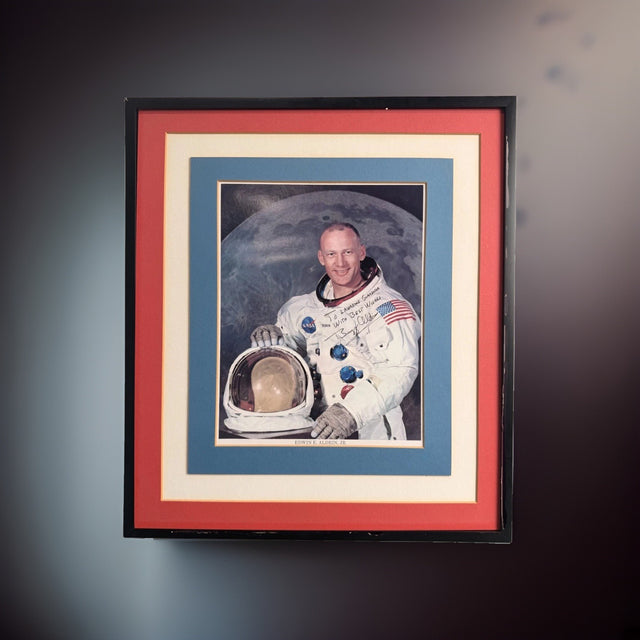
Buzz Aldrin Signed NASA 8x10 Color Photo Personalized Framed JSA LOA
$899.00 USD
-
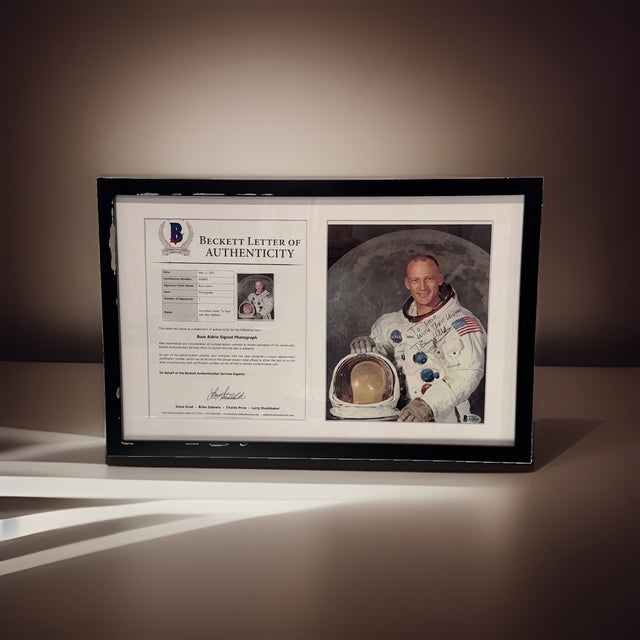
Buzz Aldrin Signed Inscribed Astronaut Photo Framed Beckett LOA A42843
$999.00 USD
-
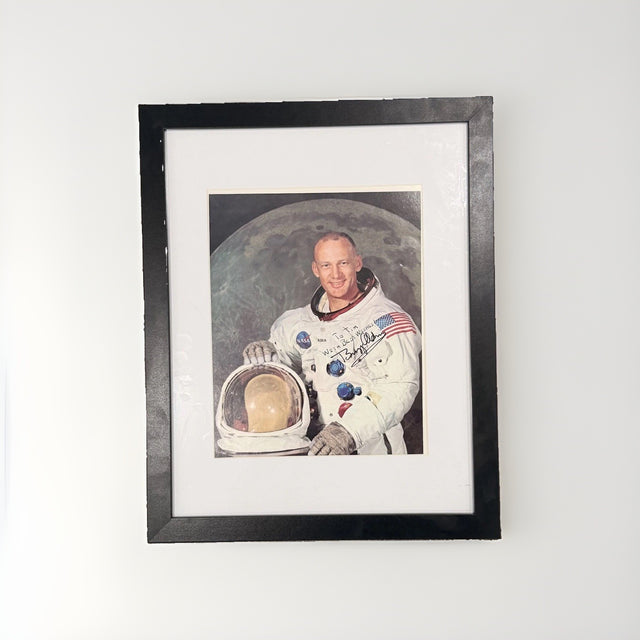
Buzz Aldrin Signed NASA Astronaut Portrait Inscribed To Tim Framed
$850.00 USD
-
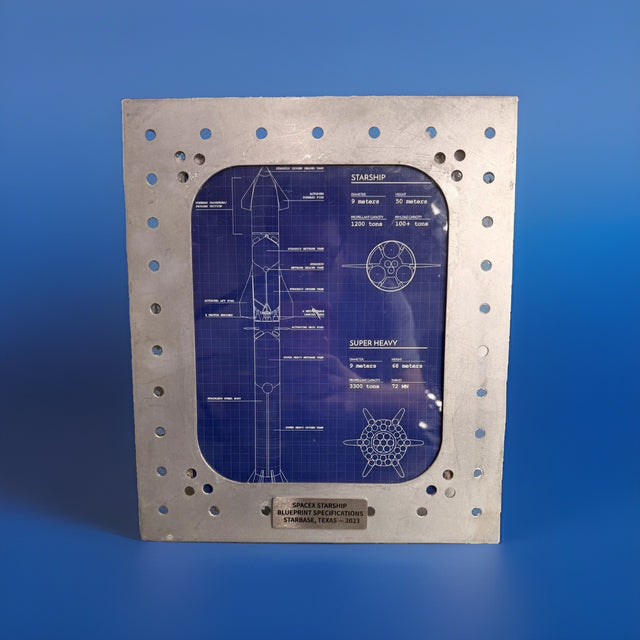
SpaceX Starship Super Heavy Blueprint Metal Display Panel Spacecraft Frame
$59.00 USD
-
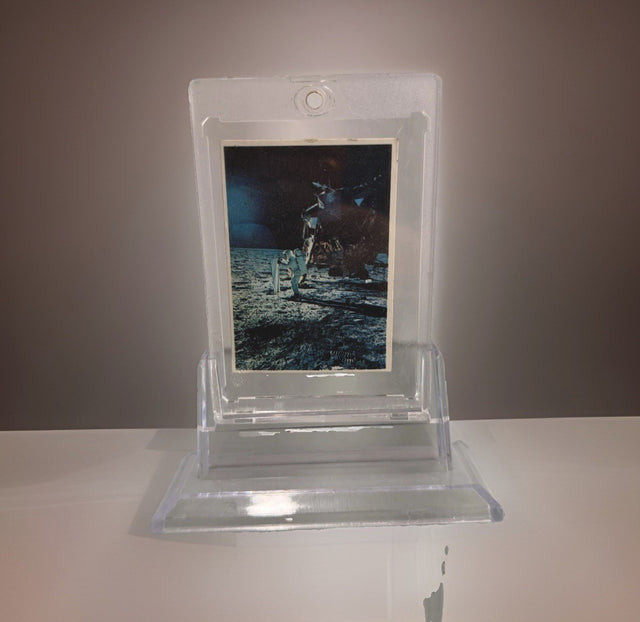
1969 Space Candy Buzz Aldrin Apollo 11 On The Moon Card #19 Taylor-Reed Display
$59.00 USD
-
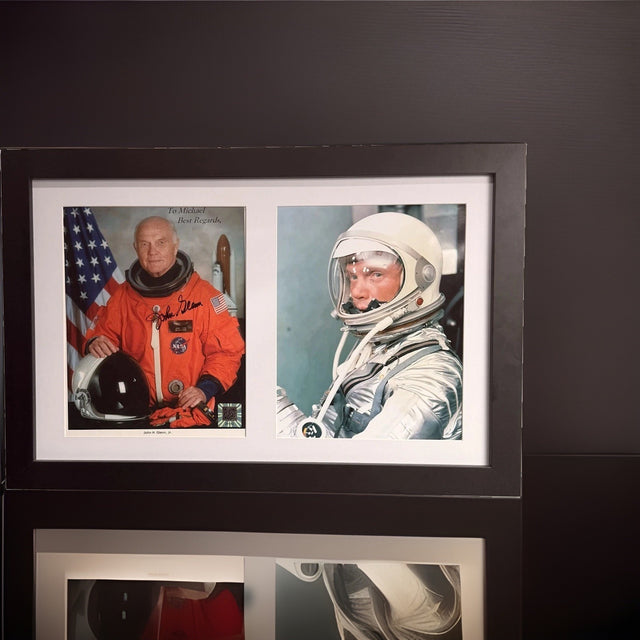
John Glenn Signed Autographed NASA Photo Display JSA Mercury Astronaut Framed
$199.00 USD
Browse the collection for current listings.