The Number in the Headline Is Not the Number That Matters

You see it everywhere. "Sells for $280,000 at auction." The art press runs it. The gallery newsletter reprints it. The seller screenshots it for Instagram.
That number is real. It is also incomplete in ways that cost collectors real money if they don't understand the gap.
Hammer price and realized price are not interchangeable terms. The auction industry uses them loosely, often intentionally, and the math between them is where margin lives — for the house, not for you.
This piece breaks down exactly how auction math works, what the catalogs don't show you, and how to read a result before you use it to price, buy, or sell anything in the secondary market.
What "Hammer Price" Actually Means
The hammer price is the last number called before the auctioneer's gavel comes down. It is the winning bid. Nothing more.
At that moment, the room applauds. The lot is marked sold. The headline writes itself.
But the transaction isn't done. Not even close.
What the winning bidder agreed to pay — contractually, in writing, before they ever raised their paddle — is the hammer price plus buyer's premium. That premium is the auction house's primary revenue engine. It is calculated as a percentage of the hammer price and it is non-negotiable for private bidders in almost every case.
So when you read "hammer price," read: the floor, not the ceiling.
The Buyer's Premium Structure
Premium structures vary by house and by tier. The general architecture at major auction houses works on a sliding scale: a higher percentage on the lower portion of the hammer price, stepping down as the number climbs. Regional houses and specialty auctions may use flat rates.
What this means practically: a work that hammers at a modest price gets hit with the highest premium percentage. Works hammering at major sums pay a lower blended rate because more of the total falls in the upper tier where the percentage drops.
The result is that buyer's premium as a percentage of realized price is rarely what the headline rate implies. You have to do the actual math for each lot.
Add sales tax where applicable — which varies by jurisdiction, by whether you have a resale certificate, and by whether the auction house has nexus in your state — and the all-in cost can be meaningfully higher than even the "realized" number that eventually gets published.
What "Realized Price" Means (And Why It's Still Murky)

Realized price, in theory, means hammer price plus buyer's premium. This is the number that reputable auction databases publish. It is the number that should be driving market comps.
In practice, there are two problems.
First, not all auction result databases are consistent about which number they're reporting. Some publish hammer. Some publish realized. Some published hammer for years and switched to realized at some point in their archive without retroactively adjusting records. If you're pulling comps from an aggregated database, do you know what you're actually looking at?
Second, "realized" still doesn't capture the seller's net. The house also charges the consignor — the seller — a seller's commission on the same transaction. So the money that actually changed hands from buyer to seller is the hammer price minus seller's commission, minus any additional fees: insurance, photography, catalogue production, shipping, condition reports.
The realized price is the buyer's cost. It is not the seller's receipt. These are two different numbers for the same transaction, and conflating them is one of the most consistent errors in secondary market analysis.
The Math in Plain Language
| Term | Who It Applies To | What It Represents |
|---|---|---|
| Hammer Price | Both parties | The winning bid; the base for all calculations |
| Realized Price | Buyer | Hammer + buyer's premium (the buyer's true cost) |
| Seller's Net | Seller | Hammer minus seller's commission and fees |
| Auction House Take | House | Buyer's premium + seller's commission + ancillary fees |
The auction house earns on both sides of the same transaction. That is the model. There is nothing wrong with that — it is disclosed — but you need to understand it before you use any auction result as a data point.
How Auction Records Get Weaponized
Here is how this plays out in practice.
A work hammers at a notable price. The auction house issues a press release citing that number. Art media pick it up, often without clarification. Secondary market listings — galleries, private dealers, online platforms — start citing "comparable auction results" at or near that hammer figure.
But a buyer trying to replicate that comp at a dealer is now being priced against a number that excludes the buyer's premium they would have paid at auction. The dealer's price has to be measured against realized, not hammer, to be a fair comparison. And even then, you're not accounting for the different risk profiles of buying from a vetted dealer versus an auction with limited warranty.
Is the dealer's price actually a premium, or is it just accurately priced against what the last buyer actually paid?
This is a legitimate question that most collectors never think to ask.
The flip side happens to sellers. Someone sees their artist "sell for X" at auction and consigns at a price expectation anchored to that headline. They don't realize their net — after seller's commission and fees — might be significantly below what they assumed. The auction house covered its margin on both ends of the deal.
Record Results and the Guarantee Structure
There's another layer here that rarely gets discussed in plain terms: the auction guarantee.
Major houses offer guaranteed minimums on high-value consignments. The guarantee protects the seller from the lot not selling. But guarantees are funded either by the house itself or by a third-party irrevocable bid — an outside party who agrees to buy the lot at a floor price in exchange for a share of the upside if the lot exceeds that floor.
When a lot with a third-party guarantee sells above the floor, the economics of that "record result" are partially redistributed to an entity the public never sees. The headline number is real. The distribution of who benefits from it is not what the press release implies.
This is legal, disclosed in the fine print of the auction terms, and completely invisible in the record databases that everyone then uses as comps.
Estimates, Reserves, and the Psychology of the Range

The pre-sale estimate is not a price prediction. It is a marketing instrument.
Auction specialists set estimates with multiple goals in play simultaneously: attract the consignor by making the lot look ambitious, attract bidders by making the entry point feel accessible, manage expectations so a result above estimate reads as a success story.
The reserve — the confidential minimum price below which the lot won't sell — is almost always set at or below the low estimate. In most major house policies, it cannot exceed the low estimate. So a lot estimated at $40,000 – $60,000 has a reserve somewhere at or below $40,000.
If the lot sells at $42,000 hammer, it sold. It beat the reserve. It met the low estimate. The press release can call it a "strong result." And it might genuinely be a fair result for the work.
But if you're buying a work at $42,000 hammer and paying buyer's premium on top, your realized cost might be $52,000 or higher. Meanwhile, the next bidder who was at $40,000 — inside the estimate range — was paying a similar premium if they'd won.
What does "within estimate" actually mean to your wallet once the premium lands?
The estimate range describes hammer price territory. Your cost operates in a completely different register.
Above-Estimate Results Are Not Always What They Seem
A lot that hammers above the high estimate generates the most press. "Sells for triple estimate." These are the records that get cited for years.
What drives above-estimate results? Legitimate bidding competition, certainly. But also: estimates that were deliberately set low to generate excitement. Telephone bidders who were recruited aggressively by the specialist team. Guarantors who pushed the floor up, creating artificial momentum in the room.
None of these are fraud. All of them affect how you should read the result as a market signal.
A genuinely competitive above-estimate result where multiple independent bidders drove a record tells you something real about demand. A below-reserve manufactured "sale" (rare, but it happens through negotiated post-sale private sales) tells you almost nothing.
The database entry looks the same either way.
Using Auction Results Correctly: A Practical Framework
If you're using auction results to price acquisitions, inform consignment decisions, or track an artist's market, here is the minimum due diligence framework.
-
Confirm which number the database is reporting.
- Is it hammer or realized? The major databases (Artnet, Artprice, MutualArt) have improved consistency here, but always verify for the specific result you're relying on.
- For sports and entertainment memorabilia, platforms aggregating Heritage, Goldin, and PWCC results have historically mixed hammer and realized reporting. Check the source record.
-
Apply the buyer's premium to get to true cost.
- Pull the actual premium schedule from the auction house's terms for that specific sale. Rates differ between categories, between sale types (live versus online), and have changed over time.
- If you're comparing a result from five years ago to current market, the premium structure may not be the same.
-
Calculate seller's net separately.
- Seller's commission is negotiated, not published, and varies with lot value, relationship with the house, and competitive pressure from other houses bidding for the consignment.
- Assume a range unless you have the actual consignment agreement. Don't assume hammer price equals what the seller walked away with.
-
Check condition report and provenance against the result.
- Two works by the same artist with similar hammer prices are not interchangeable if one had a strong provenance chain and the other had condition issues flagged in the catalogue notes.
- For street art and contemporary works, authentication matters here. A Banksy piece without Pest Control documentation is not comparable to a certified edition at the same hammer price. These are different assets.
-
Look at pass rates and unsold lots, not just what sold.
- A sale where 40% of lots pass (fail to meet reserve and go unsold) is a different market signal than a sale where 90% find buyers. Databases capture sold results. They don't foreground the unsold story.
- High buy-in rates at a particular price point tell you something important about where real demand lives versus where consignors think it lives.
-
Account for the time gap.
- Secondary market records age. An auction result from eighteen months ago in a category that has moved significantly — up or down — is not a reliable comp for today's transaction. Use it for context, not as a pricing anchor.
Category-Specific Considerations

Street Art and Contemporary Editions
The street art auction market has particular quirks. Works by artists like Banksy and Shepard Fairey trade with strong authentication dependencies that directly affect realized prices in ways that don't always show up cleanly in database comps.
A Banksy print without Pest Control authentication is a fundamentally different market proposition than a certified edition. If you're pulling comps from databases, you may not be able to tell from the record alone whether the sold lot was certified. The realized price of an uncertified work tells you almost nothing about what a certified example should command.
Similarly, Shepard Fairey editions trade on a combination of signature, edition numbering, and verifiable provenance back to an Obey Giant release. An uncatalogued or unprovenanced piece selling at a strong hammer doesn't set the ceiling for a well-documented example — it just documents a transaction.
Sports and Entertainment Memorabilia
The memorabilia market has specific authentication layers that interact with auction results in important ways. A signed guitar authenticated by PSA/DNA trades differently from one with Beckett (BAS) authentication, and differently again from one with a Roger Epperson REAL letter — which is the specialist-tier designation within BAS for music memorabilia. These authentication tiers command different realized price levels.
FBI Operation Bullpen — the federal investigation that prosecuted large-scale sports memorabilia fraud in the early 2000s — is part of why third-party authentication matters so structurally in this category. The market knows that unauthenticated results are unreliable, and price differentials between authenticated and unauthenticated items at auction reflect that institutional memory.
PSA certification-verification warnings are also live: PSA itself has issued guidance that certification numbers on population report holders should be verified directly through their system, because counterfeit slabs have circulated. A lot selling with what appears to be PSA certification is only as good as a live verification check. Are you verifying the cert number before you use that result as a comp?
For JSA, the distinction between a JSA Basic (witnessed signature) and a JSA LOA (full letter of authenticity with examined documentation) is meaningful in terms of market confidence and realized price. Database records don't always specify which type of JSA coverage applied to a sold lot.
Space and Historical Memorabilia
Space memorabilia follows the same authentication framework — BAS, JSA, PSA/DNA — with the additional layer of specialist letters, where Zarelli specialist documentation carries specific credibility in the category. Results for NASA-related items without specialist provenance support are materially different comps from certified examples, and they don't always sort cleanly in the databases.
KAWS, BE@RBRICK, and Collectible Figures
For secondary market collectibles in this category, authentication rests on original packaging, Medicom release record verification, and hologram authentication, supported by molded foot-stamp markings and documented provenance.
Auction results for figures in this category without packaging or with broken seals are not comparable to sealed, authenticated examples. A hammer price on a damaged or unverified piece doesn't set the market for a clean, authenticated one. The databases don't filter for this automatically.
Private Sale vs. Auction: Reading the Gap
Auction results are public. Private sales are not. This asymmetry shapes the entire secondary market.
A significant portion of high-value transactions happen through private treaty — dealer to collector, consignor to buyer, without a public bidding process. These deals don't appear in the databases. They don't generate headlines. And they often happen at prices that would surprise people anchored to auction comps.
Sometimes private sales transact above public auction results because confidentiality has value to both parties. Sometimes they transact below because a motivated seller accepts a certain deal over an uncertain auction outcome.
The auction record is the visible data point in a market where much of the actual trading volume and price discovery happens out of frame. Using auction comps as the only input for valuation means you're building your model on a partial dataset.
Experienced dealers know the private sale landscape. It is one of the genuine advantages of working with someone who is active in the market daily, not just reading the databases.
Red Flags
Watch for these patterns when someone cites auction results to influence a buying or selling decision:
- Hammer cited as the transaction price without clarifying buyer's premium. This is so common it barely registers, but it materially misrepresents what the buyer paid.
- Comps pulled from databases without specifying which number (hammer or realized) is being used. Always ask.
- Above-estimate results cited without context about estimate level or bidding dynamics. A deliberately low estimate makes every result look like a record.
- No mention of unsold lots in the same category or sale. Cherry-picked comps from high-sell-through sales ignore pass rates that might tell a different story about demand.
- Authentication status of the comp lot not disclosed or not verifiable. Particularly critical in street art, memorabilia, and collectibles where certification tier directly affects value.
- Results from boom-period sales used as current market comps. The market has moved in both directions across categories since any given peak. Stale comps dressed up as current market data are a consistent issue.
- Seller's "auction record" cited in a consignment pitch without netting out what you'd actually receive. Your net is not the hammer price. Get the math in writing before you consign.
- Database results for a category with inconsistent authentication standards. Without knowing the certification status of the sold lot, the price is only partially useful information.
Bottom Line
The hammer price is a real number. It is also an incomplete one. Everything between that moment and the actual exchange of money — the buyer's premium, the seller's commission, the authentication status, the provenance quality, the pass rate context, the private sale landscape that never shows up in any database — is where the actual market lives.
Auction records matter. They are the most publicly available, time-stamped evidence of what buyers have been willing to pay for specific works in competitive conditions. That makes them genuinely valuable data.
But they are raw data. They require interpretation. And the interpretation requires knowing exactly which number you're looking at, what it includes, what it excludes, and whether the conditions that produced it are comparable to the transaction you're trying to inform today.
The auction math is not hidden. It's disclosed in the terms and conditions that most buyers click through without reading. But disclosed and understood are not the same thing, and the difference is consequential.
Read the number. Then read it again with the premium applied. Then ask about the seller's net. Then check the authentication status. Then look at what didn't sell.
That's the full picture. Everything else is a headline.
FAQ
What is the difference between hammer price and realized price?
Hammer price is the winning bid amount at the moment of sale. Realized price is hammer price plus the buyer's premium — the percentage-based fee the auction house charges the buyer. Realized price represents the buyer's actual cost. The two numbers are not the same, and not all databases or press reports are consistent about which one they're reporting.
How much is the buyer's premium typically?
Premium structures vary by house, sale type, and lot value. Most major auction houses use a tiered structure: a higher percentage on the lower portion of the hammer price, stepping down as the price increases. Online-only sales often carry different rates than live auctions. The only way to know the exact premium for a specific lot and sale is to check the terms and conditions for that particular auction. Do not assume a flat rate applies uniformly.
Does the seller receive the full hammer price?
No. The seller pays a commission to the auction house — sometimes called the seller's premium or vendor's commission — which is deducted from the hammer price. Additional fees for insurance, photography, catalogue production, and shipping may also apply. The seller's net is the hammer price minus all of those deductions. It is always less than the hammer price, sometimes significantly so.
Are auction result databases reliable for market research?
They are useful but require careful interpretation. The major databases (Artnet, Artprice, MutualArt) have improved consistency over time, but historical records may mix hammer and realized figures. Authentication status of sold lots is not always captured. Unsold lots are not foregrounded. Private sales don't appear at all. Use database results as one data point in a broader research process, not as the definitive market answer.
What does it mean when an auction estimate is set very low?
Auction estimates are marketing instruments, not purely objective price predictions. A deliberately low estimate creates accessibility for bidders and makes any above-estimate result look like a success. When a work sells for "triple estimate," that result tells you more about where the estimate was set than necessarily about the work's absolute value. Always consider the estimate level relative to the artist's broader market context, not just the percentage over estimate.
How do auction guarantees affect realized prices?
A guaranteed lot has a minimum price set before the auction. If the lot fails to exceed the guarantee, the guarantor (either the house or a third-party irrevocable bidder) buys it at that floor. If the lot exceeds the floor, the upside is shared between the consignor and the guarantor according to their agreement. The headline result is real, but the economic distribution behind it involves parties the public doesn't see. This matters when you're using a guarantee-influenced record as a market comp.
When should I use a dealer instead of auction for buying or selling?
Auction makes sense when competitive bidding might drive a price higher than any single buyer would offer privately, or when the marketing exposure of a major sale serves the consignor's interests. A dealer makes sense when you want certainty — a known selling price rather than an unknown auction outcome — when the work requires specialist knowledge that a generalist auction department may not bring, or when confidentiality matters. For works where authentication complexity is high — certified editions, specialist memorabilia, provenance-sensitive pieces — a dealer who actively works in that category often adds value that the auction process doesn't replicate. The two channels are complements, not pure substitutes.
How do I calculate the true cost of an auction purchase before I bid?
Start with the maximum hammer price you're willing to pay. Apply the buyer's premium structure for that specific sale (use the actual terms, not an approximation) to your maximum hammer. Factor in sales tax based on your jurisdiction and resale certificate status. Add any shipping and insurance costs. That total is your true ceiling cost. Set your bidding limit at the hammer price that, after all additions, stays within the total you've approved. Many buyers set a hammer limit and forget the additions. Don't be that buyer.
Shop Music memorabilia
Explore current pieces available from the gallery.
-
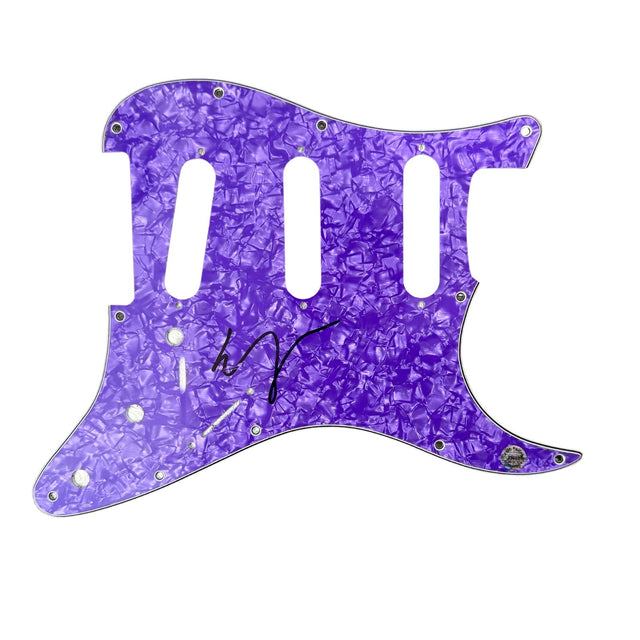
Vampire Weekend Ezra Koenig Signed Guitar Pickguard Autograph Hologram COA
$100.00 USD
-

Twenty One Pilots Signed Clancy CD Framed Display Tyler Joseph Josh Dun Auto
$199.00 USD
-

Twenty One Pilots Clancy Signed CD Tyler Joseph Josh Dun Sealed Unopened 2024
$189.00 USD
-

Twenty One Pilots Clancy Signed CD Sealed Tyler Joseph Josh Dun Silver Autograph
$189.00 USD
-
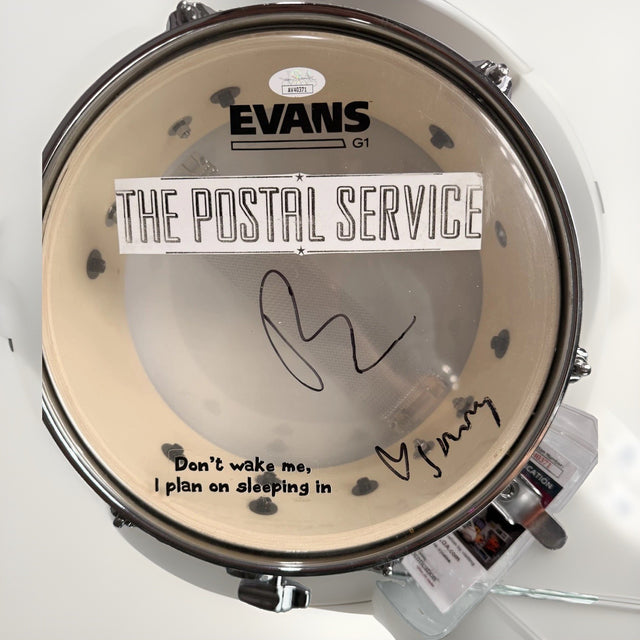
The Postal Service Dual Signed Evans M-80 Drumhead JSA A40371
$499.00 USD
-

The Head and the Heart Band Signed Framed 'aperture' CD COVER ALBUM
$65.00 USD
Browse the collection for current listings.