KAWS at the Brooklyn Museum: What WHAT PARTY Actually Meant for the Market

The Brooklyn Museum doesn't do hype. It does institution.
So when KAWS — Brian Donnelly, a guy who started by illegally replacing bus shelter advertisements in New York City — walked into one of the oldest and largest art museums in the United States for a full-scale retrospective, something had shifted permanently. This wasn't a gallery pop-up. This wasn't a brand collaboration dressed up as fine art. This was the museum establishment saying: we were wrong to wait this long.
WHAT PARTY opened at the Brooklyn Museum in 2021 and ran through the summer. It was the largest institutional survey of KAWS's work to date on American soil, covering roughly thirty years of output. Paintings, sculptures, drawings, limited editions — the full arc from vandal to validated.
For collectors, the show raised immediate and practical questions. What happens to secondary market values when an artist gets this kind of institutional stamp? How do you authenticate the pieces that came out of that exhibition period? And what does the work actually mean when it's hanging next to the permanent collection?
This piece is about all of that.
The Exhibition: What Was Actually There

WHAT PARTY traced KAWS's career in roughly chronological order, which meant it told a story most casual observers had never heard in full.
The early rooms were about the streets. Subway panels. Advertisements pulled from bus shelters and altered. The transgressive foundation that everyone references but few people have actually seen documented at this scale. Donnelly wasn't spray-painting walls — he was hijacking consumer imagery and replacing it with something that looked almost identical to the original, except the characters had X'd eyes and felt wrong in a way you couldn't immediately explain.
That aesthetic tension — familiar but corrupted, commercial but critical — ran through everything that followed.
The middle sections of the exhibition tracked the development of COMPANION and the broader cast of characters that became KAWS's visual language. The paintings from the late 1990s and early 2000s showed how quickly the formal vocabulary matured. These weren't graffiti aesthetics scaled up. They were paintings that understood painting: color field relationships, compositional weight, the specific emotional register of cartoon imagery rendered in oil on canvas.
The sculptures dominated the later galleries. Large-scale COMPANION figures. The HOLIDAY series. Works that had previously been seen primarily through product drops and secondary market listings were here given the breathing room of actual gallery space. Seen at that scale, in that context, they read differently. More melancholy. More deliberate.
The Brooklyn Museum understood what it was presenting. The wall text was serious. The curatorial framework engaged with the work as art history, not as cultural phenomenon. That distinction matters.
Why the Timing Was Significant
The show was originally scheduled to open in 2020. COVID pushed it. By the time it opened in 2021, the broader art market had undergone a pressure-test unlike anything in recent memory. Auction records had fallen. NFT speculation was exploding. The question of what constituted lasting value in contemporary art was genuinely unsettled.
WHAT PARTY landed in that context and provided something the market needed: an institutional argument for KAWS as a serious long-term proposition, not a hype cycle.
For dealers and collectors who had been in the work for years, this was confirmation. For new entrants trying to calibrate where the market was headed, it was a directional signal. The Brooklyn Museum doesn't mount retrospectives for artists it considers transient.
Understanding KAWS Authentication in This Context
Whenever a major institutional moment happens around an artist, the forgery and misrepresentation ecosystem follows. This is not speculation — it is documented pattern. The FBI's Operation Bullpen, which ran through the late 1990s and early 2000s, established how consistently high-profile artist moments create secondary fraud markets. The mechanics haven't changed. Only the artists have.
For KAWS specifically, authentication is a more structured conversation than it is for many artists, because the edition infrastructure is more formalized.
The Modern Authentication Framework
For recent KAWS editions, the authentication chain rests on documented release records, Medicom packaging quality and the hologram sticker, and molded foot stamps with copyright markings. Checked together, these create a physical-to-documentation match that is genuinely difficult to replicate at scale. This is the standard for more recent releases.
The practical implication: if you are buying a recent KAWS edition and the seller cannot demonstrate that the piece matches its documented release, stop the transaction. Full stop. The release records exist specifically so this verification is possible. A legitimate piece will match them. An excuse for why it doesn't will not hold up under scrutiny.
Older Pieces: The Established Standard
For older pieces, the authentication framework shifts to original packaging integrity, hologram verification, and cross-referencing against Medicom release records where applicable for BE@RBRICK collaborations.
This is where the market gets genuinely complicated, because the volume of older KAWS pieces in circulation is enormous, and the documentation standards were less rigorous at the time of original sale. Not every legitimate piece from this era has a clean paper trail. Not every piece with a clean paper trail is legitimate.
The questions to ask for older pieces:
- Original packaging: Is it present? Is the seal intact or was it opened? Does the packaging match known documentation for that specific release?
- Hologram: Is it present and consistent with the release documentation?
- Release record: Can the piece be cross-referenced against verifiable Medicom or KAWS release records for that edition?
- Provenance chain: Where has this piece been since original release? Is there documentation at each step?
None of these questions alone is sufficient. The answer to all of them together starts to build a picture.
Paintings and Works on Canvas/Paper
Original KAWS paintings are a different conversation from editions entirely. The market for his paintings operates at auction house level, which means the authentication bar is set by the major houses and their specialist departments. For serious inquiries, provenance documentation, exhibition history, and in some cases specialist consultation are all in play.
PSA certification-verification warnings are relevant here: PSA has documented publicly that a meaningful percentage of items submitted with COAs from less-established authenticators fail their verification standards. The certification ecosystem around works on paper and canvas requires more scrutiny than the edition market, precisely because the documentation infrastructure is less standardized.
A COA from an unknown or unverifiable source attached to a KAWS painting is not authentication. It is a document. The difference matters in a dispute.
What the Retrospective Did to Secondary Market Dynamics

The honest answer is: it accelerated what was already happening, and it shifted the quality of the demand.
Before WHAT PARTY, KAWS secondary market activity was dominated by streetwear-adjacent collectors, hype-driven speculators, and a relatively small group of serious art collectors who had recognized the work's depth earlier than most. These groups have different price tolerances, different holding periods, and different exit strategies.
A major museum retrospective changes the composition of the buyer pool. Institutional collectors, serious private collections, and collectors who would never engage with a limited edition drop but will absolutely respond to a Brooklyn Museum-validated artist — these buyers entered or intensified their engagement with the work.
That shift in buyer composition has durable effects. It tends to compress volatility. It tends to support prices at the upper tiers. It tends to increase scrutiny of provenance and condition.
For existing holders of significant KAWS works, the retrospective represented a moment to reassess their positions. For buyers entering after the show, the elevated institutional profile was already priced into the market to some degree. Timing matters.
The Catalog as a Market Document
Exhibition catalogs from major retrospectives serve a function that goes beyond documentation. They establish canonical scholarship around an artist's work. They are cited in subsequent auction descriptions. They are referenced in insurance appraisals. They become part of the provenance conversation for works that appeared in the exhibition.
The WHAT PARTY catalog is a serious document. Collectors who hold significant KAWS works and do not own the catalog are missing a piece of their own documentation infrastructure. This is a practical observation, not a sentiment.
Reading the Work: What the Retrospective Argued
There is a version of the KAWS conversation that stays entirely in the market and never engages with what the work is actually doing. That version is incomplete, and it tends to produce bad collecting decisions.
The curatorial argument of WHAT PARTY — the argument implicit in the selection and sequencing of works — was that KAWS's project has always been about emotional experience mediated through commercial imagery.
COMPANION is not a cartoon character. It is a figure whose eyes have been replaced with X's — the universal shorthand for death or unconsciousness — rendered in the visual language we associate with care and innocence. The figure covers its face. It sits alone. It carries another version of itself. The emotional register is not the register of the source material. It is something else entirely.
This is the distinction between appropriation as aesthetic exercise and appropriation as critical language. Donnelly understood from early on that the power of consumer imagery is not diminished by being borrowed — it is redirected. The familiar creates trust. The alteration creates unease. That gap is where the work lives.
Why does a cartoon character feeling grief move us when the same grief rendered in a more explicitly "serious" artistic tradition might not?
That question is what the Brooklyn Museum was asking by hanging this work on its walls. The institution was making an argument that this is not a lesser form of emotional expression because of its visual origins. It is a more direct one precisely because of them.
The Scale Question
One thing the retrospective made viscerally clear was how scale functions in KAWS's sculptural work. Pieces that read as collectible objects at edition scale transform completely at monumental scale. The same emotional content becomes environmental. You are not looking at a figure sitting alone. You are standing next to one.
The HOLIDAY series installations, documented and contextualized in the exhibition, demonstrated this most clearly. The floating COMPANION in Victoria Harbour, the reclining figure at Rockefeller Center — these were not stunts. They were experiments in what happens when you place this specific emotional content in specific public contexts.
Collectors who hold edition-scale pieces and understand this scalar relationship are holding something that participates in a more complex artistic conversation than the edition market typically reflects.
Provenance Considerations for WHAT PARTY Exhibition Works

Works that appeared in the Brooklyn Museum exhibition carry exhibition provenance. This is material to value and should be documented carefully.
If you own or are considering purchasing a work that was included in WHAT PARTY, the provenance documentation should include:
- Exhibition loan agreement or confirmation: Documentation that the specific work was included in the exhibition, ideally from the museum or the lending party.
- Catalog inclusion: Reference to the work in the exhibition catalog, with catalog citation details.
- Loan stickers or labels: Physical documentation applied to the work or its packaging/crating during the loan period.
- Insurance and condition reports: Exhibition loans generate condition reports at both departure and return. These documents are part of the work's history.
- Correspondence chain: Any written communication between lender and museum regarding the specific work.
Exhibition provenance for works in a show of this significance is not a minor footnote. It is a meaningful component of the work's documented history and affects both insurance valuation and resale positioning.
Red Flags
This section is non-negotiable. If you are buying KAWS works in the current market — particularly works marketed with any connection to the Brooklyn Museum retrospective or the exhibition period — these are the signals that should stop you cold.
- No match to a documented release. If the seller cannot show that the edition, colorway, and markings match a documented release record, this is a structural problem with the transaction. Not a negotiating point. A problem.
- COA from unverifiable source on a painting or work on paper. As noted, PSA's certification-verification warnings document the prevalence of fraudulent or questionable COAs in the broader market. A document that says "Certificate of Authenticity" is not authentication. Who issued it matters enormously.
- Packaging inconsistency on older editions. If the packaging does not match known documentation for that specific release — wrong box dimensions, wrong typography, wrong colorway on the box — treat this as a significant red flag. Counterfeit KAWS editions are sophisticated enough to pass casual inspection.
- "Exhibition provenance" claimed without documentation. The Brooklyn Museum retrospective has become a marketing association. Claims that a work "was in the exhibition" without supporting documentation — loan stickers, catalog inclusion, correspondence — should be verified independently before any purchase decision.
- Prices significantly below established secondary market. This is not generosity. The secondary market for significant KAWS works is well-documented across multiple platforms. A price that doesn't reflect that market is either attached to a condition issue that isn't being disclosed, a provenance problem, or an authentication problem. Find out which.
- Hologram absent or inconsistent on older pieces. The hologram on original packaging is a specific element. Its absence is notable. Its presence in a form that doesn't match release documentation is worse than its absence, because it suggests deliberate replication.
- Seller resistance to authentication process. A legitimate seller of a significant work has no rational reason to resist authentication. Resistance is information.
Bottom Line
WHAT PARTY at the Brooklyn Museum was not a market event that created KAWS's legitimacy. It was an institutional recognition of legitimacy that had been accumulating for thirty years in the work itself.
The distinction matters because it tells you something about durability. Museum retrospectives that anoint artists mid-hype-cycle tend to mark peaks. Retrospectives that recognize sustained, serious bodies of work tend to mark inflection points in the composition of the collector base rather than in the underlying trajectory.
KAWS has been making work that operates on multiple registers simultaneously — commercial and critical, accessible and formally rigorous — since before most of his current collectors were paying attention. The Brooklyn Museum looked at thirty years of that work and decided it warranted institutional space. That decision should inform how you think about the work's long-term positioning.
The authentication infrastructure around KAWS is among the most developed in the contemporary limited edition market. Use it. Release records and physical markings exist to protect buyers. Provenance documentation exists to protect value. The exhibition catalog exists to establish scholarly record.
Do the work. The pieces that survive scrutiny are worth holding. The pieces that don't survive scrutiny were never worth buying.
The market will continue to have cycles. The work will continue to be the work.
Frequently Asked Questions
What was the WHAT PARTY exhibition at the Brooklyn Museum?
WHAT PARTY was a large-scale retrospective survey of KAWS (Brian Donnelly) at the Brooklyn Museum, representing the most comprehensive institutional presentation of his work on American soil to date. Originally scheduled for 2020 and delayed by COVID, the show opened in 2021 and traced roughly thirty years of output: from early street interventions and altered advertisements through paintings, sculptures, and the large-scale COMPANION figures that define his international profile. The curatorial approach treated the work as serious art history, not cultural phenomenon.
Does a KAWS piece need chip-based verification to be considered authenticated?
Only a narrow slice of the market carries chip-based verification — KAWS:HOLIDAY releases from AllRightsReserved from roughly 2022 onward include an NFC authentication chip, and for those releases its absence is a significant authentication gap. For everything else, the authentication framework rests on original packaging integrity, hologram verification, and cross-referencing against release records, and the absence of a chip doesn't automatically invalidate older pieces. What matters is matching the authentication standard appropriate to the specific release period of the specific piece.
How does exhibition provenance from WHAT PARTY affect a work's value?
Exhibition provenance from a major institutional survey is materially relevant to value. It establishes documented public history for the work, generates condition reports that become part of the record, and positions the piece within canonical scholarship on the artist. For works included in WHAT PARTY specifically, catalog inclusion, loan documentation, and any physical labels applied during the exhibition period are all components of that provenance. Claims of exhibition provenance without supporting documentation should be independently verified before any purchase decision.
Why did the Brooklyn Museum choose KAWS for a retrospective?
The institutional argument, implicit in the curatorial approach, is that KAWS's work operates in a formal and conceptual register that warrants serious art historical engagement. The work appropriates commercial imagery but does so as critical language rather than aesthetic exercise — redirecting the emotional trust that consumer imagery generates toward more complex and often melancholy content. The Brooklyn Museum's decision reflects a broader institutional reckoning with the separation between "fine art" and "popular" visual culture. KAWS also has genuine New York roots, having started his career working in the city's streets, which gives a Brooklyn institution a particular claim on the retrospective.
What should I look for when buying an older KAWS edition?
Four primary areas: original packaging integrity and consistency with known documentation for that specific release; hologram presence and consistency; cross-referencing against Medicom release records where the piece is a BE@RBRICK collaboration; and provenance chain documentation from original release to the present. None of these is individually sufficient. The aggregate picture they create is what matters. Inconsistency in any of these areas warrants deeper investigation before proceeding.
How does the KAWS authentication process compare to artists like Banksy or Shepard Fairey?
The KAWS edition market has more formalized infrastructure than either. Banksy authentication runs exclusively through Pest Control, the artist's official authentication body, and there is no legitimate alternative. Shepard Fairey has no artist-issued COA system — authentication relies on signature examination, edition numbering, Obey Giant drop records, and provenance chain. KAWS authentication rests on Medicom packaging and hologram verification, molded foot stamps, and documented release records — with recent KAWS:HOLIDAY releases from AllRightsReserved (2022 onward) adding an NFC authentication chip. The complexity for KAWS is that older pieces lean more heavily on provenance, creating a layered authentication environment within the same artist's market.
Did WHAT PARTY include NFT or digital works?
The exhibition's primary focus was on KAWS's physical output across three decades — paintings, drawings, sculptures, and editions. The show was not structured around digital or NFT work, and the curatorial argument was built on the material history of the practice. The 2021 timing coincided with the broader NFT market explosion, but WHAT PARTY was largely orthogonal to that conversation. For collectors, this distinction matters: the institutional validation generated by the retrospective attaches to the physical body of work, not to any digital extensions of the brand.
Is the WHAT PARTY exhibition catalog worth acquiring?
Yes, and for reasons that go beyond sentiment. Exhibition catalogs from major retrospectives become part of the canonical scholarship around an artist. They are cited in auction descriptions, referenced in appraisals, and constitute part of the documented history of works that appeared in the exhibition. If you hold significant KAWS works, the WHAT PARTY catalog is a component of your broader documentation infrastructure. If you are researching the work or considering significant purchases, it provides the most comprehensive institutional account of the full arc of KAWS's practice available in a single document.
Shop KAWS
Explore current pieces available from the gallery.
-
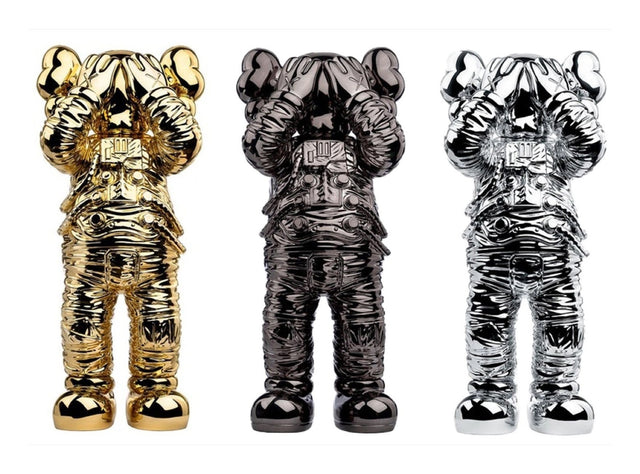
KAWS Holiday Space Set of 3 Gold Black Silver Companion Astronaut Figure Rare
$2,900.00 USD
-
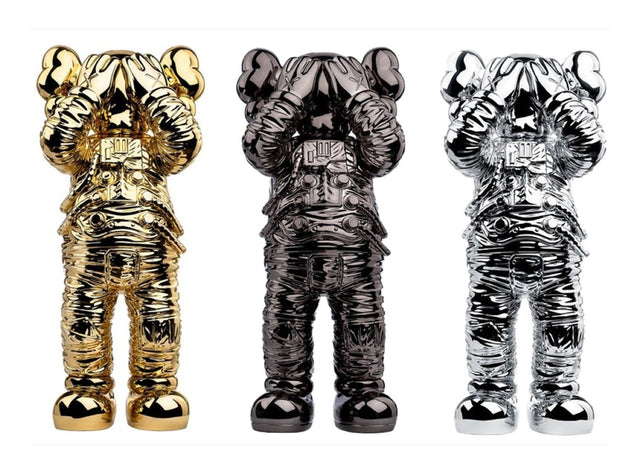
KAWS Holiday Space Set of 3 Gold Black Silver Companion Astronaut Figure
$2,900.00 USD
-
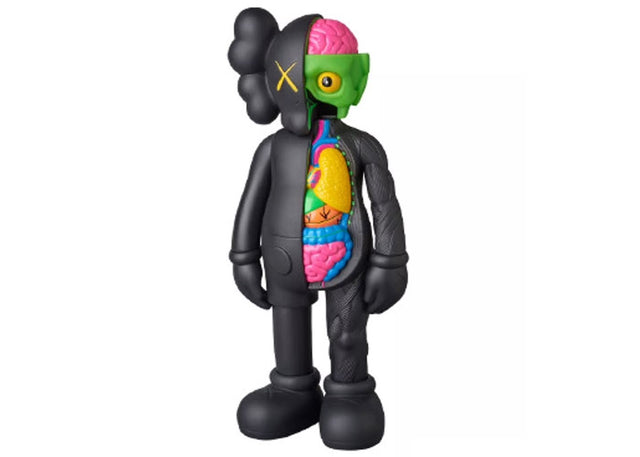
KAWS Companion Flayed Open Edition Black Medicom Toy Dissected Sealed New Figure
$599.00 USD
-
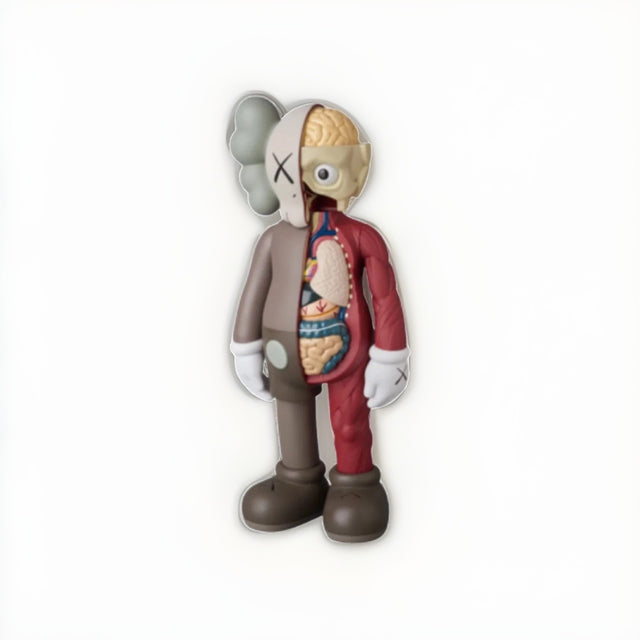
KAWS Companion Flayed Open Edition Brown Medicom Toy Dissected Sealed New Figure
$349.00 USD
-
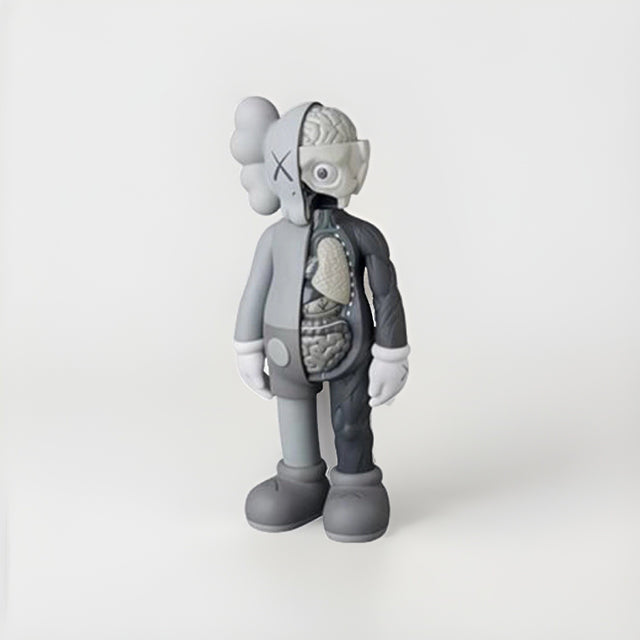
KAWS Companion Flayed Open Edition Grey Medicom Toy Dissected Sealed New Figure
$349.00 USD
Browse the collection for current listings.