JSA Witnessed LOAs: When On-Site Authentication Wins

There are two ways to get a JSA letter.
One involves mailing something in, waiting, and hoping the examiner's coffee was good that morning.
The other involves a JSA representative standing in the room when the pen touches the paper.
Those are not the same thing. Not even close. And if you've been buying music memorabilia at any serious level, you already know which one commands the premium — and which one has been gamed, copied, and exploited by every corner of the forgery market.
This is a breakdown of the JSA Witnessed LOA: what it actually means, why it matters specifically in the music vertical, how it stacks against the standard submission process, and what red flags separate a legitimate witnessed document from the growing number of fraudulent imitations circulating right now.
Let's be direct about one thing before we start. Authentication is not a guarantee. It is a documented opinion from a qualified examiner. What the witnessed process does is eliminate the single most dangerous variable in that opinion: the question of whether the signature is even real to begin with.
If an authenticator never sees the pen move, how certain can anyone actually be?What "Witnessed" Actually Means in JSA's Framework
JSA — James Spence Authentication — operates one of the most recognized third-party authentication services in the collectibles space. Their standard process is submission-based: you send an item, their examiners compare it against a reference database of known exemplars, and they render an opinion. That opinion becomes a certificate, either a Basic COA sticker or a full Letter of Authenticity (LOA).
The Witnessed LOA is a structurally different product.
Under the witnessed protocol, a credentialed JSA representative is physically present at a signing event, a private session, or a controlled backstage scenario. They observe the signer in person. They watch the signature happen. The document produced afterward is not an opinion derived from comparison — it is a firsthand attestation that a specific individual signed a specific item at a specific time and place.
That distinction has enormous evidentiary weight.
Think about what you're actually buying when you buy autographed music memorabilia. You're buying the chain of custody. You're buying the story. The witnessed LOA is that story, notarized by a professional who was in the room.
The JSA Basic vs. LOA Distinction — Why It Matters Here
JSA issues two primary types of authentication documents, and conflating them is a beginner's mistake that costs experienced collectors real money.
The JSA Basic COA is a certificate attached to or accompanying a single item. It's the sticker. It confirms JSA's opinion that the autograph is genuine, but it is produced through the submission review process. No witnessed component. No chain of custody documentation beyond what the submitter provided.
The JSA LOA is a full Letter of Authenticity — a separate document, printed on JSA letterhead, with the item's physical description, the examiner's name, and a detailed statement of findings. It carries more weight in resale, more weight in estate disputes, and more weight in any legal proceeding where provenance matters.
The JSA Witnessed LOA is the top tier. It is an LOA specifically noting that the signing was directly observed by a JSA representative. It will identify that the certification occurred at the point of signing, not retrospectively. That language — the specific notation of witnessed status — is what you verify when you pull the certificate number on JSA's online database.
Does your LOA actually say "witnessed," or are you assuming it does because the seller told you so?Why Music Memorabilia Demands This Level

Music is the most forged category in autograph collecting. Not sports. Not political. Music.
The FBI's Operation Bullpen, which ran through the late 1990s and into the early 2000s, exposed a counterfeit memorabilia network that moved hundreds of millions of dollars in fraudulent items. While the operation focused heavily on sports, its structural findings applied across every category: forgers don't work alone, certificate fraud runs parallel to signature fraud, and the authentication ecosystem itself becomes a target once the forgers get sophisticated enough.
Music forgers benefit from several specific conditions that make the category uniquely vulnerable.
First, the most collectible signatures — deceased artists, members of dissolved bands, legends who rarely sign — have no living authority to say yes or no. There's no Jimi Hendrix alive to reject a fake. There's no John Lennon to confirm or deny. The comparison database is finite, and forgers study it just as hard as authenticators do.
Second, music signings happen in controlled, difficult-to-document environments. Backstage passes. Green rooms. Tour buses. Hotel lobbies at 2 AM. The chain of custody for even legitimate autographs can be thin. A guitar signed after a show in 1978 might have passed through seven hands before it reached the current seller, with nothing more than a handshake and a story at each transfer.
Third, the price points for iconic music memorabilia are high enough to justify serious forgery operations but low enough compared to fine art that institutional scrutiny is often lighter.
The witnessed LOA addresses the present-day acquisition problem directly. It cannot retroactively fix the 1978 guitar. But for anything signed in the modern era — contemporary artists, surviving legends, current acts — it provides the cleanest possible chain of custody documentation available in the market.
Where Witnessed Signings Actually Happen
Witnessed JSA signings don't happen at every fan meet-and-greet. The process requires coordination.
The primary contexts where you'll see legitimate witnessed LOAs generated in the music space include:
- Official artist signing sessions — coordinated through management, label relations, or authorized dealers, with a JSA representative contracted to attend
- Private collector signings — high-value items brought directly to an artist or estate contact, with JSA present by arrangement
- Estate-authorized signings — where surviving family or estate management facilitates a controlled signing of existing stockpiles of items bearing the artist's signature (rare, but documented)
- Dealer-organized events — authorized memorabilia dealers who work with JSA to cover signings as part of their authentication pipeline
- Major entertainment and sports conventions — where JSA maintains a formal booth presence and representatives are actively covering signing areas
If someone is selling you a witnessed LOA and the backstory doesn't fit one of these contexts, that's a conversation worth having in detail before money changes hands.
How Witnessed Compares to the Other Tier-One Services
In music memorabilia, the credible authentication tier is widely recognized as Beckett (BAS), JSA, and PSA/DNA. Each has a witnessed or equivalent process, and understanding how they differ is part of operating at a serious level in this market.
| Service | Standard Process | Witnessed/On-Site Equivalent | Music Specialist Tier |
|---|---|---|---|
| JSA | Submission review, Basic COA or LOA | Witnessed LOA, physically present at signing | General; no specific music vertical |
| BAS (Beckett) | Submission review, graded slab or LOA | Witnessed signing coverage | Roger Epperson REAL — dedicated music specialist tier within BAS |
| PSA/DNA | Submission review, cert and letter | PSA witnessed signing program | General; PSA has issued certification-verification warnings regarding music forgeries specifically |
A note on Roger Epperson REAL within BAS: for serious music collectibles, this is the specialist credential that matters above and beyond standard BAS authentication. Epperson brings specific expertise in music signatures that general examiners don't have. If you're buying a guitar signed by a classic rock legend or a rare piece from a deceased artist's estate, the presence of an Epperson REAL evaluation adds meaningful weight alongside any witnessed LOA from JSA.
The services are not mutually exclusive. High-value pieces often carry multiple authentications, and for anything in a significant price tier, that layering is standard practice, not paranoia.
Would you buy a high-six-figure property with only one appraisal from one firm?The Certificate Verification Process — Do It Every Time

JSA maintains an online verification database at jsa.cc. Every legitimate JSA certificate has a unique alphanumeric identifier. You enter that number, you get the item on record.
This is the step that a significant portion of buyers skip. That is exactly what forgers count on.
The verification check tells you several things:
- Whether the certificate is in JSA's system at all — counterfeit COAs and LOAs exist. They are printed to look correct. They will not be in the database.
- What the certificate actually says — the description of the item on record may not match what you're looking at. A certificate issued for a signed 8x10 photograph attached to a signed guitar is a red flag of the highest order.
- Whether it's a Basic COA or a full LOA — and specifically whether the LOA carries witnessed notation
- Whether the certificate has been reported as transferred, stolen, or flagged — JSA can and does flag compromised certificates
PSA has issued explicit certification-verification warnings noting that the existence of a certificate number does not guarantee the item attached to it is the item originally certified. Certificates get separated from original items and reattached to forgeries. Verification against the original item description is the only protection.
Do this check before any transaction. Not after.
What to Look For in the Witnessed Language
When you pull a JSA LOA and you're looking for witnessed status, the language matters.
A legitimate witnessed LOA will include explicit notation that the signing was personally observed by a JSA representative. It will typically identify the context of observation. The examiner or witness who covered the signing may be identified. The language is direct and unambiguous — it does not hedge into "we believe" or "comparison suggests." It states that the autograph was observed being applied.
If the document uses the standard submission language but the seller is describing it verbally as "witnessed," those are two different things. The document is the authority, not the seller's characterization.
Get the document. Read it. Verify it.
Provenance Stacking: The Witnessed LOA Is One Layer
Here is something the authentication industry occasionally undersells because it's in their interest to be seen as the final word: even a witnessed LOA is stronger when it sits inside a complete provenance chain.
The witnessed LOA confirms the signature is genuine and was observed. It does not necessarily confirm the item's history before or after that moment. For music memorabilia, the full picture includes:
-
The item itself — instrument, photograph, record, setlist, contract, costume — and its documented history
- Where was it manufactured or produced?
- Does it correspond to the period in which the artist would have signed it?
- For instruments: is there a serial number that places it with the artist?
- The signing documentation — the witnessed LOA is the primary document here, supported by any event records, photographs, or contemporaneous materials from the signing
-
The acquisition chain — every hand the piece passed through from signing to you
- Receipts or invoices from authorized dealers
- Prior auction records if the piece has sold publicly
- Estate or management letters if the piece came through official channels
- Supporting authentication — for high-value pieces, a second authenticator's opinion, ideally from a specialist (Roger Epperson REAL for music)
The witnessed LOA is the strongest single document you can have. But a witnessed LOA on a guitar that can't be placed at the artist's known instrument period, with no acquisition chain, is still a question mark on everything except the signature itself.
Authentication covers the autograph. Provenance covers everything else.Specific Scenarios: When Witnessed Matters Most

Deceased Artists and the Legacy Market
For artists no longer living, the witnessed LOA is retrospectively impossible on new items. No new signatures are being made. What exists already exists.
For these pieces, you're working entirely within the submission-based authentication framework, supplemented by the deepest provenance research you can build. The witnessed LOA is not available, but the full LOA from JSA, combined with BAS/Epperson REAL and PSA, represents the authentication ceiling achievable.
Understand that limitation. Don't let a seller present a standard JSA LOA on a deceased artist's signature as equivalent to a witnessed document. They are categorically different.
Surviving Legends Who Sign Rarely
This is where the witnessed LOA does its most powerful work in the music market.
Consider an artist who is still living but signs infrequently — the kind of figure whose autograph commands serious secondary market prices precisely because authentic examples are scarce. The witnessed LOA from a controlled, authorized signing session for this category of artist is, functionally, a provenance document as much as it is an authentication document. It places the signature at a specific event, on a specific date, observed by a credentialed professional.
That documentation is the difference between a piece that holds its value and one that faces questions every time it changes hands.
Band Signatures and Multi-Signer Items
Full band signatures on a single item — a guitar signed by all members, an album signed by everyone — represent a specific complexity. Each signature needs to be authenticated, and the item needs to have been accessible to all signers.
Witnessed LOAs covering multi-signer items are particularly valuable because the witnessing protocol can document each signature individually within the same event. A submission-based LOA for a full-band signature requires the examiner to authenticate multiple hands against multiple reference databases, with all the comparative uncertainty that entails.
A witnessed LOA says: all five of them were in this room, this representative watched each one sign, and here is the documentation. That is a materially stronger claim.
Convention and Public Signing Event Coverage
Major music conventions and collector events sometimes feature JSA coverage in real time. This is the accessible end of the witnessed protocol — not a private session, but a public signing where a JSA representative is stationed to observe and document.
The witnessed LOAs produced in this context are legitimate, but they vary in their granularity. A high-volume convention signing may produce witnessed documentation that is less detailed than a dedicated private session. Know which context produced your certificate, and evaluate accordingly.
Red Flags
The witnessed LOA market, precisely because the document carries premium value, has attracted its own forgery and misrepresentation ecosystem. These are the indicators that something is wrong.
- The certificate number doesn't appear in JSA's verification database. Full stop. No explanation makes this acceptable. A legitimate JSA document is in the system.
- The database entry describes a different item than what you're looking at. Certificates get stripped and reattached. The description on record is what was authenticated. If it doesn't match, you have a forgery, a fraudulent transfer, or both.
- The LOA language is standard submission language but the seller claims it's witnessed. Read the actual document. The witnessed notation is explicit. If it isn't there, the document doesn't say what the seller says it says.
- No plausible context for the witnessed signing. If there's no documented event, no identifiable signing session, no management or label connection that would have enabled a JSA representative to be present, ask the seller to explain the chain of custody for how this witnessed signing was arranged. Vague answers are red flags.
- Seller resistance to independent verification. Any legitimate seller of serious music memorabilia welcomes the buyer's verification process. Resistance — urgency to close, pressure to skip the check, irritation at basic due diligence questions — is a sales tactic, not a market reality.
- Certificate condition inconsistency. A "witnessed" LOA that looks like it was printed on a home laser printer, with fonts that don't match JSA's standard letterhead, is a fabrication. JSA documents have consistent formatting. If something looks off, it probably is.
- Single-source authentication on high-value pieces. For anything in a significant price tier, the absence of any second authentication opinion — particularly the absence of BAS/Epperson REAL for music — is not disqualifying, but it is worth noting and asking about.
- Signed items that don't match the artist's known signing period or documented availability. A guitar supposedly signed at a time and place the artist wasn't touring, signed in an ink or style inconsistent with documented exemplars from that period, is a provenance problem the witnessed LOA cannot solve.
Bottom Line
The JSA Witnessed LOA is not marketing language. It is a specific designation within JSA's authentication framework that carries the highest available evidentiary weight because it eliminates the comparative uncertainty at the core of every submission-based opinion.
In the music market — the most forged category in collectible autographs, operating in the shadow of documented forgery networks and a history that includes federal law enforcement operations targeting the space — that elimination of uncertainty is worth real money at every price point.
It doesn't replace provenance research. It doesn't replace the additional weight of Roger Epperson REAL within BAS for specialist music pieces. It doesn't mean you skip the verification check on JSA's database.
What it means is that someone with credentials was in the room. They watched. They documented it. And the document says so, explicitly, in language you can verify against an online database before you spend a dollar.
That is the baseline expectation for serious music memorabilia transactions. Not a premium. The baseline.
If the piece you're considering doesn't meet it, you're not buying certainty. You're buying a story.
Know the difference.
Frequently Asked Questions
What exactly does a JSA Witnessed LOA say that a standard JSA LOA doesn't?
A JSA Witnessed LOA explicitly states that a JSA representative was physically present and personally observed the autograph being signed. Standard JSA LOAs, including full Letters of Authenticity produced through the submission process, reflect an examiner's comparative opinion based on reviewing the completed signature against reference exemplars. The witnessed document is an attestation of direct observation, not comparative analysis. The language is different, the evidentiary weight is different, and the verification entry in JSA's online database will reflect which type of document was issued.
Can I get a JSA Witnessed LOA for something that was already signed?
No. The witnessed protocol requires a JSA representative to be present at the moment of signing. It cannot be applied retroactively. If you have an item that was signed before any witnessed arrangement was in place, you're working within the standard submission authentication framework. What you can obtain is a standard JSA LOA, and for music pieces specifically, you can supplement that with a BAS evaluation including Roger Epperson REAL if the piece warrants it.
How do I verify that a JSA certificate is actually in the system?
Go to jsa.cc and use the certificate verification tool. Enter the alphanumeric certificate number printed on the document. The system will return the record associated with that certificate, including a description of the item authenticated. Compare that description against the item you're looking at. If the numbers don't match the database, the item description on record doesn't match your item, or the certificate doesn't appear at all, treat that as a serious red flag requiring resolution before any transaction proceeds.
Is a JSA Witnessed LOA sufficient on its own for a high-value music piece?
For most purposes in the music market, a JSA Witnessed LOA is the strongest single authentication document available. However, for pieces in significant price tiers, serious collectors and institutional buyers will look for layered authentication. Adding a BAS evaluation, and specifically a Roger Epperson REAL opinion for music signatures, alongside the JSA Witnessed LOA creates a much stronger overall provenance package. Neither document replaces the other — they address slightly different aspects of the authentication question and together represent a more complete picture.
What's the difference between JSA, BAS, and PSA for music memorabilia specifically?
All three are recognized tier-one authentication services for autographed memorabilia. In the music category, BAS (Beckett) has the specific advantage of the Roger Epperson REAL tier — a dedicated music specialist credential within their platform. PSA/DNA is well-established and widely recognized, and PSA has issued specific certification-verification warnings about music forgeries that reflect their awareness of the category's unique risks. JSA's witnessed program is one of the clearest examples of on-site authentication available. For music memorabilia specifically, the combination of JSA Witnessed LOA for the signing documentation and BAS/Epperson REAL for specialist comparative opinion is a strong framework at the top of the market.
Why is music memorabilia considered more forgery-prone than sports memorabilia?
Several structural factors make music the higher-risk category. The most collectible signatures are often from deceased artists where no living authority can confirm or deny authenticity, and the reference database of known exemplars is finite and well-studied by forgers. Music signings historically occur in informal, difficult-to-document environments with limited chain of custody. The FBI's Operation Bullpen, while primarily uncovering sports memorabilia fraud, demonstrated that forgery networks operate with sophisticated infrastructure including fraudulent certificates, and those same approaches apply directly to the music category. Additionally, the emotional premium collectors place on music icons sometimes overrides the due diligence habits that the sports market has more broadly normalized.
What should I ask a seller before buying music memorabilia with a JSA LOA?
Start with these questions: Is this a Basic COA, a standard LOA, or a Witnessed LOA — and does the document itself say so explicitly? What is the certificate number and have you verified it in JSA's database? What was the context of the signing — private session, public event, authorized dealer arrangement? Who held the piece between the signing and the current sale, and is there documentation for each transfer? Has the piece carried any other authentication opinions, and if not, why not for a piece at this price point? A seller with a clean piece will answer these without hesitation.
Does Gauntlet Gallery offer JSA Witnessed LOA pieces in the music category?
Gauntlet Gallery evaluates music memorabilia with the full authentication framework in mind, including the JSA Witnessed LOA standard alongside BAS and PSA documentation where applicable. Any piece we bring to market has been evaluated against the provenance and authentication standards described in this article. If you have questions about a specific piece or want to understand the authentication documentation on any item in our inventory, that conversation is always available — before you commit, not after.
Shop Music memorabilia
Explore current pieces available from the gallery.
-
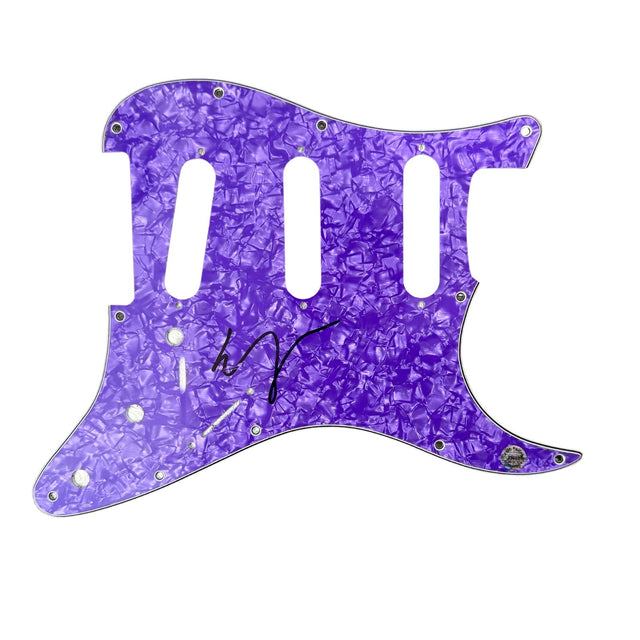
Vampire Weekend Ezra Koenig Signed Guitar Pickguard Autograph Hologram COA
$100.00 USD
-
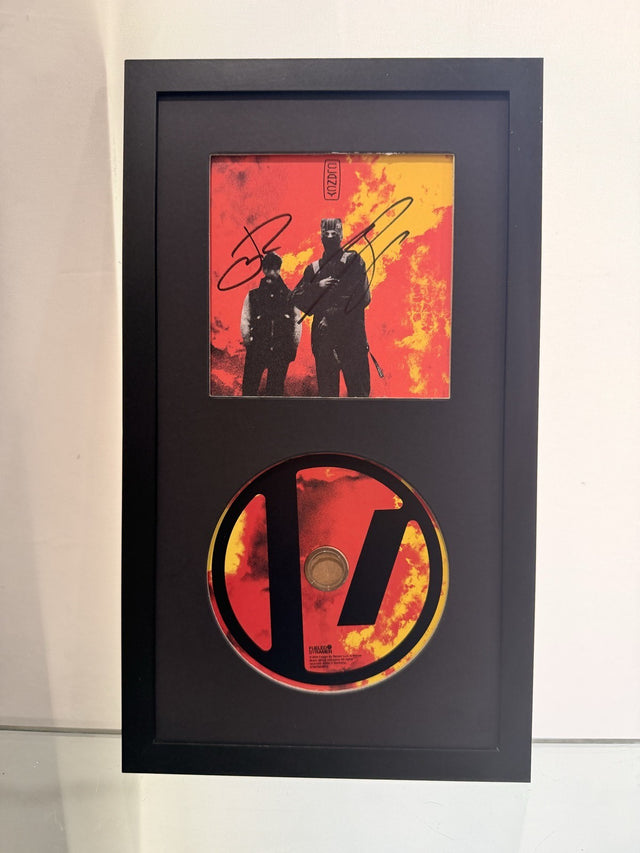
Twenty One Pilots Signed Clancy CD Framed Display Tyler Joseph Josh Dun Auto
$199.00 USD
-
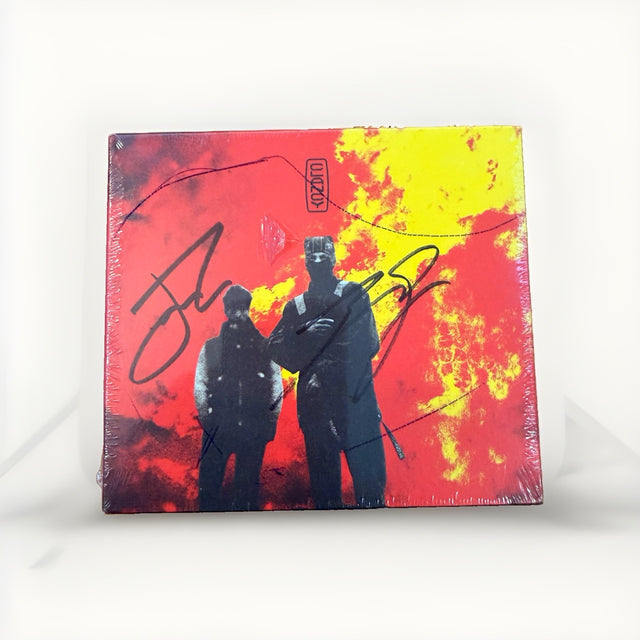
Twenty One Pilots Clancy Signed CD Tyler Joseph Josh Dun Sealed Unopened 2024
$189.00 USD
-
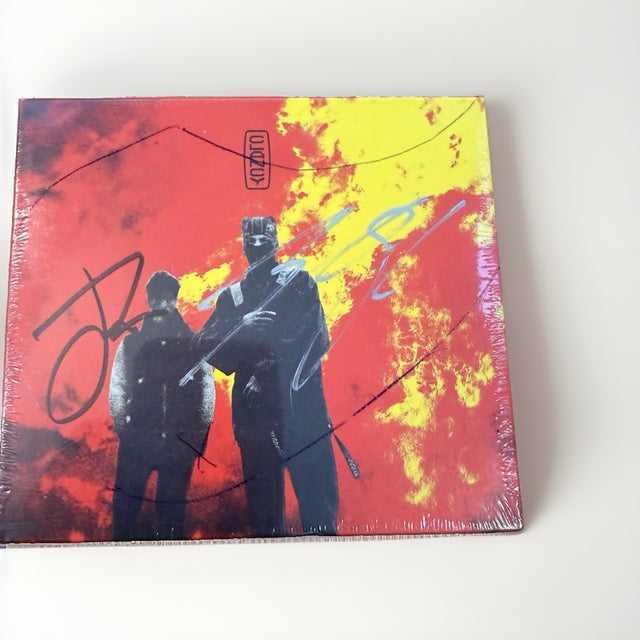
Twenty One Pilots Clancy Signed CD Sealed Tyler Joseph Josh Dun Silver Autograph
$189.00 USD
-
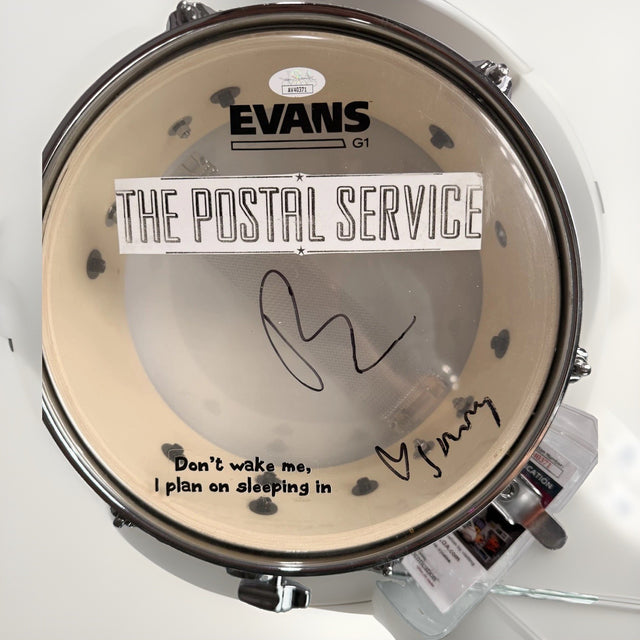
The Postal Service Dual Signed Evans M-80 Drumhead JSA A40371
$499.00 USD
-
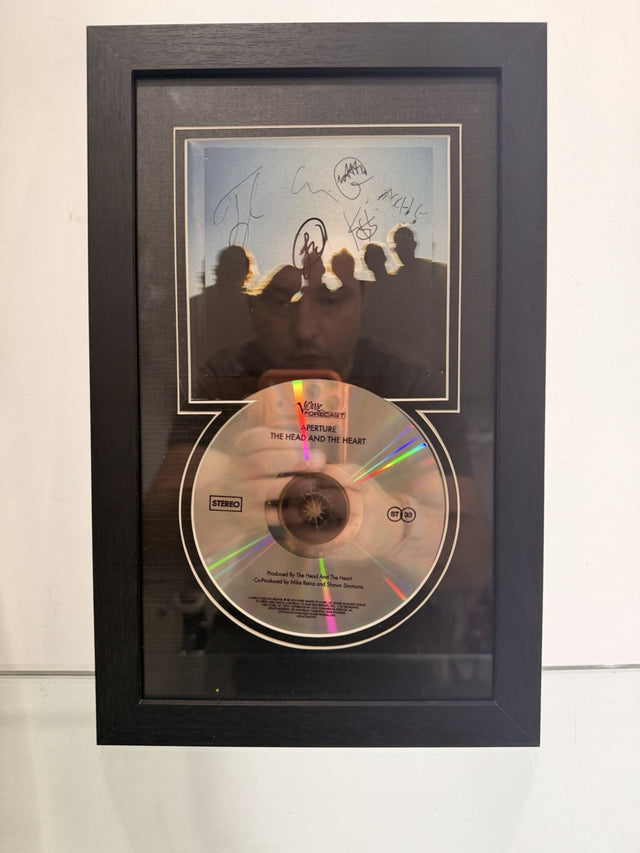
The Head and the Heart Band Signed Framed 'aperture' CD COVER ALBUM
$65.00 USD
Browse the collection for current listings.