The Setlist Nobody Questioned (Until It Sold for Five Figures)

A single sheet of paper. Handwritten in marker. A few song titles, some arrows, maybe a scrawled running order that changed three times before showtime.
That's a setlist. And in the right hands, from the right night, signed by the right artist, it is one of the most compelling objects in music memorabilia.
It is also one of the most forged.
The secondary market for signed setlists has matured fast. Auction houses that once treated them as novelty lots now dedicate catalog pages to them. Specialist dealers have built entire inventories around them. And the forgery infrastructure that FBI Operation Bullpen exposed — a sprawling scheme that flooded the market with fake signatures across sports and entertainment — has long since adapted to wherever collector money flows.
Setlists are exactly where that money flows now.
If you're buying, selling, or consigning a signed setlist, this is what the market actually requires. Not what sellers claim. Not what a frame shop told you when they matted it in 2003. What the auction houses and major dealers demand before they'll touch it.
Why Setlists Have Value in the First Place
Before we get into authentication mechanics, let's be clear about the object itself.
A setlist is a working document. It lives on the stage floor, sometimes taped to a monitor, sometimes in the hands of a crew member calling cues. It gets stepped on. Spilled on. It absorbs the energy of a specific night in a specific room with a specific crowd.
That singularity is the value proposition.
Unlike a signed album, which could have been signed at any point in a career, a setlist is tethered to a moment. A tour. A venue. Sometimes a historically significant night — a final performance before a hiatus, the first show after a tragedy, a surprise guest appearance that everyone in that room remembers decades later.
When that provenance is documented and verifiable, the object transcends signature collecting. It becomes artifact.
Add a signature from the artist, and you've combined two separate categories of value: historical document plus autograph. That combination is why strong examples from major artists trade at levels that surprise people who think of paper ephemera as inherently fragile assets.
What the Market Actually Pays For
Not all setlists are equal, and the price differential is steep.
The market rewards specificity. A setlist from a named tour is worth more than an undated one. A setlist from a tour's final night beats the opening night of an otherwise forgettable run. A setlist from a show that was officially documented — recorded, filmed, or significantly reviewed — carries a provenance anchor that a mystery date cannot.
Signature placement matters too. A signature on the setlist itself, in context, reads differently than a signature on the back of a blank card that someone later paired with a setlist. Auction specialists notice. Bidders notice. Provenance research eventually surfaces the difference.
And condition, as always, is a multiplier. A setlist with stage wear — tape marks, minor fading — is often more credible than an impossibly pristine one. The wear tells a story. Absence of wear on a supposedly stage-used document raises questions.
The Authentication Framework: What Auction Houses Require

This is where most private sellers fall short.
The major houses — and the major specialist dealers — operate within a defined authentication ecosystem. For music memorabilia, that ecosystem centers on three primary authenticators: Beckett Authentication Services (BAS), JSA (James Spence Authentication), and PSA/DNA.
Understanding the differences between them, and between their own internal service tiers, is not optional if you want to move serious paper at serious prices.
Beckett Authentication Services (BAS) and the Roger Epperson Tier
Beckett is widely regarded as the most rigorous option for music memorabilia. Within BAS, there is a specialist tier that carries particular weight: certification by Roger Epperson REAL.
Epperson is a dedicated music autograph specialist. His examination process goes beyond signature comparison. It includes paper analysis, ink assessment, contextual provenance review, and cross-referencing against known exemplars from specific periods of an artist's signing history.
For a high-value signed setlist — anything from a major-tier artist that a serious collector or auction house will scrutinize — a Beckett BAS letter with Epperson REAL certification is the gold standard the market currently recognizes.
That distinction matters because a standard BAS sticker and a Roger Epperson REAL letter are not the same thing, even though both carry the Beckett umbrella. Know which one you have.
JSA: Understanding the Basic vs. LOA Distinction
JSA is a legitimate and widely accepted authenticator, but the JSA ecosystem has a tier structure that buyers and sellers routinely conflate.
A JSA Basic certification is a witnessed signature service — meaning JSA personnel were present at the signing. For setlists, which are collected after the fact, Basic certification is rarely applicable and rarely what you encounter.
What you typically see on secondary market setlists is a JSA Full Letter of Authenticity (LOA). This is the post-signing examination service: an authenticator reviews the item and issues a written opinion.
Are those two things the same level of assurance?
They are not. The witnessed service has a verification chain the post-signing examination cannot replicate. When you're paying a premium for a signed setlist, confirm you're looking at a JSA LOA and understand what that means: it is an expert opinion, not a chain-of-custody document.
That's not a knock on JSA. It's a fundamental principle of authentication that every buyer should internalize.
PSA/DNA: The Third Pillar (With a Caveat)
PSA/DNA is the dominant name in sports autographs and has significant presence in entertainment. PSA itself has issued verification warnings about counterfeit PSA stickers — the real concern the market faces is not just fake signatures but fake certification labels applied to fake signatures.
Before accepting any PSA/DNA certification on a setlist, verify the certification number directly through PSA's online registry. This takes two minutes and has caught fraudulent labels that looked entirely convincing in photographs.
PSA is accepted by major auction houses, but for music memorabilia specifically, it carries slightly less specialist weight than Beckett BAS with Epperson REAL. That said, a strong PSA/DNA LOA on a well-documented setlist is absolutely a marketable asset.
The Two-Source Preference
The most sophisticated auction consignments arrive with two independent authenticator opinions, not one.
This isn't paranoia. It's the natural result of what Operation Bullpen taught the market. That FBI investigation, which ran through the late 1990s and early 2000s, demonstrated that no single point of authentication is impenetrable when forgery operations are sophisticated enough to target the authentication infrastructure itself.
Two independent expert opinions reaching the same conclusion creates a meaningful evidentiary threshold. If you're preparing a high-value setlist for auction, the investment in a second authentication letter is almost always recovered in the final hammer price.
Provenance Documentation: The Paper Behind the Paper
Authentication is the signature opinion. Provenance is the history of the object itself.
For setlists, provenance documentation is often more decisive than the authentication letter — especially for items where the signature is relatively simple (and therefore harder to distinguish from a skilled forgery) or where the artist has a known history of delegation.
What constitutes useful provenance for a signed setlist?
-
Direct acquisition documentation
- Purchase receipts from a venue merchandise table or official band store
- Written statements from crew members, road managers, or tour personnel
- Correspondence (email or physical) from band management at or near the time of acquisition
-
Photographic evidence
- Photos from the specific show that match the setlist's song order
- Photos of the setlist in situ on stage or being signed
- Time-stamped digital photographs taken at the venue
-
Cross-reference documentation
- Setlist.fm archives or similar databases that confirm the specific running order
- Concert reviews that mention songs played, helping anchor the date and venue
- Ticket stubs from the same night, especially when the seller was the attending collector
-
Chain of custody
- Previous auction records if the item has changed hands through reputable houses
- Dealer invoices from recognized specialist dealers
- Insurance appraisal history (insurers require documentation, which creates a useful paper trail)
The setlist that arrives with a crew member affidavit, a ticket stub, a matching setlist.fm entry, and a BAS LOA is a fundamentally different commercial proposition than the identical-looking document that arrives with a verbal story and a frame.
Which one do you think the auction house calls back first?
Artist-Specific Considerations

The authentication approach varies by artist. A few considerations that come up repeatedly in this category.
Classic Rock Era Artists
Setlists from the 1960s through 1980s present specific challenges. Paper degrades. Handwriting evolves dramatically over decades. The pool of verified exemplars from specific periods is smaller than collectors assume.
For significant classic rock setlists, the Roger Epperson REAL pathway within BAS is particularly important because Epperson's exemplar database for period-specific signatures is one of the deepest in the field.
Be skeptical of setlists from this era that arrive with only a generic "certificate of authenticity" from an unnamed dealer or a signed letter from a promoter. These are not authentication. They are provenance claims, and they need to be backed by qualified handwriting analysis.
Active Artists with High Signing Volume
The challenge flips for contemporary artists who sign frequently. High signing volume creates abundant exemplar material, which makes authentication more straightforward — but it also creates a larger pool of forgery targets because buyers are less suspicious of frequent signers.
For active artists, authentication combined with tour-specific provenance is the strongest combination. The signature may be easy to verify. What elevates the object is proving which night, which venue, which specific show the setlist came from.
Artists with Known Signing Inconsistencies
Some major artists' signatures have varied significantly over their careers due to injury, illness, or deliberate stylistic change. Others are known to have used autopens or signed by proxy during periods of high demand.
This is not insider information — it's documented in authentication literature and known to specialist examiners. But it means that for certain artists, a signature that "looks right" to a casual observer may actually reflect a period when the signature on record differs significantly from the artist's current hand.
Authentication that doesn't account for period-specific variation is not adequate authentication. Ask your authenticator directly whether the signature was compared against dated exemplars from the same approximate era.
What Auction Houses Actually Want in a Consignment
Let's be direct about the consignment conversation.
When a specialist at a major auction house evaluates a signed setlist consignment, they are running through a checklist that looks something like this:
- Primary authentication — Is there a letter from BAS, JSA, or PSA/DNA? Which tier? Is the certification number verifiable?
- Secondary authentication — Is there a second independent opinion? For items above a certain value threshold, many houses expect or strongly prefer this.
- Provenance anchor — Can the setlist be tied to a specific, verifiable event? Tour name, venue, date. The more documentation, the better.
- Cross-reference viability — Does the setlist's song order match any known record of that show? Can the house's researchers verify the setlist is consistent with known performances?
- Physical condition — Is the condition consistent with the claimed origin and age? Is the wear pattern credible?
- Chain of custody clarity — Who has owned this, and how did each transfer happen? Gaps in chain of custody are red flags, not minor issues.
- Absence of contradictory indicators — Is there anything about the item — paper stock, ink type, framing history — that contradicts the claimed date or origin?
A consignment that satisfies all seven points will move through the intake process faster, with a higher estimate, than one that requires the house to do investigative work on your behalf.
Why would you bring them a puzzle when you could bring them a proof?
The Forgery Landscape: What You're Actually Up Against

Operation Bullpen was a wake-up call, not a resolution.
The FBI operation dismantled specific forgery networks and resulted in convictions, but it documented something more enduring: a market infrastructure that, when unsupervised, naturally produces fraud at scale. The memorabilia market creates demand. Demand creates pricing signals. Pricing signals attract forgers. Forgers target whatever categories are generating the most returns.
Signed setlists are currently in that category.
The forgery threat in this specific niche has a few consistent patterns:
The "acquired at the show" story. Setlists are easy to fabricate as physical objects. Song titles for most tours are publicly known. Paper and markers are cheap. The "I got this signed by the stage" provenance story is unverifiable without corroborating documentation, which means it is the preferred cover story for forgeries targeting casual buyers.
The genuine setlist, forged signature. A real setlist from a real show — perhaps acquired from a crew member or found discarded after a performance — with a forged artist signature added. This is more dangerous because the object's provenance is genuine. The signature analysis becomes the only defense.
The previously certified fake. PSA's own verification warnings exist for a reason. Forged certification labels applied to unauthentic items are a real category of fraud. The defense is always the same: verify the certification number directly through the issuing organization's database. Never rely on the physical label alone.
The laundered auction item. Items that pass through small, low-scrutiny auction venues acquire a superficial "auction provenance" that sounds legitimate in subsequent listings. The original auction house may have done minimal due diligence. Always trace the provenance chain back as far as it will go, not just to the most recent transaction.
Red Flags
Before you buy or consign a signed setlist, run through these indicators. Any one of them warrants deeper investigation. Multiple flags together suggest serious problems.
- No verifiable authentication. A "COA" that is just a signed card from a dealer with no authentication organization affiliation is not authentication. It is a piece of paper saying someone believes the item is real.
- Authentication from an organization you cannot independently verify. Several fraudulent "authentication" companies have operated in the memorabilia space. If you cannot find the authenticator's credentials, track record, and contact information independently, be very cautious.
- Suspiciously pristine condition for a stage-used document. Real setlists get used. A setlist with no wear, no tape marks, no evidence of handling, claiming to be from a live show, deserves scrutiny.
- Vague or shifting provenance story. "I got it signed backstage" is a starting point, not a provenance statement. If the story changes or expands suspiciously when questioned, that's a signal.
- Certification number that doesn't verify. Check it. Every time. If a PSA, JSA, or BAS certification number returns no result or a result that doesn't match the item described, stop the transaction.
- Signature that doesn't match period-appropriate exemplars. Especially important for artists with long careers. Get an opinion from someone who examines period-specific signatures, not just the current signature.
- No cross-reference possible for the claimed show. If the setlist's song order doesn't match any known record of the claimed night and venue, that's a problem worth resolving before purchase.
- Framing that obscures the back of the document. Legitimate setlists don't need to hide anything. A frame that prevents examination of the reverse side is a practical obstruction to due diligence.
- Pressure to decide quickly. The urgency tactic is as old as fraud itself. Legitimate sellers of genuine pieces don't need to rush your authentication process.
Bottom Line
A signed setlist is one of the most personal objects in music collecting. It is also one of the most exposed to fraud, under-authentication, and inflated claims.
The market has matured enough that the major auction houses, the serious specialist dealers, and the most sophisticated collectors are operating with a clear framework: BAS (with Epperson REAL for significant pieces), JSA LOA, PSA/DNA with direct certification verification. Two sources where possible. Provenance documentation that ties the object to a specific, verifiable night.
Anything below that threshold is a gamble, and the market prices accordingly.
That doesn't mean only fully-papered setlists have value. It means you should understand exactly what you're buying when you buy something with gaps. Know what authentication you have, what it means, and what it doesn't mean.
The best setlists are extraordinary objects. Pieces of a night that existed once and never again, carrying the handwriting of someone who made that night matter.
Do the work to protect that object's story. The provenance chain is part of what you're selling.
Frequently Asked Questions
What is the most important authentication for a signed setlist?
For music memorabilia, Beckett Authentication Services (BAS) — particularly with certification by Roger Epperson REAL for high-value pieces — is the most specialist-respected pathway currently operating. JSA LOA and PSA/DNA are widely accepted alternatives. For significant pieces, two independent opinions from any combination of these three organizations is the preferred approach at the major auction house level.
Does a generic "Certificate of Authenticity" from a dealer count as authentication?
No. A dealer-issued COA is a provenance statement from a seller, not an independent expert opinion. It tells you what the seller believes; it doesn't constitute forensic examination of the signature. For auction purposes, and for any serious secondary market transaction, independent third-party authentication from a recognized organization is required. A dealer COA alone will not satisfy major auction house consignment requirements.
How do I verify a PSA, JSA, or BAS certification is real?
Go directly to each organization's website and use their online certification lookup tool. Enter the certification number from the label or letter. The result should return the specific item description associated with that number. If the number returns no result, or returns a different item, the certification is fraudulent. PSA has specifically issued warnings about counterfeit certification labels — physical examination of the label is not sufficient. Always verify the number independently.
What makes a setlist from a specific show more valuable than an undated one?
Provenance specificity is the primary value driver beyond the signature itself. A setlist tied to a documented, historically significant night — a tour finale, a charity benefit, a surprise appearance, or any show with external documentation — carries a narrative that an undated setlist cannot. Cross-reference ability matters too: if the song order can be matched to known records of a specific performance (through setlist.fm archives, contemporary reviews, or official recordings), the object's authenticity case is strengthened and its collector appeal increases significantly.
Is stage wear on a setlist a positive or negative sign?
Stage wear — tape marks, minor fading, handling creases consistent with a document that lived on a monitor or music stand — is generally consistent with a legitimate stage-used piece and can support authenticity. What raises red flags is the opposite: a supposedly stage-used setlist in impossibly pristine condition. However, wear can also be artificially introduced, so it's not a standalone authentication indicator. It's one element of a larger physical examination that qualified authenticators assess in context.
Can I authenticate a setlist myself using online signature comparison?
You can use online exemplars as a preliminary reference, but self-authentication is not authentication in any commercially meaningful sense. Online signature images vary in quality, resolution, and era. Signatures change significantly over careers due to age, injury, or stylistic evolution. The subtle forensic elements that qualified examiners assess — pen pressure, stroke sequence, hesitation marks, ink characteristics — are not visible in typical photographs. Treat any self-assessment as a starting point for deciding whether to pursue professional authentication, not as a conclusion.
What provenance documentation is most useful when consigning a setlist?
In rough order of impact: a written statement from a crew member, tour manager, or band representative who witnessed the signing or transfer; photographs from the specific show showing the setlist in context; ticket stubs from the same night; cross-reference documentation matching the song order to a known setlist database entry; and any previous auction house records if the item has sold publicly before. The more documentation that ties the physical object to a specific, verifiable night, the stronger the consignment package.
Do setlists ever sell at auction without full authentication?
At lower-tier auction venues, yes. But the price differential between a fully papered setlist and one with minimal documentation can be substantial — and the exposure to post-sale disputes, return claims, or long-term value erosion increases significantly when authentication is thin. The major specialist houses either require authentication as a condition of consignment or will advise sellers to obtain it before the item goes to catalog. If a house is willing to sell an unauthenticated piece without disclosure, that's a signal about the house's standards, not just the item's status.
Shop Music memorabilia
Explore current pieces available from the gallery.
-
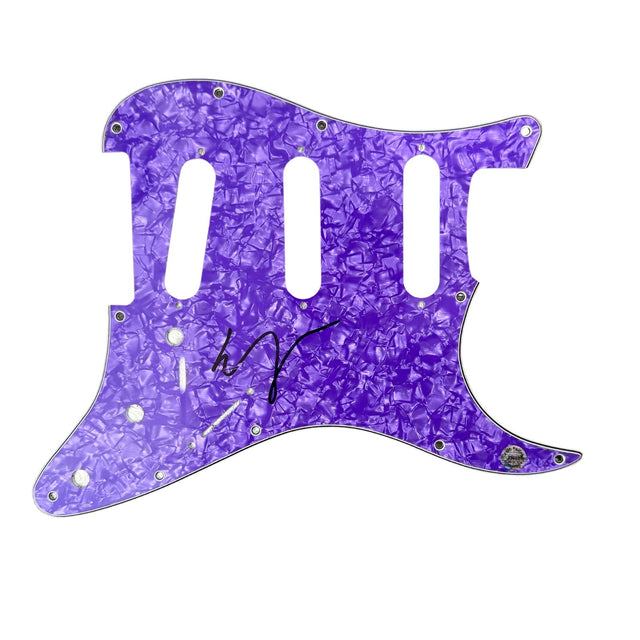
Vampire Weekend Ezra Koenig Signed Guitar Pickguard Autograph Hologram COA
$100.00 USD
-
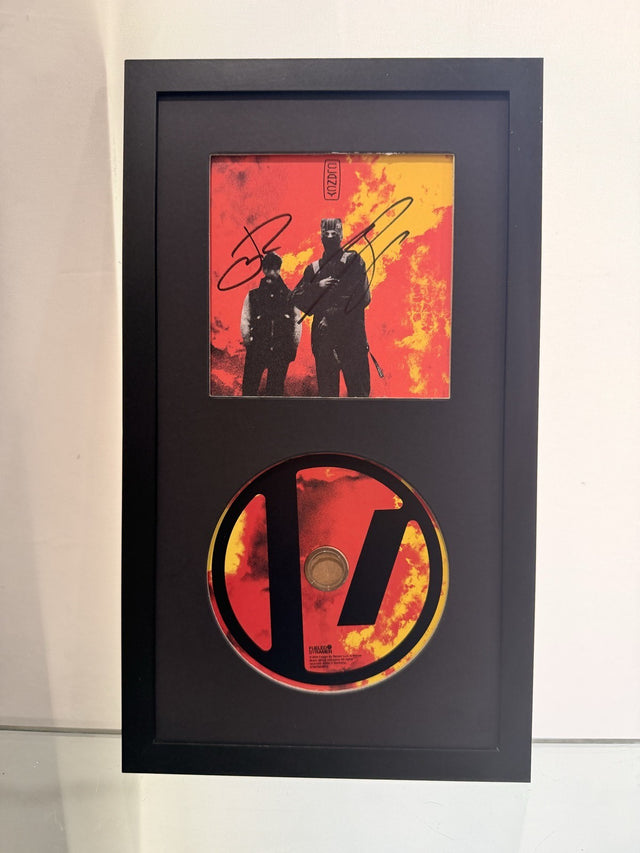
Twenty One Pilots Signed Clancy CD Framed Display Tyler Joseph Josh Dun Auto
$199.00 USD
-
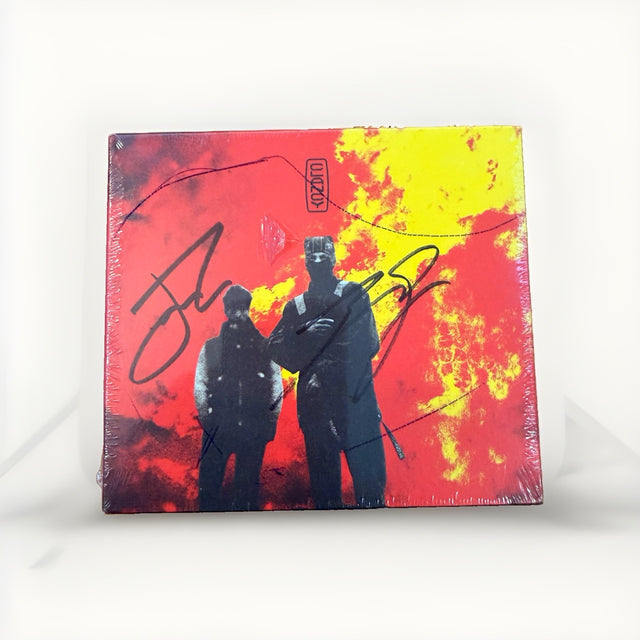
Twenty One Pilots Clancy Signed CD Tyler Joseph Josh Dun Sealed Unopened 2024
$189.00 USD
-
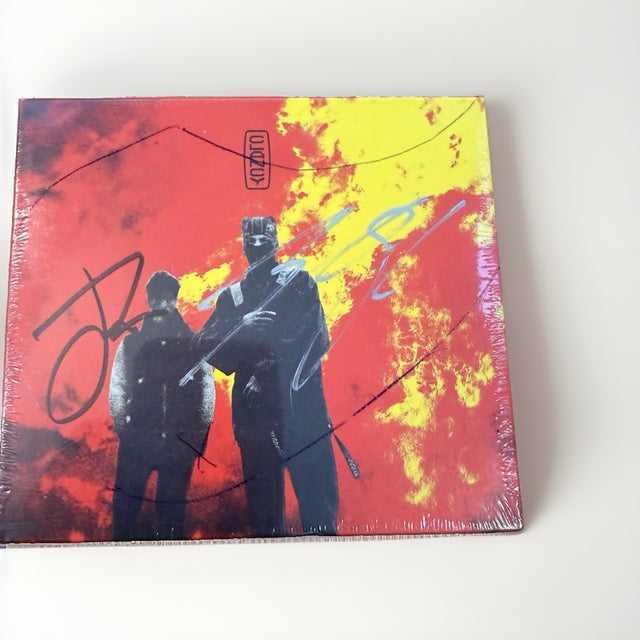
Twenty One Pilots Clancy Signed CD Sealed Tyler Joseph Josh Dun Silver Autograph
$189.00 USD
-
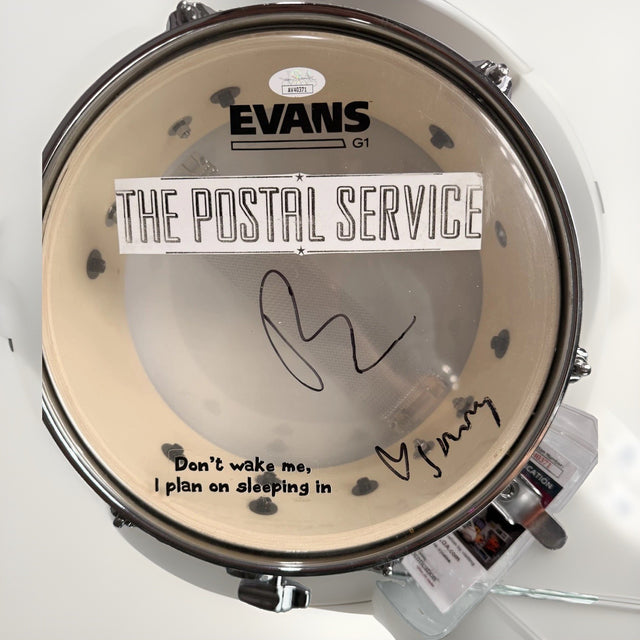
The Postal Service Dual Signed Evans M-80 Drumhead JSA A40371
$499.00 USD
-
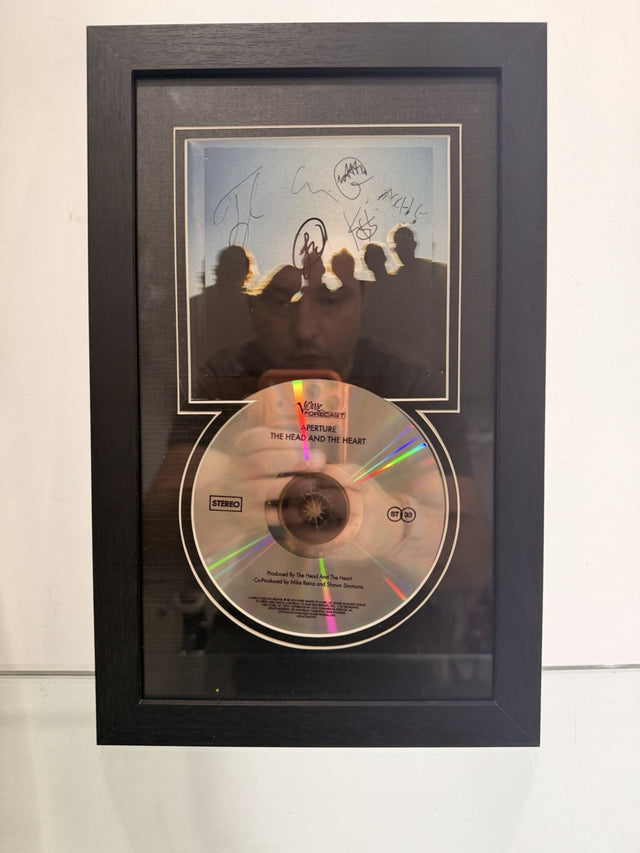
The Head and the Heart Band Signed Framed 'aperture' CD COVER ALBUM
$65.00 USD
Browse the collection for current listings.