Should You Buy a Banksy Flower Thrower Sculpture or Figure? The 3D Object Market Explained
It is one of the most reproduced images in modern art: a masked protester, face wrapped, arm cocked back to throw — except his hand holds a bouquet of flowers instead of a Molotov cocktail. Banksy first stencilled it on a wall near Bethlehem in the early 2000s, and the image has lived a dozen lives since: as a signed screen print, an unsigned screen print, a wall mural, a mural-as-merchandise, and — increasingly — as a three-dimensional object you can stand on a shelf.
That last category is where buyers get confused, and where most of the questions land in our inbox. You have probably seen them: a resin or vinyl figure of the Flower Thrower, sometimes branded "Brandalised," sometimes a Be@rbrick, sometimes a Mighty Jaxx "Flower Bomber," sometimes an anonymous bootleg from a marketplace listing that simply says "Banksy sculpture." Prices swing from twenty pounds to several thousand. Some carry a licence; many do not. And almost none of them are what a first-time buyer assumes they are.
This guide is written to answer the questions an actual buyer asks before clicking "buy": what these objects are, what "officially licensed" really means for a Banksy 3D piece, how they differ from an authenticated original print, what they tend to cost, whether they hold interest over time, and the specific things to check before you spend money. We will be honest about the uncertainty, because the honest answer is more useful than a confident one.
First, the image itself: "Love Is in the Air" / "Rage, the Flower Thrower"

The work goes by a few names. Banksy's own print release is titled Love Is in the Air. Collectors and the press more often call the image Flower Thrower or Rage, the Flower Thrower. They all refer to the same composition: a young man in a baseball cap and bandana, frozen mid-throw, his "weapon" a tied bunch of flowers.
The mural first appeared in the West Bank in the early 2000s, on a garage wall in Beit Sahour near Bethlehem, and it quickly became shorthand for Banksy's whole project — protest reframed as something tender, violence swapped for a peace offering. Because the image is so legible and so widely loved, it has been licensed, adapted, copied, and bootlegged onto more products than almost any other Banksy motif. That popularity is exactly why the 3D market around it is so crowded and so easy to misread.
The single most important thing to understand before buying any Flower Thrower object: a figure or sculpture of this image is a piece of merchandise or collectible design, not an authenticated Banksy artwork — no matter how official the packaging looks.
Hold that thought. It is the spine of everything below.
What actually exists in 3D? A field guide to the objects
When people say "Banksy Flower Thrower sculpture," they could be describing several very different things. Sorting them into categories is the first step to not overpaying.
1. Licensed designer collectibles (Brandalised and partners)
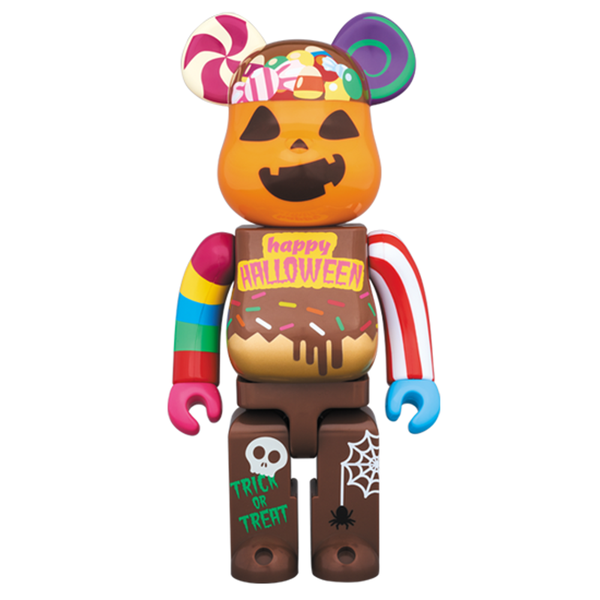
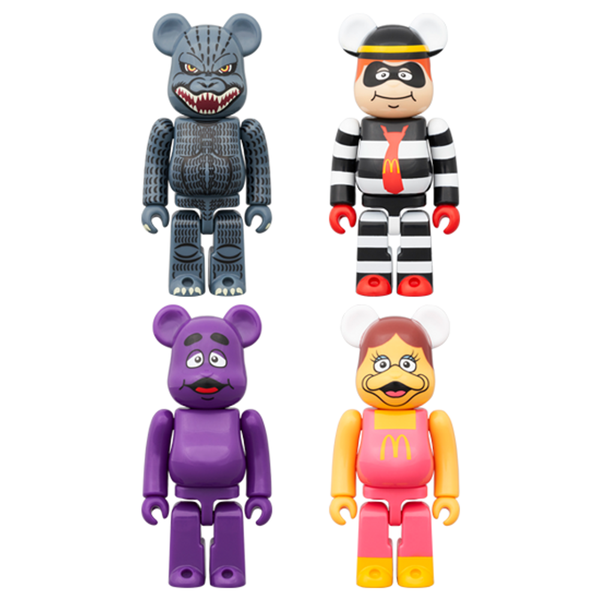
The most visible "official-looking" Flower Thrower objects come through Brandalised, a licensing brand that produces and authorises a range of Banksy-image merchandise — figures, statues, homeware, apparel and accessories. Brandalised has partnered with established collectible manufacturers, and you will see Flower Thrower imagery appear on things like Medicom Toy's Be@rbrick figures (the bear-shaped collectible platform) and on standalone resin or PVC statues sold through licensed retailers.
These are real products with a real supply chain and, usually, decent production quality. The crucial caveat — which we will return to repeatedly — is what "licensed" does and does not mean for a Banksy piece specifically.
2. Independent designer-toy interpretations (e.g. Mighty Jaxx "Flower Bomber")
Designer-toy studios such as Mighty Jaxx have produced their own sculptural interpretations of the Flower Thrower motif — the best known is generally marketed under a "Flower Bomber" name, often as a stylised or "dissected" art toy. These pieces are designed and released by the studio (frequently in collaboration with named 3D artists who reinterpret the image), in stated edition sizes, with their own packaging and certificates from the studio.
They occupy a middle ground: they are legitimate, collectible objects from a respected toy label, but they are interpretations of a Banksy image rather than works authorised by Banksy. Whether any given release carries a formal Banksy/Brandalised licence varies by product, which is one of the things you should confirm rather than assume.
3. Unlicensed "bootleg" figures
The largest category by sheer volume is the unbranded knock-off: resin statues, vinyl figures and "street art" sculptures listed on marketplaces with the word "Banksy" in the title, no manufacturer named, no edition, and often a price that is either suspiciously low (a £25 ornament) or suspiciously high (a "limited" piece dressed up to look rare). Some are honestly described as "tribute" or "inspired by." Many are not, and lean on the Banksy name to imply an endorsement that does not exist.
4. Repurposed prints and "3D" framing gimmicks
A smaller group blurs the line: a genuine paper print mounted in a deep "shadow box," or a print laid over a sculpted relief, marketed as a "3D Banksy." These are worth separating in your head — the value question for a framed paper print is completely different from the value question for a resin figure.
"Officially licensed" vs "authenticated by Banksy" — the distinction that matters most

This is the heart of the matter, so we will be precise.
A licence is a commercial agreement that grants the right to manufacture and sell products bearing an image. "Officially licensed" merchandise means a manufacturer has obtained the rights to produce that product through whoever holds (or claims) the relevant rights. It tells you the object is a sanctioned commercial product, not a back-alley copy. It can speak to manufacturing quality, consistency and traceable distribution.
What "officially licensed" does not mean is that Banksy personally made, designed, approved, signed, or authenticated the object as a work of art.
Banksy's official authentication body, Pest Control, authenticates artworks — principally prints and original pieces — and explicitly does not authenticate merchandise. There is no Pest Control certificate for a Flower Thrower figure, statue, or Be@rbrick, because that is not what Pest Control does.
This is the single most common misunderstanding we see. A buyer finds a handsome resin Flower Thrower with a glossy box and a certificate, and reasonably concludes it must be "a real Banksy." It is a real product. It is not an authenticated Banksy artwork, and it never will be — even if it is fully licensed and beautifully made.
A note on the licensing itself
It is worth knowing that the licensing landscape around Banksy merchandise is genuinely complicated and, at times, contested. Banksy as an artist has been publicly cool toward — even hostile to — the commercialisation of his imagery. Brandalised operates as a licensing vehicle, and the broader question of who holds which rights to Banksy imagery for merchandise has been the subject of trademark disputes over the years. You do not need to untangle all of that to be a careful buyer. You only need to internalise the practical takeaway:
- "Licensed" is a statement about commercial rights, not artistic provenance.
- A licence does not put the object into the category of authenticated Banksy art.
- If a seller implies a figure is "approved by Banksy" or "comes with authentication," treat that as a red flag, because Pest Control does not authenticate these objects.
How a figure differs from an authenticated original print
If you came to the Flower Thrower hoping to own "a Banksy," it is worth being clear-eyed about how far a 3D collectible sits from an authenticated print. They are different markets with different rules.
| Feature | Authenticated print (Love Is in the Air) | Licensed / unlicensed 3D figure |
|---|---|---|
| Made or authorised by the artist | Yes — issued as a Banksy edition | No — produced by a licensee or third party |
| Pest Control authentication available | Yes (this is the authority) | No — Pest Control does not authenticate merchandise |
| Edition structure | Defined signed and unsigned editions, documented | Manufacturer's stated run, if any; bootlegs have none |
| Secondary market | Established auction and dealer market with comps | Collectible/toy market; thinner, more variable data |
| Typical price band | High four to six figures depending on signed/unsigned and condition | Tens to low thousands depending on category |
| Primary reason to own | Authenticated Banksy artwork | Design object you enjoy displaying |
The print side has its own depth — the screen-printed Love Is in the Air exists in a signed edition and a larger unsigned edition, both issued in the early 2000s, with documented edition sizes and a well-developed authentication path through Pest Control. If your real goal is to own the Flower Thrower as a Banksy, the print is the object that gets you there, and our editorial library covers print authentication in detail. The figure, however lovely, is a different purchase with a different rationale.
Buy the print if you want an authenticated Banksy artwork. Buy the figure if you want a well-made object you genuinely like looking at. Trouble starts when a buyer pays figure-money expecting print-grade provenance, or pays print-money for a figure dressed up to look like more than it is.
What do these objects actually cost?
We will speak in ranges, because the 3D collectible market is less transparent than the print market and prices move with release, condition and demand. Always check current comparable sales (comps) before you buy rather than trusting a single listing's asking price.
Licensed designer collectibles
Mass-produced licensed statues and homeware featuring the Flower Thrower image often sit in the modest tens to low hundreds at retail. Licensed collaboration figures with a recognised platform — a Be@rbrick at a larger scale, for example — can command more, particularly in bigger sizes (the 400% and 1000% Be@rbrick formats are typically priced well above the small 100% bears), and can rise further on the secondary market once a release sells out. Condition of the box and completeness matter a great deal in this corner of the market.
Independent art toys (Mighty Jaxx "Flower Bomber" and similar)
Limited art-toy releases are usually priced in the low-to-mid hundreds at launch, with sold-out editions sometimes trading higher afterward. As with all designer toys, secondary prices depend heavily on edition size, whether the piece is still sealed, and how sought-after the specific sculptor or colourway has become. Some editions soften after the initial hype; others hold collector interest. Both happen, and neither is guaranteed in advance.
Unlicensed bootlegs
Bootleg resin and vinyl figures can be found for very little — sometimes £15–£60 — and that low price is itself information: it reflects the absence of a licence, an edition, or a known maker. The problem is not always the price; it is when a bootleg is dressed up with a fake "limited edition X of 100" sticker and a made-up certificate to justify a price several times higher than its actual market level.
Collectibility: what tends to make a 3D piece more (or less) interesting

Within the collectible-object world, not all Flower Thrower pieces are equal. Collectors of designer toys and licensed art objects tend to value a fairly consistent set of attributes. None of these turn a figure into authenticated Banksy art — but they do separate a serious collectible from a throwaway ornament.
- A named, reputable maker. A recognised manufacturer (Medicom/Be@rbrick) or studio (Mighty Jaxx and peers) with a traceable release history beats an anonymous "Banksy statue" every time.
- A genuine licence, honestly described. Brandalised licensing or an equivalent, stated plainly — not implied, not exaggerated into "authenticated."
- A defined, modest edition size. Smaller documented runs tend to hold more collector attention than open, ongoing production.
- Condition and completeness. Original box, inserts, any studio certificate, and an unblemished surface. In the toy world, a sealed or mint-in-box piece can be worth substantially more than a loose one.
- Scale and finish. Larger formats and higher-quality casting/paint generally carry more weight, especially in the Be@rbrick ecosystem.
- Clean provenance for the object. A receipt from an authorised retailer and original packaging tell a cleaner story than "found it at a market."
Things that reduce interest: no maker, no edition, no box, obvious casting flaws, paint slop, and — above all — a seller leaning on the Banksy name to imply something the object cannot deliver.
The buyer's checklist: what to verify before you pay
Here is the practical part. Run through this before committing, regardless of which category you think you are buying.
1. Identify the category honestly
Is this a licensed collectible, an independent art toy, a bootleg, or a repurposed print? You cannot judge a fair price until you know which market you are in. If the listing is vague about the maker, assume the more cautious category.
2. Name the maker and the licence
Look for a clearly stated manufacturer (e.g. Medicom Toy, a named studio) and, where relevant, a stated licensing brand (e.g. Brandalised). "Officially licensed" with no named licensor and no named manufacturer is a phrase doing a lot of work and proving very little.
3. Decode any "certificate"
A studio or manufacturer certificate authenticates the product — that this is a genuine release from that maker, in that edition. That is useful. It is not Banksy authentication. If a certificate claims to authenticate the piece as a Banksy artwork, that is a misrepresentation, because Pest Control does not certify these objects.
4. Check edition details against the maker, not the seller
If a piece is described as "limited to 500," see whether the manufacturer ever stated that figure. Bootlegs invent edition numbers freely. Where you cannot verify an edition claim independently, treat it as marketing rather than fact.
5. Inspect condition and completeness
Ask for photographs of the actual item: all sides, the base/underside, any maker's stamp or mould marking, the box, inserts and certificate. For sealed art toys, confirm whether it is genuinely factory-sealed. Surface, paint and box condition drive a large share of value here.
6. Pull comparable sales
Look at what the same release — same maker, same edition, same size — has actually sold for recently, not just current asking prices. A single optimistic listing is not a market. Multiple recent completed sales are.
7. Sanity-check the price against the category
A £25 ornament priced at £900 because it is "rare Banksy" is a story, not a valuation. A clean, boxed, sold-out licensed piece priced in line with recent comps is a market. Let the comps, not the romance of the name, set your ceiling.
8. Buy from sellers who describe accurately
The best signal of a trustworthy seller is precise language: "licensed Brandalised statue," "Mighty Jaxx Flower Bomber, edition of X, mint in box," "tribute resin figure, not authenticated." Vagueness and Banksy-name-dropping point the other way.
So — should you buy one?

It depends entirely on what you want from it, and the answer becomes simple once you are honest about that.
- You want a great-looking object you love and will display. Then yes, a Flower Thrower figure can be a genuinely satisfying buy — ideally a licensed collectible or a quality art toy from a named studio, bought at a price that matches its category. Enjoy it for what it is.
- You want to own the Flower Thrower as an authenticated Banksy artwork. Then a figure will not get you there, and no amount of "official licensing" changes that. The authenticated path is the Love Is in the Air print, verified through Pest Control.
- You are buying primarily hoping it becomes more valuable. Be cautious. The collectible-object market is volatile, data is thinner than for prints, and we do not frame any purchase as a guaranteed gain. Buy what you like, at a fair, comps-checked price, and let the future be the future.
The happiest Flower Thrower buyers we meet are the ones who knew exactly which category they were buying, paid a price the comps supported, and loved the object on its own terms. The unhappy ones almost always paid for a story the object could never back up.
Questions Buyers Ask
Is a licensed Banksy Flower Thrower figure a "real Banksy"?
It is a real, sanctioned product, but it is not an authenticated Banksy artwork. Banksy did not make, sign, or authenticate it. "Officially licensed" means a manufacturer obtained commercial rights to produce merchandise with the image — it does not mean the object is Banksy art or that it can be authenticated as such.
Can Pest Control authenticate a Flower Thrower sculpture or figure?
No. Pest Control is Banksy's official authentication body and it authenticates artworks, principally prints and original pieces. It does not authenticate merchandise such as figures, statues, or Be@rbricks. Any certificate that comes with a 3D piece is a manufacturer's product certificate, not Banksy authentication.
What is the difference between a Brandalised figure and a Mighty Jaxx Flower Bomber?
Brandalised is a licensing brand that authorises Banksy-image merchandise, often with established makers like Medicom (Be@rbrick). Mighty Jaxx is a designer-toy studio that has produced its own sculptural interpretations, frequently with named 3D artists. Both are legitimate collectibles; neither is authenticated Banksy art. Confirm the stated maker, licence and edition for any specific release.
Are cheap "Banksy Flower Thrower" statues on marketplaces worth buying?
They are usually unlicensed tribute pieces with no named maker and no genuine edition, which is exactly why they are cheap. That can be fine if you simply want an inexpensive decorative object and the seller describes it honestly. It becomes a problem when a bootleg is sold with an invented edition number or fake certificate to justify a much higher price.
How much should a Flower Thrower 3D piece cost?
It varies widely by category: bootlegs from roughly tens of pounds, licensed statues and homeware in the tens to low hundreds, and limited art toys or larger licensed Be@rbricks from the low hundreds up to low thousands for sought-after, boxed, sold-out releases. Always check recent comparable sales for the exact release rather than trusting a single asking price.
If I want an authenticated Flower Thrower, what should I buy instead?
The authenticated route is the screen print Love Is in the Air, which exists in documented signed and unsigned editions and can be verified through Pest Control. A print is the object that lets you own the Flower Thrower as a genuine Banksy artwork, with an established secondary market and a real authentication path — something no figure can offer.
How Gauntlet Gallery Approaches This
We founded Gauntlet Gallery in San Francisco in 2012 on a collectors-first principle: tell people exactly what they are buying, in plain language, even when a vaguer story would be easier to sell. The Flower Thrower 3D market is a perfect test of that principle, because so much of it depends on a category most buyers do not realise exists. A figure can be a wonderful object. It is simply not the same thing as an authenticated print, and we will always say so.
So our approach is to name the category, describe the maker and licence honestly, point you to comparable sales rather than a single asking price, and — for any authenticated Banksy purchase — anchor everything to Pest Control as the authority, with dealer documentation treated only as supporting evidence. If a piece cannot back up its story, we would rather you know before you buy than after.
Thinking about the Flower Thrower? If you want an authenticated Banksy artwork, browse our Banksy collection for prints with clear provenance and a real authentication path. If you are weighing a figure versus a print and want a straight answer for your situation, contact our team — no pressure, just an honest read on what you are looking at and what it should cost.
This article is educational and reflects general market observations. It is not financial or investment advice. Market conditions vary and past performance does not guarantee future results. Always verify authenticity through Pest Control for Banksy artworks and confirm current values against recent comparable sales before purchasing.
Shop Banksy & Dismaland
Explore current pieces available from the gallery.

Browse the collection for current listings.