Banksy-Inspired and Homage Prints (Death NYC, Medicom): How They Differ From a Real Banksy
If you have spent any time browsing online marketplaces for street art, you have almost certainly run into them: bright, glossy prints that pair a Banksy motif with a fashion logo, or vinyl figures that echo a famous stencil. They are eye-catching, often affordable, and they sit right next to the real thing in search results. So a sensible buyer asks the obvious question, "Is this a Banksy, or isn't it?"
The honest answer is that pieces by makers such as Death NYC and Medicom Toy are, in the great majority of cases, not Banksy works. They are inspired by, reference, or pay homage to Banksy's imagery, and that is a meaningfully different thing from a work created, editioned, and released by the artist. None of them carry Pest Control authentication, because Pest Control only authenticates genuine Banksy works. That does not make them fakes in the criminal sense, and it does not make them worthless. It makes them a separate category of collectible with its own rules, its own price ranges, and its own buyer etiquette.
This guide is written to help you buy with your eyes open. We will explain what "Banksy-inspired" actually means, why the confusion happens so often, what these pieces tend to cost, how to buy them honestly, and where the bright line sits between an homage and the genuine article. Gauntlet Gallery has been a collectors-first dealer since 2012, and our view is simple: a well-informed buyer who knows exactly what they are purchasing is a happy buyer, whether they spend forty dollars or forty thousand.
What "Banksy-Inspired" and "Homage" Actually Mean

Language matters enormously here, and the art market uses these words with some precision. Understanding the vocabulary is the single fastest way to protect yourself.
The three categories you are really choosing between
- An authentic Banksy. A work conceived and released by the artist Banksy, typically through his former outlet Pictures on Walls (POW) or as a hand-finished piece, and capable of being submitted to Pest Control, the artist's official authentication body, for a certificate. This is the only category that is "a Banksy."
- A Banksy-inspired or homage work. A piece made by a different, named artist or studio that openly borrows, remixes, or references Banksy's imagery — Death NYC's mash-ups of the Balloon Girl with luxury logos, for instance. The maker is not pretending to be Banksy; the work is their own creative output that quotes Banksy as a cultural reference point.
- A counterfeit. A piece deliberately manufactured and sold as if it were a genuine Banksy, with intent to deceive. This is the only one of the three that is dishonest by definition, and it is the category every responsible buyer and dealer works to avoid.
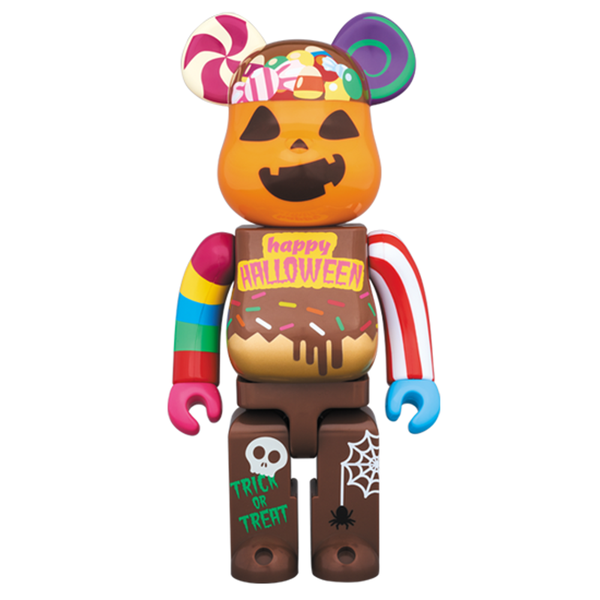
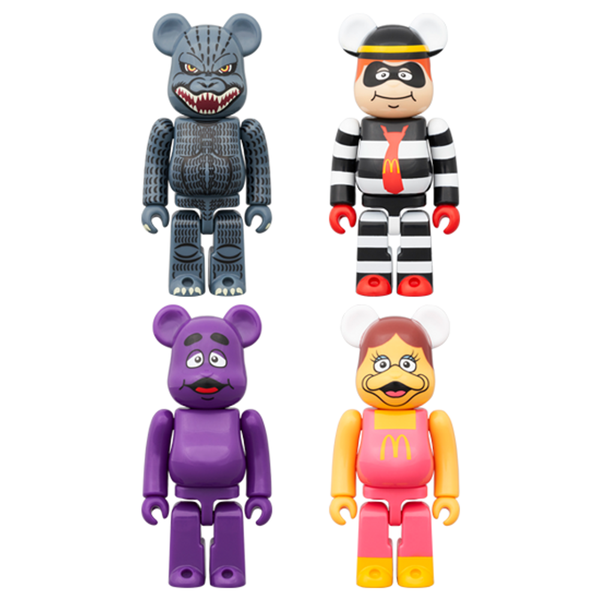
Death NYC and Medicom both sit squarely in the middle category. Death NYC is the working name of a New York-based pop artist who produces small, signed, numbered editions that collide recognizable art-world and fashion imagery. Medicom Toy is a Japanese manufacturer best known for the Bearbrick (Be@rbrick) figure platform and for licensed and collaborative art toys. Both have, at various points, produced work that references Banksy motifs. Neither is Banksy.
An homage announces itself. A counterfeit hides. The moment a seller blurs that line — implying Pest Control where there is none, or calling a homage "a Banksy" — your antennae should go up.
Why "inspired by" is a legitimate tradition
Appropriation, quotation, and homage are not fringe behaviours in art; they are central to the entire pop and street-art lineage. Andy Warhol built a career on borrowed commercial imagery. Banksy himself riffs on Monet, on classical sculpture, and on advertising. So an artist who remixes a Banksy stencil is participating in a long conversation, not committing a crime — provided they are transparent about authorship. The problem is never the homage itself. The problem is when a homage is re-described in the resale market as the real thing.
Who Are Death NYC and Medicom, Exactly?
Buying confidently means knowing who actually made the object in your hands. Here is the practical picture for the two names that come up most often.
Death NYC
Death NYC produces signed, numbered editions — frequently issued in small runs and often presented with a hand-signed and numbered margin and an embossed or stamped mark. The aesthetic is deliberately mash-up: a familiar art image (a Banksy Balloon Girl, a Warhol soup can, a Murakami flower) fused with a luxury-brand logo such as Louis Vuitton, Chanel, or Hermès. The appeal is exactly that collision — it is pop culture eating itself, with a wink.
Key things a buyer should internalise:
- Death NYC works are Death NYC works. They are collected under that artist's name, not Banksy's.
- They typically come with the artist's own paperwork or certificate. That is a Death NYC document about a Death NYC print — it says nothing about Banksy and is not, and cannot be, a Pest Control certificate.
- The use of a Banksy image within the composition is a reference, not a claim of Banksy authorship.
Medicom Toy
Medicom is a manufacturer, not an individual artist. Its Bearbrick platform turns the work of countless artists and brands into collectible figures, and it has run official, licensed collaborations across the art world. Where Banksy-related Medicom product exists, the crucial questions are always: was this an officially licensed collaboration, a general art-toy referencing a motif, or an unlicensed knock-off using the Medicom-style format? The vinyl-figure space is awash with look-alikes, so the Medicom name itself is something you should verify rather than assume.
- A genuine Medicom product is a manufactured collectible with its own packaging, edition logic, and release history — collected as a Medicom or Bearbrick item.
- It is not authenticated by Pest Control, and it should never be presented as "a Banksy sculpture."
- Because art toys are heavily counterfeited, the homage-versus-fake question here is often really a genuine-Medicom-versus-bootleg-Medicom question — a second layer of diligence on top of the Banksy question.
With Death NYC you are usually verifying "is this a genuine Death NYC?" With Medicom you are often verifying two things at once: "is this genuine Medicom?" and, separately, "what is its actual relationship to Banksy?"
The Bright Line: What Makes a Banksy a Banksy

To see the difference clearly, it helps to know what a genuine Banksy print actually is and how it enters the world. Banksy's editioned prints were, historically, released through Pictures on Walls. They exist as signed editions (hand-signed by the artist, smaller runs) and unsigned editions (larger runs, typically stamped rather than autographed). Many were screen prints; some later releases used other processes. We have written separately about the screen-print-versus-offset distinction and about the signed-versus-unsigned value gap, and both are worth your time if you are buying at the higher end.
Pest Control is the authority — full stop
The defining feature of the genuine Banksy market is Pest Control, the body the artist set up to authenticate his work. A Banksy with a Pest Control certificate of authenticity (COA) is, in market terms, a different object from one without — even if the images look identical. Pest Control is the gatekeeper; it is the reason the Banksy market can function at all given the artist's anonymity.
This is where the homage category and the genuine category never overlap:
- You cannot submit a Death NYC print to Pest Control and have it become a Banksy. It is not a Banksy and never was.
- A Medicom figure does not gain Banksy status because it references a stencil.
- No dealer COA, no gallery letter, and no condition report can manufacture Pest Control authentication. Those documents are second-layer supporting evidence — useful for provenance and condition — but they never replace the artist's official authentication, and any seller who implies otherwise is misleading you.
Put plainly: if the conversation is about a real Banksy, the only authentication that ultimately settles the question is Pest Control. If the conversation is about a Death NYC or Medicom piece, Pest Control is simply not part of the picture, and that absence is normal and expected — not a red flag in itself, because these were never meant to have it.
Why the absence of Pest Control is fine for an homage but fatal for a "Banksy"
Here is the logic every buyer should hold onto. If a seller offers a Death NYC print and is upfront that it is a Death NYC print, the lack of Pest Control authentication is completely appropriate — you are buying a Death NYC, and it has Death NYC paperwork. But if a seller offers something as a Banksy and cannot point to a credible path to Pest Control authentication, that absence is a serious warning sign. Same missing certificate; opposite meaning. The difference is entirely about what is being claimed.
Why Buyers Confuse the Two So Often
The confusion is not a sign that buyers are careless. It is engineered, in part, by how these works look and how marketplaces present them. Understanding the mechanisms helps you stay clear-headed.
Visual overlap is the whole point
An homage works precisely because it triggers instant recognition. When a Death NYC print places the Balloon Girl front and centre, your brain reads "Banksy" before it reads anything else. That is the artwork doing its job — but it also means a quick glance at a thumbnail can mislead. The image you recognise is Banksy's; the object you are looking at is not.
Search and marketplace listings blur the categories
- Keyword stuffing. Sellers know that the word "Banksy" drives traffic, so homage listings often pile the term into titles and tags — "Banksy style," "Banksy Balloon Girl Death NYC," "after Banksy." Even honest sellers do this for visibility, which trains buyers to associate the homage with the name.
- Side-by-side placement. Marketplace algorithms show genuine and homage pieces in the same grid because they share visual features and keywords. Proximity implies equivalence to the casual eye.
- Certificate theatre. A glossy COA, an embossed stamp, a numbered margin — these signal "authenticity" in a general sense and can be misread as Banksy authentication when they are nothing of the kind.
Price ambiguity
Genuine Banksy prints span an enormous range, from the lower thousands for some unsigned editions to six and seven figures for the most sought-after signed works at auction. Homage pieces typically sit far below that. But because the genuine market is so wide, a buyer who sees a few-hundred-dollar homage may reason, "Maybe this is just a cheap Banksy." It is not. A price that looks like a bargain for a Banksy is almost always a fair price for something that is not a Banksy at all.
The single most useful instinct you can build: when the picture says "Banksy" but the price, paperwork, and seller language don't add up, assume you are looking at an homage until proven otherwise.
What These Pieces Tend to Cost
Prices move with taste, condition, edition size, and demand, so treat everything here as broad, current-as-of-writing context rather than a fixed tariff. Always check live comparable sales (comps) before you buy or sell — past results do not guarantee future ones, and the only reliable price is the one a willing buyer and seller agree on today.
Death NYC prints
Death NYC editions generally trade in the modest range relative to the blue-chip street-art market — often from the low tens of dollars up into the low hundreds for a signed, numbered sheet in good condition, with desirable subjects or particularly clean examples reaching somewhat higher. They are designed to be accessible, decorative, and fun. Many collectors value them for exactly that: a recognisable, signed pop-art object at an approachable price.
What moves a Death NYC price:
- Subject popularity (a coveted logo-plus-icon mash-up versus a quieter composition).
- Condition — bright, unfaded inks, clean margins, no handling creases.
- Presence of the artist's signature, numbering, and original paperwork.
- Framing quality and whether the sheet has been kept out of direct light.
Medicom and Bearbrick figures
Art toys are their own market with their own dynamics. Prices depend heavily on size (the 100%, 400%, and 1000% Bearbrick formats differ dramatically), on whether a release was a limited collaboration, and on whether the box and accessories survive. Some collaborative figures have historically commanded strong prices among toy collectors; general releases are more modest. Again, condition and completeness — sealed packaging, intact inserts — drive a great deal of the value.
How that compares to a genuine Banksy
The gap is not subtle. A genuine, Pest Control-authenticated Banksy print operates in an entirely different price universe — frequently four, five, six figures and occasionally far beyond at auction for the most iconic signed editions. If a piece is priced like an homage, it is, in all likelihood, an homage. We cover the genuine market's numbers in depth elsewhere; for buying decisions here, the takeaway is that price alone usually tells you which category you are in.
How to Buy Banksy-Inspired Work Honestly and Well

None of this should scare you off. Homage and inspired-by pieces are legitimate, enjoyable things to collect. The goal is simply to buy them as what they are. Here is a practical approach.
Before you buy: a short due-diligence checklist
- Read the listing literally. Does it say "Banksy" or "Banksy-style / after Banksy / inspired by / Death NYC / Medicom"? The qualifier is the whole story. "After Banksy" means not Banksy.
- Identify the actual maker. Confirm the named artist or manufacturer (Death NYC, Medicom, Bearbrick) and collect the piece under that name.
- Match the paperwork to the claim. A Death NYC certificate authenticates a Death NYC print — good. If a seller waves any document and says "Banksy authentic," ask specifically whether Pest Control authenticated it. For an homage the honest answer is no, and that is fine.
- Sanity-check the price. If it is priced like an homage, expect an homage. A "too good to be true" Banksy price is the oldest tell in the book.
- Verify condition from real photos. Ask for raw, well-lit images of the full sheet, margins, signature, and any stamp — or for toys, the box and inserts.
- Check the seller's transparency. The best sellers volunteer the homage status. Evasion or aggressive Banksy-name-dropping is a reason to slow down.
Questions to ask the seller
- "Who is the actual artist or manufacturer of this piece?"
- "Is this an authentic Banksy with Pest Control authentication, or a Banksy-inspired work by another maker?" (A straight answer here tells you everything.)
- "What documentation comes with it, and what exactly does that documentation certify?"
- "What is the edition size and where does this number fall?"
- "Can you provide provenance — where and when it was acquired?"
How to collect homage work for enjoyment
Many collectors build genuinely satisfying walls around inspired-by and pop-mashup pieces. If that is you, lean into it honestly:
- Buy what you love to look at, not what you hope someone will later mistake for something else.
- Keep the original paperwork and packaging; completeness matters in these markets.
- Frame with UV-protective glazing and keep work out of direct sun to preserve those bright inks.
- Label your own records accurately — "Death NYC, signed/numbered edition, references Banksy Balloon Girl" — so that if you ever sell, you pass the same honesty forward.
The collector who writes "after Banksy" on their own inventory card is the collector who never gets burned — and never burns anyone else.
Red Flags That Signal a Homage Is Being Mis-Sold as a Banksy
The category is honest; some sellers are not. Watch for these specific behaviours, any one of which warrants caution:
- The word "Banksy" with no qualifier, at an homage price. Genuine Banksys are rarely cheap, and rarely sold casually.
- A certificate presented as Banksy authentication that isn't from Pest Control. Dealer COAs and condition reports are supporting evidence only; they never stand in for Pest Control on a genuine-Banksy claim.
- Vague provenance. "Acquired from a private collection" with no further detail, no acquisition trail, and no willingness to elaborate.
- Pressure and urgency. "Another buyer is waiting" is a sales tactic, not a fact about authenticity.
- Refusal to name the maker. An honest homage seller will happily tell you it is a Death NYC or Medicom piece. Evasion is the tell.
- Heavy keyword stuffing. A title crammed with "Banksy original signed authentic rare" is optimising for clicks, not clarity.
If you ever find yourself genuinely uncertain whether something is being sold as a real Banksy, stop and treat it as a Banksy-authentication question — which means the conversation has to end at Pest Control, not at any substitute document.
Why Homage Pieces Are Worth Collecting on Their Own Terms
It would be a mistake to read all of this as "homage equals lesser." These works have real merits, and dismissing them misses the point of why people collect art in the first place.
They are part of a living conversation
Pop and street art have always remixed, quoted, and argued with what came before. A Death NYC mash-up is a commentary on branding, status, and the commodification of rebellion — the same themes Banksy himself works. Owning one is owning a fragment of that ongoing dialogue.
They are accessible entry points
For a new collector, an affordable, signed, numbered pop print is a wonderful way to start living with art, learning how to handle and frame works on paper, and discovering what you actually respond to. Many seasoned collectors began exactly here. The value is in the looking and the learning, not in any promise about tomorrow.
They have their own communities and histories
Bearbrick collecting, for instance, is a deep and global hobby with its own canon of grail releases. Death NYC has its own following. These are not consolation prizes for people who could not afford a Banksy; they are categories with their own logic that reward the same diligence — condition, completeness, provenance — that any serious collecting rewards.
Questions Buyers Ask
Is a Death NYC print a real Banksy?
No. A Death NYC print is an original work by the artist who uses the name Death NYC, and it references or remixes Banksy imagery rather than being created by Banksy. It is collected under the Death NYC name, comes with Death NYC paperwork, and is not eligible for Pest Control authentication. That is entirely normal for an homage piece — it simply means it is not a Banksy.
Can a Banksy-inspired piece be authenticated by Pest Control?
No. Pest Control authenticates only genuine works by Banksy. An inspired-by or homage work made by another artist or manufacturer cannot become a Banksy through authentication, and no dealer certificate or condition report can substitute for Pest Control on a genuine-Banksy claim. The absence of Pest Control authentication on a Death NYC or Medicom piece is expected and appropriate, because those works were never Banksy works to begin with.
Why do so many sellers use the word "Banksy" for these pieces?
Mostly for search visibility — buyers search "Banksy," so listings include the term, often as "Banksy-style" or "after Banksy." Many honest sellers do this for reach. The problem arises only when the qualifier is dropped and an homage is presented as the genuine article. Always read the listing literally and ask the seller to state plainly whether the work is an authentic, Pest Control-authenticated Banksy or an inspired-by piece by another maker.
How much should I expect to pay for a Death NYC or Medicom piece?
Prices vary with subject, condition, edition size, and demand, but homage pieces generally trade far below the genuine Banksy market — Death NYC sheets often in the tens to low hundreds of dollars, and Medicom or Bearbrick figures across a wide range driven by format and rarity. Always check current comparable sales before buying, and remember that past prices do not guarantee future ones. If something is priced like a Banksy, it usually is one; if it is priced like an homage, expect an homage.
Are these pieces a bad thing to collect?
Not at all. Banksy-inspired and homage works are legitimate collectibles with their own communities, histories, and appeal. The key is to buy them honestly — as Death NYC or Medicom pieces that reference Banksy, not as Banksys. Collect what you enjoy looking at, keep the paperwork and packaging, store and frame them well, and describe them accurately if you ever resell.
How can I tell if something is a genuine Banksy versus an homage?
Start with the language and the maker: if the work names another artist or manufacturer, or uses qualifiers like "style," "after," or "inspired by," it is an homage. For anything genuinely claimed as a Banksy, the only authentication that ultimately resolves the question is Pest Control; dealer COAs and condition reports are supporting evidence only. Price, provenance, and the seller's willingness to state the category plainly are your fastest practical signals.
How Gauntlet Gallery Approaches This
Our position has been the same since we opened our doors in San Francisco in 2012: a buyer who knows precisely what they are purchasing is the buyer we want. We describe homage and inspired-by works as exactly that — naming the maker, stating that the piece references Banksy rather than being a Banksy, and never implying Pest Control authentication where none exists. When a work is offered as a genuine Banksy, we treat Pest Control as the authority and regard any gallery documentation strictly as second-layer support, never a replacement.
We think that transparency serves everyone. It lets a collector who simply loves a glossy pop mash-up buy one happily and affordably. It lets a collector pursuing a genuine, authenticated Banksy do so with the right diligence and the right expectations. And it keeps the line between homage and counterfeit bright, where it belongs.
If you are weighing a piece and want a candid read on which category it falls into — homage or genuine — we are glad to help you think it through, with no pressure either way. Browse our Banksy collection to see how we describe and document work, or contact our team with photos and the listing details and we will give you an honest assessment. For more on the authority that anchors the genuine market, you may also find our overview of how Pest Control authentication works a useful companion read.
A note on uncertainty: market prices and edition details shift over time, and this article speaks in ranges on purpose. Verify any genuine-Banksy claim against Pest Control records, and check current comparable sales before you buy or sell. Past performance does not guarantee future results, and nothing here should be read as a promise about future value.
Shop Death NYC
Explore current pieces available from the gallery.
-
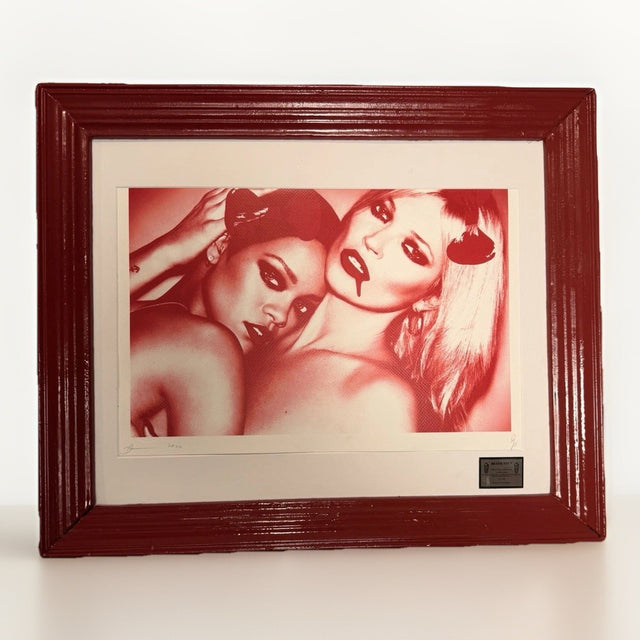
Death NYC — Kate Moss Rihanna Red Drip 2020 A/P Artist Proof Framed
$91.88 USD
-
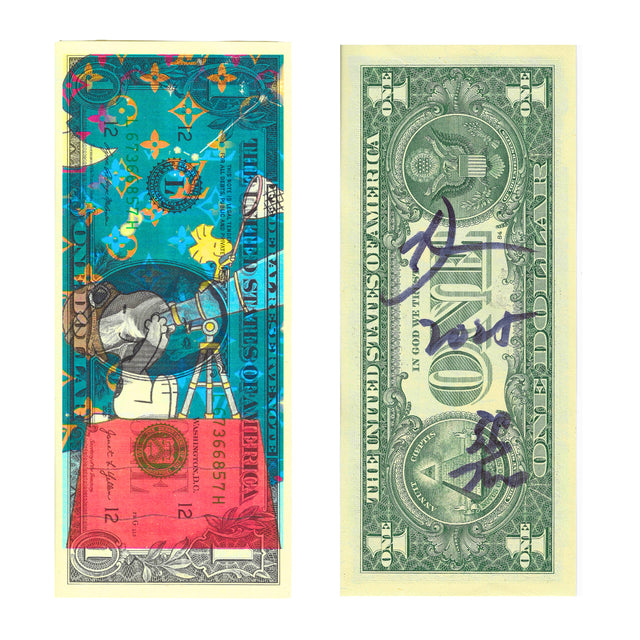
Death NYC Snoopy Woodstock Telescope LV Dollar Bill Art Signed Numbered COA
$55.00 USD
-
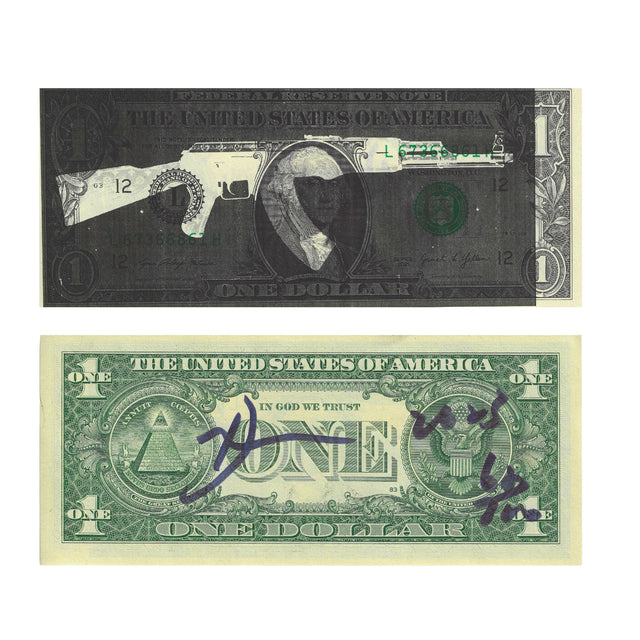
Death NYC Gun Dollar Bill Art Signed Numbered COA Black White Pop Street Art
$50.00 USD
-
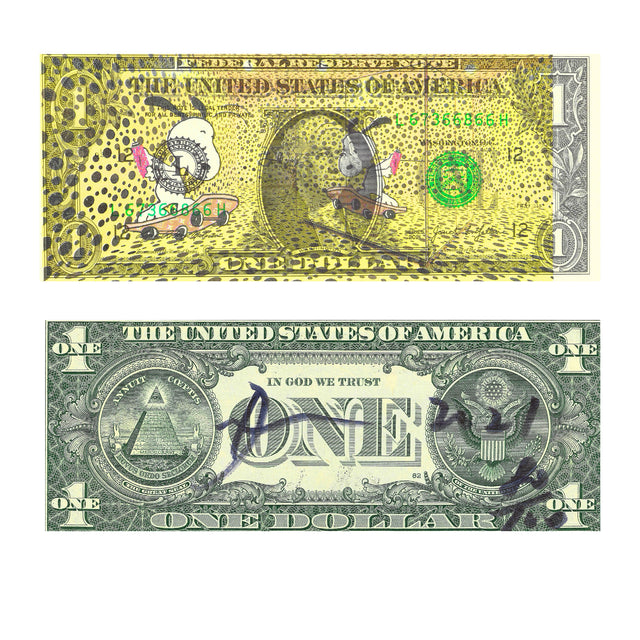
Death NYC Snoopy Skateboard Dollar Bill Art Signed Numbered COA Pop Street Art
$75.00 USD
-
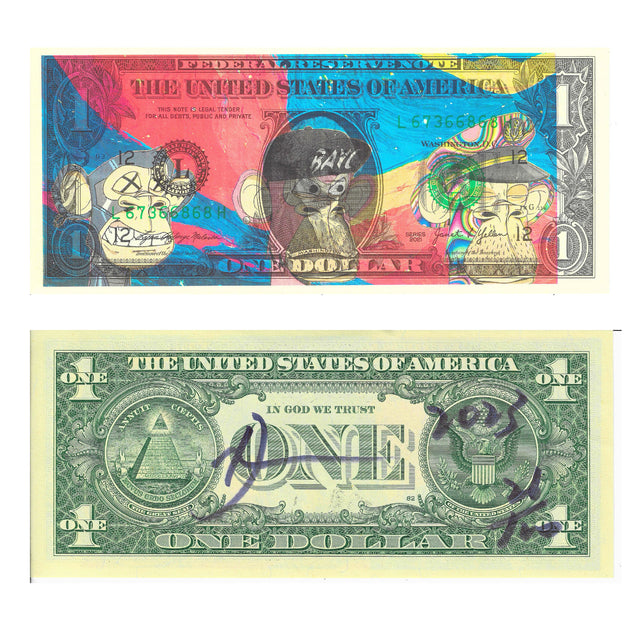
Death NYC Bored Ape Dollar Bill Art Signed Numbered COA Pop Street Art
$40.00 USD
-
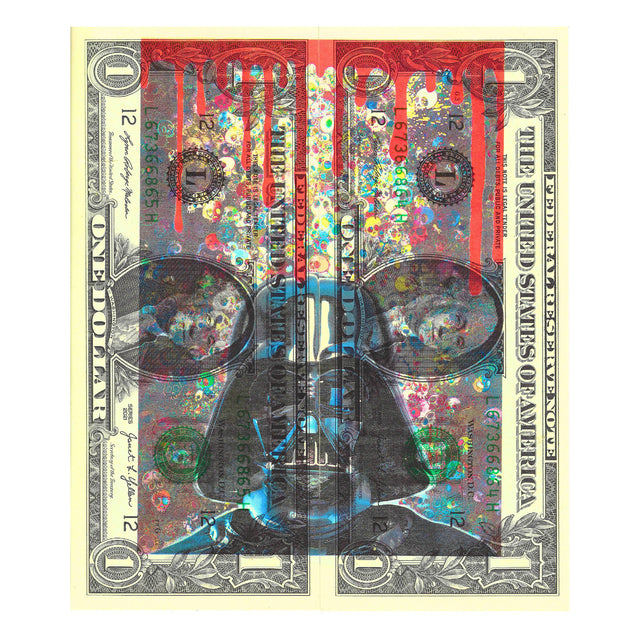
Death NYC Darth Vader Star Wars Dollar Bill Art Signed Two Bills COA Unframed
$100.00 USD
Browse the collection for current listings.