The Machine in the Drawer

There is a device sitting in the back offices of most major political figures, many celebrities, and a surprising number of athletes. It holds a pen. It signs names. And it has been doing so since the Eisenhower administration.
The autopen. A signature machine that produces mechanically perfect reproductions of a human signature, used at industrial scale, often without the subject's knowledge that any particular letter went out signed that way.
It is not a forgery in the criminal sense. The owner authorized its use. But to a collector paying for a personal inscription, it is worthless. A decorative mark that carries zero market premium and, in many cases, actively suppresses resale value once identified.
How many pieces sitting in your collection right now were signed by a machine?
That question is not rhetorical. The autopen problem is more widespread than most newer collectors understand, and more insidious than most seasoned ones admit. This guide covers the mechanics of how autopen works, the detection methods that actually move the needle, and the specific red flags that should make you pause before any significant purchase.
What an Autopen Actually Does
The basic mechanism has evolved over decades but the core principle is unchanged. A template — either a physical pattern or, in modern systems, a digital vector file — guides a mechanical arm holding an actual writing instrument. The pen touches paper. The arm moves. The result is a genuine ink signature that, under basic examination, looks entirely human.
Modern autopen systems can reproduce subtle imperfections. They can vary pen pressure within a single signature. They can be loaded with different pen types. High-end units used by major political offices can cycle through multiple signature templates for the same person, so that no two outputs are identical in obvious ways.
This is not a cheap office toy. The industrial systems used by White House offices, major label management companies, and large-scale celebrity licensing operations are sophisticated, expensive, and deliberately hard to detect.
Who Uses It and Why
The clearest documented cases involve presidential correspondence. Multiple administrations have acknowledged autopen use for routine mail — constituent letters, bill signings at a distance, mass photo distributions. Barack Obama's administration was the first to publicly confirm autopen use for bill signings when the president was traveling. That confirmation opened a wide conversation in the authentication community.
But the problem extends well beyond politics.
Record labels used autopen extensively during the 1960s and 1970s fan mail era. A major act might receive thousands of letters a week. The response photos, signed eight-by-tens sent back to fans, were frequently run through autopen machines rather than signed by hand. The Beatles, the Rolling Stones, and virtually every major act of that period had management or label staff handling correspondence this way.
Athletes at peak popularity face the same volume problem. A number-one draft pick in the weeks after selection receives more signing requests than any human could reasonably handle. Autopen, rubber stamps, and secretarial signatures fill the gap.
The result is a secondary market flooded with items that were "signed" in a technically real way but that carry none of the personal touch collectors are actually paying for.
The Detection Methods That Work

1. Pattern Matching Across Multiple Examples
This is the foundational autopen detection technique, and it is the one the major authentication services lean on hardest.
Because an autopen reproduces from a template, multiple outputs from the same template will be exact duplicates. Not similar. Not close. Identical, within the mechanical tolerances of the device.
The process works like this. You collect as many examples of the signature in question as you can find — from auction archives, from dealer inventories, from reference libraries, from established collections with strong provenance. You overlay them. If you find two or more that are superimposable, you have mechanical reproduction. Human beings cannot physically replicate their own signature to that degree of precision, stroke by stroke, pressure point by pressure point.
PSA's authentication team maintains what they call "exemplar databases" — archives of confirmed genuine signatures used as comparison baselines. When a submitted piece overlays perfectly against a known autopen template that has already been flagged, the identification is straightforward. PSA's certification-verification warnings on their registry specifically flag autopen-identified pieces so buyers checking a cert number get the full picture.
Beckett Authentication Services (BAS) runs a similar comparison process. Their graders work from physical and digital exemplars and are specifically trained on known autopen patterns for high-volume signers — presidential subjects, entertainment figures from the peak fan mail era, and active athletes whose autopen use has been documented.
2. Pen Pressure and Line Quality Analysis
A human signature carries organic variation in pressure. You press harder when you start a downstroke. You lift slightly on an upstroke. The transition points between letterforms have micro-hesitations, speed variations, and natural tremor characteristics that vary with the signer's physical state, emotion, and environment.
An autopen produces mechanically consistent pressure profiles. Not necessarily uniform — sophisticated machines can be programmed with pressure variation — but consistent in a way that human signatures are not.
Under magnification, look for:
- Entry and exit strokes — Human signatures typically show a slight drag mark where the pen first contacts and last leaves the paper. Autopen entry and exit points are often cleaner, sometimes showing a slight dot or blob where the mechanism pauses at the start position.
- Tremor absence — Healthy adult signers show micro-tremor throughout their signatures. It is invisible to the naked eye but detectable under 10x magnification. Autopen strokes are abnormally smooth along their length.
- Pressure uniformity within a stroke — On downstrokes especially, human signers show a pressure gradient. Autopen strokes that are programmed for consistent pressure show a flat profile across the stroke width.
3. Ink Distribution at Speed Points
When a human signer moves quickly, less ink deposits. When they slow for a curved letterform or a crossing stroke, more ink deposits. This creates a natural variation in line density that experienced examiners read as a speed map of the signature.
Autopen speed is mechanically governed. The arm moves at a programmed rate. The ink distribution pattern reflects this — often showing either too-consistent density or machine-specific pooling at direction-change points where the mechanical arm decelerates and re-accelerates.
This is where loupe work earns its keep. A quality 10x jeweler's loupe or a USB digital microscope at 60x-100x will reveal line quality that is simply invisible to the naked eye.
4. Baseline Consistency
Human signatures drift. The baseline — the invisible line the signature sits on — angles up, angles down, or wanders slightly across the signing surface. This is natural. It reflects how the signer positioned themselves, how they held the item, the surface underneath.
Autopen signatures follow a mechanically determined baseline. When you lay multiple autopen examples side by side from the same template, the baseline angle is identical. The signature occupies the same relative position. This is not something a human signer does naturally, even if they are trying to be consistent.
5. The "Lift" Test for Crossing Strokes
Many signatures include crossing strokes — the cross on a T, the line through an X, the secondary stroke completing a letter. On genuine signatures, these crossing strokes often show a slight pen lift and re-entry, visible as a microscopic gap or a change in ink character at the crossing point.
Some autopen systems execute crossing strokes as part of the continuous mechanical motion, eliminating these natural gaps. Others show mechanical artifacts at the crossing point that differ from natural pen re-entry. Neither matches the organic signature of the actual signer.
The Authentication Services and How They Handle Autopen
PSA/DNA
PSA maintains explicit autopen identification flags in their authentication process. A piece submitted that is identified as autopen will not receive a standard authentication certificate. It may receive a "Not Authentic — Autopen" determination, which is documented in their registry. Buyers checking cert numbers against PSA's verification system will see this flag.
This is important. A PSA cert number alone does not mean "authentic in the collector sense." Check the registry. Know what the cert actually says.
Beckett Authentication Services (BAS)
Beckett's process involves multiple graders examining submissions with comparison to their exemplar database. For music memorabilia specifically, Roger Epperson REAL represents the specialist tier within BAS — Epperson's focus on music acts of the 1960s and 1970s means his team has deep pattern libraries for exactly the era where autopen use was most widespread and least documented.
If you are buying signed Beatles, Stones, or major Motown memorabilia, a Beckett certification that includes Roger Epperson REAL examination is meaningfully different from a generic BAS certification. Ask specifically which examiner handled the piece.
JSA (James Spence Authentication)
JSA distinguishes between their Basic certification and their full Letter of Authenticity (LOA). This distinction matters enormously for autopen risk.
A JSA Basic certification means the signature was visually reviewed and passed basic examination. It does not represent the same depth of analysis as a JSA LOA. For any item with significant autopen risk — presidential, peak-era music, high-volume sports signers — a JSA LOA is the minimum standard you should accept. Ask the seller which they have. If they cannot distinguish the two, that is itself informative.
High-Risk Categories

Not every signed item carries the same autopen risk. Certain categories have documented, widespread autopen use. Others have low risk. Knowing the landscape matters before you buy.
Presidential Autopen: The Highest-Risk Category
Presidential material is the single highest-risk category for autopen in the entire memorabilia market. This is not speculation. Multiple administrations have publicly acknowledged autopen use. The practice has been standard since at least the Eisenhower era.
Any signed presidential photograph, letter, or document that came through standard constituent mail processes should be treated as autopen suspect until proven otherwise. Items signed in person at specific documented events — a bill signing ceremony, a formal meeting, a fundraiser with specific guest records — carry far better provenance.
The key question for presidential material is always: what is the provenance of this specific item? Where did it come from? Who witnessed it being signed? Mail-response items are high risk. Event-specific items with documented attendance and signing records are lower risk.
Peak-Era Music Memorabilia
The fan mail era of the 1960s through 1980s is the second-highest risk zone. FBI Operation Bullpen, which ran from the mid-1990s through 2000, focused primarily on sports memorabilia forgery rings but its investigations exposed how broadly "non-genuine" signatures — including autopen, rubber stamp, and secretarial signatures — had infiltrated the music memorabilia market via the same distribution channels that forgery rings used.
The Beatles are the textbook case. Fan mail signed photos from the early 1960s have a very high proportion of secretarial and autopen signatures. In-person signed items from specific documented events exist but are significantly rarer than the market supply would suggest.
Active Athletes at Peak Volume
A player who just won a major championship, just set a record, or just went number-one in a draft is receiving signing requests at a rate no individual can manage. This is when teams and management reach for mechanical solutions. Items signed in this specific window — especially through mail-in programs, memorabilia companies handling bulk requests, or licensing deals involving mass production — carry elevated autopen risk.
Space Memorabilia
Astronaut and space program memorabilia carries specific autopen risk around the Apollo-era correspondence period. The volume of fan mail received by Apollo astronauts was extraordinary. Documentation of autopen use by specific astronauts in specific periods exists in the research literature.
For significant space memorabilia acquisitions, the standard of BAS/JSA/PSA certification applies, with the additional value of a Zarelli specialist letter for items where astronaut-specific pattern libraries are relevant. Zarelli's work on space memorabilia autopen documentation is the specialist resource in this niche.
What Autopen Is Not
A brief but necessary clarification.
Autopen is not the same as a rubber stamp, a printed facsimile, or a secretarial signature. Each has different visual characteristics and different detection methods. They get lumped together colloquially but an examiner treats them as distinct problems.
A rubber stamp produces a flat, uniform ink impression with no line variation at all. Detection is typically straightforward under low magnification.
A printed facsimile (a laser or inkjet reproduction of a signature) shows dot-matrix structure under magnification and typically sits on top of the paper surface rather than being embedded in it.
A secretarial signature (signed by an assistant or staff member) is a genuine human signature, just not the right human. These can be the hardest to catch because they carry all the organic characteristics of a real signature. The tell is pattern comparison against confirmed genuine exemplars — the letterforms, spacing, and speed characteristics do not match the subject's authentic signature.
Autopen falls between rubber stamp and secretarial in detection difficulty. More challenging than a stamp, less challenging than a good secretarial, but with specific mechanical artifacts that a trained examiner can identify.
Practical Buying Protocol

If you are buying signed material in any of the high-risk categories, here is the working protocol.
-
Start with provenance, not the cert
- Where did this item originate? What is the paper trail from signing to your hands?
- Event-specific provenance (specific signing event, documented attendance) outweighs a mail-response origin every time.
-
Identify the signer's autopen risk profile
- Is this a presidential subject? Treat as high risk by default.
- Is this a major music act from the 1960s-1980s? Research documented autopen use for that specific act in that specific period.
- Is this an athlete at peak-volume signing demand? Apply elevated scrutiny.
-
Check authentication against the right standard
- PSA/DNA: verify the cert on their registry and check for autopen flags, not just the cert number.
- BAS: for music material, confirm Roger Epperson REAL involvement for peak-era acts.
- JSA: confirm LOA not Basic for high-risk categories.
-
Do your own pattern comparison
- Pull auction archives, reference books, and established collection examples of the same signer.
- Overlay digitally. Look for superimposable matches.
- This step costs nothing and catches a meaningful percentage of obvious autopen pieces before you spend money on authentication.
-
Examine with magnification before purchase when possible
- A 10x loupe is a twenty-dollar investment. Use it.
- Look for: entry and exit point artifacts, abnormal tremor absence, mechanical pressure uniformity.
- If the seller will not allow physical examination, that tells you something.
-
Price reality check
- An authenticated, genuinely signed piece from a major subject commands a significant premium over market average.
- If the price seems too accessible for what is claimed, ask why. Autopen pieces circulate at lower prices because dealers who know the market price them accordingly — or because sellers who do not know are passing them off unknowingly at seemingly "good" prices.
Red Flags
These are the specific signals that should stop you before a purchase and demand further investigation.
- Presidential material with mail-response provenance and no event documentation. This is the single highest-risk combination in the entire market.
- 1960s-1980s music memorabilia signed photos described as "fan mail response" items. Fan mail programs for major acts from this era had documented, widespread autopen use.
- Identical signatures across multiple examples from the same seller or estate. If the seller has three copies of the same piece and the signatures overlay, you are looking at autopen output being distributed as individual authentic signed pieces.
- Certification by services outside the major three (PSA, BAS, JSA) on high-value pieces. There are dozens of small or one-person authentication services in the market. Some are legitimate specialists. Many are not. For autopen detection specifically, which requires pattern libraries and comparison databases, small services often lack the reference material to make accurate determinations.
- JSA Basic on a piece described as "fully authenticated." JSA Basic and JSA LOA are not the same product. A seller who presents Basic as equivalent full authentication either does not know the difference or hopes you do not.
- Abnormally clean entry and exit points on pen strokes under loupe examination. Human pen strokes are not clean at the start and end. They drag. They skip. They show micro-pooling. Mechanically clean entry points are a physical artifact of autopen.
- Complete tremor absence at 10x magnification. Organic signatures from healthy adult signers show tremor. Its complete absence is suspicious, especially on signatures from elderly signers who would be expected to show even more tremor, not less.
- Bulk lot provenance. "Part of a large estate collection" or "acquired from a signing company inventory" for high-volume-signer material means you may be looking at autopen output that was run through in quantity. Individual, event-specific provenance is what you want.
- No provenance offered at all beyond "I was told it's real." In the categories with serious autopen risk, oral assurance is not provenance. It is an invitation to make a mistake.
Bottom Line
The autopen is not a modern problem. It is not a niche problem. It sits at the center of some of the most heavily traded categories in the entire signed memorabilia market — presidential material, peak-era music, high-volume sports signers — and it has been there for decades.
The good news: it is detectable. Not always easily, not always cheaply, but reliably, by trained examiners using pattern comparison, magnification work, and proper reference libraries. The major authentication services have processes for it. The specialist examiners know the documented patterns.
The bad news: the market is full of autopen pieces carrying generic certs, confident oral assurances, and prices that look like a deal. Many of them are in collections owned by people who have no idea what they actually bought.
Is the piece you are considering one of them?
Do the work. Pull the exemplars. Examine with magnification. Verify the cert on the actual registry. Ask the specific questions about provenance. A genuinely signed piece by a major subject is a meaningful cultural artifact and a sound acquisition. A machine-signed piece is a photo with a pen mark on it.
Know which one you are buying.
FAQ: Autopen Signatures
How common is autopen use in the presidential memorabilia market?
Extremely common. Presidential autopen use has been documented going back to the Eisenhower administration and multiple modern administrations have publicly acknowledged it. Any unsigned correspondence, constituent response photographs, or mass-distribution signed items from a presidential office should be treated as potentially autopen until the provenance specifically accounts for a personal in-person signing. The default assumption for mail-response presidential material should be skepticism, not trust.
Can a major authentication service miss an autopen?
Yes, and it happens. The major services — PSA, BAS, and JSA — maintain comparison databases, but those databases are only as complete as the pattern libraries they have built. A signer for whom limited autopen template examples have been cataloged is harder to flag. A newer autopen template that has not yet been encountered in quantity by examiners can pass initial review. This is why provenance matters independently of certification — a cert does not guarantee the piece is free of autopen risk, it means it passed examination against available reference material at the time of review.
What is the difference between autopen and a secretarial signature?
An autopen is produced by a mechanical device using a template of the subject's actual signature. A secretarial signature is a human signature produced by an assistant or staff member attempting to replicate the subject's signature. Autopen leaves specific mechanical artifacts — abnormal tremor absence, mechanical pressure profiles, pattern superimposability. Secretarial signatures carry human organic characteristics but the letterforms, spacing, and speed characteristics do not match the genuine subject. Secretarial signatures are generally harder to detect than autopen because they pass basic organic character tests. Pattern comparison against confirmed genuine exemplars is the primary detection method for both.
I have a piece with a JSA certification. Is it authentic?
It depends on which JSA product the cert represents. JSA issues Basic certifications and full Letters of Authenticity (LOA), and these are not equivalent. A JSA Basic certification represents a visual examination that passed initial review. A JSA LOA represents a more thorough examination process. For any high-risk category — presidential material, peak-era music, high-volume athlete signers — a JSA LOA is the minimum standard that represents meaningful autopen examination. If you have a JSA Basic on a high-risk piece, you should consider having it re-examined under LOA standards or by one of the other major services before relying on it for significant transactions.
Does autopen use make a piece worthless?
Not worthless in every sense, but essentially worthless from a signed memorabilia standpoint. Autopen pieces carry no meaningful premium for the personal interaction they appear to represent. A presidential autopen photograph is a printed photograph with a mechanical mark on it. It has no premium value over an unsigned version for the same reason: the personal connection collectors are paying for was not present. Some collectors keep autopen pieces for historical or display purposes without premium investment, but they should be acquired and held at prices reflecting what they actually are, not what they appear to be.
Can I detect autopen myself without professional equipment?
Partially. Pattern comparison using digital overlays of multiple examples is something any collector can do using auction archives and free image-editing software. This method catches obvious autopen templates that have been documented and distributed at volume. A quality 10x jeweler's loupe allows basic ink and line quality examination accessible to any collector. What you cannot do yourself reliably is compare against the proprietary exemplar databases that the major services maintain, or apply the depth of pattern analysis that experienced examiners bring. Self-examination is a useful first filter, not a substitute for professional authentication on significant purchases.
What role did FBI Operation Bullpen play in exposing the autopen problem?
FBI Operation Bullpen was primarily a forgery investigation targeting fake sports memorabilia signatures, running through the late 1990s and culminating around 2000. Its significance to the broader authentication landscape was that it exposed how deeply compromised distribution channels were — the same dealers, auction houses, and distribution networks handling outright forgeries were also handling autopen pieces, secretarial signatures, and rubber-stamped items. The investigation prompted significant reforms in how the major authentication services structured their processes and how the market approached certification requirements. It did not eliminate autopen from the market, but it established that "came from a reputable source" was not an authentication standard.
For music memorabilia specifically, when should I insist on Roger Epperson REAL involvement through BAS?
For any significant signed music memorabilia from roughly the 1950s through the 1980s involving major commercial acts, Roger Epperson REAL specialist examination within BAS is the highest available standard for that category. Epperson's pattern libraries for peak-era music acts — the period when fan mail autopen use was most widespread and least documented — represent accumulated decades of specialist research. A standard BAS certification on a 1964 Beatles signed photograph and a BAS certification with Epperson REAL examination on the same piece represent materially different levels of scrutiny. For high-value acquisitions in this category, the distinction is worth asking about explicitly before accepting a certification as sufficient.
Shop Music memorabilia
Explore current pieces available from the gallery.
-
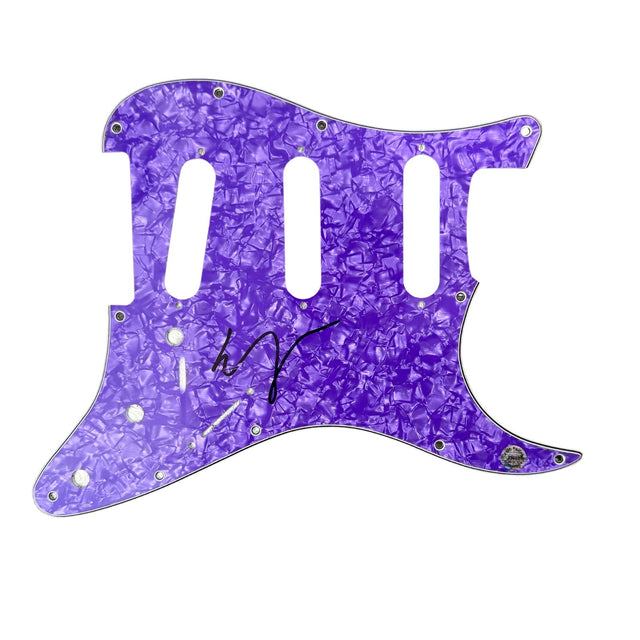
Vampire Weekend Ezra Koenig Signed Guitar Pickguard Autograph Hologram COA
$100.00 USD
-
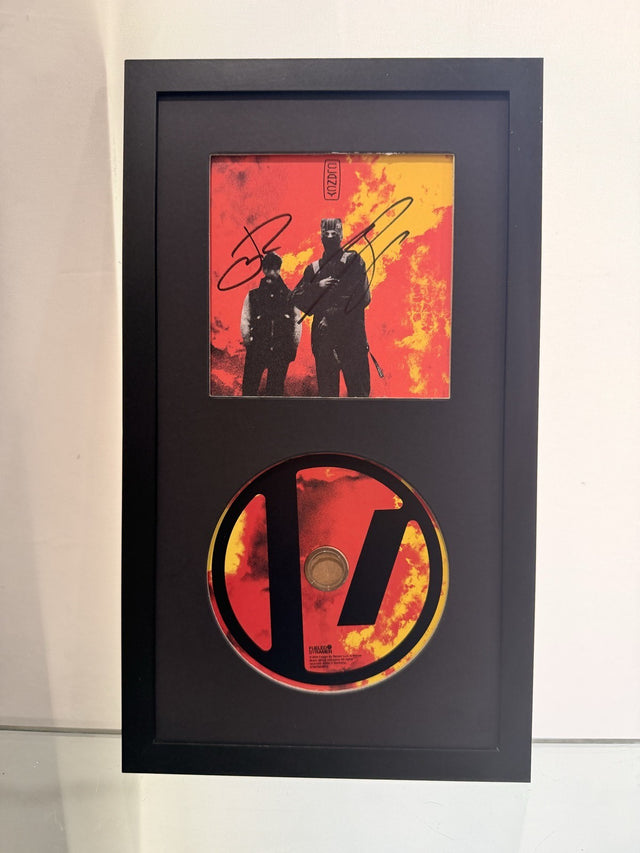
Twenty One Pilots Signed Clancy CD Framed Display Tyler Joseph Josh Dun Auto
$199.00 USD
-
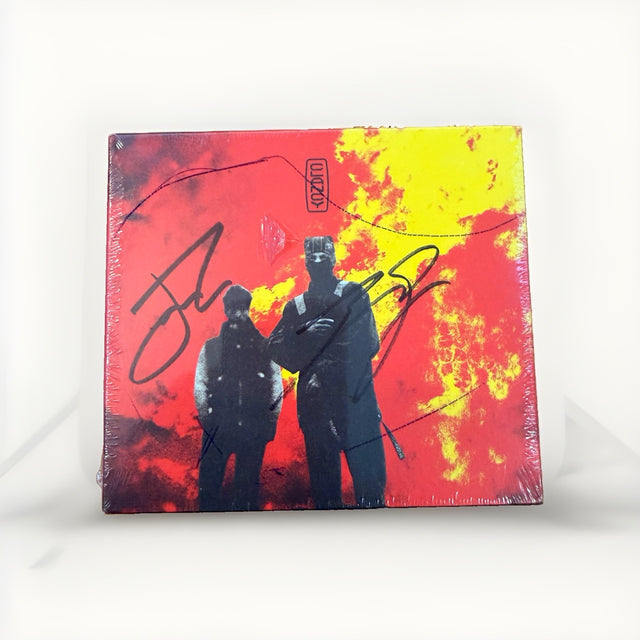
Twenty One Pilots Clancy Signed CD Tyler Joseph Josh Dun Sealed Unopened 2024
$189.00 USD
-
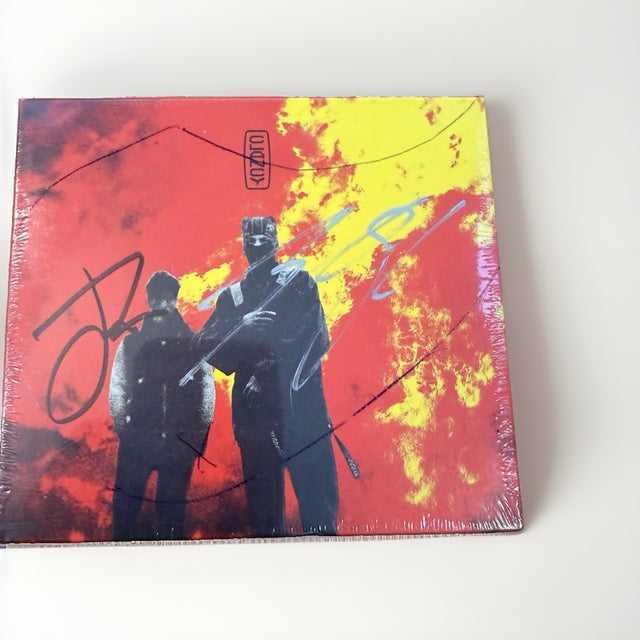
Twenty One Pilots Clancy Signed CD Sealed Tyler Joseph Josh Dun Silver Autograph
$189.00 USD
-
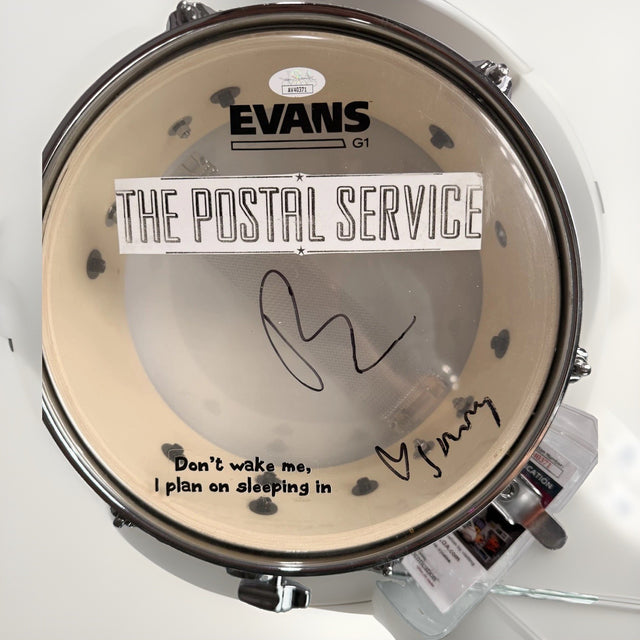
The Postal Service Dual Signed Evans M-80 Drumhead JSA A40371
$499.00 USD
-
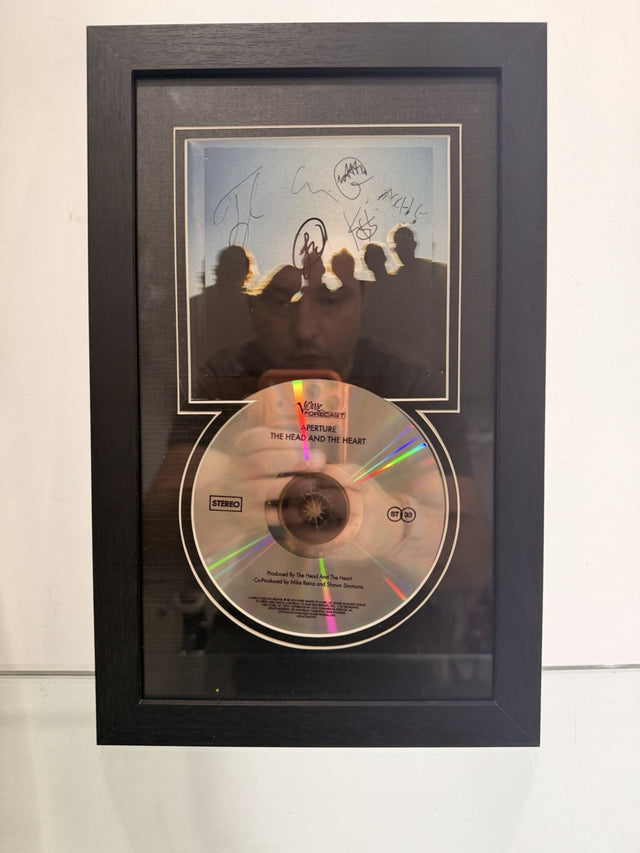
The Head and the Heart Band Signed Framed 'aperture' CD COVER ALBUM
$65.00 USD
Browse the collection for current listings.