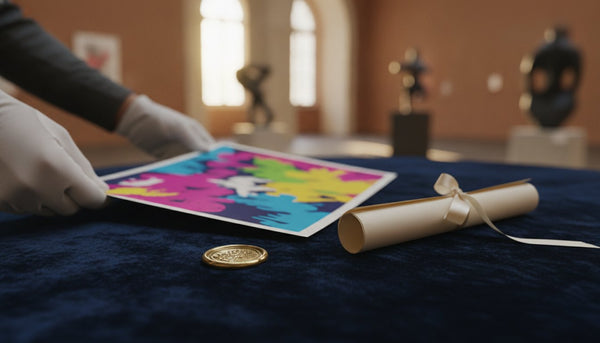
The Edition Timing Paradox: Why Mid-Career Prints Often Outperform the Debut
Everyone wants to buy early.
Buy the first edition. Get in before the crowd. Lock down the work before the market catches up. It sounds obvious. It sounds smart. And for a narrow slice of artists, over a narrow slice of time, it works.
But here's what twenty years in the secondary market teaches you: the first edition is often the worst edition to own.
Not always. But more often than collectors expect — and almost always for reasons that are entirely predictable once you understand how artist careers actually move.
The mid-career print edition is the secondary market's most consistently undervalued position. Not the debut. Not the late masterwork. The edition that drops when an artist has already built real infrastructure but hasn't yet crossed into institutional blue-chip territory.
So why does almost every new collector ignore it?
Because the logic of "buy early" is seductive, and the logic of "buy at the right moment" requires more nuance than a newsletter headline can hold.
Let's fix that.
How Artist Careers Actually Arc
The career of a serious print artist doesn't move in a straight line. It moves in phases, and each phase produces fundamentally different editions — different in production quality, distribution infrastructure, authentication integrity, and secondary market behavior.
Phase One: The Early Editions
Early editions come out of urgency.
The artist is building a name. Resources are tight. Edition sizes are often poorly planned — sometimes too small to generate real collector breadth, sometimes too large because the artist needed revenue. Print quality is inconsistent. The documentation infrastructure doesn't exist yet, which means COAs are informal at best, missing at worst.
The distribution is thin. A handful of galleries, a few direct drops, maybe a street context for artists coming out of that world. The collector base is early adopters plus the artist's immediate community. Liquidity is almost zero. If you need to sell, you're selling to a very small room.
And here's the part nobody talks about: the early edition often represents the artist's least resolved visual language. They're still finding the work. The prints that defined the career — the ones that end up in the retrospective — almost never come from the debut edition. They come from the period when the artist had enough stability to take real creative risks.
Phase Two: The Mid-Career Window
This is the zone.
The artist has survived the first cull. They have gallery representation that actually functions. They have a collector base that extends beyond personal relationships. Their print production has matured — better printers, better paper selection, proper edition planning, functional documentation.
Critically: the authentication and provenance infrastructure is now real. COAs are issued correctly. Edition numbering is controlled. The artist has a relationship with established certification bodies if they're working in a space where that matters — or they've built their own verifiable documentation systems if they're in the street art or contemporary fine art context.
The secondary market has enough transaction history to establish price anchors. But the primary market still hasn't gone fully institutional. You can still acquire at prices that reflect the artist's current tier rather than their ceiling.
The liquidity window is open but not yet crowded.
What more do you need?
Phase Three: The Late-Career and Institutional Editions
By the time an artist crosses into genuine institutional territory — major museum acquisitions, retrospective catalogs, auction house specialist departments — the edition economics have shifted completely.
Primary prices reflect ceiling expectations. Edition sizes are often larger because the market can absorb them. The prints themselves may be technically accomplished but they're frequently working within an established visual grammar rather than developing one. You're buying the confirmation of greatness, not the evidence of it.
That's not worthless. Liquidity is excellent. Authentication is unambiguous. But the multiple you're likely to achieve on a late-career institutional edition is structurally compressed. The market already knows what the artist is. The price already contains most of the information.
The Quality Problem With First Editions
Let's be specific about why early editions underperform on quality — and why quality matters more than timing.
Production Infrastructure Takes Time
Great print editions require great printers. That relationship takes years to develop. An artist releasing their first screen print or etching edition is working with whoever they can access. The results are frequently inconsistent — registration issues, ink variances, paper weights that don't serve the image.
By the mid-career window, the artist has found their production partners. They know how to brief a print shop. They know what paper the image needs. They've made the expensive mistakes already, on someone else's dime or their own early revenue, and they're not making them anymore.
The print you buy from a mid-career edition is almost always better made than the print from the debut edition. This isn't subjective. Put them side by side under proper lighting and the difference is usually visible.
Edition Sizing and Market Planning
Early edition sizing is almost always wrong. Either the artist underestimates demand and creates scarcity that benefits flippers more than long-term collectors, or they overestimate demand and create a supply overhang that suppresses secondary prices for years.
Mid-career editions are sized by artists and galleries who have actual data. They know their collector pool. They know their primary sell-through rates. They plan edition sizes to create healthy secondary market dynamics — genuine scarcity without artificial restriction.
This planning is what creates the conditions for orderly price appreciation rather than volatile spikes and crashes.
The Documentation Gap
This is where things get serious.
Early editions from artists who later become significant are plagued by documentation problems. Informal COAs that don't hold up to scrutiny. Missing provenance links. Edition numbering that was never properly controlled. In the street art and urban contemporary space specifically, early editions often circulated without any meaningful authentication trail at all.
When those artists become collectible — and authentication matters — the early editions become problem assets. Not necessarily fakes, but not cleanly verifiable either. The secondary market discounts them accordingly, or worse, they become targets for the kind of forgery operations that the FBI's Operation Bullpen documented extensively in sports memorabilia and that have clear parallels in the art market.
Mid-career editions, by contrast, were produced when the infrastructure existed. The gallery that published the edition is still operating and can verify the work. The edition records are complete. The documentation chain is clean.
How many early editions have you looked at where the COA was a photocopied letter with a rubber stamp?
That's not a rhetorical flourish. That's Tuesday in the secondary market.
Market Mechanics: Why Mid-Career Timing Works Financially
The financial case is actually straightforward once you understand the structure.
Price Anchors Without Ceiling Compression
In the mid-career window, there's enough secondary market transaction history that you can assess value with real data. You're not speculating blind on an unproven quantity. But the price ceiling hasn't been set by institutional validation, which means the upside capture is still substantial.
This is the asymmetry that experienced collectors exploit. Enough information to make a defensible purchase decision. Enough runway to capture meaningful appreciation.
Early editions lack the first condition. Late editions lack the second.
The Collector Base Effect
Liquidity in the art market is a function of collector base depth. A first edition owned by fifty people, most of whom bought directly from the artist or a single gallery, has almost no secondary liquidity. There's no established transaction network, no auction track record, no community of potential buyers who know the work and want to own it.
A mid-career edition typically has a collector base that's an order of magnitude larger. Multiple galleries across multiple markets participated in the primary sale. The work has appeared in auction, giving it public price discovery. There's a community of collectors who follow the artist and will compete for secondary availability.
This matters enormously when you need to sell. It matters even more when you want to sell at a fair price rather than a distressed one.
The Secondary Market Education Curve
When a first edition hits the secondary market, buyers often don't know how to value it. They're guessing. They're comparing to the wrong benchmarks. They're discounting for the documentation problems we already discussed. This creates pricing inefficiency that rarely resolves in the seller's favor.
By the mid-career window, the market has educated itself. Auction records exist. Gallery secondary departments have transaction history. Specialist dealers know the price grid. The buyer pool is informed, which means competition is real and pricing is efficient.
Efficient pricing, for a seller, means fair value realized. That's the outcome you're building toward.
Context by Market Sector
The mid-career thesis plays out differently across market sectors. Let's be precise.
Urban Contemporary and Street Art
This is where the timing argument is most acute.
Artists emerging from street contexts often release early editions through informal channels — studio drops, small gallery relationships, artist-run platforms. These editions frequently have zero formal authentication infrastructure. When these artists subsequently achieve gallery representation and broader market recognition, those early editions become the most problematic assets in the category.
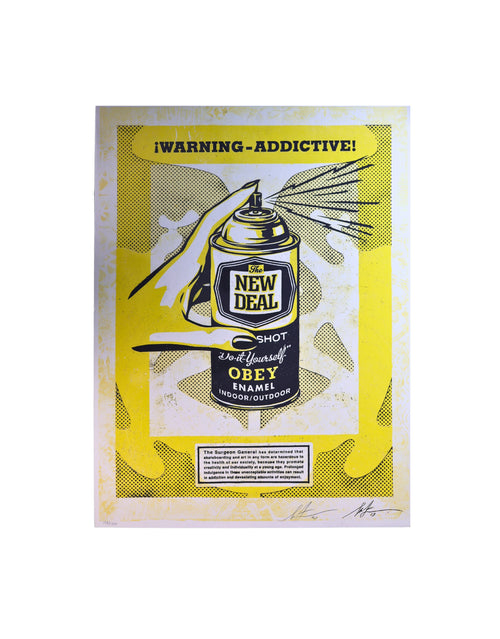
Consider what proper authentication looks like in this sector for established artists: Pest Control for Banksy (the only legitimate authentication body, full stop), Obey Giant drop records and provenance chain for Shepard Fairey editions, Death NYC's artist-signed COA combined with the studio gold seal for their work — both elements required, not one or the other.
None of that infrastructure existed for the earliest editions of these artists. Which means the earliest editions carry authentication risk that the mid-career editions simply don't.
The mid-career street art edition — produced after the artist established gallery relationships and documentation systems, before they crossed into the auction house major-lot tier — is the cleanest position in the category.
Contemporary Fine Art Print Editions
In the gallery-based fine art print context, the quality argument dominates.
Serious print publishers — the workshops and studios that produce editions for gallery artists — don't work with artists who can't sustain a relationship. They're expensive, technically demanding, and they protect their own reputations. Getting into a serious print shop requires that an artist have enough career infrastructure to be worth the investment.
Which means: the first editions from gallery artists are often produced at second-tier printers. The mid-career editions, when the artist has the relationships and the budget, are produced at the workshops that matter. The difference in the physical object is not subtle.
Photography Editions
Photography editions have their own timing dynamics.
Early career photographers often release editions without thinking carefully about total edition size across formats and sizes. They print an edition of 25 at one size, then later print similar editions at different sizes, creating supply confusion that suppresses secondary values across all variants.
Mid-career photographers have usually worked with a gallery or publisher that imposed edition discipline. Total edition sizes are planned. Variant sizing is controlled. The documentation specifies the complete edition structure, which is what sophisticated buyers need to accurately value individual prints.
PSA's certification-verification warnings about photography editions are directly relevant here: editions where the total production across formats isn't clearly documented are exactly the kind of assets where verification problems cluster. Mid-career editions, produced under gallery supervision with proper documentation, don't have this problem.
Music and Entertainment Memorabilia
For artists who cross between music and visual art — and there are more of them every year — the mid-career timing argument applies with an additional layer.
Authentication standards in this crossover category require BAS (Beckett Authentication Services), JSA, or PSA/DNA certification. For music-specific pieces, the Roger Epperson REAL designation within BAS is the specialist tier that serious collectors require. These certification systems didn't credential early career work the way they would mid-career and later production. The paper trail is simply cleaner in the middle of a career.
The distinction between JSA Basic and a full JSA LOA (Letter of Authenticity) matters here too. Mid-career pieces, produced when the artist had enough market presence to attract proper documentation attention, are far more likely to carry full LOAs rather than basic certifications — and the secondary market prices them accordingly.
How to Identify the Mid-Career Window
If this argument holds — and we believe it does — the practical question is identification. How do you know when an artist is in the mid-career window rather than early or late?
Here's the working framework:
-
Gallery representation with a functioning secondary department
- Not just primary sales representation — a gallery that actively manages secondary transactions for the artist's work
- This indicates that secondary volume justifies the gallery's attention, which is a liquidity signal
-
Auction records in at least two major houses
- Not one auction result — a track record across multiple houses and multiple years
- This establishes that the price anchors reflect real competition, not single-buyer events
-
Edition documentation that's verifiable through an operating entity
- The publisher or gallery that issued the edition is still operating and can confirm authenticity
- Edition records are accessible and complete, not reconstructed from memory
-
Collector base breadth beyond the immediate community
- The artist's work is held by collectors who discovered it through market channels, not personal relationships
- This is the signal that the market has self-organized around the work, rather than the work depending on a single gallerist's relationships
-
Critical attention without institutional canonization
- Press coverage, curatorial attention, inclusion in significant group exhibitions
- But not yet: retrospective catalog, major museum permanent collection acquisition in the lead institution for their category, auction department specialist coverage
- That last step is when the ceiling sets
-
Print production quality is consistent across the most recent two or three editions
- Consistency is the signal that production infrastructure is stable, not that you happened to get a good run
- Look at the physical objects, not just the documentation
An artist who checks four of these six boxes is almost certainly in the mid-career window. An artist who checks all six is near the trailing edge of it — still worth the position, but the window is closing.
The Exception Cases: When Early Editions Do Win
This argument isn't absolute. There are conditions under which early editions outperform mid-career positioning.
Meteoric Trajectories
Some artists move so fast through the career phases that the mid-career window barely exists. The debut edition is produced at low prices, and within eighteen to twenty-four months the artist is at institutional prices. In this scenario, the early edition captures the full multiple and the mid-career window is a rounding error.
These trajectories are real but they're not predictable. The collectors who profited from them mostly got lucky with timing, not smart with analysis. Attributing the outcome to skill rather than chance is the kind of reasoning that produces bad future decisions.
Historically Significant Debut Works
Occasionally a first edition is not just early — it's historically definitive. The image itself becomes the signal piece for the artist's career. The retrospective is organized around it. Every account of the artist's development starts with it.
When an early edition has this quality — and you can only really know in retrospect — it maintains a premium that no subsequent edition can match. The provenance of being first matters intrinsically, separate from quality or documentation.
But again: you can't know this in advance with any reliability. And even with this premium, early documentation problems still suppress the price relative to what a clean provenance would achieve.
Deliberately Limited First Editions From Established Artists in New Mediums
When an artist who is already mid-career or later releases a first edition in a new medium — a painter making their first print, a sculptor releasing a first photography edition — the "first edition" carries the institutional weight of an established career. This is a different category entirely and the timing logic doesn't apply in the same way.
Red Flags
Whether you're looking at early, mid, or late editions, these signals should stop you cold.
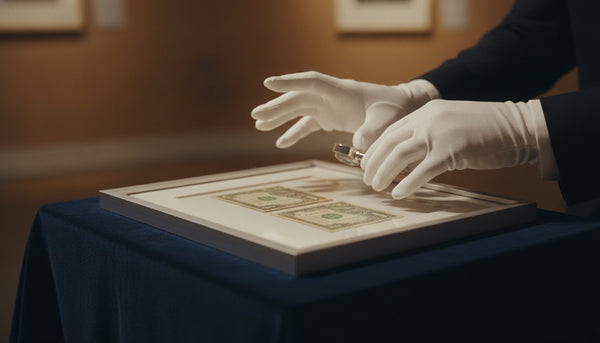
- COA from an entity that no longer exists and cannot be verified. This is the authentication dead end. A COA is only as good as the ability to verify it. If the issuing gallery closed, the publisher dissolved, and there's no edition record accessible through any operating channel, the piece is effectively unverifiable. Walk away or price it accordingly.
- Edition numbering inconsistencies. If the number on the work doesn't match the documentation, or if the claimed edition size doesn't align with what the market record shows, you have a provenance problem. PSA's certification-verification processes flag exactly this — it's a red flag for a reason.
- A "first edition" story that's being sold harder than the work itself. When the dealer is more excited about the rarity narrative than the quality of the print, that's a tell. Scarcity value and quality value are different things. Scarcity without quality is a story, not an asset.
- Authentication claims that don't match category standards. Banksy work without Pest Control documentation. Death NYC pieces with only one of the two required authentication elements — artist signature or studio gold seal, not both. Music crossover pieces with only JSA Basic when the market expects a full LOA. These mismatches don't mean the work is fake, but they mean you're holding a harder-to-sell asset than you think.
- Secondary market price history that's thin or concentrated. If the only auction records are from a single house in a single season, that's not a price grid — it's one data point. Real mid-career secondary markets show transaction history across multiple channels and multiple years.
- Documentation that's been reconstructed rather than maintained. Artists, galleries, and estates sometimes reconstruct edition records for works that weren't properly documented at production. This isn't automatically fraudulent, but it significantly reduces the reliability of the authentication trail. Ask directly: was this documentation produced contemporaneously, or assembled later?
- Edition sizes that expanded after initial release. If an edition was announced at one size and additional works appeared later — artist proofs, printer's proofs, or outright additional numbered prints — without clear disclosure, the scarcity that supported the original pricing is compromised. This is one of the patterns that FBI Operation Bullpen documented in the forgery context, but legitimate editions can have undisclosed expansion too, and it's equally damaging to value.
- Pressure to decide quickly on a "rare opportunity." The secondary market occasionally produces genuine urgency. But genuine urgency doesn't require you to skip due diligence. Any seller who can't give you forty-eight hours to verify documentation is telling you something important about what that documentation contains.
Bottom Line
The "buy early" instinct is understandable. It's not stupid. In a perfect world with perfect information, getting in before the market is exactly the right move.
But the real world doesn't work that way. Early editions carry documentation risk, production quality risk, and liquidity risk that the mid-career window doesn't. The first edition is often the worst-made, worst-documented, least liquid version of the artist's work. And the premium that "first" commands in the primary market frequently isn't supported by secondary performance.
The mid-career window is where the variables align: quality, documentation, liquidity infrastructure, and price runway. It's not as exciting as the discovery story and it doesn't generate the same retrospective mythology as "I bought when nobody knew the name." But it generates better outcomes for collectors who are building serious holdings rather than telling stories at openings.
Buy the work when the work is ready. Buy the edition when the infrastructure around it is real. Buy at the moment in the career when you have enough information to make a defensible decision and enough runway to capture meaningful appreciation.
That moment is almost always the middle — not the beginning.
FAQ
Isn't buying early always better if you believe in the artist?
Belief in the artist and belief in the specific edition are different things. You can be right about an artist's trajectory and still own the wrong edition — one that has documentation problems, production inconsistencies, or such limited liquidity that realizing the gain is practically impossible. Early conviction about an artist is valuable. Early purchase of whatever edition happens to be available is a different calculation entirely.
How do I know if I'm at the trailing edge of the mid-career window?
Watch for the institutional signals: a major museum acquiring the work for the permanent collection (not just exhibiting), an auction house creating a specialist position or dedicated sale for the category that includes the artist, a retrospective catalog from a significant institution. These aren't bad signs for the work you already own — they're confirmation events. But they indicate that primary prices are about to reprice to ceiling levels, which compresses future multiples for new acquisitions.
What does proper documentation look like for a mid-career print edition?
At minimum: a COA from the publishing gallery or studio that's still operating and can verify it, clear edition numbering on the work itself (number and total edition size), documentation of the printing process and materials, and a provenance record that traces ownership from primary sale to current holder without gaps. In category-specific contexts, add the authentication layer that applies: Pest Control certification for Banksy, artist-signed COA plus studio gold seal for Death NYC, Medicom packaging and factory-marking verification for applicable KAWS works, and so on.
Are artist proofs and printer's proofs worth more or less than numbered editions?
It depends entirely on how they were handled. In properly managed editions, artist proofs (typically designated AP) are held outside the numbered edition and represent a small percentage of the total run — traditionally around ten percent. In mid-career editions from organized publishers, APs often command a modest premium because of their designation and because they're typically retained by the artist or gallery rather than distributed broadly. But in poorly documented early editions, AP designations are sometimes used to expand effective edition size without acknowledging it. The designation itself tells you nothing without understanding the documentation context.
Does this logic apply to digital and NFT editions from the same artists?
The career arc logic applies, but the authentication and liquidity infrastructure is structurally different. Physical print editions have decades of established market infrastructure — auction records, authentication bodies, gallery secondary departments, specialist dealers. Digital editions are working with much younger infrastructure. The mid-career timing argument holds in principle, but you're assessing a different set of risks when you cross into digital formats from the same artists. Treat them as separate markets with separate due diligence requirements.
What about artists who release editions frequently — does the mid-career thesis still apply?
High-frequency edition artists are a specific case. When an artist releases multiple editions per year across multiple price points, the "mid-career window" is less about a time period and more about identifying the specific editions within their output that have the right combination of quality, edition planning, and documentation. Some editions within a prolific artist's output will be mid-career quality even early in the relationship with that artist. Others will be rushed, poorly documented, or oversized for the market. Evaluate editions individually rather than trusting that career timing alone determines quality.
How do I verify that an edition's documentation was created contemporaneously rather than reconstructed later?
Ask for the original gallery invoice from the primary sale, not just the COA. Ask whether the edition records are held in a physical or digital archive that predates the current owner's purchase. Ask the gallery or publisher directly whether any documentation was reconstructed after the fact. None of these questions are rude — they're standard due diligence in the secondary market. A seller who objects to them is a seller who can't answer them. Also, consult the authentication body appropriate to the category: PSA's certification-verification system, Beckett's process documentation, and comparable bodies maintain records that can sometimes verify or contradict claimed production dates.
What's the most common mistake collectors make when thinking about edition timing?
Conflating price with value at the moment of purchase. Early editions are cheap in absolute terms, which feels like value. Late editions are expensive, which feels like the market has already done the work. Neither feeling tracks reliably to what you'll actually realize on the secondary market. The mid-career edition might be priced higher than the debut edition and lower than the institutional edition — and that price might represent better value than either, because the documentation is clean, the work is quality, and the liquidity window is open. Price is what you pay. Value is what you own. Get comfortable distinguishing between them.