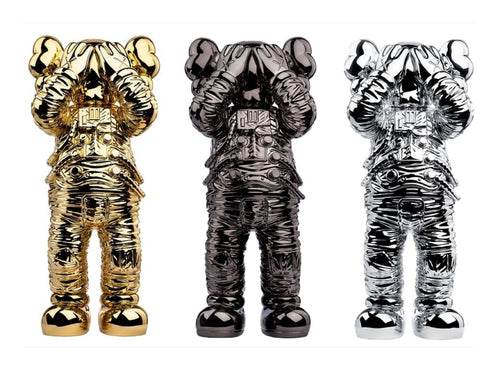
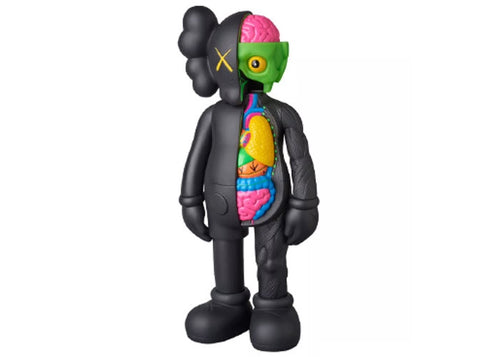
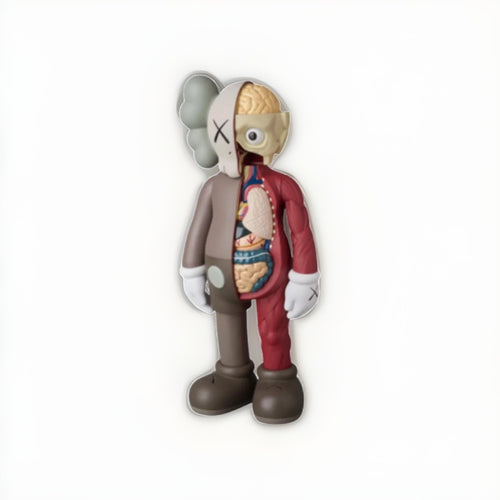
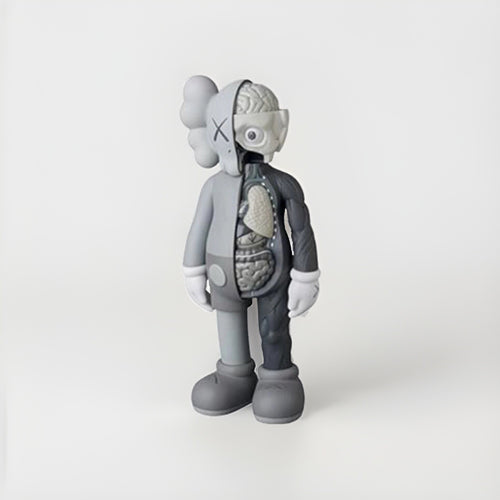
The Toy That Started Everything: KAWS Original Brown 1999
There is a vinyl figure sitting in a climate-controlled case somewhere right now that looks, to the uninformed eye, like a beat-up cartoon character with X's for eyes.
To the market, it looks like a down payment on a house.
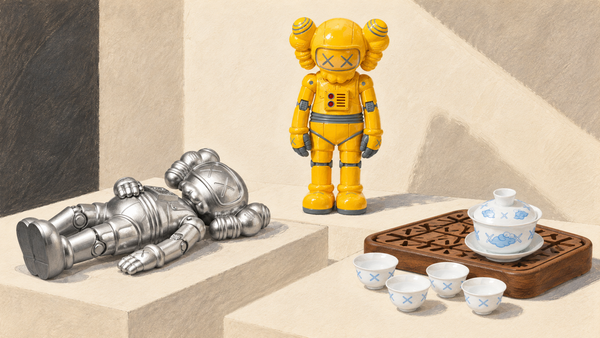
The KAWS Original Brown — the 1999 Bounty Hunter collaboration figure that effectively launched the entire KAWS collectible universe — regularly trades hands for sums that make auction specialists pause before they type the estimate. We are talking about a piece of molded vinyl that predates the artist's gallery representation, predates the brand licensing deals, predates the museum retrospectives. A thing made in extremely limited quantities before anyone outside a tight circle of Tokyo streetwear insiders knew who Brian Donnelly was.
So why does a twenty-five-year-old toy command the same price as a late-model luxury car?
That is the right question. And if you are thinking about buying one, selling one, or simply trying to understand how this market works, you need an honest answer.
Context First: What the KAWS Original Brown Actually Is
Brian Donnelly — KAWS — spent the late 1990s doing two things simultaneously. He was bombing bus shelter advertisements in New York with his signature Companion character, and he was deepening a relationship with the Tokyo underground that would define his commercial trajectory for the next decade.
Bounty Hunter, the influential Japanese streetwear and collectible label founded by Hikaru Iwanaga, was the conduit. The collaboration produced a small run of vinyl figures featuring the Companion character in what collectors now call the Original Brown colorway. This was not a mass market product. It was not available at retail in any conventional sense. It moved through the kind of channels that existed in that particular moment: Japanese boutiques, word-of-mouth, the overlap between graf culture and the nascent designer toy world.
The figure itself — that chunky, crossed-out skull face, the rounded Companion body — was KAWS translating his street intervention aesthetic into a three-dimensional object. It was also a document of a specific cultural handshake between New York and Tokyo at the exact moment designer toys were coalescing as a category.
That is the historical argument for the price. The market argument is simpler: supply is functionally zero, and demand has never been higher.
The Supply Problem Is Not Going Away
Vintage KAWS figures from the 1999-2002 window are not scarce the way a limited print run is scarce. They are scarce the way first pressings of certain records are scarce — a combination of low initial production, years of attrition through normal use, loss, and the simple fact that nobody in 1999 was thinking about long-term preservation of a vinyl toy.
The Original Brown in genuinely collectible condition — meaning original box, all accessories intact, figure unplayed-with — represents a fraction of total surviving examples. And total surviving examples in any condition are already a small number.
KAWS has not reissued this piece. He is not going to reissue this piece. The market understands this, and prices have moved accordingly over a long enough time horizon that the trajectory is not ambiguous.
When was the last time a confirmed Original Brown in excellent condition came to open market?
That is the question you should be asking your dealer. The honest answer is: not often. And when they do surface, they do not stay available.
Why Condition Drives Everything at This Tier
In the broader KAWS secondary market, condition is important. At the vintage tier — the 1999-2002 Bounty Hunter and Bounty Hunter-adjacent pieces — condition is essentially everything.
The difference between a graded Near Mint example with original box and an unboxed figure showing play wear is not a small percentage. It can be the difference between a six-figure ambition and a mid-tier result. The market at this level is thin enough that a single exceptional example sets a reference point that stands for an extended period.
Key condition factors collectors and specialists look for:
-
Original box integrity
- Box flap condition, corner sharpness, absence of tape repairs
- Interior tray present and undamaged
- Any original tissue or packing material is a significant positive
-
Figure surface condition
- Paint application stability — the brown colorway has specific aging characteristics; check for flaking at high-wear points
- Absence of yellowing, which affects the lighter elements
- Joint integrity — early vinyl figures can develop stress fractures over decades
-
Completeness
- All original accessories and inserts accounted for
- Any original hang tag, sticker sheet, or supplementary material present
-
Provenance documentation
- Purchase receipts, original acquisition context
- Photographic evidence of ownership chain
- Connection to original point of sale or known collection
Authentication: Where the Real Risk Lives
Let us be direct about something.
The KAWS vintage market has an authentication problem. Not a catastrophic one, not a scandal-level one, but a real and persistent one that any serious buyer needs to understand before committing significant capital.
The designer toy category did not develop the same authentication infrastructure as, say, sports memorabilia or fine art. For decades, provenance was established informally — reputation of the seller, documentation quality, community knowledge. That worked reasonably well when the market was small and populated by true insiders.
The market is no longer small. And it is no longer populated exclusively by insiders.
The Modern KAWS Authentication Stack
For recent KAWS releases, the authentication pathway is clear. KAWS:HOLIDAY releases from roughly 2022 onward carry an NFC authentication chip that pairs to the specific figure. For everything else in that more recent window, original packaging with hologram, the molded foot stamp, and a confirmed Medicom release record provide the authentication layer.
The Original Brown predates all of this infrastructure entirely. It is pre-chip. It is pre-the category having any systematic authentication framework at all.
So what does authentication actually look like for a 1999 Bounty Hunter KAWS figure?
Honest answer: it looks like deep specialist knowledge, documented provenance chain, and physical examination by someone who has handled enough examples to know what authentic looks like versus what a sophisticated reproduction looks like.
What the Third-Party Grading Services Can and Cannot Tell You
The major grading and authentication services have extended into the designer toy and collectible space. For the KAWS Original Brown specifically, grading can document condition accurately and encapsulate the piece in a way that preserves condition going forward. That has genuine value.
What grading services cannot do, and what the serious collector needs to understand, is that a graded label on a vintage piece confirms condition assessment — it does not independently authenticate the piece against the full range of reproduction risk the way a deep specialist provenance review does. The grading services are explicit about the scope of their review when pressed.
For a piece at this price tier, grading is a component of the picture, not the whole picture.
The Provenance Chain Conversation
When you are looking at a piece claimed to be a 1999 Original Brown, the provenance conversation needs to be specific and documented. Not vague. Not "this came from a Japanese collector." Specific.
- Where was it purchased? Which boutique or outlet?
- Who owned it between original purchase and now?
- Is there any documentation of those ownership transfers?
- Has it appeared in any published collection records, exhibition catalogues, or documented auction history?
A clean, traceable provenance chain does not guarantee authenticity, but its absence is a meaningful signal.
The Bounty Hunter Relationship: Why It Matters to Value
The Bounty Hunter collaboration is not incidental to the piece's value — it is foundational to it.
Bounty Hunter occupied a specific and significant position in the designer toy ecosystem at that moment. Hikaru Iwanaga's label was not simply a manufacturer; it was a cultural gatekeeper connecting Japanese street and underground culture to an international network of collaborators. The KAWS relationship was one of its most consequential partnerships, and both parties understood what they were making together even if neither could have predicted the market outcome twenty-five years later.
Pieces that carry genuine Bounty Hunter production provenance — the correct manufacturing characteristics, the correct packaging format, the correct period-specific details — carry that history as part of their value proposition. Reproductions that miss period-specific manufacturing details, however convincingly they replicate the surface aesthetics, do not have that history and cannot have it.
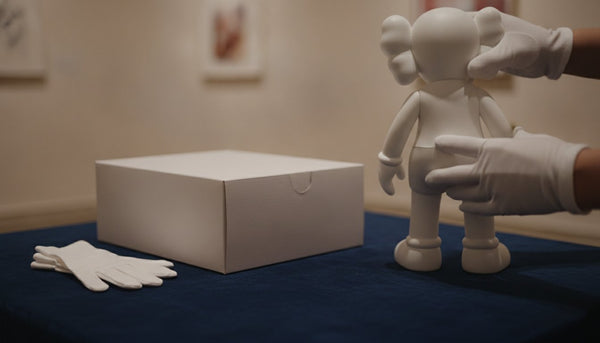
This is why physical examination by a specialist who knows the Bounty Hunter production run specifically matters. The details that distinguish original production from reproduction are not always visible in photographs.
The Investment Argument: How This Market Actually Works
People ask whether KAWS vintage pieces are "good investments." That is actually two different questions disguised as one.
The first question is whether the market for these pieces has historically appreciated. The answer, for confirmed Original Brown examples in excellent condition, is unambiguously yes over a long enough horizon. The trajectory from original retail context to current secondary market values represents appreciation that exceeds most conventional asset classes over the same period.
The second question is whether the market will continue to appreciate, and on what timeline, and with what volatility. That question is genuinely harder.
The KAWS market overall — prints, sculptures, figures — has shown the kind of volatility that comes with any market where enthusiasm from a broader collector base intersects with genuinely scarce supply at the top tier. The mainstream market for mid-tier KAWS pieces has shown real softness in certain windows. The vintage tier, the 1999-2002 Bounty Hunter pieces specifically, has held and in most cases appreciated through those same windows, because the supply floor is real in a way that it is not for more recent, larger-edition work.
But does "the vintage tier is more resilient" mean you should think of this as a financial instrument rather than a collectible?
No. It means you should buy what you understand, buy from sources you can verify, and not let the investment framing crowd out the basic due diligence that any piece at this price point requires.
Comparable Market Context: What Else Trades at This Level
To understand why a 1999 vinyl figure commands the prices it does, it helps to think about what else occupies that market tier in adjacent categories.
| Category | Comparable Item Type | Value Driver |
|---|---|---|
| Sneakers | Nike Air Max 1 "Big Bubble" OG deadstock, 1987 | Original production era + unworn condition + correct box |
| Designer Toys | Medicom Be@rbrick 1st run rares, pre-2002 | Low production + era significance + original packaging |
| Streetwear | Supreme box logo tee, late 1990s, deadstock | Cultural moment + scarcity + condition |
| Fine Art Prints | Early Banksy unsigned unsigned screen prints, pre-Pest Control era | Pre-institutional period + verifiable provenance |
The pattern is consistent. Objects that document a specific cultural moment, produced in low quantities before the relevant market infrastructure existed, in genuinely excellent preserved condition, trade at significant premiums to later work by the same artists or in the same categories.
The KAWS Original Brown is that story in one object.
The Current Market: Who Is Buying and Why
The buyer profile for a piece at this tier has evolved over the past decade in ways worth understanding.
The original collector base for vintage KAWS was the designer toy community itself — people who had been in the category from the beginning, who knew the provenance context, who bought with deep product knowledge. That community is still active at the top tier.
But the buyer universe has expanded significantly. Contemporary art collectors who entered the KAWS market through his gallery and museum work have worked backward into the historical pieces as they have developed deeper market knowledge. Institutional and semi-institutional collectors who view the Companion as a significant cultural object — not just a collectible but a document — have entered the market.
And there is a category of buyer who is primarily financially motivated, who views the vintage KAWS tier the way they might view a first edition of a significant literary work or a key piece of historical photography. As a store of value attached to a culturally significant object.
All of these buyer types push price in the same direction when supply is as constrained as it is for the Original Brown.
How to Approach Buying: A Practical Framework
If you are a serious collector considering a purchase at this tier, here is the honest framework for doing it right.
-
Establish baseline knowledge before you negotiate
- Study confirmed auction records for Original Brown examples. Understand what documented results look like, not just price but condition and provenance descriptions
- Familiarize yourself with the Bounty Hunter production context specifically — this is not general KAWS knowledge, it is specific knowledge
- Know the difference between Original Brown and other early colorways; the brown specifically has distinct characteristics that affect both identification and value
-
Require documentation before serious discussion
- Full provenance chain, not summary
- High-resolution photography of figure, box, all sides, all accessories
- Any existing grading or third-party review documentation
- Seller's own authentication narrative: how do they know what they say they know?
-
Engage specialist review
- For a piece at this price tier, independent specialist review before purchase is not optional, it is basic due diligence
- The designer toy specialist community is small but real. The people who have handled enough early Bounty Hunter KAWS production to speak with authority are identifiable
- If the seller resists independent specialist review, treat that resistance as significant information
-
Understand the liquidity reality
- The market for a piece at this tier is thin. Buying is one transaction; selling is a different, potentially longer process
- The specialist auction channel is the most reliable path to realizing full market value; private sale can be faster but typically involves a discount to the auction ceiling
- Plan for a holding period if your goal is to maximize realized value
Red Flags
The following are real warning signs. Any one of them should slow you down. Multiple should stop you entirely.
- Provenance described in vague terms. "From a Japanese collection" or "acquired in the early 2000s" without specificity is not provenance. It is a placeholder. At this price tier, vague provenance is a red flag, not an acceptable condition of sale.
- Seller resistant to specialist examination before purchase. Legitimate sellers of legitimate pieces understand that serious buyers at this level require serious verification. Resistance is not normal.
- Pricing significantly below established market comps without clear explanation. The secondary market for confirmed Original Brown examples is well-enough established that a price dramatically below comparable results demands explanation. If the explanation does not hold up to scrutiny, do not proceed.
- Box and figure that do not match in aging characteristics. A box showing significant age and a figure in implausibly pristine condition — or vice versa — warrants close examination. Aging should be consistent across the piece and its packaging given shared storage history.
- No clear answer on grading history. Has the piece been graded? If so, by whom, with what result? If not, why not, given the price being asked? The absence of any third-party review history on a piece at this tier is worth probing.
- Photographs that avoid showing specific details. High-quality photography of the piece overall but conspicuous absence of close shots of specific areas — joints, paint edges, box corners, manufacturing marks — is a pattern worth noticing.
- Pressure to decide quickly. "I have another buyer" is a sales technique. At this price tier, if the piece is genuine and fairly priced, it will still be genuine and fairly priced after you complete proper due diligence. Do not let artificial urgency compress your verification process.
- COA from an unrecognized or non-specialist issuer. For vintage KAWS pieces, a COA from a generic authentication service that does not have demonstrated designer toy specialization adds limited value and does not substitute for genuine provenance documentation and specialist review.
Bottom Line
The KAWS Original Brown is not expensive because of hype. It is not expensive because of marketing. It is expensive because it is a genuine artifact of a specific and significant cultural moment, produced in extremely limited quantities, with a survival rate in collectible condition that is lower than any manufacturer's stated run would suggest, attached to an artist whose market trajectory has been one of the most remarkable in contemporary art history.
The price reflects all of that accurately.
What it does not reflect is an easy transaction. There is no casual path to acquiring a genuine example in excellent condition. The supply is too limited and the stakes are too high for the market to be casual about it.
If you are serious about this piece, be serious about the process. Commission specialist review. Require documented provenance. Understand what you are buying before you commit. The collectors who have built real positions in vintage KAWS did not do it by moving fast. They did it by knowing more than the next person in the room.
That approach is still available. It is just work.
Frequently Asked Questions
What makes the Original Brown colorway specifically significant versus other early KAWS Bounty Hunter figures?
The Original Brown is generally considered the first or among the first Companion figures produced in the Bounty Hunter collaboration, making it the foundational object in the KAWS collectible history. Other early colorways carry real value and historical significance, but the brown specifically occupies the origin point position in the collector narrative. That position commands a premium independent of the purely aesthetic question of colorway preference.
How do I know if a piece being offered as a 1999 Original Brown is actually from 1999 and not a later reproduction?
This is the central authentication question and the honest answer is: you need specialist examination of the physical object. Period-specific manufacturing characteristics — materials, mold details, packaging construction, printing specifics on the box — are the primary physical markers. Photographs can support authentication review but are not sufficient on their own. Any seller of a genuine piece should be able to provide the documentation and access necessary for that examination.
Does the original box significantly affect value, and what happens if the box is present but damaged?
Original box presence significantly affects value at this tier — we are not talking about a small percentage differential. A confirmed Original Brown with original box in excellent condition occupies a different market tier than the same figure unboxed or with missing or heavily damaged box. A box that is present but shows meaningful damage still represents better provenance documentation than no box, but the premium over boxed examples in excellent condition can be substantial. The box is not just packaging; it is part of the historical document.
Are there grading services that specialize in early KAWS figures the way BGS or PSA specialize in cards?
The designer toy grading space has developed meaningfully over the past several years, with services extending into the collectibles category. For vintage KAWS pieces specifically, the grading services that have the most meaningful market recognition are the ones with established track records in the broader collectibles category that have extended credibly into designer toys. What grading provides most reliably is condition assessment and physical preservation going forward. For authentication of a 1999 piece specifically, grading is a component of the overall review, not a standalone determination. The market has not yet converged on a single grading service as definitively authoritative for this specific piece category the way it has in sports cards.
What is the relationship between the KAWS fine art market and the vintage toy market, and do they move together?
They share a collector base at certain levels, but they do not move in lockstep. The vintage toy market at the Original Brown tier is driven primarily by scarcity dynamics and the foundational historical narrative. The broader KAWS fine art market — prints, paintings, large sculptures — is driven by a wider collector base, more liquidity, and more exposure to general contemporary art market sentiment. In periods where the broader KAWS market has shown softness, the vintage tier has generally held better precisely because the supply floor is real. That said, a sustained and severe correction in the broader market would eventually affect all tiers; no category is fully isolated.
Can I insure a piece at this value, and what do insurers need to establish value?
Yes, specialist art and collectibles insurers can cover pieces at this tier. What they typically require is a current appraisal from a qualified appraiser with demonstrated expertise in the relevant category, supporting documentation of provenance and acquisition, and in many cases condition documentation. For a piece at the Original Brown tier, a generalist appraiser is not appropriate — you need someone with demonstrated contemporary collectibles and specifically KAWS market expertise. The appraisal should be updated periodically to track market movements; an appraisal that is several years old may not reflect current replacement value accurately.
Is the KAWS Original Brown likely to be included in museum collections, and does institutional collection affect market value?
KAWS's institutional presence has grown substantially, with significant museum exhibitions and acquisitions of his work across multiple categories. The Companion figure as a cultural object has been discussed in institutional contexts, and there are examples of early figure work in museum and significant private collection contexts. Institutional collection of comparable examples does not directly move the secondary market for individual pieces in the short term, but it contributes to the long-term cultural legitimacy narrative that sustains demand at the top tier. A work class that is being collected by serious institutions is being collected for reasons that tend to persist.
What is the most reliable channel for selling a genuine Original Brown if I am a current owner looking to realize value?
The specialist auction channel, particularly auction houses with demonstrated contemporary collectibles and designer toy track records, has historically been the most reliable path to ceiling price for a confirmed Original Brown in excellent condition. The auction format creates competitive tension among multiple qualified buyers that private sale typically cannot replicate at this tier. Private sale through a specialist dealer can be appropriate if speed of transaction matters more than maximizing achieved price, but should involve a dealer with a demonstrated buyer network specifically at this value tier. Listing on general resale platforms without specialist intermediation is rarely the right choice for a piece at this price point — the buyer pool that can and will pay market value for a confirmed Original Brown is not browsing general resale markets in any volume.