For most first-time collectors, the KAWS Companion is the stronger starting point. It is the artist's signature character, it has the longest production history, the deepest pool of comparable sales, and the widest range of entry-level formats — which makes it easier to research, easier to price, and easier to resell if your taste evolves. The BFF is the better first buy for collectors who respond to its warmer, furrier character design, who want a figure that photographs beautifully in color, or who simply connect with it more — because the best first purchase is always the one you will actually keep on the shelf and enjoy. Below, we break down both characters in depth: their history, formats, condition and packaging considerations, authentication, and how to think about value before you buy.
Two Characters, One Artistic Universe
Before comparing the two head-to-head, it helps to understand what each figure represents within the world of KAWS — the American artist Brian Donnelly, whose crossed-out eyes and reimagined pop iconography have become one of the most recognizable visual languages in contemporary art. Both the Companion and the BFF are original characters created by the artist, and both have appeared across a spectrum of formats: monumental sculpture, museum exhibitions, limited-edition vinyl figures, plush editions, and open-edition releases. Understanding where each character sits in that spectrum is the foundation of a smart first purchase.
The Companion: The Artist's Signature Character
The Companion is the character most people picture when they hear the name KAWS. It debuted in 1999 as a vinyl figure and has since become the artist's defining creation — a gray, cartoon-inflected figure with gloved hands, skull-and-crossbones styling, and the unmistakable X eyes. Over more than two decades, the Companion has appeared in an enormous range of poses and interpretations: standing, seated, slumped with head in hands, dissected to reveal a stylized anatomical interior, and reclining. It has been produced at every scale from pocket-sized keychains to multi-story inflatable and sculptural installations shown around the world.
That long history matters for a first-time collector in a practical way. Because the Companion has been produced in so many editions across so many years, there is an unusually deep public record of sales, editions, and variants to study. For a newcomer, that depth of information is a genuine advantage: you can learn what a given release is, how it typically trades, and what condition standards look like before you ever spend a dollar. Compare the exact KAWS release, colorway, pose, edition and condition using dated completed sales. Broad archive totals and another edition’s performance do not establish an item’s resale value.
The BFF: The Newer, Softer Counterpart
The BFF is a much newer character, introduced by KAWS in the mid-2010s. Where the Companion reads as smooth, sculptural, and slightly melancholy, the BFF is rendered as a shaggy, fur-textured character — a friend figure, as the name suggests — with the same signature X eyes. The BFF has appeared as large-scale sculpture, as plush editions, and as vinyl figures, most famously in saturated colorways that make it one of the most visually distinctive pieces in the KAWS catalog.
The BFF's relative youth cuts both ways. On one hand, there are fewer releases to learn, which makes the character easier to map for a newcomer: a collector can become genuinely knowledgeable about the BFF catalog much faster than they can absorb twenty-plus years of Companion releases. On the other hand, a shorter history means a shallower pool of long-run market data, fewer format choices at any given moment, and a resale market that is thinner than the Companion's. Neither of those is disqualifying — but they shape which collector each character suits best.
Companion vs BFF: Head-to-Head Comparison
Here is how the two characters compare across the criteria that matter most to a first-time buyer. We deliberately keep pricing qualitative — figure values move with edition, colorway, condition, and market cycle, so the right approach is always to compare recent verified sales for the exact release you are considering rather than rely on any static number — the price guide and Financial Insights resources linked later in this article are built for exactly that.
| Criterion | Companion | BFF |
|---|---|---|
| Introduced | 1999 — the artist's first and defining vinyl character | Mid-2010s — a newer addition to the KAWS universe |
| Catalog depth | Very deep: many poses, colorways, scales, and collaborations across two decades | Focused: a smaller, more manageable set of releases |
| Formats available | Vinyl figures in many sizes, open editions, dissected variants, collaborations, keychains | Vinyl figures and plush editions, plus large-scale sculpture |
| Materials | Painted vinyl (smooth finish) | Painted vinyl with sculpted fur texture; separate plush editions |
| Market liquidity | Highest of any KAWS character — trades constantly worldwide | Healthy but thinner; fewer transactions to benchmark against |
| Research burden | Higher — more releases to learn, more variants to distinguish | Lower — a first-timer can learn the catalog quickly |
| Condition sensitivity | Smooth vinyl shows scuffs and paint rub; boxes matter | Textured vinyl hides minor handling better; plush editions have their own care needs |
| Counterfeit pressure | Heavily replicated — verification is essential | Also widely replicated, especially popular colorways |
| Best first-buyer fit | Collectors who want the canonical character, maximum data, and easiest resale | Collectors drawn to the design, color, and a more contained catalog |
The Case for Starting with a Companion
If you asked us to recommend a single first KAWS purchase with no other information about your taste, we would point you toward a Companion, and the reasoning is straightforward.
It is the canonical entry point. The Companion is to KAWS what the signature motif is to any major artist: the work most closely identified with the name. Owning one connects you to the center of the artist's practice rather than a branch of it. If you later expand into other KAWS characters — the BFF, or the artist's other creations — a Companion anchors the collection.
The information advantage is real. First-time collectors make their worst mistakes when they buy in an information vacuum: unfamiliar edition, unclear provenance, no sense of typical condition. The Companion's long, well-documented release history collapses that vacuum. There are established references — including our own KAWS Figurine Index, which catalogs releases across the artist's vinyl output — that let you identify exactly what a seller is offering and how it compares to other examples. Deep documentation is the first-time collector's best friend, and no KAWS character is better documented.
Liquidity protects beginners. A first purchase is also a first lesson, and sometimes the lesson is "my taste changed." Because Companions trade in volume globally, a properly documented example in good condition is straightforward to resell. That liquidity acts as a safety net: it converts a purchase you have outgrown back into budget for the piece you now want. Thinner markets make that exit slower and less predictable.
The format ladder is unmatched. The Companion exists at nearly every commitment level — from small open-edition figures to scarce early releases and large-format editions. That means you can start modestly, learn how you feel about the character in your home, and step up deliberately. Our KAWS buyer's guide, linked in the checklist below, walks through that ladder format by format.
The Case for Starting with a BFF
None of the above means the BFF is the wrong first buy — for a meaningful share of collectors, it is the better one.
Emotional connection outranks strategy. The most common failure mode in collecting is not overpaying; it is buying something you feel lukewarm about because it seemed like the "correct" choice. Collectors who respond to the BFF respond to it strongly — the fur texture, the saturated color, the warmer emotional register compared with the Companion's melancholy. If the BFF is the figure that made you want to collect KAWS in the first place, that is the figure to buy. A piece you love is one you keep, care for, and never regret.
A contained catalog is a gift to newcomers. Learning the Companion universe takes real time. The BFF's smaller release history means a diligent first-timer can understand essentially the whole picture — the major colorways, the vinyl versus plush split, the edition structures — in a fraction of the study time. That knowledge compounds: a collector who deeply understands one corner of the market makes better decisions everywhere else.
Visual distinctiveness. In a room, a BFF reads differently from anything else in the designer-figure world. The sculpted fur catches light in a way smooth vinyl does not, and the strong colorways give it presence beyond its physical size. Collectors who want one statement piece rather than the start of a shelf often find the BFF delivers more visual impact per figure.
Plush offers a different entry path. The BFF is one of the few KAWS characters with significant plush editions, which trade and display differently from vinyl. Plush appeals to collectors who want something tactile and personal; it also demands its own care standards — clean hands, dust control, no direct sunlight — which we cover below.
Formats, Editions, and What "Open Edition" Means for You
Both characters have appeared in limited editions and in open editions, and a first-time buyer should understand the difference because it drives everything from availability to long-term collectibility.
- Limited editions are produced in a fixed quantity and never rerun. Scarcity is structural, and the edition documentation — what was released, when, and in what quantity — becomes part of the object's identity. Early and small editions of both characters are the most sought-after examples.
- Open editions are produced to meet demand during a release window. They are the natural first-purchase format: more accessible, easier to find in excellent condition, and a low-risk way to live with a character before committing to scarcer pieces. Their long-term trajectory depends more on demand for the character than on built-in scarcity.
- Scale variants exist for both characters. Larger formats amplify presence and tend to be produced in smaller quantities; smaller formats are more affordable and easier to display, ship, and store.
- Colorways matter enormously in this market. The same sculpt in different colors can occupy entirely different tiers of desirability. Never assume two colorways of the same figure are interchangeable — verify each one against the release record and recent sales for that specific colorway.
Whichever character you choose, identify the exact release — sculpt, size, colorway, year — before comparing prices. Our figurine index exists so collectors can pin down precisely which release they are looking at, and every piece in our gallery is listed with its release identification spelled out.
Condition and Packaging: Where First-Time Buyers Win or Lose
In designer figures, condition and packaging are not afterthoughts — they are a substantial share of the value equation, and they are where inexperienced buyers most often leave money on the table.
Vinyl Condition
The Companion's smooth painted vinyl shows its history honestly: scuffs, paint rub at contact points, scratches, and sun-fading are all visible on close inspection. When you evaluate a Companion, examine high-contact areas — hands, feet, the crown of the head — under good light, and ask sellers for photographs of exactly those areas. The BFF's sculpted fur texture is somewhat more forgiving of minor handling, but its saturated color fields make fading and discoloration more noticeable when they do occur. For both characters, ultraviolet exposure is the silent enemy: keep figures out of direct sunlight, full stop.
Packaging
Original packaging carries real weight in this market. A figure complete with its original box — and, in the strongest case, factory-sealed — occupies a higher tier than the same figure loose. KAWS packaging is itself designed, and collectors treat the box as part of the object. When buying, confirm that the box matches the figure (release, colorway, and any printed identifiers), that inserts are present, and that the box itself is clean and structurally sound. Sealed examples deserve extra scrutiny precisely because the contents cannot be inspected — which is why sealed pieces should come with verifiable provenance, a subject we return to below. Our KAWS packaging guide walks through packaging elements release family by release family.
Plush-Specific Considerations
BFF plush editions add textile concerns: fiber condition, matting, staining, tag presence, and stitching integrity. A plush with its original tags and clean fibers is a different asset from one that has been displayed loose for years. Handle plush with clean, dry hands, store it away from moisture and sunlight, and resist the urge to "fluff" or wash it with anything beyond gentle, dry surface care.
Authentication: How We Verify Both Characters
Both the Companion and the BFF are among the most counterfeited collectibles in the world, and the replicas have improved year over year. This is not a reason to avoid the category — it is a reason to buy with verification built into the purchase rather than bolted on afterward.
Where a piece is sealed, it remains in its sealed original packaging with hologram intact. That combination — physical verification on the object, a tamper-evident digital certificate, and documented provenance behind it — is the standard we believe first-time collectors should demand wherever they buy. For a KAWS or BE@RBRICK purchase, check the individual listing for release-specific packaging, production marks, condition and provenance. Manufacturer NFC is relevant only on releases that include it; a certificate alone does not establish authenticity.
Beyond the certificate, the fundamentals of verification are learnable, and we encourage every new collector to learn them:
- Provenance first. The strongest single signal is a documented chain of custody: original purchase records, receipts, or a dealer who can account for where the piece came from. A figure with a clean paper trail is worth more than an identical figure without one — and it should be.
- Study the release record. Counterfeits frequently exist in configurations that were never released: wrong colorway for a sculpt, wrong size, packaging details that do not match the documented release. Checking the offered piece against an authoritative release record eliminates a large share of fakes before you ever inspect paint.
- Inspect craftsmanship. Authentic production quality is consistent: clean paint edges, correct finish, properly fitted joints, crisp packaging printing. Replicas tend to fail on the details — though the best ones fail subtly, which is why craftsmanship inspection supports, rather than replaces, provenance and documentation.
- Compare against verified sales. If an offer is dramatically below what recent verified sales suggest for that release in that condition, treat the discount itself as information.
For a figure under consideration, compare its photographed production marks, packaging and condition with release-specific references.
Value and Market Behavior: Thinking Like a Collector, Not a Speculator
We will not quote figure prices here, because any specific number would be stale within a season and misleading across editions. What a first-time collector actually needs is a framework:
- Value lives at the release level, not the character level. "What is a Companion worth?" has no answer; "what has this sculpt, in this size and colorway, in this condition, sold for recently?" does. Always anchor to recent verified sales for the exact release.
- Condition and completeness multiply everything. The gap between a mint, boxed, documented example and a loose, scuffed one is consistently larger than newcomers expect. Buying the better example of a modest release usually beats buying the worse example of a famous one.
- Liquidity is a feature. The Companion's transaction volume means tighter spreads between asking and selling prices, faster sales, and more reliable comparables. The BFF trades well, but with fewer data points, individual sales can swing more — which demands more careful comping, not avoidance.
- Buy the piece, not the projection. Designer figures can appreciate; many have. But the collectors who do best over time are the ones who bought work they loved from verified sources, kept it in excellent condition with its documentation, and let the market do what it does. Speculation on hype cycles is a different activity with a different risk profile.
When you are ready to evaluate a specific figure, compare recent verified sales through our KAWS price guide, and use the broader market context in our Financial Insights hub to understand where the category has been trending.
Care, Records, and Provenance: Protecting Your First Piece
The moment you buy your first figure, you become its custodian — and how you keep it determines a large share of what it is worth to the next collector.
- Display away from sunlight and heat. UV fades paint and yellows vinyl; heat can warp it. A shelf or case away from windows and radiators is ideal.
- Keep the packaging, always. Store boxes flat, dry, and dark. Even if you display the figure loose, the box is part of the asset.
- Handle minimally and cleanly. Oils from skin dull painted vinyl over time. Handle by the body, not by limbs or accessories.
- Dust gently. A soft, dry brush or microfiber cloth is all vinyl needs. Never use solvents or household cleaners.
- Build a provenance file. Keep your invoice, certificate, and any correspondence about the piece together — digitally and physically.
- Document condition on arrival. Photograph the figure and packaging the day it arrives. If you ever sell, dated photographs are your best evidence of condition history.
First-Time Buyer's Checklist: Companion or BFF
Run through this list before committing to any purchase of either character:
- Identify the exact release — sculpt, size, colorway, and year — using an authoritative reference like our KAWS Figurine Index.
- Confirm the release actually exists in the offered configuration; mismatches are a leading counterfeit tell.
- Ask for provenance: original receipts, purchase records, or dealer documentation.
- Request detailed photographs: high-contact wear points, packaging, and any identifiers on figure and box.
- Compare the asking price against recent verified sales for that exact release and condition; treat outlier discounts as warnings.
- Confirm return terms and shipping method — figures should ship double-boxed with the inner box protected.
- Decide honestly which character you want to live with. Strategy breaks ties; love makes the decision.
If you want a structured path through all of this, start with our KAWS buyer's guide, browse the wider buyer's guide library, or explore current authenticated examples in our figurines collection. New terms along the way — edition, colorway, open edition, provenance — are all defined in our collector's glossary.
Our Verdict
Choose the Companion if you want the canonical KAWS character, the deepest documentation, the widest choice of formats, and the most liquid market to grow — or exit — from. It is the default recommendation for a first purchase, and for good reason.
Choose the BFF if it is the character that genuinely moves you, if you value a catalog you can master quickly, or if you want a figure with singular color and texture presence. A well-chosen, well-documented BFF is every bit as legitimate a foundation for a collection.
And whichever you choose, apply the same discipline: identify the exact release, demand provenance and verification, buy the best condition you can, and keep the documentation together. Do that, and your first KAWS figure will be exactly what it should be — the confident beginning of a collection, not a cautionary tale. Every piece in our KAWS collection is offered on those terms, and our team at the Collector's Hub is glad to help you weigh specific pieces against your budget and taste.
Frequently Asked Questions
Is a KAWS Companion a good first purchase for a new collector?
Yes. The Companion is the artist's signature character with the longest production history, the deepest pool of comparable sales, and the widest range of formats. That makes it the easiest KAWS figure to research, price, and eventually resell — three qualities that protect first-time buyers.
What makes the BFF different from the Companion?
The BFF is a newer character with a shaggy, fur-textured design and strong colorways, in contrast to the Companion's smooth vinyl and muted palette. It has a smaller catalog that is faster to learn, exists in both vinyl and plush editions, but trades in a thinner market with fewer comparables.
Do open editions hold value?
Open editions are produced to demand rather than fixed scarcity, so their long-term trajectory depends primarily on demand for the character. They remain the natural first-purchase format: accessible, easy to find in excellent condition, and a low-risk way to start. Compare recent verified sales for the specific release before buying.
How important is the original box?
Very. Collectors treat KAWS packaging as part of the object, and complete or sealed examples occupy a higher tier than loose figures. Whatever you buy, keep the box, inserts, and documentation stored flat, dry, and dark.
How do I avoid buying a fake?
Anchor on provenance and documentation, verify the offered configuration against the release record, inspect craftsmanship closely, and compare the price to recent verified sales — steep outlier discounts are a warning.
Should I buy sealed or displayed?
Sealed examples preserve maximum condition certainty and collectibility, but the contents cannot be inspected, so provenance matters even more. Displayed figures let you enjoy the object and verify condition directly. Both are legitimate — the key is documentation either way.
Shop KAWS
Explore current pieces available from the gallery.
-
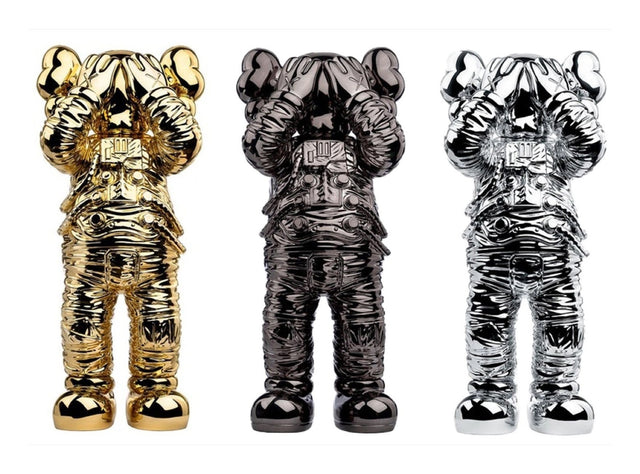
KAWS Holiday Space Set of 3 Gold Black Silver Companion Astronaut Figure Rare
$2,900.00 USD
-
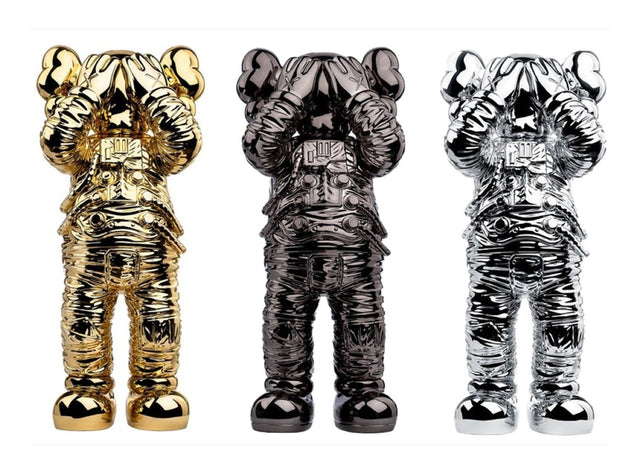
KAWS Holiday Space Set of 3 Gold Black Silver Companion Astronaut Figure
$2,900.00 USD
-
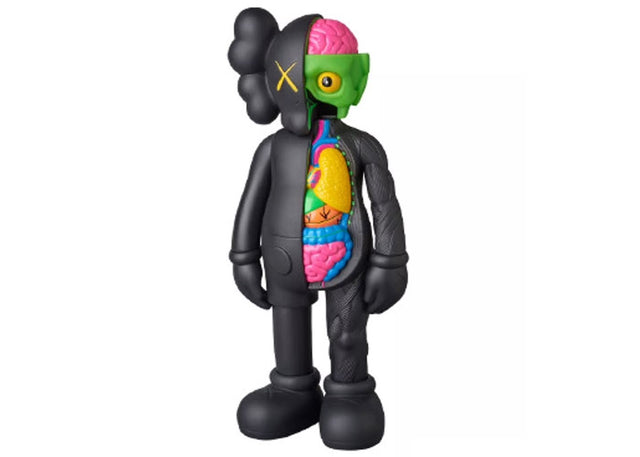
KAWS Companion Flayed Open Edition Black Medicom Toy Dissected Sealed New Figure
$599.00 USD
-
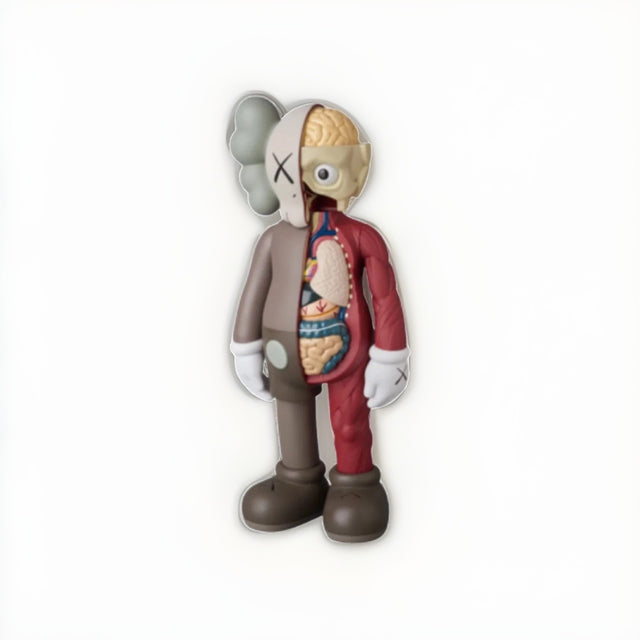
KAWS Companion Flayed Open Edition Brown Medicom Toy Dissected Sealed New Figure
$349.00 USD
-
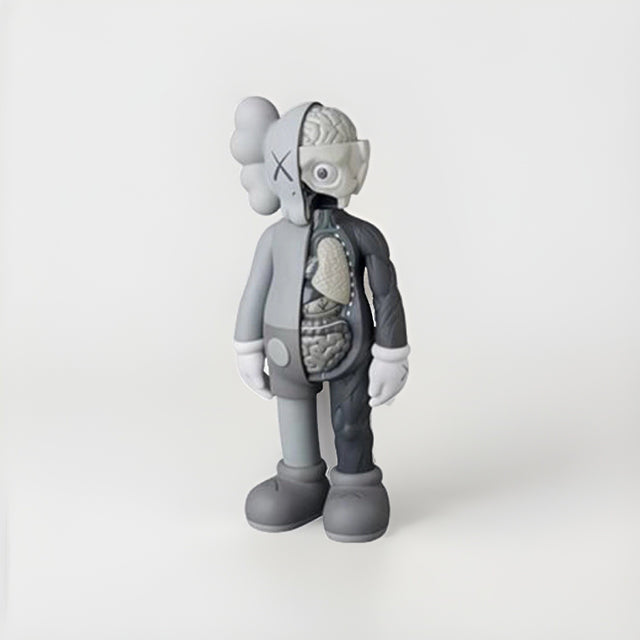
KAWS Companion Flayed Open Edition Grey Medicom Toy Dissected Sealed New Figure
$349.00 USD
Browse the collection for current listings.