Updated 2026-07-11
A balanced evaluation of JSA Basic Cert, LOA, witnessed services, public verification, expert-opinion limits, and buyer due diligence.
Updated July 11, 2026 · By Gauntlet Gallery Research
Quick answer: JSA is a widely used third-party autograph authenticator with public certificate lookup, basic certification, detailed Letters of Authenticity, witnessed-signing services, and multiple possible outcomes—including rejection and inconclusive results. That makes a genuine, matching JSA record meaningful evidence. It is not infallible: JSA itself says it does not claim 100% accuracy. Buyers must verify the number and match the signer, item, label, document, image, and seller evidence.
What “reliable” should mean
Reliability is not a yes/no badge. For an autograph authenticator, it includes:
- a defined process and service scope;
- expert review or documented witnessing;
- permanent, buyer-accessible records;
- item-specific labels or documents;
- transparent outcomes beyond “pass”;
- market acceptance;
- a way to handle questions, replacements, and mismatches;
- honest limits.
JSA meets several important structural tests. Its official site provides a verification tool, describes multiple services, and distinguishes accepted, questionable, and inconclusive outcomes. Its submission page also states that JSA does not claim accuracy 100% of the time. That caveat is not a reason to dismiss the service; it is the appropriate limit for expert opinion.
The buyer’s question is therefore not “Does the item have a JSA sticker?” It is “Does this physical item match a genuine JSA record, and what exactly did JSA opine on or witness?”
JSA services are not interchangeable
JSA’s official services page describes several relevant outputs.
Basic Certification (COA) uses a registration card and corresponding alphanumeric tamper-evident label. JSA says the certification number is uploaded for customer verification. The basic service is used for lower JSA-discretionary-value items and has less customized documentation than a full LOA.
Letter of Authenticity (LOA) includes an inset image and customized information such as signature quantity, manufacturer, writing implement, and item type/model. A corresponding label can be placed on the item or letter according to customer preference.
Witnessed Protection Program (WPP) means a JSA representative watched the signing at an event. This is fundamentally different from examining a pre-existing autograph.
Letter of Opinion (LOO) indicates the autograph did not meet requirements and was considered of questionable authenticity.
Inconclusive Letter (INC) means JSA could not reach a confident conclusion. This matters because a process that admits uncertainty is more informative than one that forces every item into pass/fail.
Do not call a Basic Cert an LOA, or a standard opinion “witnessed.” Record the exact service.
What post-signing authentication can establish
When JSA examines an existing autograph and issues certification, the result is an expert opinion about the signature submitted. It can improve confidence, marketability, and clarity. It does not automatically establish:
- where or when the signing occurred;
- who owned the object;
- that a guitar was played or stage-used;
- that a record is a particular pressing;
- that an instrument is manufactured by the brand claimed;
- that every component in a frame was examined;
- current market value.
Those are separate questions. A JSA-certified Isaac Brock autograph on a custom guitar does not prove Fender manufacture. A JSA-certified signed pickguard does not prove the artist handled the assembled guitar. A JSA-certified signature on a record jacket does not grade the vinyl.
Reliability improves when the conclusion is kept inside its actual scope.
Why witnessed evidence is different
JSA says its WPP representative observes the athlete or celebrity signing at a show, convention, or signing event. That reduces the uncertainty inherent in comparing a pre-existing signature with exemplars.
Witnessing still does not prove every later claim. It does not establish stage use, ownership history after signing, current condition, or that a signed removable component was never transferred. The buyer must still match the WPP record and physical label to the object.
If a seller writes “JSA witnessed,” require the lookup or documentation to show WPP. A generic JSA logo is not enough.
How to verify a JSA-certified item
Use this sequence:
- Go directly to JSA Verify Authenticity.
- Enter the complete alphanumeric number from the physical label or document.
- Confirm that a result is returned rather than an error or no-record message.
- Match the signer or signers.
- Match the item category and signed component.
- Match the number across label, Basic Cert, or LOA.
- Compare the LOA image with signature placement, object color, damage, and layout.
- Inspect label edges for lifting, cuts, residue, or transfer.
- Confirm that no extra signature or component was added after authentication.
- Save the lookup and photographs in the acquisition file.
A no-record response can have several explanations, including entry error or a technical problem. It is not permission to assume authenticity. Recheck the number, preserve the screen, and contact JSA before buying.
Match the label to the item, not just the number
Certification-number lookup is necessary but not sufficient. A genuine number can be presented beside the wrong object, a label can be attached to a removable component, and a multi-piece display can expand after authentication.
Ask:
- Where is the label attached?
- Can that part be removed or switched?
- Does the item description say guitar, pickguard, album, photograph, or another format?
- Does the LOA image show the same object?
- Are the same signatures present now?
- Is the document original or a seller-made summary?
If a signed pickguard is installed on a new guitar, describe the pickguard as the certified signed object unless JSA’s record covers the assembled instrument. Accurate wording preserves the value of the real evidence.
Evaluate Basic Cert versus LOA
A full LOA generally contains more item-specific information than a Basic Cert. JSA’s current fee and service page explains that Basic Certification uses a matching card and label, while LOA documentation includes an inset image and customized characteristics.
More documentation can make matching easier, especially for high-value, unusual, or multi-signature items. It does not make every LOA-backed object more valuable than every Basic-Cert item. Witnessed status, signer demand, object, condition, provenance, and market evidence still matter.
For a large guitar or multi-piece display, ask whether an LOA image and description are available. For a lower-value signed album, a matching Basic Cert may be proportionate. The key is not document size; it is whether the documentation identifies the object without ambiguity.
Understand expert-opinion limits
Autograph authentication involves comparison and judgment. Signatures vary with age, speed, surface, pen, signing posture, health, and context. Exemplars can be incomplete. A genuine rushed signature may look unusual; a skilled imitation may look convincing.
That is why JSA’s explicit non-100%-accuracy statement matters. Buyers should avoid two opposite errors:
- treating JSA as meaningless because no opinion can be perfect;
- treating a JSA label as absolute proof of every claim in a listing.
The reasonable position is calibrated: a genuine matching JSA certification is substantial evidence within its scope, strengthened by direct provenance and object matching, and still subject to review when facts conflict.
Does JSA affect resale value?
JSA may affect marketability by reducing buyer uncertainty and making the item easier to describe and verify. The effect on price is not a fixed percentage. It depends on the signer, object, service type, completeness, competing supply, and buyer preferences.
Measure the effect with paired completed sales: same signer, object, signed surface, condition, and date, differing mainly in authentication. Even then, small sample sizes and hidden provenance can distort the apparent premium.
Authentication can create more value through liquidity than headline price. An item that another buyer can verify quickly may sell faster or attract a broader audience. Do not promise a return or treat the authentication fee as automatically recoverable.
Seller quality remains independent
A real JSA item can still be misdescribed, poorly packed, overpriced, damaged, or combined with unsupported provenance. Review the seller’s photographs, return policy, business identity, autograph history, condition disclosures, and shipping plan.
Warning signs include:
- stock images instead of the physical item;
- refusal to show the label and document;
- a lookup that names another signer or object;
- “JSA-style” or “guaranteed to pass” wording;
- full-band claims when the LOA lists fewer names;
- stage-use claims based only on a signed object;
- label placed where it cannot be inspected;
- price justified only by active asking listings.
Authentication and seller diligence are two separate risk controls.
Compare JSA with PSA and Beckett fairly
PSA, JSA, and Beckett offer different service structures and have different collector preferences. Compare the exact service rather than repeating a universal ranking.
For a buyer:
- Is the signing witnessed or examined later?
- Is there a public record?
- Does the record include an image?
- Is the signed component identified?
- Does the physical label match?
- Will the likely resale audience recognize the service?
PSA Cert Verification carries its own warning that number verification does not eliminate risk. Beckett provides an official alphanumeric lookup and a separate Witness Certification program. No major service should be reduced to a logo or declared infallible.
A buyer decision rule
Proceed when:
- the JSA number verifies;
- signer, item, service, label, and document agree;
- the physical object matches any image;
- seller evidence and return terms are strong;
- claims stay within the authentication scope;
- price is supported by completed comparable sales.
Pause when a record is missing, mismatched, technically unavailable, or attached to a removable component that the listing does not disclose. Contact JSA or request more evidence.
Decline when the seller refuses basic verification, expands “signed” into unsupported ownership/use claims, or pressures purchase before resolving a mismatch.
Audit a JSA listing in five minutes
Start with the physical item photograph, not the marketing title. Locate the JSA label and record its complete number. Open JSA’s own verification page in a new tab and enter it manually. Compare signer, object category, signature count, and service type. If an LOA image exists, compare the entire signed surface, not only the autograph.
Next, ask whether the label is attached to the permanent object or a removable component. Check that the listing does not expand “authenticated autograph” into manufacture, ownership, use, or value. Read return terms and save the listing.
This fast audit cannot replace physical inspection, but it catches common category errors before money changes hands. Any mismatch moves the item from “consider” to “pause.”
What a reliable seller should provide
A seller should supply uncropped item photos, label and document images, a direct verification path, condition notes, exact signed-component language, provenance claims with supporting records, and written return terms. It should answer whether components were transferred or signatures added after authentication.
The seller should also welcome independent verification. Pressure, vague references to reputation, or refusal to show the physical label weakens the transaction even when JSA is a recognized service.
Frequently asked questions
Is JSA legitimate?
JSA operates public verification, Basic Cert, LOA, witnessed, rejection, and inconclusive services. A genuine matching record is meaningful evidence. “Legitimate” does not mean error-free or unlimited in scope.
Is a JSA LOA better than a Basic Cert?
It is more detailed and usually easier to match to a high-value object. The stronger purchase still depends on service, object, condition, provenance, seller, and price.
Does JSA authenticate music autographs?
JSA’s services cover signed memorabilia broadly. Verify the exact signer fee/eligibility and item record rather than assuming every name or format is handled identically.
Can a JSA opinion change?
Expert opinions can differ or be revisited as evidence and exemplars develop. Preserve the original record and ask JSA about review procedures when a material conflict arises.
Should I buy if the number does not appear?
Not until the discrepancy is resolved. Recheck entry, contact JSA, and require seller cooperation. A missing result is not a substitute for verification.
Gauntlet Gallery context and methodology
Gauntlet Gallery lists JSA-backed and other authenticated music memorabilia, so these checks are directly relevant to its buyers. This article uses JSA’s own pages for service facts and explicitly preserves JSA’s stated accuracy limit. It is educational, not a guarantee about any specific item.
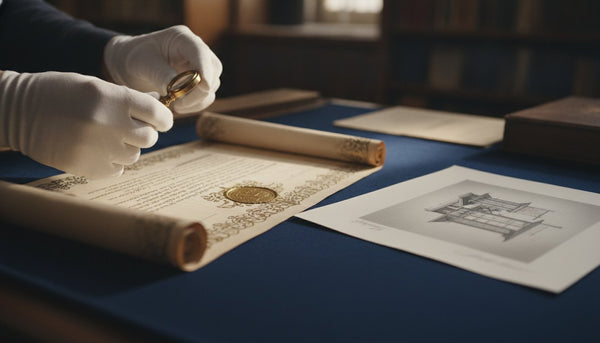
Editorial image disclosure: Illustrations on this page were generated with Nano Banana for explanatory use. They are not authentication evidence, provenance records, or reproductions of any specific collectible.