Investment-Grade Art That Also Elevates a Room
Yes, art can be both a genuinely good acquisition and great decor — but only when you choose for both at once, and refuse to compromise on the things that protect value. A piece earns its place on the wall by improving the room; it earns its place in your holdings through a documented artist, a defined edition, honest condition, and clean, verifiable provenance. The mistake most first-time buyers make is treating those as opposing goals. They are not. The same disciplines that make a work collectible — scarcity, authentication, condition, an artist with a real trajectory — are exactly what make it feel considered and permanent in a room, rather than disposable. Below is how to buy so that a room upgrade doubles as a smart acquisition, without sacrificing style or overstating what any single piece will do financially.
What "Investment-Grade" Actually Means (and What It Doesn't)
"Investment-grade" is a useful phrase only if you keep it honest. It does not mean guaranteed appreciation, and no responsible dealer will promise a number. It means the work sits in a category where a real secondary market exists, where comparable sales can be observed, and where the specific attributes of your piece — artist, edition, condition, provenance — are the ones the market rewards. A mass-produced open-edition poster can be beautiful and still have essentially no resale floor. A signed, numbered, limited-edition screenprint by an artist with a documented auction and marketplace history is a different instrument entirely.
The four pillars that separate decor from an asset
- Artist trajectory. Is there a multi-year record of sales, institutional attention, and demand that isn't dependent on a single hype cycle? A career with depth behind it is more durable than a viral moment.
- Edition and scarcity. Smaller, clearly defined editions with signatures and numbering carry more weight than open runs. Scarcity is only meaningful when it's documented.
- Condition. Prints and works on paper are unforgiving. Fading, foxing, trimming, tears, and restoration all move price — usually downward and permanently.
- Provenance and authentication. The chain of ownership and the authentication method are what let a future buyer trust the piece. Without them, even a real work is hard to resell at full value.
If a piece is strong on all four, it can hold or appreciate over a reasonable horizon while looking superb on your wall. If it's weak on two or more, treat it as decor you happen to love — which is a perfectly good reason to buy, just not an investment case. For the market context behind these categories, our Financial Insights hub reviews historical sales data rather than forecasts.
It helps to think in terms of a floor and a ceiling. The four pillars set the floor — the price a work can reasonably be resold into an existing market because it is documented, authentic, and in good condition. Desirability, timing, and the artist's momentum influence the ceiling, and the ceiling is far less predictable. Sound buying is mostly about protecting the floor: you cannot control whether an artist's market runs hot next year, but you can control whether your specific piece is the version collectors want — signed rather than unsigned, pristine rather than sun-faded, documented rather than orphaned. Buyers who obsess over the ceiling tend to overpay in hype cycles; buyers who protect the floor tend to sleep well and sell cleanly.
Choosing Pieces That Look Stunning and Hold Value
The decor question and the value question share more overlap than most buyers expect. A piece that commands a wall — strong composition, a confident palette, real presence at scale — is usually a piece the market also takes seriously, because presence tends to track with an artist working at full ability. Start from the room, then filter through the four pillars.
Let the wall set the brief
Before you shop, know the constraints: the wall's dimensions, the light it gets, the palette already in the room, and the viewing distance. A large graphic screenprint reads beautifully from across an open-plan space; a detailed, intimate work rewards a hallway or reading nook where people stand close. Buying a piece that fits the architecture is the single biggest driver of whether it looks intentional or like an afterthought — and intentional rooms are the ones people photograph, share, and remember.
Then filter for durability
Once a candidate looks right in the space, run it through the pillars. Signed and numbered? Reasonable edition size? Condition documented with real photography, not stock images? A stated authentication path? An artist you can look up and find a sales history for? A piece that clears those bars is one you can enjoy now and, if your life changes, resell into an existing market rather than hoping to find the one buyer who happens to want it.
The Decor-vs-Preservation Balance
Here is where aspiration meets maintenance. The environment that flatters a piece visually is not always the environment that preserves it — and the collectors who do best learn to satisfy both. The good news is that modern framing and simple placement discipline let you have the look without quietly destroying the asset.
Light: the thing that flatters and the thing that fades
Direct sunlight is the most common cause of avoidable value loss in works on paper. UV exposure fades pigments and yellows paper, and it is not reversible. The fix is not to banish art to a dark corner; it's to control the light. Hang valuable works out of direct sun, use UV-filtering glazing, and light the piece deliberately with LED sources rather than letting a south-facing window do the work. A framed print washed by a warm, angled lamp looks more like a gallery and ages far better than one baking in afternoon glare.
Glazing, framing, and materials
- UV-filtering, low-reflection glazing protects against fading while cutting glare — so the piece both lasts longer and looks better under lamplight.
- Acid-free mats and backing prevent the brown burn lines and foxing that quietly cut resale value.
- Reversible, archival framing (hinged mounting, no dry-mounting or trimming of a limited edition) preserves the work's originality — trimming margins or flattening a deckled edge can permanently reduce what a piece is worth.
Placement and climate
Avoid hanging works on paper above active fireplaces, over heating vents, or on bathroom-adjacent walls where humidity swings. Stable temperature and moderate humidity matter more than any single decorating choice. Practically: interior walls, away from direct heat and moisture, at a height where the center sits near eye level, framed with materials that can be undone later without harming the sheet.
None of this requires a climate-controlled vault or a decorator's budget. It requires a few defensible choices made once, at framing time, and a bit of restraint about where the piece hangs. The reward is that the work you fell in love with looks the same in a decade as it does today — which is exactly what preserves both the daily pleasure of owning it and the option to resell it into a market that still recognizes it as pristine. Preservation, in other words, is not the opposite of good decorating; it is what keeps good decorating from becoming an expensive mistake.
Categories That Double as Design Statements
Some corners of the market are unusually good at being both wall-worthy and collectible. These are the categories we see doing double duty most often — each with its own authentication standard that you must respect and never blur across artists. The reason these particular categories work is that they combine graphic legibility — imagery that reads instantly and holds a wall — with defined editions and established verification. That pairing is uncommon: plenty of beautiful art has no resale market, and plenty of collectible art is visually inert. The categories below sit in the overlap, which is why they turn up again and again in rooms that are as considered as they are well-invested.
Shepard Fairey
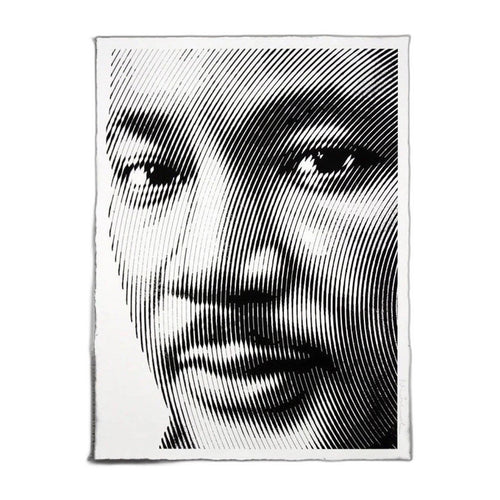
Fairey's bold, poster-derived graphic language is built to command a wall — high-contrast reds, creams, and blacks with dense ornamental detail that reads at a distance. Signed, numbered screenprints from defined editions are the collector's sweet spot. Fairey works are authenticated by silent, content-based verification — the piece's own documented characteristics — not by a third-party certificate program, so buy from sellers who document the work thoroughly. Browse the current range in our Shepard Fairey collection.
Pop art and its lineage
Warhol, Haring, Basquiat, and the pop tradition they anchor remain some of the most recognizable, room-defining imagery in modern collecting. Warhol works are authenticated through TrueCOA. The visual vocabulary — flat color, graphic confidence, instantly legible subjects — is exactly what makes these pieces anchor a living room. See what's available in Pop Art.
KAWS and BE@RBRICK designer figures
Designer art figures bring dimension and playfulness that flat art can't, and they've become genuine design objects on their own shelves and plinths. KAWS and BE@RBRICK pieces are authenticated via TrueCOA — a blockchain certificate any future owner can verify online. Keep original boxes and packaging; for figures, packaging is part of both the display story and the resale case.
DEATH NYC
Small-format, densely referential, and highly giftable, DEATH NYC pieces cluster and grid beautifully on a wall. They carry a COA with a gold seal — that's the standard to look for, and its absence is a red flag.
Banksy
The most recognizable name in street art, and the most exacting on authentication: Banksy works are authenticated only through Pest Control. Anything claiming to be Banksy without Pest Control paperwork should be treated as decorative at best. That discipline is precisely why the properly authenticated pieces hold their standing.
A note on memorabilia
If your taste runs to signed music or entertainment memorabilia as wall pieces, the authentication standard shifts to the specialists — Beckett, JSA, or PSA. As with every category above, the certificate is not paperwork you file and forget; it's the thing that lets the next owner trust the piece.
The Value + Decor Scorecard
Use this to weigh any candidate before you buy. Score each attribute honestly. A piece that lands mostly in the right-hand column is where the decor case and the acquisition case reinforce each other.
| Attribute | Decorative-only signal | Investment-grade + decor signal |
|---|---|---|
| Edition | Open edition, unsigned, unnumbered | Limited, signed, numbered; defined edition size |
| Artist trajectory | No traceable sales record | Multi-year, documented demand and market history |
| Authentication | None, or a vague generic "certificate" | Category-correct standard (Pest Control, TrueCOA, gold-seal COA, Beckett/JSA/PSA) |
| Condition | Undisclosed; stock photos only | Documented with real images; no fading, trimming, or restoration |
| Provenance | Unknown chain of ownership | Clear, verifiable history from a reputable source |
| Visual presence | Fine up close, forgettable at scale | Commands the wall; anchors the room at viewing distance |
| Fit to space | Wrong scale or palette for the wall | Sized, colored, and lit for its exact placement |
| Preservation setup | No UV protection; direct sun | UV glazing, acid-free framing, controlled light and climate |
How to Buy So the Room Upgrade Is Also a Smart Acquisition
The buying process is where good intentions either become a real asset or a nice-looking gamble. A short, repeatable discipline keeps you on the right side of that line.
A practical buying sequence
- Define the wall first. Dimensions, light, palette, viewing distance. Buy to the space, not to an impulse.
- Shortlist by artist and category. Favor artists with a documented market and categories with a clear authentication standard.
- Verify the specific piece. Confirm edition, signature, numbering, and the correct authentication path for that artist — never mix chains across artists.
- Inspect condition on real images. Ask for detailed photography of margins, corners, and surface. Assume anything undisclosed is a problem.
- Confirm provenance. Understand where the piece came from and who is standing behind it.
- Plan the framing before it arrives. UV glazing and archival, reversible mounting are part of the acquisition cost, not an afterthought.
- Keep the paperwork and packaging. Certificates, receipts, and original boxes are part of the resale case.
New to this? Start with our Collector Library for what to buy and how to verify it, and browse the full Art Index to see how edition, scarcity, and collector notes are documented across artists. If you're comparing where to buy authenticated work, our companion guide, Best Places to Buy Investment-Grade Street Art, Compared, walks through channels and their trade-offs. And when you're ready to browse broadly, the full catalog lives at every authenticated piece.
Set expectations honestly
Buy pieces you genuinely want to live with. Category trends are context, not promises — condition, authentication, and provenance mean an individual work can perform very differently from any average. If you'd be content to own a piece for years simply because it improves the room, and it also clears the four pillars, you've made a sound decision regardless of what the market does next. That combination — love it on the wall, and it holds up as an asset — is the whole point.
Frequently Asked Questions
Can a single piece of art really be both good decor and a good investment?
Yes, when it satisfies both goals at once: it improves the specific room it hangs in, and it clears the value pillars — a documented artist, a defined limited edition, honest condition, verifiable provenance, and the correct authentication for its category. Pieces that are strong on presence but weak on those pillars are decor; pieces strong on both are where the two cases reinforce each other.
Does framing a print behind UV glass make it look worse in a room?
No — modern UV-filtering, low-reflection glazing actually improves how a piece reads under lamplight by cutting glare, while protecting pigments from fading. It's one of the few upgrades that helps both the look and the longevity of a work on paper.
Where should I never hang a valuable print?
Avoid direct sunlight, walls above active fireplaces or heating vents, and humidity-prone spots like bathrooms. Direct UV causes irreversible fading, and heat and moisture swings damage paper. Favor interior walls with controlled, indirect light and stable climate.
How do I know a piece is authentic?
Use the authentication standard specific to the artist, and never mix them: Banksy only through Pest Control; KAWS and BE@RBRICK via TrueCOA; DEATH NYC by COA with a gold seal; Warhol via TrueCOA; Shepard Fairey by silent, content-based verification; and music or entertainment memorabilia through Beckett, JSA, or PSA. A certificate from the wrong program — or a vague generic one — is a red flag.
Does condition really affect value that much for prints?
Yes. Works on paper are unforgiving: fading, foxing, tears, trimmed margins, and restoration all reduce value, often permanently. Always review real, detailed photography of margins and surface before buying, and preserve condition afterward with archival framing.
Do I need to keep the box and certificate for figures like KAWS or BE@RBRICK?
Yes. For designer art figures, original packaging is part of both the display appeal and the resale case, and the certificate is what lets a future buyer trust the piece. Keep them together and undamaged.