Direct answer
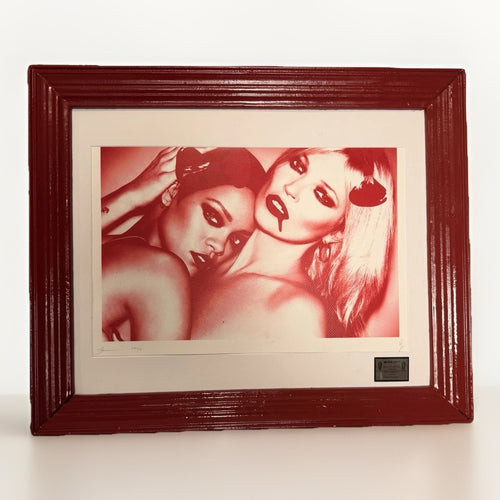
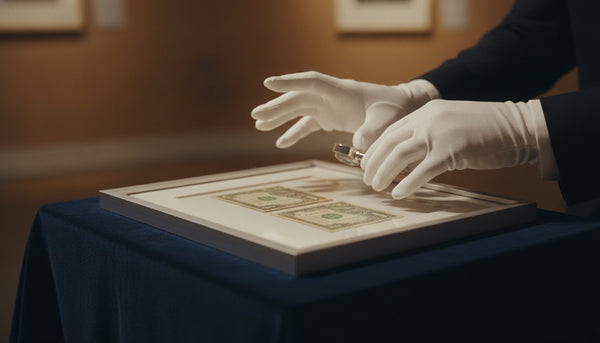
To sell a DEATH NYC print responsibly, start by creating a record of the exact object you have—not a generic description of the image. Photograph the work front and back, any markings, its edges, the packaging, and every document that is actually included. Write a plain-language condition report, separate facts from assumptions, and choose a selling channel whose rules, audience, fees, and return process you have checked recently. In the listing, do not call a work official, authentic, rare, complete, signed, numbered, or one of one unless the specific item supports that claim and the evidence is shown or described accurately. Protect the work with a flat, rigid, trackable shipment and retain your pre-shipment record. This is a practical selling workflow, not an appraisal, authentication service, legal opinion, or promise of a sale price.
Table of contents
- The goal: make the listing inspectable
- Build an object record before discussing price
- Separate condition, documentation, and provenance
- Choose a venue after checking its current rules
- Photograph a work so a remote buyer can assess it
- Write listing language that does not overclaim
- Set a price range without confusing an ask with a value
- Pack, ship, and preserve a handoff record
- Handle questions, changes, and a reported issue
- Practical pre-listing checklist
The goal: make the listing inspectable
Selling a print online asks a stranger to make a judgment from a screen. A useful listing makes clear what is being offered, what comes with it, what it looks like in ordinary light, and what the transaction terms are. That replaces implied promises with an inspectable record.
For a DEATH NYC work, shorthand such as “with COA,” “AP,” “limited,” “original,” or “gold seal” is not a substitute for photographs, measurements, history, and an account of what is included. A certificate, label, signature, notation, or packaging may be relevant evidence; none is universal proof on its own. Build a private sale file before drafting the listing so the details come from the exact work in hand.
Overlap check and distinct intent
This article was deliberately scoped as a seller-side operations guide. It does not duplicate Gauntlet Gallery’s buyer-side condition guide, Condition Matters: Grading a Death NYC Print Before Purchase (/blogs/editorial/death-nyc-condition-guide), which helps a buyer inspect a candidate listing. It also does not duplicate How to Read a Death NYC Certificate of Authenticity (/blogs/editorial/death-nyc-coa-guide), which explains how to read documentation without treating it as standalone proof.
The closest existing pages checked were:
-
/blogs/editorial/death-nyc-official-releases-secondary-market— current release versus resale buying checks. -
/blogs/editorial/death-nyc-condition-guide— buyer-side condition review. -
/blogs/editorial/death-nyc-coa-guide— document-reading guidance. -
/blogs/editorial/death-nyc-care-storage— care and storage of paper works. -
/blogs/editorial/death-nyc-price-guide— using comparable sales while buying.
Those pages are useful inputs to a sale file, but a seller still needs a distinct sequence: record, disclose, choose a venue, fulfill, and keep a transaction trail. The focus here is that sequence.
1. Build an object record before discussing price
Start a folder on your computer or a physical sleeve labeled with a temporary internal ID, such as DNYC-2026-08-01-01. The ID is only for your recordkeeping; it does not authenticate the work and should not be presented as a registry number. Put every file for this exact object in that folder. If you are selling multiple works that use similar imagery, give each work its own ID. Small differences in paper, margin, notation, damage, framing, or documents can matter to the buyer’s decision.
The object record should answer six questions.
What is physically present? Record the print, any mat or frame, packaging, paper documents, invoice copies, and any other materials in the lot. If an item is not in your possession, do not write as though it is included. If you have a digital copy but not an original document, say that plainly.
What does the object measure? Measure the sheet and, if relevant, the image area and the framed dimensions separately. Use a tape measure or ruler, photograph the measurement where practical, and state whether a dimension is approximate. Do not infer a published format from another example; production and trimming differences can exist.
What markings can you see? Photograph and transcribe visible signatures, dates, edition-style notations, stamps, labels, and inscriptions exactly as they appear. A transcription such as “lower right, handwritten notation appears to read …” is more honest than translating it into a conclusion. Avoid extrapolating a mark’s meaning when you cannot document it.
How did you acquire it? Write the acquisition path in chronological order: for example, “purchased from [seller type] in [month/year]; seller provided [document]; stored unframed since.” If a link, receipt, email, or prior listing exists, archive a copy. If the history begins with a prior owner and you cannot independently verify earlier events, identify the limit rather than filling it with a story.
What is the condition today? Describe what you can observe under ordinary, diffuse light and at close range. A condition report is a disclosure tool, not a conservation examination. If a work appears to have handling marks, waviness, foxing, corner pressure, a tear, adhesive residue, a frame shadow, fading, or an odor, say so. If you do not know whether a visible feature is a production characteristic, storage effect, or later damage, state that uncertainty.
What transaction terms apply? Decide before publication whether you will sell the work framed or unframed, where you can ship, how return requests are handled under the channel’s actual policy, and how you will insure or declare the shipment if you choose to do so. Policies vary and change. Check the venue, carrier, payment processor, and destination-country requirements on the day you list.
This record is useful even if you later choose not to sell. It becomes the baseline that lets you identify any later change in condition and answer questions without rewriting history in a message thread.
2. Separate condition, documentation, and provenance
These three ideas often get collapsed into one reassuring sentence. They should not be.
Condition is the observable physical state of the exact sheet and any accompanying materials. It concerns paper, ink or other visible media, margins, handling, framing, and storage effects. A work can have an orderly paper trail and still have a condition issue. Conversely, a clean-looking sheet does not establish how it was made or where it has been.
Documentation is the information that travels with the work or supports the seller’s account: a receipt, email, order confirmation, invoice, certificate, prior catalogue entry, old listing, or condition report. Documentation may be helpful, incomplete, inconsistent, or unrelated to the specific sheet. Explain what each document is, who issued it if known, whether it identifies the particular work, and whether you are transferring the original or a copy.
Provenance is the ownership and transaction history claimed for the work. A continuous, independently supported chain can be stronger than a vague one, but it may still have gaps. Sellers should not represent provenance as complete merely because they can identify one earlier transaction. Use phrases such as “acquired by the seller from …,” “accompanied by …,” or “the seller was told …” to distinguish first-hand knowledge from inherited information.
If you need a buyer-focused framework for reviewing an item’s visible condition, point readers to Gauntlet’s condition guide for a Death NYC print. For document literacy, the more useful companion is Gauntlet’s guide to reading a Death NYC certificate of authenticity. Those links do not resolve the facts of your specific item; they help you make your disclosure more precise.
The most credible seller language distinguishes observation from conclusion. “The lot includes a paper certificate that names the work as described” is an observation. “The certificate proves the work is authentic” is a conclusion that may not be justified by the certificate alone. The first gives a buyer something inspectable. The second creates an unnecessary promise.
3. Create photographs that answer predictable questions
Use photographs taken specifically for this listing, not a stock image, an old catalogue image, or a cropped social image. Photograph in diffuse daylight or consistent neutral lighting. Avoid high-contrast filters, strong color correction, staged glare, and heavy sharpening. Buyers need enough information to see the work; they do not need a dramatic image that conceals surface detail.
Begin with a full, straight-on image of the front. Add a full reverse if the back is accessible. Then make detail images: each corner, the signature or notation area, the edges, any label or document, and every disclosed issue. Include a scale reference in at least one image, but do not let a ruler cover a marking. If the work is framed, photograph the glazing and frame separately from any view that tries to show the artwork through reflections. If you cannot remove the work from the frame safely, say that the work was assessed while framed.
Photograph accompanying documentation as part of the lot, but protect personal data. You can mask an order number, home address, payment details, or other sensitive fields before sharing a copy. Do not alter the substantive text or image to create an impression that a document says more than it does. In the listing, explain that redactions protect personal information.
For flaws, use both a contextual image and a close-up. A corner crease that appears catastrophic in a macro photo can be nearly invisible at viewing distance; a broad field of fading can disappear in a flattering overhead photo. The pair lets a buyer judge scale. Include a short caption: “upper-left corner, approximately [measurement], shown in image 8 and image 9.”
Keep original, full-resolution image files until the transaction and any applicable return period have ended. Marketplace compression can remove useful detail. A complete photo set is also better evidence of pre-shipment condition if a later issue is reported.
4. Choose a selling channel after checking its current rules
There is no universally best channel. Choose according to the work, evidence file, time available, fees, return process, and type of buyer. Check current rules before committing.
Direct sale or a marketplace listing gives control over the description and timing, but makes you responsible for communication, payment, shipping, and compliance. Read current rules for art, chargebacks, international selling, and returns; copied old listing copy may no longer be adequate.
Consignment with a gallery or specialist can transfer presentation and fulfillment, but adds a contract, commission, timeline, condition intake, and possible exclusivity. Get the agreement in writing and confirm description, offer approval, shipping allocation, and what happens after a return or an unsold term.
Auction may fit certain objects or collections. Review reserve, fees, catalogue wording, insurance, and payment terms before consignment. Auction results are not automatically comparable to private sales because presentation, timing, audience, and fees vary.
Local handoff permits inspection but needs clear safety and payment boundaries. Use a lawful setting and a traceable arrangement you understand. In every channel, let the listing language control; update it if a message changes what is included, price, or delivery.
5. Write listing language that does not overclaim
The title should identify the object, not make a conclusion. A useful format is: “DEATH NYC print — [visible subject or seller’s descriptive title] — [sheet/framed] — [included documents, if any].” Avoid title stuffing and any claim you cannot substantiate in the photographs or body copy.
In the description, use a fixed order:
- What is for sale. Describe the exact work and whether the frame, mat, certificate, receipt copy, or other item is included.
- Measurements. State sheet, image, and framed size separately where available.
- Visible markings. Transcribe rather than interpret.
- Condition. State the positives and the disclosed issues in the same section.
- Acquisition and documentation. Identify only what you know and what you are transferring.
- Images. State that the photos are of the actual item, if they are.
- Terms. Give location, shipping scope, packing method in general terms, and the platform or sale agreement’s current return framework.
Avoid phrases with hidden guarantees. “Museum quality,” “investment grade,” “flawless,” “mint,” “official,” “verified,” “rare,” “one of one,” and “guaranteed” all ask the buyer to rely on a conclusion. A precise factual substitute is usually better: “stored flat in the seller’s possession since acquisition,” “the lot includes the pictured document,” “small handling mark visible in photo 10,” or “no additional documents are represented.”
If you use a term that a buyer might reasonably interpret in more than one way, define it. For example, “unframed” does not always tell a buyer whether the sheet has ever been framed; “sealed” does not necessarily identify what lies inside; “AP” should not be expanded beyond what is visibly marked and supported by the item-specific evidence. A carefully worded description is not less persuasive. It gives the serious buyer a reason to trust the rest of the listing.
6. Set a price range without confusing an ask with a value
A sale listing needs a number, but that number is an asking decision, not a universal statement of value. Start by defining the exact comparison problem: same or closely related image, similar sheet size, visible notation, condition, documents included, frame status, date of transaction, venue, buyer’s premium or seller fees, and geographic market. A loosely related image or an unverified asking price is not a comparable sale.
Keep a small worksheet with three columns: observed public outcomes, current unsold asks, and your proposed ask or reserve. Do not mix the columns. An unsold listing tells you that a seller wants a number; it does not show that a buyer paid it. A public result may include a buyer’s premium or omit taxes and shipping. A private transaction may be impossible to verify. Note the limitation next to every number.
Then adjust only for facts you can describe. A work with an unexamined frame, incomplete documentation, visible paper damage, or unclear history may call for a different approach than a comparably named listing with more complete evidence. This is not a formula and it is not a valuation opinion. It is a discipline against copying the most optimistic number you can find.
Before publishing, decide your lowest acceptable net amount after channel fees, payment processing, packing, shipping, and any possible return cost. If you cannot state those costs with confidence, do not pretend a high gross number is a better outcome. Current tax, customs, fee, and payment rules are time-sensitive; consult the relevant platform, carrier, tax adviser, or official authority for your situation.
7. Pack, ship, and preserve a handoff record
Paper works can be damaged by ordinary shipping. Decide whether the exact work should travel flat, framed, or in a tube only after considering its size, paper, curl, framing, and the carrier’s current restrictions. If uncertain, use a professional art-packing service. The goal is an object-appropriate method, not a universal recipe.
For a print that can safely travel flat, use clean interleaving, rigid protection, and a package that resists bending. Keep tape and pressure-sensitive surfaces away from the work. For a framed piece, consider glazing, hardware, sharp edges, and the stated frame condition. Photograph the packed object, retain tracking and the receipt, and send delivery expectations tied to the actual carrier rather than a promise you do not control.
If declared-value or insurance coverage is relevant, read current terms. Coverage can contain exclusions, timing rules, documentation requirements, and limits. Do not say “fully insured” unless you can accurately explain the applicable policy.
8. Handle questions, changes, and a reported issue
Answer questions with the record, not a new assertion. If a buyer asks whether a mark proves something, describe it, point to the photo, and say what evidence you have. If you do not know, say so.
If a delivery problem is reported, preserve the record before debating cause. Ask for photographs of the packaging, label, interior packing, and reported issue; compare them with your pre-shipment images and the carrier’s current claim procedure. Available remedies depend on the agreement and current policies. Keep a dated note of the report and the next step, and photograph any agreed return before re-listing it.
The same discipline transfers to other contemporary art categories. If you also sell Invader editions, the companion draft How to Sell or Consign an Invader Print, Kit or Panel applies the same record-first method to a different format. For work that arrives with a suspected shipping issue, the linked draft Receiving a DEATH NYC Print: Unboxing, Condition Documentation and a 48-Hour Claims Checklist gives the buyer-side intake sequence a seller can anticipate.
Practical pre-listing checklist
| Step | Record or action | Why it matters | Do not substitute |
|---|---|---|---|
| Identify | Internal ID, exact visible subject, sheet and frame measurements | Keeps similar works from being mixed up | A generic title from another listing |
| Photograph | Full front/reverse, edges, markings, every disclosed issue, documents | Lets a remote buyer inspect the exact lot | A stock photo or a flattering crop |
| Describe | Plain-language condition report and what is included | Separates observations from promises | “Mint,” “perfect,” or “guaranteed” shorthand |
| Document | Acquisition notes and copies/originals of supporting material | Shows what you know and its limits | An implied complete provenance |
| Compare | Date-stamped public outcomes and unsold asks kept apart | Prevents an ask from being described as market proof | A single optimistic listing |
| Select venue | Current fees, policies, delivery/return rules, and seller obligations | Prevents a terms surprise after sale | Last year’s platform rules |
| Pack | Object-specific protection and pre-shipment sequence | Creates a defensible handoff record | Tape or adhesive against the work |
| Retain | Listing snapshot, messages, shipping receipt, tracking, delivery record | Supports orderly follow-up | Memory alone |
Related guides
- Existing canonical checked: DEATH NYC Prints: Official Releases and Secondary-Market Checks —
{{URL: /blogs/editorial/death-nyc-official-releases-secondary-market}} - Existing canonical checked: Condition Matters: Grading a Death NYC Print Before Purchase —
{{URL: /blogs/editorial/death-nyc-condition-guide}} - Existing canonical checked: How to Read a Death NYC Certificate of Authenticity —
{{URL: /blogs/editorial/death-nyc-coa-guide}} - Draft D04: Receiving a DEATH NYC Print: Unboxing, Condition Documentation and a 48-Hour Claims Checklist —
https://gauntlet.gallery/blogs/editorial/death-nyc-unboxing-condition-claims - Draft I03: How to Sell or Consign an Invader Print, Kit or Panel —
https://gauntlet.gallery/blogs/editorial/how-to-sell-consign-invader-art
FAQs
Do I need a certificate to sell a DEATH NYC print?
You can describe exactly what documentation is included or absent. Do not imply that a certificate alone settles the identity, condition, history, or marketability of the specific work.
Can I call a print “original” in a listing?
Only use that word if you can define what it means for the exact object and support the statement with item-specific evidence. If there is room for ambiguity, describe the physical work and its markings instead.
Should I sell the frame with the print?
State clearly whether the frame is included, its condition, and whether the work was assessed while framed. Choose the packing method only after considering the actual object and carrier rules.
What if I only have a receipt copy?
Say that it is a copy, redact personal data appropriately, and explain whether the original is unavailable. A copy can be useful context without being represented as complete provenance.
Can I use another seller’s price as my listing price?
You can observe current asks, but an ask is not evidence that a transaction occurred. Separate unsold listings from verifiable completed results and account for condition, fees, and what is included.
Source notes and limitations
This draft is a process guide, not an authentication, appraisal, conservation, legal, tax, insurance, shipping, or platform-policy opinion. It was scoped against Gauntlet Gallery’s published editorial index dated August 6, 2026. Venue rules, payment protections, carrier terms, customs requirements, tax obligations, and insurance provisions are time-sensitive; confirm them with the applicable official source or qualified adviser before acting. The specific release history, production details, and documentation practices for any DEATH NYC work must be assessed from the exact work and credible item-specific evidence. This article intentionally does not assert a universal edition process, official status, or provenance chain.