DEATH NYC prints are worth what the market's verified sales say they are worth — and that figure is driven far more by the specifics of an individual print than by the artist's name alone. Five factors do almost all of the work: the edition and numbering of the print, the subject and imagery of the particular design, the physical condition of the sheet, the completeness of its provenance, and whether it retains its artist-signed Certificate of Authenticity with the official metal gold seal. For current numbers, compare recent verified sales in our DEATH NYC price guide rather than relying on asking prices. Compare the exact image, edition, medium and presentation with dated completed sales, distinguishing hand-sprayed originals from editioned prints. Future resale value is uncertain.
That is the short answer. The longer answer — the one that actually helps you buy well, sell well, or value what you already own — requires understanding how the DEATH NYC market is structured, why two prints by the same artist can be valued very differently, and how to research a specific print with real comparable-sales data instead of wishful listings. That is what the rest of this guide covers.
Who Is DEATH NYC, and Why Does the Market Care?
DEATH NYC is an anonymous New York–based artist known for prolific, boldly graphic "mashup" prints: compositions that remix familiar pop-culture imagery, luxury fashion motifs, currency and consumer iconography into a single, instantly recognizable visual language. The work sits squarely in the lineage of appropriation-driven pop and street art — art that comments on branding, fame, and consumption by borrowing its visual vocabulary — and it has found a large international audience precisely because it is witty, decorative, and attainable.
Two characteristics of the DEATH NYC practice shape everything about how the prints are valued.
First, the output is prolific. DEATH NYC releases a steady stream of designs, each produced as a signed and numbered limited edition. This is fundamentally different from an artist who releases a handful of prints a year through a single gallery. A prolific release model means the market is deep and liquid — there are always DEATH NYC prints changing hands, which is excellent for price discovery — but it also means that scarcity operates at the level of the individual design, not the artist's name. Owning "a DEATH NYC" is common; owning a specific sought-after design in excellent condition with full documentation is not.
Second, the work is standardized in format and documentation. DEATH NYC prints are typically hand-signed and numbered, and each piece is accompanied by a Certificate of Authenticity signed by the artist, with an official metal gold seal affixed. That consistent documentation package is a genuine advantage for collectors: it gives the market a clear, checkable standard for what a complete example looks like. Prints that retain the full package trade with confidence; prints that have lost it invite questions — and questions are what discount prices.
The result is a market that behaves less like the rarefied blue-chip print world and more like a well-organized collectibles market: broad participation, frequent sales, meaningful spreads between the best examples and the rest, and real rewards for buyers who do their homework.
The Five Drivers of DEATH NYC Print Value
When we evaluate a DEATH NYC print — whether we are acquiring for our own inventory or helping a collector understand what they own — we work through the same five questions every time. Together they explain the overwhelming majority of the variation you see in realized prices.
1. Edition and Numbering
DEATH NYC prints are released in numbered limited editions, and the edition information on your sheet is the first thing any serious buyer will check. Smaller editions concentrate scarcity; larger editions distribute it. Beyond raw size, the market cares that the numbering is present, legible, and consistent with the edition documentation for that release. A cleanly numbered print that matches its paperwork is a straightforward proposition. A print with unclear or missing numbering forces the buyer to do extra verification work, and buyers price that work in as a discount.
Because DEATH NYC has released many designs over the years, do not assume every print follows one universal edition convention. Check the specific print against its own documentation, and when in doubt, compare it with verified examples of the same release. Our DEATH NYC authentication guide walks through exactly what to examine on the sheet and the paperwork.
2. Subject and Design
This is the factor casual sellers most often underestimate. Within any prolific artist's catalog, collector demand clusters around certain designs — the images people actually want on their walls. For DEATH NYC, demand tends to concentrate on the designs whose pop-culture mashups feel most iconic, most visually striking, or most connected to figures and motifs with their own devoted followings. Two prints from the same year, in the same condition, with identical documentation can realize meaningfully different prices purely because one design has a deeper pool of eager buyers.
There is no shortcut here except data. Asking prices tell you what sellers hope; realized sales tell you what buyers pay. When we price a design, we pull every verified sale of that specific image from our comparable-sales database, then look at adjacent designs with similar subjects to fill in gaps. You can approach the same exercise through our financial insights hub, which aggregates market context across the categories we cover.
3. Condition
DEATH NYC prints are works on paper, and paper is unforgiving. The condition standards that govern the entire fine print market apply in full:
- Corners and edges — soft corners, dings, and edge wear are the most common flaws, usually from handling or poor storage.
- Surface — scuffs, scratches to inked areas, and rubbing from stacking prints face-to-face without interleaving.
- Waviness and creases — from humidity exposure or rolling the sheet too tightly; a hard crease is permanent and materially affects value.
- Fading — sunlight and even bright indoor light degrade pigments over time; compare colors against verified fresh examples.
- Stains, foxing, and tape residue — moisture spots, brown speckling, and residue from non-archival mounting all discount value, and amateur framing is a frequent culprit.
The market's grading logic is simple: a flawless sheet competes with every other flawless sheet, while a flawed sheet competes only for buyers willing to accept that specific flaw. That smaller buyer pool translates directly into lower realized prices. Condition is also the value driver most completely within your control after purchase — more on preservation below.
4. Provenance and Documentation Trail
Provenance — the documented history of ownership — matters for DEATH NYC prints for the same reason it matters everywhere in the art market: it collapses buyer uncertainty. A print that can be traced from its original release through each subsequent owner, supported by receipts, invoices, or dealer records, is an easy print to buy. A print that surfaces with no history requires the buyer to rely entirely on physical examination, and most buyers respond to that uncertainty by bidding less or walking away.
Keep everything: original purchase confirmation, emails, invoices, prior listings, photographs of the print at acquisition. If you are buying, favor sellers who can show you the trail — it is one of the clearest quality signals available. Our Collector's Hub covers provenance record-keeping in more depth.
5. The Signed COA and Gold Seal
Every authentic DEATH NYC print is accompanied by a Certificate of Authenticity signed by the artist, with an official metal gold seal affixed. In this market, the COA is not a nice-to-have accessory — it is a core component of the complete collectible, and the market prices it that way. A print offered with its original signed COA and intact gold seal is a complete package. A print offered without it is an incomplete package, and it will trade at a discount even if the print itself is genuine, because every future buyer in the chain will face the same documentation gap.
When examining a COA, check that the certificate corresponds to the specific print in hand — the design and edition details should match what you are buying — that the artist's signature is present, and that the metal gold seal is affixed and undisturbed. Because the COA carries real economic weight, it is also where corner-cutters focus their effort, which is why we recommend reading our guide to spotting problematic DEATH NYC listings before buying from an unfamiliar source. The goal is not fear — the overwhelming majority of the market is straightforward — it is simply knowing what a complete, correct example looks like so you can recognize one instantly.
How the Five Factors Interact: A Quick Reference
The factors above do not act independently — they multiply. A sought-after design in poor condition disappoints; a flawless sheet of an unloved design plateaus; a great design in great condition with no COA leaves money on the table. The table below summarizes how each factor moves value and what to verify.
- Number is legible and consistent with the release's edition documentation
- Verified sales of the exact design, not the artist's average
- Corners, edges, surface, colors, verso — examined in raking light
- Receipts, invoices, dealer records, acquisition photos
- Artist-signed certificate matching the print, metal gold seal intact
Why You Should Ignore Asking Prices
The single biggest mistake people make when asking "what is my DEATH NYC print worth?" is typing the title into a marketplace search and reading the listings. Asking prices are aspirations, not values. On any given day, the same design can be listed across a wide spread of prices by sellers with wildly different levels of knowledge, urgency, and honesty. Some listings sit unsold for years at fantasy numbers; a naive seller anchoring on those numbers will overprice and stall, while a naive buyer anchoring on them will overpay.
The only data that matters is realized sales — transactions where a real buyer actually paid a real price — and even realized sales need filtering:
- Match the exact design. DEATH NYC's catalog is large. A sale of a different mashup is context, not a comp.
- Match the condition tier. A pristine sale does not tell you what a creased sheet is worth, and vice versa.
- Match the documentation status. Compare COA-complete examples with COA-complete examples.
- Weight recent sales. Markets move. Older results establish trajectory; recent results establish value.
- Discard polluted data. Cancelled transactions, shill-inflated results, and misdescribed lots all creep into raw sales feeds and must be filtered out.
If you collect across categories, the same methodology powers all of our price guides . Research references: DEATH NYC price guide.
Where DEATH NYC Sits in the Broader Print Market
Context helps calibrate expectations. The contemporary pop and street art print market spans an enormous range, from museum-validated blue-chip names whose editions trade through major auction houses, to emerging artists whose markets are still forming. DEATH NYC occupies a distinctive position within that spectrum: a high-volume, internationally traded, entry-accessible market with genuine liquidity.
For collectors, that position carries real advantages. The barrier to entry is low relative to blue-chip prints, so you can build a meaningful collection without blue-chip capital. Liquidity is strong, so when you want to sell, there are buyers. And because the documentation standard — signed COA plus gold seal — is consistent, the verification burden is manageable for a diligent collector. What the market does not reward is treating every DEATH NYC print as interchangeable. The spread between a documented, pristine example of a coveted design and a beaten-up, paperless example of a common one is where all the interesting economics live.
It is also worth being honest about what this market is not. It is not a guaranteed-appreciation vehicle, and no responsible dealer will tell you otherwise. Prices for individual designs rise and fall with collector attention, broader market sentiment, and supply coming out of collections. Buy work you love, in the best condition you can find, with complete documentation, at a price supported by recent verified comps — that discipline protects you in every market weather. Our DEATH NYC buyer's guide expands on each of these habits.
Valuing the Print You Already Own: A Step-by-Step Walkthrough
If you have a DEATH NYC print and want a grounded sense of its value, work through this sequence.
- Identify the exact design. Note the imagery, the title if documented, the numbering, and any dates or inscriptions on the sheet. Photograph the front, back, signature, and numbering in good light.
- Inventory your documentation. Locate the signed COA and confirm the gold seal is intact. Gather purchase records, emails, and any prior sale history. The completeness of this file materially affects the answer.
- Assess condition honestly. Examine the sheet under raking light for creases, scuffs, and waviness. Check corners and edges. Compare colors against verified fresh examples of the same design. If the print is framed, note whether the framing looks archival; do not disassemble a frame yourself if you are unsure.
- Pull verified comps for the exact design. Start with our price guide and the market context in our financial insights hub, both linked throughout this article. Focus on recent realized sales that match your print's condition and documentation tier.
- Adjust for your print's specifics. If your example is cleaner than the typical comp, it belongs at the upper end of the observed range; missing paperwork or condition issues push it down. Resist the temptation to average in outlier asking prices.
- Sanity-check with a specialist. A dealer who transacts in this market daily can tell you quickly whether your estimate is realistic. We are always happy to look at documentation and photographs and give a straight answer grounded in our sales data.
Protecting the Value You Have
Because condition and documentation are two of the five value drivers, preservation is not housekeeping — it is portfolio management. The good news is that best practice is inexpensive and simple.
Storage and Display
- Store unframed prints flat in acid-free folders or archival sleeves, inside a flat file or archival box — never rolled long-term, never in ordinary plastic.
- Frame with UV-filtering glazing, acid-free mats, and archival hinging. Never let tape or adhesive touch the sheet, and never trim a sheet to fit a frame.
- Hang away from direct sunlight, radiators, and exterior walls prone to condensation. Stable, moderate temperature and humidity are the goal.
- Handle with clean, dry hands — or cotton gloves — supporting the sheet fully so it never flexes or creases.
The Documentation File
- Keep the signed COA with its gold seal in an archival sleeve, stored separately from the print but clearly cross-referenced to it.
- Maintain a simple record per print: design, edition number, acquisition date, source, price paid, condition photos at acquisition, and every document you hold.
- Back the file up digitally. If you ever sell, this file is the difference between a smooth premium sale and a discounted one — and if you ever face an insurance claim, it is indispensable.
If any of the terminology in this guide is unfamiliar — foxing, raking light, archival hinging — our collector's glossary defines the full vocabulary collectors use.
The Gauntlet Gallery Perspective
We handle DEATH NYC prints as an authenticated-source dealer: every piece we offer comes with its artist-signed Certificate of Authenticity and official metal gold seal, documented provenance, and honest, photographed condition reporting. We price against our own database of verified comparable sales rather than against the asking prices of hopeful listings, which means the numbers you see from us are anchored to what buyers actually pay. You can browse current inventory in our DEATH NYC collection.
Our view of this market, built on years of transaction data, comes down to three convictions. First, DEATH NYC is one of the best on-ramps in contemporary print collecting: liquid, energetic, visually rewarding, and accessible. Second, the market pays for completeness — the buyers who insist on the full package of print, signed COA, gold seal, and provenance are the ones who preserve and grow value. Third, information is the collector's edge. The spread between what informed and uninformed participants pay for the same print is wide enough that an hour spent with verified comps and a good buyer's guide is the highest-return hour in the entire process.
Buyer's Checklist: Before You Pay for a DEATH NYC Print
- Confirm the exact design and compare the imagery against verified examples of the same release.
- Verify the print is hand-signed and numbered, and that the numbering is consistent with the release's documentation.
- Confirm the artist-signed COA is included and that the metal gold seal is affixed and intact.
- Request high-resolution photos: full front, full back, signature, numbering, all four corners, and the COA.
- Ask for the provenance trail — where the seller acquired the print and what records they hold.
- Check recent realized sales for the exact design in comparable condition; ignore asking prices.
- Assess the seller: track record, return policy, and willingness to answer detailed questions are all signals.
- Factor in condition honestly — price flaws in, or hold out for a cleaner example.
- On arrival, inspect immediately against the listing photos and file every document.
If a listing fails any of these checks, that is not necessarily a dealbreaker — but it is a negotiation point, and sometimes a walk-away point. For deeper diligence tactics, see our authentication FAQ.
Frequently Asked Questions
What makes one DEATH NYC print more valuable than another?
Five factors: the edition and numbering, the desirability of the specific design, the physical condition of the sheet, the completeness of its provenance, and whether it retains the artist-signed COA with the official gold seal. Because DEATH NYC's catalog is large, design-level demand and documentation completeness create wide spreads between individual prints.
Does a DEATH NYC print need its COA to be valuable?
An authentic print without its COA is still an authentic print, but the market treats the artist-signed certificate and metal gold seal as part of the complete collectible. Missing documentation imposes a persistent discount, because every future buyer inherits the same gap. Whenever possible, buy complete packages and keep the certificate archivally stored.
Are DEATH NYC prints a good investment?
They are best approached as collectibles first. The market is liquid and accessible, and well-chosen, well-documented examples have a track record of resale demand — but no print market guarantees appreciation. The disciplined approach is to buy designs you love, in top condition, with complete documentation, at prices supported by recent verified sales.
How do I find out what my specific print sold for recently?
Search realized sales — not listings — for your exact design, then filter by condition and documentation status.
Does condition really matter that much for an affordable print?
Yes — proportionally, condition matters as much at accessible price points as at blue-chip ones. A hard crease, fading, or tape residue shrinks the pool of willing buyers and pushes realized prices toward the bottom of the range for that design. Archival storage and framing cost little and protect the premium.
Where is the safest place to buy a DEATH NYC print?
Buy from sources that provide the complete package: the print, the artist-signed COA with gold seal, documented provenance, and honest condition photography — and that price against verified sales data. Whether that is a specialist dealer or a well-documented private sale, the checklist is the same; the seller's transparency is the tell.
Shop Death NYC
Explore current pieces available from the gallery.
-
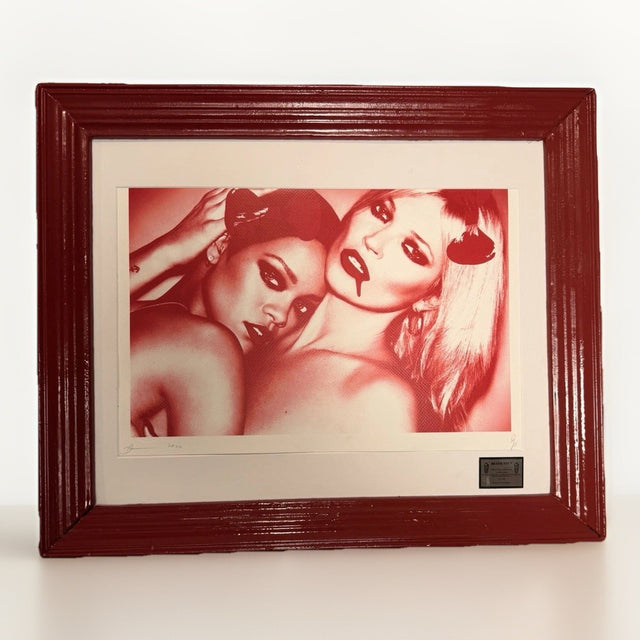
Death NYC — Kate Moss Rihanna Red Drip 2020 A/P Artist Proof Framed
$91.88 USD
-
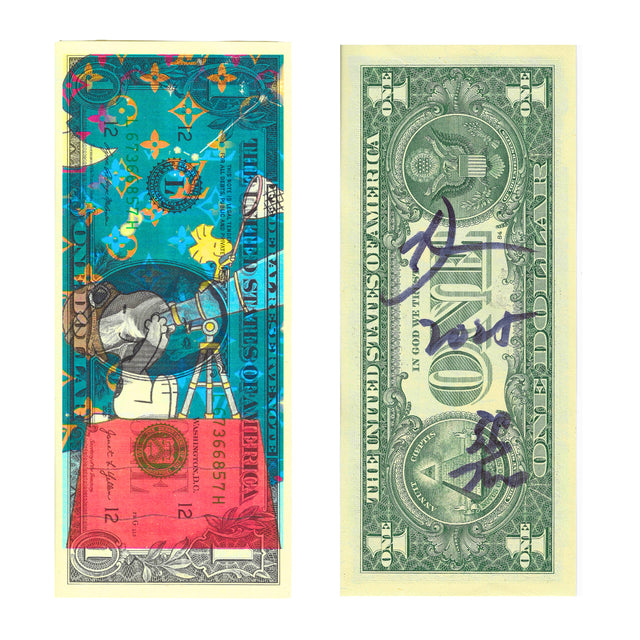
Death NYC Snoopy Woodstock Telescope LV Dollar Bill Art Signed Numbered COA
$55.00 USD
-
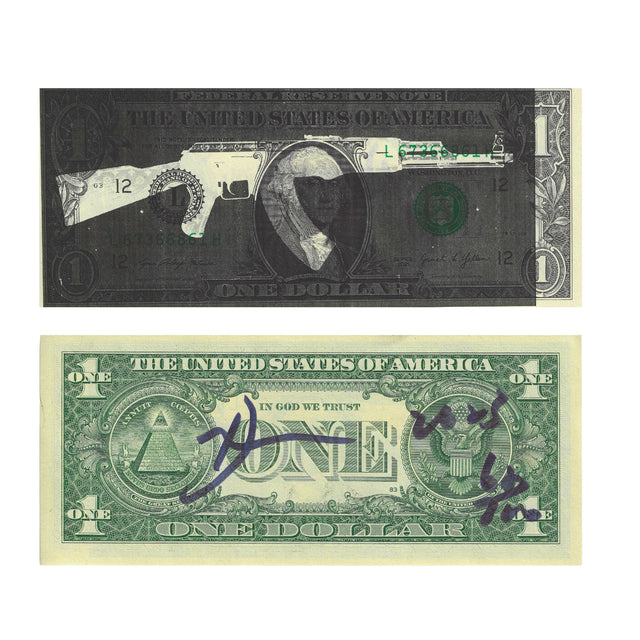
Death NYC Gun Dollar Bill Art Signed Numbered COA Black White Pop Street Art
$50.00 USD
-
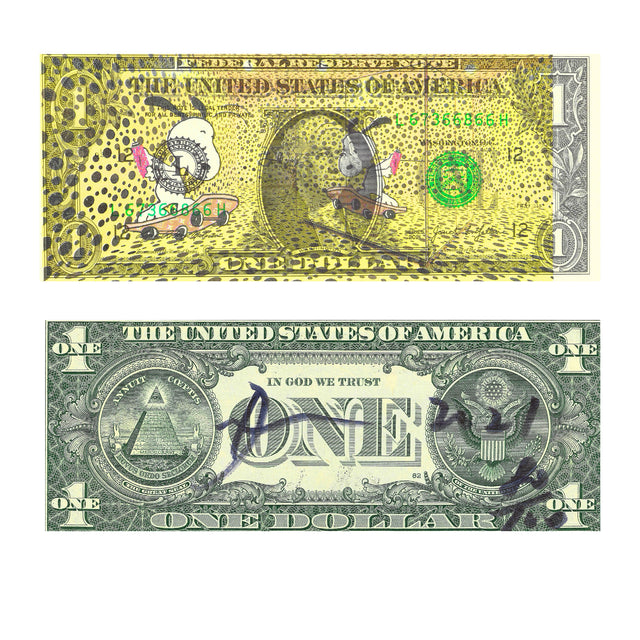
Death NYC Snoopy Skateboard Dollar Bill Art Signed Numbered COA Pop Street Art
$75.00 USD
-
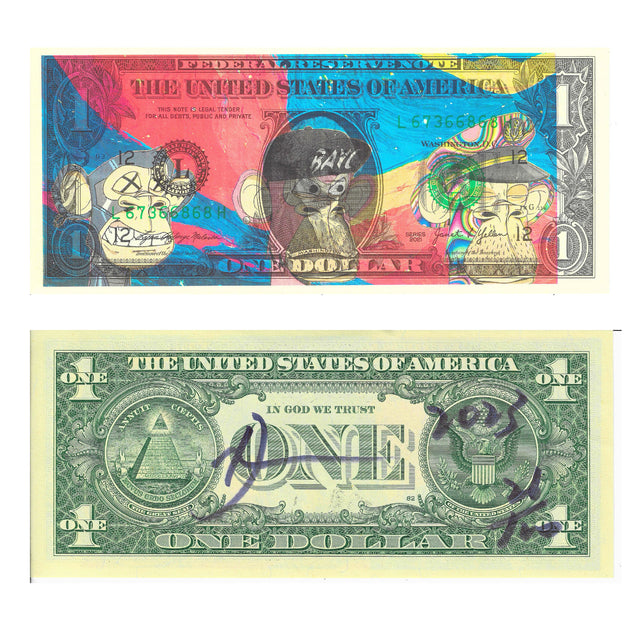
Death NYC Bored Ape Dollar Bill Art Signed Numbered COA Pop Street Art
$40.00 USD
-
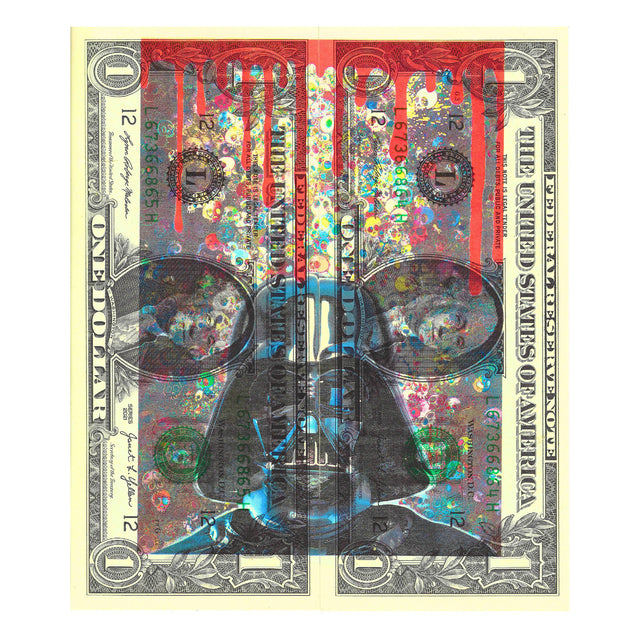
Death NYC Darth Vader Star Wars Dollar Bill Art Signed Two Bills COA Unframed
$100.00 USD
Browse the collection for current listings.