Condition is one of the single largest drivers of resale value for a DEATH NYC print. Because these works are produced in small, numbered editions, buyers on the secondary market are almost always comparing several examples of the same or similar images — and when two prints carry the same signature, the same numbering, and the same documentation, condition is what separates the top of the price range from the bottom. In practical terms, condition does not just adjust the price of a DEATH NYC print at resale — it determines which tier of the market your print competes in at all. Compare the exact image, edition, medium and presentation with dated completed sales, distinguishing hand-sprayed originals from editioned prints. Future resale value is uncertain.
That is the short answer. The longer answer — the one that actually helps you buy better, store smarter, and sell stronger — requires understanding what DEATH NYC prints are physically, which specific flaws the market punishes hardest, how the certificate and gold seal factor into "condition" as a complete package, and what a disciplined condition-grading habit looks like. This guide walks through all of it.
Why Condition Carries So Much Weight in the DEATH NYC Market
Every collectible market rewards condition, but the effect is amplified in markets with three characteristics — and the DEATH NYC market has all three.
First, the editions are small and numbered. DEATH NYC releases her prints in limited, hand-numbered editions — many collectors will be familiar with the small edition sizes noted in pencil on the front of each sheet. Small editions mean that at any given moment, only a handful of examples of a particular image are available for sale. Buyers can afford to be selective, and selective buyers pay up for the best-preserved example while discounting or skipping compromised ones. Always confirm the numbering on your specific piece against its documentation rather than assuming; the pencil fraction on the sheet is the reference point.
Second, the works are on paper. Works on paper are the most condition-sensitive category in the entire art market. Paper creases permanently, absorbs moisture, ripples, fades, and picks up surface soiling in ways that canvas and sculpture do not. A flaw that would be trivial on a vinyl figure — a light scuff, say — can be a permanent, value-defining defect on a print. That sensitivity cuts both ways: because damage is common, genuinely pristine sheets stand out and command a premium.
Third, the market is comparison-driven. DEATH NYC's output is prolific and thematically consistent — pop-culture and luxury mash-ups, bold color, recurring motifs. Buyers researching one print can easily find recent sales of the same image or close siblings from the same series. When comparables are abundant, condition differences become visible and priceable. For a structured view of how we read that data, our Financial Insights hub is the right starting point.
Put those three factors together and the conclusion is straightforward: in this market, condition is not a footnote on the listing — it is the listing.
What a DEATH NYC Print Is, Physically
To grade condition well, you need to know what you are looking at. A typical DEATH NYC print is a work on paper featuring the artist's signature pop-culture remix imagery, hand-signed in pencil, hand-numbered from the edition, and usually dated. Many sheets also carry the artist's stamp or blindstamp-style markings that collectors learn to recognize. Each piece is accompanied by a certificate of authenticity signed by the artist, with the metal official gold seal affixed — that COA-plus-seal pairing is the documentation standard for the artist's work, and it travels with the print as part of the object's identity. Our DEATH NYC authentication guide covers the documentation side in depth.
Physically, this means a DEATH NYC print has several distinct zones where condition lives:
- The image area — where fading, scuffing, ink abrasion, or moisture staining are most visually damaging.
- The margins — the unprinted border where handling marks, mat burn, tape residue, and pencil smudging tend to accumulate.
- The corners and edges — the first casualties of careless handling: dings, soft creases, small tears, and bumps.
- The pencil elements — signature, numbering, and date, which can smudge or fade and must remain crisp and legible.
- The verso (back) — where old tape, hinge remnants, foxing, and previous framing history reveal themselves.
- The documentation — the artist-signed COA with its gold seal, whose presence and condition are part of the package a buyer evaluates.
A disciplined condition review touches every one of those zones. Skipping any of them — especially the verso and the paperwork — is how buyers end up surprised at resale time.
The Condition Grading Ladder
The print market broadly communicates condition through a ladder of grades. Terminology varies between sellers, which is why reading actual condition notes always beats trusting a one-word grade — but the ladder below reflects how the market thinks. You will find related terms defined in our collector's glossary.
| Grade | What it means | Typical market effect |
|---|---|---|
| Mint / As issued | The sheet is exactly as it left the artist: flat, clean, crisp corners, no handling evidence, pencil elements sharp, full documentation present. | Competes at the top of the range for that image; attracts the most bidders and the fastest sales. |
| Near mint / Excellent | Essentially pristine to the naked eye; perhaps the faintest evidence of careful handling visible only under raking light. | Sells strongly; most discerning collectors treat this as fully collectible. |
| Very good | Minor, honest flaws: a soft corner, light margin handling, minor waviness. Image area clean. | Sells reliably at a visible discount to clean examples; condition notes must disclose the flaws. |
| Good / Fair | Noticeable defects: creases entering the image, fading, staining, tears, or heavy ripple. | Materially discounted; the buyer pool narrows to decorators and bargain hunters. |
| Poor | Major damage: significant tears, water damage, heavy fading, loss. | Trades far below the range, if at all; often valued mostly as a decorative object. |
Two habits make this ladder useful rather than misleading. First, grade against "as issued," not against perfection in the abstract — a print sold rolled will naturally show gentle curl that flattens with proper storage, and that is not damage. Second, always pair the grade with specifics: "very good — light soft crease to lower-left margin corner, not affecting image, verso clean" tells a buyer everything, while "great condition!" tells them nothing.
The Defects the Market Punishes Hardest
Not all flaws are equal. Here is how the common ones rank in the eyes of experienced buyers, roughly from most to least damaging.
Damage inside the image area
Anything that intrudes on the printed image — a crease that crosses the artwork, a scuff through an ink field, a stain in the composition — is the most severe category of flaw. Margins can be hidden by a mat; the image cannot. Flat, saturated color fields, which DEATH NYC's imagery uses heavily, are especially unforgiving: even a light abrasion or crease catches light differently and becomes visible from across a room. Expect image-area damage to move a print down a full grade or more on its own.
Fading and light damage
Ultraviolet and even strong ambient light will fade inks over time, and bold contemporary palettes show it quickly — reds and pinks are often the first to shift. Fading is uniquely dangerous for two reasons: it is irreversible, and it is often invisible to the owner because it happens gradually and evenly. Compare your print's colors to a well-preserved example of the same image and the difference can be startling. A faded print permanently loses access to the top of the market, no matter how flat and clean the sheet otherwise is. This is why every framing decision matters, which we cover below.
Moisture: ripple, cockling, foxing, and tide lines
Paper is hygroscopic — it swallows humidity and deforms. Mild, even waviness from ordinary humidity exposure is common and can often be professionally relaxed; buyers discount it modestly. Tide lines (visible water stains) and foxing (the small rust-colored spots caused by mold or metallic impurities reacting with moisture) are far more serious, both visually and because they signal poor storage history. Foxing can be professionally treated in some cases, but treatment is a conservation decision with its own disclosure obligations.
Creases and corner damage
A hard crease is permanent — the paper fibers have fractured and no amount of flattening fully erases the line. Soft handling dents and bumped corners are less severe, especially when confined to margins, but they accumulate: a print with four soft corners and a margin dent reads as "handled," and handled prints sit below crisp ones in every sale. Corner condition is also one of the fastest visual proxies buyers use when scanning listing photos, which makes it disproportionately important to protect.
Previous framing damage: mat burn, tape, and trimming
Cheap framing is a slow-motion accident. Acidic mats leave a brown burn line around the image; pressure-sensitive tapes leave stains and skinned paper on the verso; and in the worst cases, a framer trims the sheet to fit a frame — margin loss that permanently and severely reduces value, since the sheet's full, untrimmed dimensions are part of what buyers verify. When you examine a previously framed print, always ask about the verso and the sheet size. Our DEATH NYC buyer's guide includes the full list of questions worth asking before purchase.
Pencil smudging
The signature, date, and edition number on a DEATH NYC print are in pencil, and graphite smears when rubbed. A smudged but legible signature is a modest deduction; a signature rubbed to near-illegibility is a serious one, because the pencil elements are central to how the object is verified and described. Handle sheets by the extreme edges, ideally with clean hands or cotton gloves, and never stack prints face-to-face without interleaving tissue.
Condition Is a Package: The COA and the Gold Seal
With DEATH NYC, "condition" extends beyond the sheet itself. Each work is issued with a certificate of authenticity signed by the artist, with the metal official gold seal affixed. On the secondary market, that documentation is part of the object's condition profile in three ways.
Presence. A print offered with its original artist-signed COA and gold seal is a complete package; a print offered without it is an incomplete one. The artwork does not stop being genuine because paperwork went missing, but the resale conversation changes: the seller must work harder to establish the piece's history, the buyer pool shrinks, and the price reflects it. When we source DEATH NYC works for our DEATH NYC collection, the COA and seal come with the piece — that completeness is part of what authenticated sourcing means.
Condition of the documents themselves. A crisp, unbent certificate with its seal firmly affixed presents better than a creased, coffee-ringed one. Store the COA flat, in an archival sleeve, physically separate from the print (so one accident cannot claim both) but clearly associated with it in your records.
Consistency. The details on the certificate should agree with the sheet — title, numbering, and date. A mismatch is a research flag that slows or kills sales. Verifying that agreement is a five-minute habit at purchase time that prevents a painful surprise at resale time; our authentication FAQ walks through the general logic of matching documents to works.
How Condition Translates Into Price — Without Guesswork
Collectors often ask for a universal formula: "How much does a crease cost me? What percentage does fading knock off?" The honest answer is that fixed percentages are a fiction. The condition discount for any given flaw depends on the image's desirability, how many other examples are currently on the market, whether those competing examples are clean, and how the flaw photographs. The same soft corner crease might barely matter on a scarce, in-demand image and matter a great deal on a readily available one.
What actually works is the comparison method:
- Identify your exact print — image, series, edition numbering, and date.
- Pull recent verified sales of the same or closely comparable images.
- Read the condition notes on each comparable, not just the prices. A price range only becomes meaningful when you know which end of it the clean examples occupied.
- Place your print honestly on that spread. If your example is crisp, complete, and well-documented, it belongs near the strong end. If it carries disclosed flaws, it belongs where similarly flawed examples actually sold — not where you hope it might sell.
Two qualitative patterns show up consistently in the data. First, the penalty for condition problems is asymmetric: the market pays a modest premium for pristine, but it charges a steep discount for damaged. Preserving condition is therefore less about chasing upside and more about defending value you already own. Second, incomplete packages — missing COAs, missing seals, undocumented history — take longer to sell even when priced down, because time-on-market is itself a condition-adjacent cost. For current guidance on where DEATH NYC values sit and how to read the ranges, see our DEATH NYC price guide, and for the broader methodology, the price guides hub.
Grading a DEATH NYC Print Yourself: A Practical Inspection Routine
You do not need a conservation lab to grade competently. You need good light, clean hands, a flat surface, and a routine you follow every time.
- Set up. Work on a clean, dry, hard surface covered with a fresh sheet of paper or glassine. Remove watches and rings. Wash and dry your hands, or wear clean cotton or nitrile gloves.
- Overall read, straight on. View the print vertically under even light. Check color intensity, overall cleanliness, and whether anything intrudes on the image.
- Raking light pass. Hold a light source at a low angle across the sheet. This is the step most sellers skip and most flaws hide from: creases, dents, ripples, and surface abrasion leap out under raking light while staying invisible face-on.
- Corners and edges. Examine all four corners and run your eye along every edge. Note bumps, soft creases, and any tiny tears.
- Pencil elements. Confirm the signature, numbering, and date are crisp and unsmudged.
- Verso inspection. Turn the sheet carefully (support it fully — never flip it by a corner) and examine the back for tape, hinge remnants, stains, foxing, and skinned areas.
- Transmitted light. Hold the sheet up to a bright window or light. Thin spots, repairs, and stains that have penetrated the paper reveal themselves this way.
- Documentation check. Confirm the artist-signed COA is present, the gold seal is affixed, and the details match the sheet.
- Write it down. Record everything you found — including "no flaws found" — with date-stamped photographs, front and verso.
That last step matters more than most collectors realize. A dated condition record with photographs is provenance for the object's physical state. When you eventually sell, being able to show that the print looked exactly this good three years ago — and looks the same today — converts your care into buyer confidence, and buyer confidence converts into price. It also protects you in shipping disputes and insurance claims.
Storage and Display: Where Resale Value Is Actually Won
Condition at resale is mostly determined by decisions made years earlier, in storage and framing. The good news is that best practice is neither expensive nor complicated relative to the value it protects.
If you store the print
- Flat beats rolled. Store sheets flat in an archival (acid-free, lignin-free) folder or box, ideally in a flat file. If a print arrived rolled, let it relax and flatten gradually under clean weight rather than forcing it.
- Interleave. Place acid-free tissue or glassine between the print's face and anything touching it.
- Control the environment. Aim for stable, moderate temperature and humidity. Avoid basements, attics, garages, and exterior walls — the classic moisture and temperature-swing zones. Stability matters more than hitting a perfect number.
- Dark is best. Stored prints should live in the dark. Light damage is cumulative and irreversible.
If you frame the print
- Use a framer who works with fine art on paper, and say the words "full conservation framing."
- Acid-free everything: museum-grade mat board, acid-free backing, archival mounting.
- Reversible hinging only. The print should be hinged with archival, reversible materials — never dry-mounted, never taped with pressure-sensitive tape, never trimmed. Dry-mounting a limited print is a permanent, value-destroying alteration.
- UV-filtering glazing. UV-filtering glass or acrylic dramatically slows fading. It is the single best money you can spend on a displayed print.
- Hang thoughtfully. Keep the framed print out of direct sunlight and away from heat sources, bathrooms, and kitchens.
One more habit separates careful collectors: when you frame, keep your documentation and your condition photos in your records, and note the framing date and materials. Future buyers read a documented framing history as a signal that the sheet behind the glass has been protected, not merely displayed.
Shipping Without Regret
A remarkable share of condition damage happens in transit — usually in the last sale of a print's life, at the exact moment its condition is being monetized. If you sell a DEATH NYC print yourself, ship it the way professional dealers do: sheet in an archival sleeve, sandwiched between rigid boards larger than the sheet, clearly marked, in a snug outer box or a heavy-walled tube of generous diameter if rolling is unavoidable. Photograph the print and the packing process. Insure the shipment for its replacement value. The cost of doing this properly is trivial next to the discount a transit crease imposes.
Restoration and Conservation: Proceed With Discipline
Can a damaged print be improved? Sometimes — but the decision requires discipline. Professional paper conservators can often relax waviness, reduce surface soiling, treat some foxing, and stabilize tears. What conservation cannot do is un-fade inks or erase hard creases, and amateur intervention (household tape, erasers on margins, DIY flattening with a warm iron) reliably converts moderate flaws into severe ones.
Three rules serve collectors well. First, get a conservator's opinion before deciding anything; assessment is cheap compared to regret. Second, weigh the treatment cost against the realistic value recovery — for many moderately priced prints, the math favors selling as-is with honest disclosure. Third, disclose any treatment when you sell. The market is forgiving of professionally conserved works that are described as such, and unforgiving of discovered surprises. Transparency is not just ethics; it is pricing strategy.
How Gauntlet Gallery Approaches DEATH NYC Condition
Our gallery's position on condition is simple: it is the first thing we assess and the thing we describe most carefully. We document what we see, including the honest minor flaws, because a precisely described print sells better and stays sold.
For collectors building knowledge before buying, we maintain a full library: the DEATH NYC buyer's guide for purchase strategy, the authentication guide for documentation details, and our guide to spotting problem DEATH NYC listings for the verification mindset. The broader buyer's guide hub and Collector's Hub extend the same approach across every category we handle.
The Pre-Purchase Condition Checklist
Before buying any DEATH NYC print on the secondary market, run through this list:
- Request high-resolution photos: full front, full verso, all four corners, close-ups of signature, numbering, date, and any stamps.
- Ask for a raking-light photo — a seller who knows what that is has probably examined the print properly.
- Ask directly: any creases, fading, stains, foxing, tears, or restoration? Get the answer in writing.
- Confirm the sheet is untrimmed and ask for its measurements.
- Confirm the artist-signed COA is included and the metal gold seal is affixed, and that its details match the sheet.
- Ask about framing history — what materials, and whether the print was ever dry-mounted or taped.
- Ask how the print has been stored and how it will be shipped.
- Compare the asking price against recent verified sales of comparable examples in comparable condition — not against the most expensive listing you can find.
If a seller cannot or will not answer these questions, that silence is itself condition information. Buy from sources that examine, document, and disclose — you are not just buying an image, you are buying the specific physical history of one numbered sheet.
The Bottom Line
Condition affects the resale value of a DEATH NYC print more than almost any other factor a collector can control. You cannot change an edition's size or an image's popularity, but you can buy the best-preserved example available, keep its artist-signed COA and gold seal safe and matched, store and frame it to conservation standards, document its state, and ship it like a professional. Do those things and your print stays in the top tier of its market. Neglect them and the market will quantify the neglect for you — precisely, and permanently. Explore available DEATH NYC works in our collection, each one condition-examined and offered with complete documentation.
Frequently Asked Questions
Does a missing COA ruin the resale value of a DEATH NYC print?
It does not ruin it, but it changes the sale. DEATH NYC works are issued with an artist-signed certificate and metal gold seal, and buyers treat that documentation as part of the complete package. Without it, the seller must establish the piece's history through other evidence, the buyer pool narrows, and the print typically sells more slowly and lower on the range than a fully documented example.
Is light waviness in the paper a serious problem?
Mild, even waviness from ordinary humidity is one of the most common and least damaging flaws — buyers discount it modestly, and a paper conservator can often relax it. What matters is distinguishing gentle ripple from moisture damage: tide lines, staining, or foxing spots indicate real exposure and carry a much heavier penalty.
What is the worst kind of damage a print can have?
Anything inside the image area — creases crossing the artwork, abrasion through ink fields, stains in the composition — plus irreversible fading. Margins can be matted over; the image cannot. Fading is especially costly because it is permanent, often unnoticed by the owner, and removes the print from the top of its market entirely.
Should I restore a damaged DEATH NYC print before selling?
Get a professional paper conservator's assessment first, then weigh treatment cost against realistic value recovery. Conservation can address waviness, soiling, and some foxing, but cannot reverse fading or erase hard creases. For moderately priced prints, selling as-is with honest disclosure often makes more financial sense. Always disclose any treatment; the market punishes discovered surprises far more than described conservation.
How should I frame a DEATH NYC print to protect its value?
Use full conservation framing: museum-grade acid-free mat and backing, reversible archival hinging, and UV-filtering glazing. Never allow dry-mounting, pressure-sensitive tape, or trimming of the sheet — those are permanent alterations that severely reduce value. Hang the framed print away from direct sunlight, heat, and humidity, and keep the COA stored safely outside the frame.
How do I find out what my print's condition is worth?
Compare it against recent verified sales of the same or similar images, reading the condition notes on each comparable rather than just the prices. Fixed percentage formulas for flaws do not hold up in practice.
Shop Death NYC
Explore current pieces available from the gallery.
-
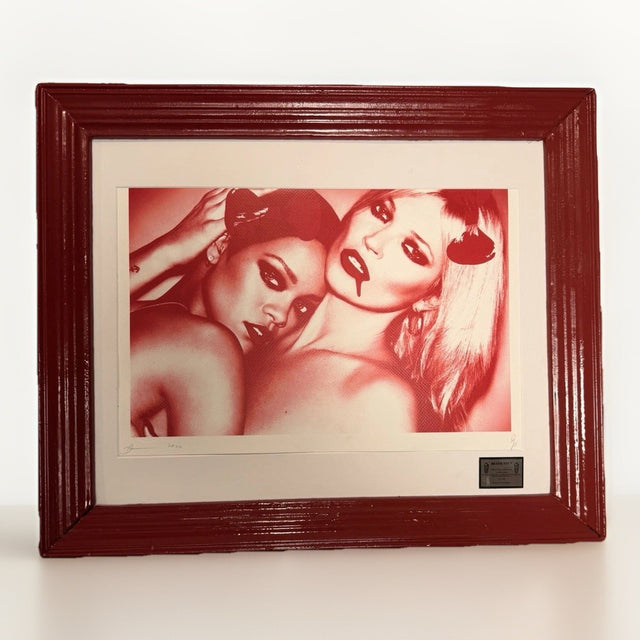
Death NYC — Kate Moss Rihanna Red Drip 2020 A/P Artist Proof Framed
$91.88 USD
-
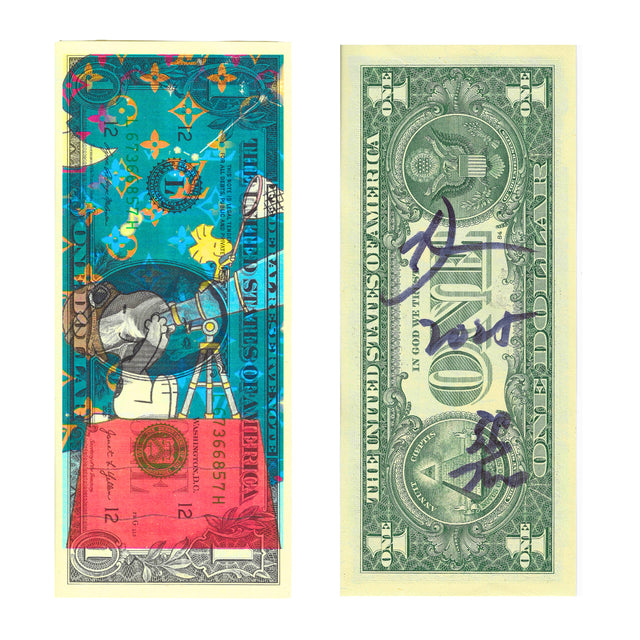
Death NYC Snoopy Woodstock Telescope LV Dollar Bill Art Signed Numbered COA
$55.00 USD
-
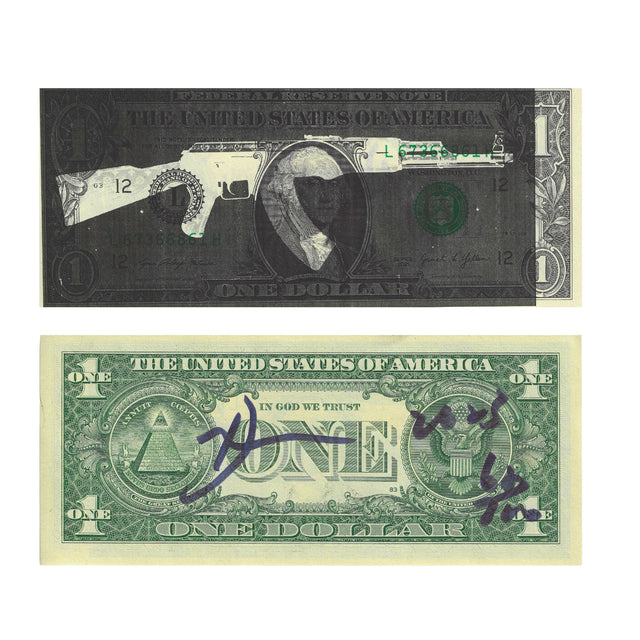
Death NYC Gun Dollar Bill Art Signed Numbered COA Black White Pop Street Art
$50.00 USD
-
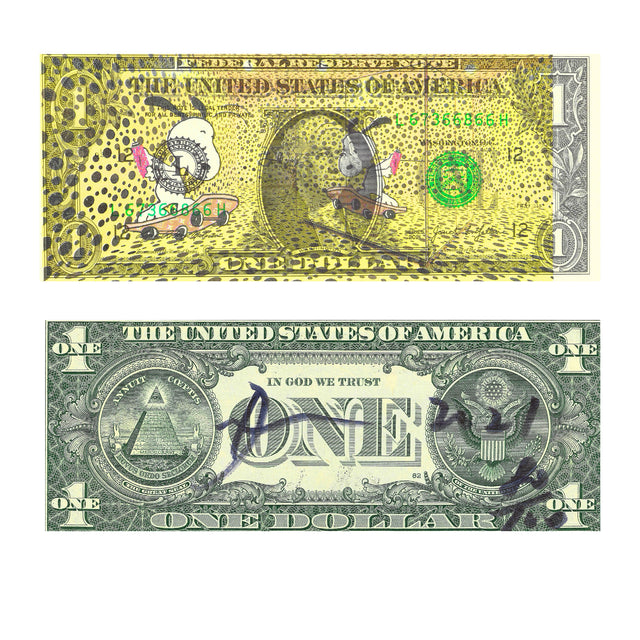
Death NYC Snoopy Skateboard Dollar Bill Art Signed Numbered COA Pop Street Art
$75.00 USD
-
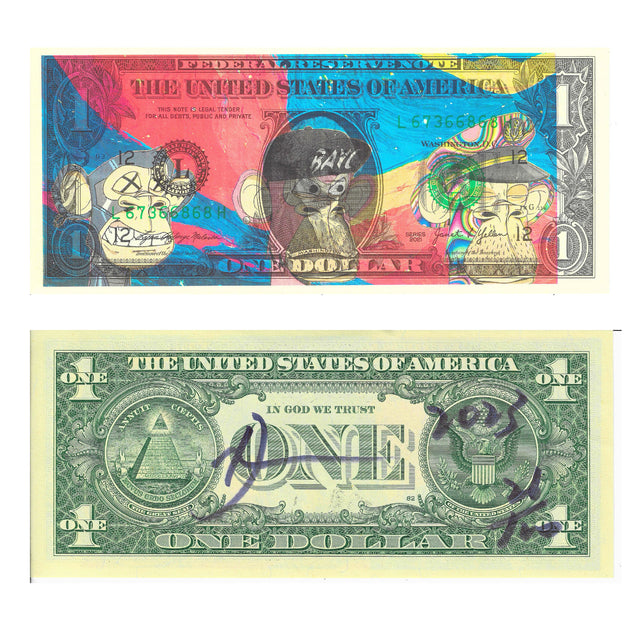
Death NYC Bored Ape Dollar Bill Art Signed Numbered COA Pop Street Art
$40.00 USD
-
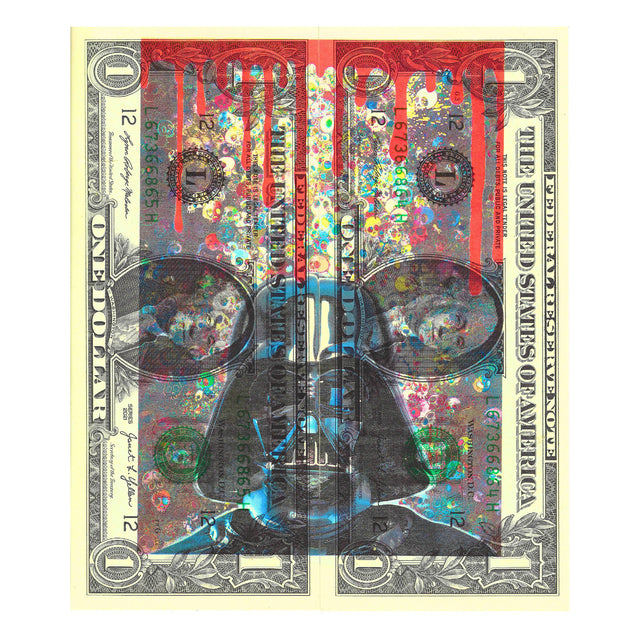
Death NYC Darth Vader Star Wars Dollar Bill Art Signed Two Bills COA Unframed
$100.00 USD
Browse the collection for current listings.