Framing & Protecting Street-Art Prints in a Real Home
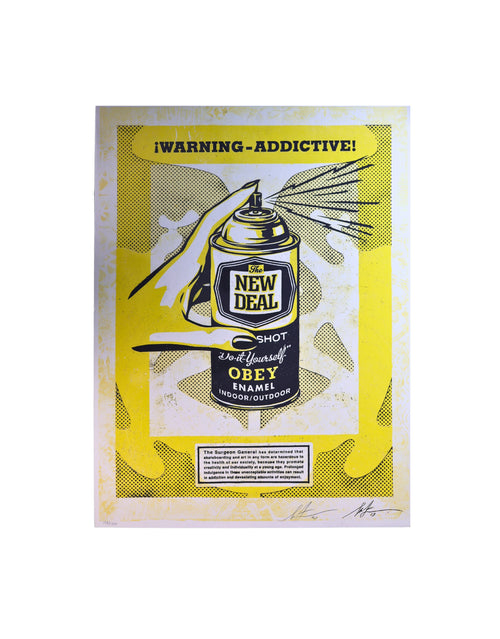
If you want to buy original street art for home decor, the most reliable route is a curated dealer that pairs authenticated inventory with clear provenance rather than an open marketplace where fakes and unframed damage risk hide in plain sight. At Gauntlet Gallery's full collection you can shop signed, numbered prints from artists like Shepard Fairey, Invader, and DEATH NYC, each backed by documented authentication. But buying the piece is only half the job: how you frame and hang a street-art print determines whether it holds condition — and value — over the decade you live with it. This guide covers conservation-grade framing (UV-filtering glazing, acid-free mats, reversible hinging), light and humidity control, and how the right framing choices protect both the object and its resale.
Street-art prints occupy a specific middle ground. They are more valuable and more condition-sensitive than a poster, but usually more affordable and more forgiving than a unique painting. That combination is exactly why framing matters: a $300 signed Fairey screenprint and a $3,000 hand-painted multiple both live or die on paper stability, and the framing bill for protecting either is roughly the same. Doing it right the first time is the cheapest insurance in the hobby.
Why Framing Is a Conservation Decision, Not a Decorating One
Most people frame art to make it look finished on the wall. Collectors frame art to keep it in the same condition it was in the day it arrived. Those two goals overlap, but when they conflict, conservation wins — because condition is the single biggest lever on a print's long-term worth. A crease, a light-burn, a tide line from humidity, or a patch of acid migration browning from a cheap mat can erase a large share of a piece's value, and none of it is reversible without expensive professional paper conservation.
The good news is that the principles are simple and standardized. Museums and serious dealers converged on the same rules decades ago: block ultraviolet light, keep acidic materials away from the paper, mount the work so it can expand and contract freely, and never let anything permanent touch the sheet. Every recommendation below flows from those four ideas. If you internalize them, you can walk into any framer and specify a package that will still be sound in twenty years.
The Four Layers That Protect a Print
A conservation frame is a stack of components, each doing one job. Understanding the stack lets you make informed trade-offs instead of accepting whatever the framer defaults to. From front to back, the layers are glazing, mat, hinge/mount, and backing, all held in a rigid frame. Get any one of them wrong and the others cannot fully compensate.
Glazing: The UV Barrier
Glazing is the clear sheet in front of the art, and it is the layer most people underspend on. Ordinary picture glass does almost nothing to filter ultraviolet light, and UV is the primary driver of fading in the inks and dyes used across screenprints, giclées, and offset lithographs. Conservation-grade glazing — sold as UV-filtering or "museum" glass and acrylic — blocks the majority of UV wavelengths, dramatically slowing fade even in a bright room. It costs more, but it is the difference between a print that looks the same in ten years and one that has visibly shifted color.
Glass versus acrylic is a real decision. Glass is more scratch-resistant and does not attract dust with static, but it is heavy and it shatters — and shattered glass inside a frame can slice a sheet. Acrylic (often sold under brand names) is lighter, safer, and shatterproof, which makes it the standard for large pieces, shipping, and homes with kids or earthquakes. Its downsides are static cling, which is a problem for charcoal or pastel but irrelevant for a sealed print, and softer surfaces that scratch. For most street-art prints, UV-filtering acrylic is the pragmatic choice; UV museum glass is the premium one. Avoid non-glare "etched" glass on valuable work — it can dull the image and interact oddly with fine screenprint detail.
The Mat: Acid-Free, Always
The mat is the border between the image and the glazing, and its most important job is not aesthetic — it is to hold the glazing off the surface of the art. Paper needs an air gap. When a sheet is pressed directly against glazing, humidity can make the ink stick to the glass, and any condensation transfers straight onto the image. The mat creates that spacer while framing the work visually.
The material spec is non-negotiable: use 100% cotton rag or "conservation" (buffered, acid-free) matboard. Standard "paper mat" or wood-pulp board contains lignin and acids that migrate into the print over years, producing the tan or brown burn line you have seen on old framed pieces — often called mat burn. That damage is permanent. Rag and conservation board are pH-neutral and will not off-gas acid into the sheet. If a framer quotes you a suspiciously cheap mat, ask directly whether it is acid-free conservation board; if they hesitate, walk. When you'd rather skip the mat for a contemporary edge-to-edge look, use spacers hidden under the rabbet of the frame to maintain the air gap instead.
Hinging and Mounting: Reversible or Nothing
How the print attaches inside the frame is where the most expensive mistakes happen. The rule is absolute: the mount must be fully reversible and must never permanently adhere to the sheet. Conservators hinge works using small tabs of Japanese tissue and a wheat- or rice-starch paste, attached only at the top edge so the sheet can hang and move naturally. This can be undone by a conservator with water, leaving no trace.
What destroys value is permanent mounting: dry-mounting (heat-pressing the print onto a board), spray adhesive, self-stick foam board, and — the single most common home-framing sin — regular pressure-sensitive tape or masking tape on the back of the sheet. Tape yellows, its adhesive bleeds through and stains, and removing it tears fibers. A dry-mounted print is generally considered permanently compromised for resale because the process is irreversible and alters the paper. If you take one rule from this article, take this one: never let tape or glue touch the art, and insist your framer hinge with archival materials only.
Backing and the Sealed Package
Behind the art sits the backing board, which should also be acid-free — typically a rag or conservation foam board, sometimes with an additional barrier sheet. The whole sandwich is then closed and, ideally, dust-sealed at the back with archival tape around the perimeter. A sealed package keeps out airborne pollutants, insects, and moisture swings, and it is standard practice for anything you intend to keep long term. Ask your framer to "seal the back" as a conservation package rather than just stapling in a dust cover.
Conservation Framing Materials at a Glance
The table below summarizes the components, the conservation-grade specification to request, why it matters, and the cheap substitute to refuse. Bring it to your framer or use it to sanity-check a quote.
| Component | Conservation-grade spec to request | Why it protects the print | Avoid |
|---|---|---|---|
| Glazing | UV-filtering ("museum") glass or acrylic | Blocks the UV wavelengths that fade inks and dyes; slows color shift dramatically | Plain picture glass (no UV protection); etched non-glare on fine detail |
| Mat / spacer | 100% cotton rag or buffered conservation board; or hidden spacers | Holds glazing off the surface (air gap); pH-neutral, won't off-gas acid | Wood-pulp / standard "paper" mat (causes permanent mat burn) |
| Hinge / mount | Japanese tissue with wheat- or rice-starch paste, top-edge only | Fully reversible; lets the sheet expand and contract freely | Dry-mounting, spray glue, foam tape, any pressure-sensitive tape |
| Backing | Acid-free rag or conservation foam board + barrier sheet | Prevents acid migration from behind; adds rigidity and a moisture buffer | Corrugated cardboard, standard chipboard, raw MDF against the sheet |
| Back seal | Dust-sealed archival tape perimeter (conservation package) | Keeps out pollutants, insects, and humidity swings | Open back or loose stapled dust cover on long-term pieces |
| Frame | Rigid wood or metal moulding sized with room for expansion | Holds the package square and stable; protects edges from handling | Warped, undersized, or clip frames that press glazing to paper |
Reading a Framing Quote Before You Pay
Framing is one of the few art-adjacent purchases where the buyer usually cannot see what they are getting. Once the package is sealed, the glazing, mat, and backing all look roughly the same from the front — a UV-filtering rag-mat conservation job and a plain-glass wood-pulp job can be visually identical on the wall and differ by a factor of three or more in price and in protection. That information gap is exactly why you have to specify the components on the order form rather than trust a verbal "yes, it's archival."
When you read a quote, look for the material named on each line, not just the word "custom." A trustworthy quote will say something like "Optium/museum UV acrylic," "8-ply cotton rag mat," "T-hinge, Japanese tissue, starch paste," and "acid-free foam backing, sealed." A vague quote will say "glass," "mat," and "mount" with no materials attached, and the default behind those blanks is almost always the cheapest non-conservation option. If the line items are blank, ask the framer to write the materials in. Reputable custom shops do this without friction; the request itself is a useful test of whether the shop handles fine art or just retail posters.
Two upgrades are worth paying for on valuable pieces and two are usually optional. Worth it: UV-filtering glazing and rag or conservation matting, because both directly prevent irreversible damage. Situational: anti-reflective coatings, which improve viewing in bright rooms but add cost, and deeper "float" mounting, which showcases the deckle edge of a fine-art sheet but requires more skilled handling. Skip, always: dry-mounting, "lamination," and any offer to "clean up" or "flatten" the sheet with heat or moisture, which are conservation red flags on a collectible edition.
The Deckle Edge and Float Mounting
Many street-art screenprints and fine-art editions are printed on heavy rag paper with a deckle edge — the soft, feathered natural edge of the sheet — or with wide, intentional margins. Those edges and margins are part of the object's character and, on numbered editions, part of what a future buyer inspects. Float mounting sits the whole sheet on top of a mat rather than tucking its edges beneath a window, so the full paper edge stays visible. It is the preferred presentation for deckle-edge and signed pieces because it protects the margins and shows the sheet as the artist made it. The trade-off is that float mounting demands careful, minimal hinging so the sheet lies flat without cockling, which is squarely a job for a skilled framer.
Light, Humidity, and Where to Hang
Framing protects the object, but placement decides how hard the frame has to work. Even museum glass only slows UV damage; it does not stop it. The most consequential decorating decision you make is where the piece hangs.
Manage the Light
Direct sunlight is the enemy. Never hang a print where the sun lands on it during any part of the day, even for an hour — cumulative exposure fades inks and can bleach paper unevenly, leaving a visible "shadow" where a mat once sat. North-facing walls, interior halls, and rooms with sheer window coverings are ideal. If a wall gets strong indirect light, UV-filtering glazing plus rotating the piece out of the brightest spots periodically will keep it stable. For bright rooms with valuable work, some collectors rotate pieces seasonally the way galleries rotate light-sensitive works on paper. Also avoid mounting spotlights that sit close to the surface; heat and light both accelerate aging.
Control Temperature and Humidity
Paper is hygroscopic — it absorbs and releases moisture with the air. Wild swings cause the sheet to expand and contract, which produces cockling (waviness), and sustained high humidity invites foxing (rusty spots) and mold. The practical target is a stable, moderate interior climate: roughly room temperature and moderate relative humidity, without extremes. That immediately rules out several popular hanging spots. Do not hang paper art in a bathroom, directly above a radiator or heating vent, over a working fireplace, in an unconditioned garage, or on an exterior wall that gets cold and sweats. Basements are risky unless dehumidified. A stable living-room or bedroom wall away from vents is almost always the right answer.
Handle and Hang Securely
Handle framed work by the frame, never by pressing on the glazing, and wash or glove your hands when touching an unframed sheet — skin oils leave marks that develop over time. Hang heavier frames on two points using proper wall anchors rated well above the frame's weight; a print that falls can crease or tear inside the frame even if the glazing holds. For acrylic-glazed pieces, dust with a soft dry cloth only, never household glass cleaner, which can craze acrylic and creep under the frame edge.
How Framing Protects Value
For anything you might eventually sell, framing is not a cost — it is condition insurance, and condition is a primary driver of price for prints and works on paper. Two identical editions of the same Fairey or Invader print can trade at very different prices purely on condition, and the gap widens as a piece ages. The buyer at resale is paying for a clean, flat, un-faded sheet with no acid burn and no mounting damage. Conservation framing is what delivers that sheet years later.
There is also a documentation dimension. Serious collectors keep the paper trail — the original invoice, any certificate or authentication, and a record of framing choices — because provenance and condition together underwrite resale confidence. If your piece came with a certificate and a gold seal, as DEATH NYC works do, or with a blockchain certificate through TrueCOA as many designer pieces at Gauntlet do, keep that documentation with the work and do not let a framer trim or discard anything that shipped with it. You can read more about how the gallery structures buyer protection and provenance at the Collector's Hub.
One nuance specific to editions: never let a framer trim the sheet to fit a frame or hide the margins permanently under a mat if the margins carry the pencil signature, edition number, or blindstamp. Those margins are part of what authenticates and prices the work. Float-mount or window-mat so the signature and numbering remain visible or at least intact and recoverable. Trimming a signed, numbered street-art print to make it "fit" is a value-destroying mistake that framers untrained in art handling make routinely.
Storing and Moving Unframed Prints
Not every print goes on the wall immediately, and how you store the overflow matters as much as how you frame the display pieces. A print waiting to be framed, or rotated off the wall, should lie flat between sheets of acid-free glassine or interleaving tissue inside a rigid archival portfolio or flat file — never rolled tightly and never left loose in a drawer where it can slide and crease. Rolled prints develop a set that resists flattening and can crack the ink layer at the curl; if a piece arrives rolled in a tube, unroll it gently and let it relax flat under light, even weight (clean acid-free board, not heavy books directly on the sheet) before framing.
When you move house or ship a framed piece, the glazing is the hazard. Tape a large X across glass glazing so that if it breaks it holds together instead of raining shards onto the sheet, or better, switch valuable pieces to acrylic before shipping. Corner protectors, a rigid outer box, and "this side up / fragile" marking are standard. For anything genuinely valuable, professional art shippers and proper insurance are cheaper than the loss. The same discipline that protects condition on the wall protects it in transit.
DIY Versus a Professional Framer
You can absolutely frame lower-value prints yourself using ready-made frames, provided you buy the right materials: a UV-filtering glazing insert, an acid-free rag mat, archival photo corners or starch-paste hinges instead of tape, and an acid-free backing board. For an inexpensive open-edition or a poster, this is sensible and keeps costs proportional to the piece.
For signed, numbered, or hand-finished work — anything with resale ambitions — use a custom framer and specifically ask for a conservation or museum package. The phrase to use is "conservation framing with UV glazing, rag mat, reversible hinging, and a sealed back." A good framer will confirm all four without prompting; a framer who tries to dry-mount your signed print or reaches for tape is telling you to take your work elsewhere. The premium for conservation over standard framing is real but modest relative to the value it protects, and it is a one-time cost.
Common Framing Mistakes That Quietly Cost You
Most value lost to framing is not dramatic — it is slow and invisible until the day you try to sell. A handful of avoidable errors account for the majority of it, and every one of them is a decision made at the framing counter or the moment of hanging.
- Plain glass in a bright room. The single most common error. The print looks fine for a year, then the reds and yellows quietly shift. UV-filtering glazing is the fix and it is not expensive relative to the piece.
- Tape on the back of the sheet. Home framers reach for whatever tape is in the drawer. It stains within a few years and tears fibers on removal. Use archival photo corners or starch-paste hinges, never pressure-sensitive tape.
- A cheap wood-pulp mat. The tan burn line it leaves is permanent and reads instantly to any experienced buyer as careless handling. Insist on rag or conservation board.
- Trimming the sheet to fit a frame. Cutting margins to force a print into a ready-made size can remove or crowd the signature and edition number, damaging both authentication and value. Size the frame to the sheet, not the other way around.
- Hanging in the wrong room. Bathrooms, kitchens over the stove, and walls above heat sources subject paper to humidity and temperature swings that cause cockling and foxing. Choose a stable interior wall.
- Discarding the paperwork. Throwing away the invoice, certificate, or gold seal that came with the piece weakens provenance and depresses resale. Keep documentation with the work permanently.
None of these mistakes is exotic, and none is expensive to avoid. The pattern is consistent: the collector who treats framing as a decorating afterthought pays for it later, and the one who treats it as conservation keeps a clean, saleable object. Framing is the cheapest step in the whole chain at which you can protect the money you have already spent on the art.
Buying the Print in the First Place
All of this presumes you are protecting an authentic piece, which is why where you buy matters as much as how you frame. Original street-art prints for the home are best sourced from dealers who authenticate and document rather than from anonymous listings. Gauntlet Gallery curates signed, numbered editions across the movement's core names, each with clear provenance. Browse the Shepard Fairey collection for the artist most associated with collectible street-art printmaking, or explore the broader art index to see the full range of movements and artists in stock. For guidance on choosing pieces that suit your space and building a cohesive wall, the sibling guides below are the natural next reads.
If you want a style-first approach to matching art to your interior before you buy, start with how to buy street art that fits your interior. If you are planning a grouping rather than a single piece, building a street-art wall that mixes Fairey, Invader, DEATH NYC, and KAWS covers composition and scale. And to calibrate budget before framing costs enter the picture, street-art price tiers — what $100, $1,000, and $10,000 actually buy maps the market. Buy authenticated, frame to conservation standard, and hang it out of the sun: that sequence is how a print stays beautiful and holds its worth in a home you actually live in.