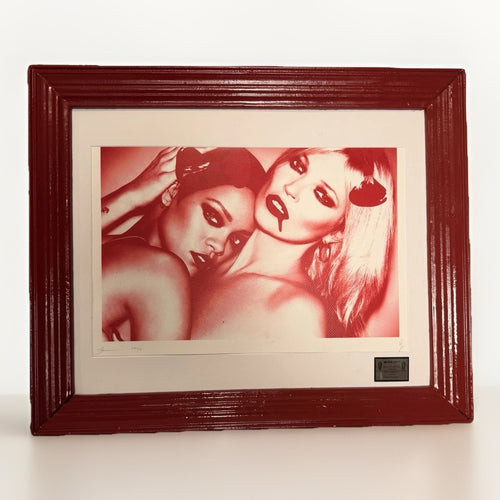
Death NYC appeals to collectors because the work asks to be read at two levels at once. There is the immediate hit of a familiar image, logo, character, or art-historical reference placed into an unexpected collision. Then there is the physical object: a signed paper work with an edition notation, a date or identifying information, a certificate, and a condition story. The first level makes a collector stop. The second is what makes a purchase decision durable.
This guide focuses on a repeatable way to slow down and make a documented decision before buying. It is not an authentication opinion, appraisal, or promise of future value. It is a practical framework for making a clearer decision, recording what was observed, and knowing when the evidence is too thin to proceed. That distinction matters in a category where listings can look similar at a glance but differ materially in condition, documentation, and seller transparency.
Start with the complete object, not the headline
Marketplace titles are useful search tools, not reliable catalog entries. Before comparing price or edition language, assemble a small record for the exact work in front of you: the full image, close views of the signature and numbering, the reverse, every corner, the certificate, the date shown on the print and paperwork, dimensions, and the seller’s stated acquisition history. If one of those elements is unavailable, write that down rather than filling the gap with an assumption.
The useful question is not simply whether a print is “rare.” It is whether this specific object is well described enough to own confidently. A strong record lets a future buyer, framer, insurer, or adviser understand the piece without reconstructing the original listing. A weak record pushes that work downstream and generally narrows the audience for a resale.
Evidence changes the decision
There is no single feature that should carry the full burden of verification. A signature, an edition number, a stamp, a certificate, a seller invoice, and the physical characteristics of the paper should be considered together. Consistency across those signals is more useful than any isolated claim. When a claim cannot be checked, the sensible response is not to invent certainty; it is to adjust the price, seek additional images, or pass.
For a purchase in this category, our working file usually includes saved listing screenshots, seller correspondence, the invoice, unedited close photographs, and a condition note made when the work arrives. This takes minutes, not hours. It also gives the collector a better baseline if the piece is reframed, moved, insured, or offered later.
Condition is part of the work’s identity
Paper is expressive but vulnerable. Raking light can reveal a soft handling crease that a front-facing image hides. Corner compression, surface rub, yellowing, moisture tide marks, tape residue, mat burn, and mounting history all change how a print displays and how conservators approach it. A clean front image does not resolve those questions.
Ask for photos with the work unframed when practical, including the reverse and all four corners. If a work is framed, ask what materials touch the paper and whether the mounting can be reversed. Original certificates should be stored with the work but not permanently attached to it. The aim is preservation and clarity, not a ritual of perfection; a disclosed, stable flaw can be much easier to live with than an undisclosed one.
Use market data as a range, not a verdict
Comparable sales are most useful when they are genuinely comparable: same kind of object, similar date or visual subject, similar condition, comparable completeness of documentation, and a sale rather than an ambitious ask. Gauntlet Gallery’s current Death NYC market dataset includes more than 1,800 qualifying marketplace records over five years, with a median recorded price near $200. That broad figure is orientation only. It should not be used to price an individual work without reading the details.
The spread in any artist market often reflects object differences rather than contradiction. Early works, unusually strong compositions, unusual formats, complete documentation, and exceptional condition can sit far from the middle. Conversely, a missing certificate, unclear photos, or material damage can make a low price entirely rational. Compare the evidence before comparing the number.
A repeatable collector workflow
Use this short sequence whenever a work catches your attention:
- Save the listing and record the seller’s stated facts verbatim.
- Request the missing views: signature, edition notation, certificate, reverse, corners, and any condition concern.
- Match dates, numbers, and descriptions across the physical work and its paperwork.
- Compare recent completed sales only after adjusting for condition and completeness.
- Set a ceiling price that leaves room for framing, conservation, shipping, and the possibility that the work must be held rather than quickly resold.
- Keep the invoice, message trail, and arrival photos in the same digital folder as the work’s record.
This process does not remove judgment. It gives judgment something solid to work with. The best collecting decisions are usually both visual and administrative: the work feels right, and the record is strong enough that the feeling does not have to do all the work.
Where to continue your research
Start with the Death NYC collection to see currently available works. For a category-level overview, read the Death NYC buyer’s guide, the Death NYC authentication guide, and the Death NYC price guide. You can also compare this framework with our guide to reading certificates of authenticity and our original analysis of Death NYC one-day editions.
The central rule is simple: buy the exact object you can document, not the promise embedded in a listing title. For collectors who return to that rule, a Death NYC purchase becomes easier to enjoy, easier to care for, and easier to explain.