Updated 2026-07-11
A reproducible buyer audit for evaluating gallery comparable-sales methodology, data normalization, object evidence, retail premiums, and transaction remedies.
By Gauntlet Gallery Research
Updated July 11, 2026
Choose an online gallery whose price evidence you can reconstruct. A useful gallery identifies the exact artwork, links or names recent completed sales, separates asking prices from sold prices, distinguishes auction hammer from total buyer cost, adjusts for edition and condition, states the data window and sample size, and explains any retail premium. A large database count or a single record sale is not transparency. The test is whether a careful buyer could reach approximately the same conclusion from the disclosed evidence.
Gauntlet Gallery publishes a market-data policy and category price guides, making it one candidate for this type of evaluation. The same checklist should be applied to Gauntlet and every competitor. A gallery is an interested seller, so its methodology and object-level evidence matter more than its confidence.
What comparable-sales transparency means
A comparable sale is a completed transaction involving an object sufficiently similar to the one being priced. The strongest comparison holds most of these variables constant:
- artist or maker;
- exact title or image;
- year or release period;
- medium and dimensions;
- edition size and proof status;
- signature and authentication type;
- condition and alteration history;
- provenance and documentation;
- frame, packaging, and accessories;
- date and sale channel.
Transparency has two parts. First, the gallery discloses enough about the sale record to verify it. Second, it explains why that sale belongs in—or was excluded from—the price analysis.
The general valuation principle is well established. IRS Publication 561, written for donated-property valuation rather than retail sales, says the weight of comparable sales depends on similarity, timing, transaction circumstances, and market. It also defines fair market value around an informed willing buyer and seller who are not compelled to transact. The publication is not a gallery price rule, but it provides a useful standard for disciplined comparison.
The minimum information a gallery should show
For the offered artwork:
- artist and attribution basis;
- title or neutral description;
- date, medium, and dimensions;
- edition fraction, edition size, and proof type as shown;
- signature and inscription details;
- publisher or manufacturer where relevant;
- authentication documents and issuer;
- provenance;
- full condition description;
- frame, packaging, and included materials.
For each cited comparable:
- source or auction house;
- original URL or enough data to locate the record;
- sale date;
- sold, passed, withdrawn, or active status;
- hammer, premium-inclusive, or asking price;
- currency;
- lot contents;
- object differences;
- condition and documentation when known.
For the analysis:
- date window;
- number of included records;
- exclusions;
- median or range;
- treatment of outliers;
- currency and fee normalization;
- confidence level;
- reason for the gallery’s final retail price.
A gallery does not need to reveal a prior owner’s private identity or confidential consignment terms. It should still disclose enough for a buyer to understand the evidence class and price logic.
Sold prices, asking prices, and auction estimates
These numbers answer different questions.
Completed sale: evidence that a transaction closed at a reported amount, subject to record quality and return risk.
Active asking price: the amount a seller currently wants. It describes supply and negotiation context, not market clearing.
Auction estimate: the auction house’s pre-sale expectation. It is not a sale.
Hammer price: the winning bid when the lot closes.
All-in auction price: hammer plus buyer’s premium and sometimes taxes or fees, depending on the source.
Christie’s auction-fee guide explains that the buyer’s premium is added to hammer and that tax, shipping, and other costs can also apply. When a gallery compares its retail price with an auction, it should state whether it uses hammer or total acquisition cost.
A useful display has separate columns:
| Evidence | Use |
|---|---|
| Matched completed sales | Core valuation evidence |
| Current dealer asks | Availability and negotiation context |
| Auction estimates | Specialist expectation, not realized price |
| Gallery’s prior sales | Useful if method and date are described, even when price stays private |
| Charity or bundle sales | Special context; usually exclude from ordinary median |
Watch for language that converts “listed at” into “worth,” or “estimated at” into “sold for.”
How a gallery should normalize records
Raw sale prices are rarely ready to compare.
Auction fees
Use hammer consistently for market-clearing analysis or all-in prices consistently for buyer-cost comparison. Do not mix them silently.
Currency
Convert foreign results using the exchange rate on the sale date and preserve the rate source. A current conversion can distort an older transaction.
Bundles
A lot of three prints is not three independent single-print comps. Divide only when component values can be allocated responsibly; otherwise exclude or label the bundle.
Frames
Record whether framing is included. Retail frame cost rarely transfers dollar-for-dollar into secondary art value. Separate presentation replacement cost from artwork value.
Condition
Prefer a same-work sale in comparable condition to a generic percentage adjustment. When no close condition comp exists, explain the defect and widen the estimate.
Authentication
Identify the issuer and service. A witnessed autograph, post-signing opinion, artist-issued certificate, publisher record, and seller certificate are different evidence types.
Duplicates
Use URL, images, title, date, price, seller, and object identifiers to detect repeated records. A legitimate later resale remains useful; a mirrored listing of one transaction should not count twice.
Why condition needs its own evidence
Two examples from the same edition can differ materially. Look for:
- fading, discoloration, foxing, or moisture;
- creases, tears, trimming, or abrasion;
- restoration, mounting, or adhesive residue;
- signature fading or smearing;
- missing certificate, box, or accessories;
- frame or glazing damage;
- opened packaging for collectible figures;
- replaced parts on signed instruments.
The gallery should show high-resolution front, reverse, margins, corners, signature, labels, and certificate images. A grade such as “Very Fine” is more useful when tied to observable traits.
Gauntlet’s public Condition Policy describes a grading vocabulary and says signature condition is separate from authenticity. Treat that as the gallery’s policy, then verify that the item page follows it.
A gallery that prices a damaged work below a near-mint comp should explain the adjustment. A gallery that asks the same amount should identify another reason—rarity, provenance, superior edition status—or acknowledge the premium.
Authentication and provenance in the price model
Authentication asks who made or signed the object. Provenance describes ownership and movement. They overlap but are not interchangeable.
The Getty defines provenance as the history of an artwork and explains that researchers use sale catalogues, archival records, labels, stamps, inscriptions, and physical evidence. See Research on Museum Collection Provenance.
A transparent listing states:
- who issued each certificate;
- what the issuer examined or witnessed;
- whether the document identifies the exact object;
- whether a database number verifies;
- known ownership and sale events;
- gaps or unresolved conflicts;
- whether the gallery independently examined attribution or is relaying third-party documentation.
Avoid a single “COA present” checkbox that assigns equal value to every document. A premium should reflect how much the evidence improves buyer confidence and resale liquidity in that specific market.
Test the gallery’s methodology page
A strong public methodology page should answer:
- Which sources are used?
- Are active asks separated from completed sales?
- Are auction premiums handled consistently?
- What data-cleaning rules apply?
- How are duplicates removed?
- Are condition, edition, and authentication normalized?
- Are thin samples labeled?
- Are ranges used when evidence is dispersed?
- Are corrections accepted and logged?
- Is AI-assisted research human-reviewed?
Gauntlet’s Market Data & Collector Content Policy says it uses completed eBay sales, specialty auctions, gallery listings, and internal history; labels asks; shows ranges; notes thin markets; and human-reviews AI-assisted copy. These are clear commitments. They do not independently prove that every data page or listing complies.
Test one live item. Follow its comps, reproduce the fee treatment, compare the condition, and see whether the final price explanation survives. A gallery’s quality is demonstrated at object level.
Warning signs in “data-backed” pricing
Be cautious when a gallery:
- advertises a huge record count without revealing the relevant subset;
- cites only the highest sale;
- uses active listings as completed sales;
- shows screenshots without URLs or dates;
- pools prints, originals, sculptures, and bundles;
- removes low results with no rule;
- includes future-dated or duplicate records;
- quotes auction hammer against its own delivered retail price;
- treats charity bidding as normal demand;
- applies another artist’s proof premium;
- calls a price prediction “market data”;
- gives no correction path.
A median can still mislead if the population is wrong. Ten thousand artist-title matches do not price one dollar-bill artwork, signed guitar, or hand-painted multiple.
Price visibility matters, but context matters too
Artsy’s 2025 Art Market Trends reported that surveyed online buyers identified insufficient information and missing visible prices as major barriers. It also reported that works with visible prices on Artsy were substantially more likely to sell than those without.
Visible price is a good starting point. It is not sufficient transparency. Buyers also need:
- availability status;
- taxes and shipping;
- frame inclusion;
- return terms;
- authentication documents;
- comparable-sale context;
- negotiation or offer process.
A price-on-request gallery can still be transparent if it responds promptly with a written price, complete object record, comparable evidence, and total cost. A visible-price gallery can be opaque if the object description is incomplete.
Evaluate the retail premium
A gallery price may exceed peer-to-peer comps because the transaction includes:
- sourcing and inventory risk;
- research and cataloguing;
- condition inspection;
- document organization;
- professional photography;
- framing or conservation;
- payment processing;
- insured shipping;
- customer support;
- a return process.
Ask the gallery to separate object differences from service. A premium is reasonable when you value the service and the amount is proportionate. It is not justified merely because the seller calls itself a gallery.
Calculate total cost across channels:
object + premium + tax + shipping + insurance + framing + immediate conservation
Then decide how much recourse and convenience are worth. A lower auction hammer can become a higher delivered cost; a higher gallery price can still be unattractive if evidence is weak.
Check returns, corrections, and accountability
Price transparency without remedies leaves risk with the buyer. Review:
- return window;
- final-sale exclusions;
- condition required on return;
- who pays insured shipping;
- damage notification deadline;
- authenticity-claim procedure;
- documentation requirements;
- governing law and contact identity.
Gauntlet’s Returns & Refunds policy describes a 14-day contact period for most eligible standard inventory, with exclusions, documentation conditions, and possible return-label fees. Other galleries may offer shorter inspection windows, store credit, final sale, or stronger guarantees. Compare written terms for the exact object.
Also test correction culture. A responsible gallery should update an incorrect edition, dead link, or mislabeled comp and preserve a record of material changes.
A 15-minute gallery audit
Choose one listing and complete this scorecard:
| Area | Pass question |
|---|---|
| Identity | Can I identify the exact object? |
| Images | Can I inspect front, reverse, marks, and flaws? |
| Documents | Is the issuer and object match clear? |
| Comps | Are at least three close sold records findable? |
| Math | Are currency, fees, and bundles handled consistently? |
| Condition | Are differences visible and priced? |
| Provenance | Are known events and gaps distinguished? |
| Retail premium | Is the price above comps explained? |
| Total cost | Can I calculate delivered cost? |
| Remedies | Are returns and authenticity claims written? |
One “no” may be resolvable by asking. Several unanswered fields indicate that “data-backed” is marketing rather than a reproducible method.
Questions to send before buying
- Which completed sales most directly support this price?
- Are the cited results hammer or premium-inclusive?
- Why were other visible sales excluded?
- How does this example differ in condition and edition?
- Who issued the authentication document?
- What provenance is item-specific?
- Is the frame conservation-grade and reversible?
- What is the total delivered cost?
- Is this item eligible for return?
- Will you correct the invoice and listing if a field proves wrong?
The quality of the response is part of the gallery evaluation. Direct, written, item-specific answers are more useful than prestige language.
Bottom line
The best comp-transparent online gallery is not necessarily the one with the most data. It is the one that defines the object correctly, selects close completed sales, shows its normalization, explains uncertainty, discloses the retail premium, and stands behind the transaction with clear terms.
Gauntlet publishes enough policy to be tested against that standard. Buyers should do the testing. Apply the same audit to Artsy dealers, auction houses, specialist galleries, and marketplace sellers, then choose the combination of evidence, price, service, and recourse that fits the exact artwork.
Editorial methodology and limitations
This article reviewed Gauntlet, IRS, Getty, Christie’s, and Artsy sources available July 11, 2026. Seller policies are attributed and not independently audited across every listing. It is buyer education, not an appraisal, endorsement, tax opinion, or guarantee that a cited sale record remains accessible.
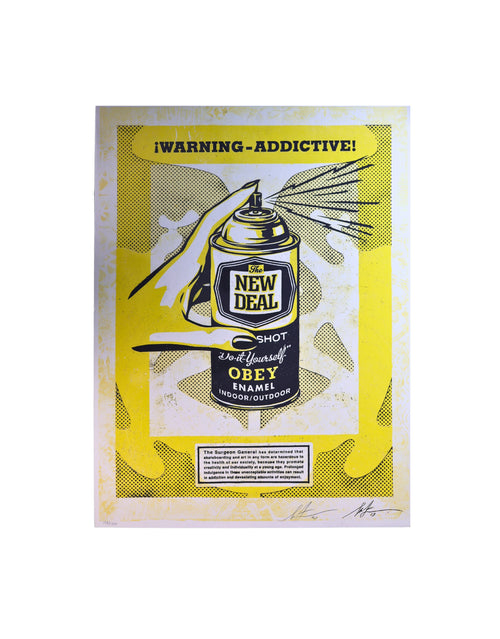
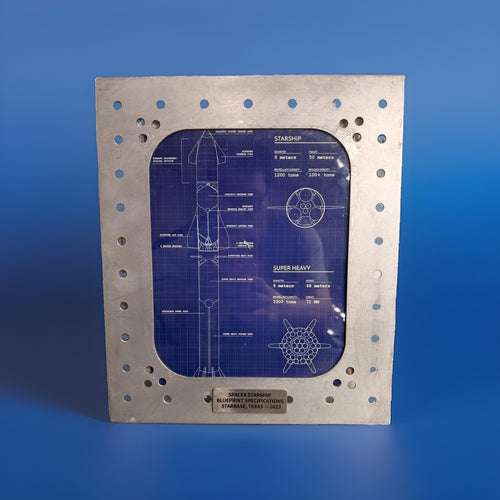
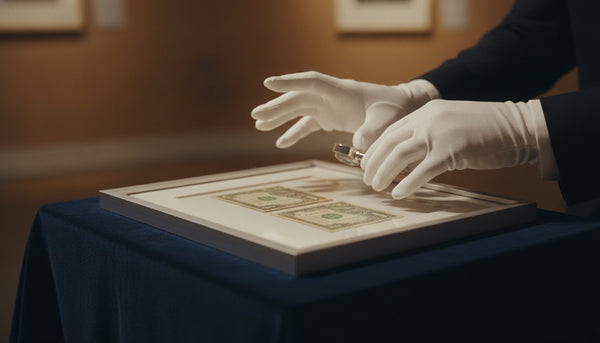
Editorial image disclosure: Illustrations on this page were generated with Nano Banana for explanatory use. They are not authentication evidence, provenance records, or reproductions of any specific collectible.