Updated 2026-07-11
A three-gate beginner workflow for street-art identity, object evidence, and transaction quality across artist-specific authentication systems.
Updated July 2026 · By Gauntlet Gallery Research Desk
Begin with a documented edition by one artist whose release system you can learn. Match the physical work to a primary artist, publisher, estate, or authentication record; inspect condition and mounting; trace provenance; and compare completed sales for the exact edition. “Street art COA” is not a universal standard. Banksy, Shepard Fairey, KAWS, Death NYC, and other artists require different evidence. Spend less on your first work than your maximum budget until you can explain every document in the file.
Choose an Artist With a Researchable Release System
The safest first category is not necessarily the cheapest. It is the one whose identity can be tested.
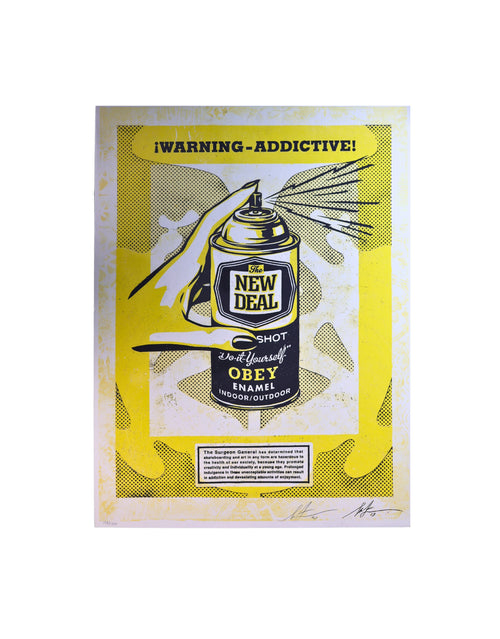
Shepard Fairey has an official OBEY Giant print archive with searchable release pages. Banksy has Pest Control Office as the official authentication service. Manufacturer-produced art toys require exact release and packaging comparison. Artist-published editions may have studio certificates or documented chops.
Before shopping, answer:
- Who issued the edition?
- Is there a primary release archive?
- Who has authority to authenticate the artist?
- Were works signed, numbered, stamped, or certified?
- Are size, medium, and edition publicly documented?
- Do completed secondary-market sales exist?
Avoid starting with an artist whose identity, edition structure, and certificate issuer you cannot research independently. Fame does not compensate for missing records.
Learn the Object Categories
“Street art” listings can mean:
- Signed limited-edition screenprint
- Unsigned offset poster
- Artist proof, printer’s proof, or HPM
- Original painting or drawing
- Sculpture or vinyl figure
- Exhibition souvenir or event ephemera
- Altered found object
- Stencil attributed to an artist
- Reproduction or tribute object
These categories have different markets and authentication systems. A genuine exhibition ticket is not automatically an artwork. A licensed manufacturer product is not automatically an original by the referenced artist. A signature authenticates handwriting only if the signer and item are correctly identified.
Write the object identity before discussing value:
Artist/issuer · title · year · medium/support · dimensions · edition type and size · signature/number · publisher · certificate.
If a seller cannot provide this, the listing is not ready for a serious comparison.
Understand Authentication Authority
Authority can come from the living artist or studio, an estate or foundation, an original publisher, a catalogue raisonné, a recognized specialist, a witnessed-signature service, or an official authentication body. The correct source depends on the artist and claim.
Pest Control’s buying advice says Banksy works certified as real should be accompanied by its certificate and warns about fake backstories. It also says there were no Dismaland COAs or “free art.” A gallery document cannot replace that Banksy-specific authority.
OBEY’s release archive can establish what a Fairey edition was supposed to be, including size, medium, and numbering. It does not authenticate the signature on a particular sheet or reveal hidden condition.
For a contemporary artist-issued work, an original studio invoice and certificate may be primary evidence. For an autograph added to an object, PSA, JSA, Beckett, or another recognized service may offer an opinion on the signature—but not necessarily the artwork or provenance.
Ask every certificate: who issued it, what exact object does it describe, what claim does it cover, how is it verified, and what remedy exists if it is wrong?
Build a Minimum Evidence File
Do not buy from one hero photograph. Request:
- Full front and back
- Signature, date, and edition number
- Publisher chop, stamp, labels, and certificate
- All edges and corners
- Raking-light surface images
- Unframed dimensions or explanation of limits
- Frame, hinge, mat, and mounting details
- Invoice and prior ownership history
- Primary release link
- Current seller and return terms
Match the certificate number and description to the object. Compare photographs in any registry. Save the lookup page; online systems change.
Provenance should connect the exact object, not merely show that the seller attended an exhibition or knows the artist. A receipt for a different edition is not transferable.
Gauntlet Gallery publishes a cross-category authentication library. Use it as a checklist, then defer to the artist-specific primary authority. Gauntlet is also a seller, so exact listing evidence remains essential.
Inspect Condition Before Price
Paper works can suffer handling dents, creases, edge wear, fading, foxing, adhesive staining, trimming, dry mounting, and frame contact. Paint and marker can crack or fade. Figures can lean, scuff, discolor, or lose packaging.
The Library of Congress paper FAQ emphasizes preventive storage and states that all light can damage paper. It recommends professional help for valuable or complicated objects.
Ask whether the work was examined outside the frame. “Excellent framed condition” does not describe the verso or hidden margins. Identify restoration and backing. Never remove tape, flatten brittle paper, clean a signature, or separate a composite object without qualified advice.
Condition affects both value and future authentication. Trimming can remove publisher marks; fading can obscure ink; reframing can separate paperwork. Preserve photographs before intervention.
Use Completed Sales Correctly
Compare the exact edition and object category. Record:
- Title and year
- Standard edition, AP, PP, HPM, original, or poster
- Medium and dimensions
- Signed/numbered status
- Certificate and publisher
- Condition and mounting
- Sale date and venue
- Hammer, buyer’s premium, and currency
- Shipping and framing
Keep current asking prices separate. Read whether an auction “price realized” includes premium. Exclude charity results unless you explicitly account for philanthropic bidding. Exclude famous originals when valuing editions.
Use median and range when enough like-for-like sales exist. One outlier does not set a market. If sales are thin, widen one variable at a time and lower confidence rather than fabricating precision.
Your maximum offer should reflect landed cost: price, premium, tax, shipping, customs, insurance, conservation, and immediate reframing.
Choose a Sales Channel by Risk
Artist or publisher direct: strongest release provenance when available, but drops can sell quickly and returns may be limited.
Specialist gallery: can add curation, condition reporting, authentication coordination, framing, shipping, and returns. Verify those services and evidence object by object.
Major auction house: useful for rare works and public provenance. Add buyer’s premium and study condition and sale terms before bidding.
Marketplace: broad selection and price discovery, with seller-dependent authentication and return quality.
Private sale: potentially lower fees, but demands stronger contract, payment, inspection, and title safeguards.
The channel does not authenticate the work automatically. It changes who performs due diligence, what records are created, and which remedies are available.
Use a Starter Budget That Preserves Learning Capacity
Split the budget:
- 70–80% object and transaction cost
- 10–15% framing, storage, or display
- 5–10% authentication or specialist inspection
- Reserve for shipping, tax, and returns
The percentages are planning ranges, not a financial rule. The principle is to avoid spending the entire budget on the asking price and then tolerating unsafe framing or skipping authentication.
Consider beginning with a documented standard edition rather than a weakly attributed “original.” Strong classification beats romantic ambiguity.
Do not borrow based on promised appreciation. Street-art markets are illiquid and taste-driven. Your first work should remain satisfying if resale takes years or prices fall.
Seller Questions That Prevent Expensive Ambiguity
- What exact edition and variant is this?
- Which primary source confirms it?
- Who authenticated which claim?
- Can I verify the certificate directly?
- Are the images of the actual object?
- Was it inspected outside the frame?
- Is it mounted, restored, trimmed, or faded?
- What provenance predates the current seller?
- Which completed sales support the price?
- What is the landed cost?
- What return applies to condition or authenticity discrepancies?
- Will all paperwork be named on the invoice?
A seller who answers narrowly is more useful than one who promises “100% authentic” without defining the evidence.
Common First-Buyer Traps
The famous-name trap: the artist’s reputation replaces edition research.
The COA trap: any certificate is treated as authority.
The original trap: “original” means unique, official, hand-made, or merely not photocopied depending on seller usage.
The rarity trap: an edition denominator or “sold out” label is mistaken for demand.
The asking-price trap: the highest listing is used as a comp.
The frame trap: a premium frame hides dry mounting, trimming, or damage.
The provenance-story trap: event attendance is mistaken for object-specific acquisition.
The visual-authentication trap: one signature or paper trait becomes a definitive verdict from images.
Treat each as a prompt for evidence, not an accusation.
Artist-Specific Evidence Map
The authentication question changes with the artist. A first-time buyer should be able to complete a map like this before comparing prices.
Banksy
Primary authority: Pest Control Office. A certificate from another seller can record that seller’s transaction but does not replace Pest Control for a claimed Banksy artwork. Event ephemera, licensed-looking products, Dismaland material, and Pest Control-certified prints must remain separate categories.
Questions: Does the exact work have a Pest Control certificate? Does certificate imagery and description match? Is ownership registered or transferable through the appropriate process? Is the object a Banksy artwork or only connected to a Banksy-conceived event?
Shepard Fairey
Primary release reference: OBEY Giant and original publishers or venues. Match title, year, medium, dimensions, edition, signers, chops, and certificate practice. An official release match screens the print; it does not authenticate every signature or reveal hidden mounting.
Questions: Which variant is this? Did the release have a COA? Is it standard, AP, PP, HPM, offset, or large format? Does every expected collaborator sign?
KAWS and manufacturer collectibles
Primary release reference: KAWSONE, Medicom Toy, AllRightsReserved, museum shops, or other original release channels, depending on the object. Match exact character, pose, colorway, size, marks, package, accessories, and release-era verification.
Questions: Did this release use digital/NFC verification? Is the box original to the figure? Are edition size and numbering sourced or inferred? Does the provenance begin at a known release source?
Artist-published contemporary editions
Primary authority may be the artist or studio certificate and invoice. Verify contact and certificate directly through the artist’s official channel when possible.
Questions: Does the studio recognize the title, edition, and certificate? Is the seller’s certificate original? Are later dealer records clearly identified as later?
Autograph-enhanced objects
A signature service may offer a handwriting opinion or witnessed record. It may not authenticate the underlying art edition or prove artist ownership or use.
Questions: What claim did the authenticator examine? Does the certification name the item type and signer? Was the signature added at release or later?
This map prevents a common category error: asking one certificate to prove the artist, object, signature, edition, provenance, and condition simultaneously.
A Worked Budget Example
With a $1,000 total budget, a buyer might reserve $750 for the work and transaction, $125 for archival framing or storage, $75 for inspection or authentication, and $50 as shipping/return contingency. Actual needs vary. A large framed work may reverse those proportions.
The purpose is not precise allocation. It is to preserve the ability to respond when inspection finds acidic mounting, when an authenticator charges a fee, or when insured return shipping becomes necessary. A buyer who spends $1,000 on the object and has no capacity to protect or verify it did not actually have a $1,000 purchase budget.
A Three-Gate Purchase Decision
Gate 1—Identity: exact title, year, medium, dimensions, edition, signature, publisher, and certificate match primary sources.
Gate 2—Object: actual photographs, condition, mounting, provenance, and authentication are complete enough for the risk.
Gate 3—Transaction: completed sales, landed cost, seller, shipping, insurance, returns, and invoice are acceptable.
Failing any gate pauses the purchase. A low price cannot compensate for failed identity. Strong identity cannot compensate for severe undisclosed condition. A good object can still be a bad transaction.
Final Checklist
- One artist and release system studied
- Object category stated precisely
- Primary release record saved
- Correct authentication authority identified
- Certificate scope verified
- Full object photographs reviewed
- Condition and mounting disclosed
- Provenance tied to exact object
- Like-for-like completed sales collected
- Landed cost calculated
- Seller and return terms saved
- Long-term storage planned
- No investment promise required to justify purchase
Methodology and disclosure
This guide uses primary artist/authentication records, institutional conservation guidance, and Gauntlet’s current educational resources. It does not authenticate any individual work from images and does not rank artists or promise returns. Exact evidence standards remain artist- and object-specific.
Where primary records are unavailable, the correct result may remain “attributed,” “unverified,” or “insufficient evidence.” A buyer should not convert repeated dealer descriptions into artist authority. Laws, resale rights, copyright, cultural-property restrictions, and consumer remedies can also vary by jurisdiction; obtain qualified advice when a purchase raises those issues.
Editorial image disclosure: Illustrations on this page were generated with Nano Banana for explanatory use. They are not authentication evidence, provenance records, or reproductions of any specific collectible.
Frequently Asked Questions
How do I start collecting street art without getting burned?
Buy from specialists who authenticate before listing and show provenance, learn how editions and signatures work for each artist, and check comparable sales before you pay. Avoid open marketplaces where verification falls entirely on you.
How do I know a street art print is authentic?
Authenticity rests on provenance, edition consistency (paper, printing, numbering), and each artist's own authentication norm — which varies by artist. A documented ownership trail matters more than a generic certificate.
Where can I buy authenticated street art with comparable-sales data?
Gauntlet Gallery authenticates work before listing and benchmarks pricing against more than 300,000 comparable-sales records, so you can see how value is grounded in real results.
What is a smart first street-art purchase?
Start with a well-documented edition in strong condition from an artist you understand, bought from a seller who authenticates and shows comparable sales — substance over hype.