

Featured image: AI-generated interior concept using product reference photography. Scale, setting, framing, and placement are illustrative.
Designing a focal point on a tabletop, library table, or floating credenza often presents a vexing dilemma for interior designers. Opaque sculptures, stone urns, and solid plaster forms establish presence through heavy mass, yet they create dead zones across sightlines. In an open-plan room, a large solid object breaks conversation pathways, cuts off light from adjoining windows, and obscures architectural details behind it. Transparent celestial spheres solve this spatial challenge. Made popular in the mid-twentieth century by specialized manufacturers like Farquhar, these clear acrylic instruments define a large sphere of visual interest without acting as a physical wall.
Instead of absorbing ambient light, a clear acrylic globe transmits, refracts, and layers light. The printed cartography of constellations, star magnitudes, and coordinate lines appears to float in three dimensions. When positioned thoughtfully, a vintage instrument transforms from an educational artifact into an architectural anchor. However, specifying a transparent globe requires balancing visual transparency, spatial dimensions, lighting conditions, and material preservation. Below, we examine the principles of transparent volume, optical reflections, tabletop footings, and practical acquisition checks to successfully integrate these rare scientific instruments into contemporary residential settings.
Understanding Transparent Volume and Visual Mass
In interior architecture, visual mass differs significantly from actual physical volume. Visual mass measures how strongly an object claims space, draws the eye, and interrupts the room. A solid brass sphere occupies space by creating an impenetrable profile. A transparent acrylic sphere occupies that same spatial boundary through outline, layered grid markings, internal suspended components, and edge highlights. The volume remains fully present, yet the eye travels through it. This phenomenon, known as transparent volume, allows designers to place substantial objects on central tables without blocking vistas across the room.
When an observer looks at a vintage celestial sphere, the front shell shows fine black or colored printing, the central axis supports an internal Earth sphere or coordinate arm, and the back curved acrylic mirrors and magnifies the far side markings. This overlapping of lines creates an illusion of depth that expands as you move around the surface. The sphere does not sit on a surface like a static ornament; it forms a dynamic optical bubble. Because the eye processes both the front face and the interior core, the perceived density changes continuously depending on ambient light, viewer distance, and the colors placed directly behind it.
Using transparent volume works exceptionally well in transitional zones. Consider a foyer where a table sits directly in line with a living room doorway, or a dual-sided desk in a home office. A solid sculpture on that table halts entry movement. A clear instrument draws interest immediately while allowing the architectural depth of the adjacent room to remain visible. The room feels larger and continuously connected.
The Dual-Sphere Geometry of Farquhar Celestial Instruments
Among mid-century astronomical instruments, pieces produced by Farquhar Transparent Globes in Philadelphia stand out for their complex internal spatial organization. Unlike standard globes that map terrestrial features on an opaque card shell, Farquhar instruments construct a model of the universe as viewed from Earth looking outward toward the cosmos. The user looks through an exterior clear star sphere to see an interior terrestrial globe suspended at the exact center.
This nested geometry produces compelling layered graphics. For example, the 1963 Farquhar Earth in Space celestial globe incorporates a small printed Earth globe held in place by a central polar axis inside a larger printed clear celestial shell. The outer sphere carries constellation outlines, named stars with light-year distances, ecliptic bands tracking the sun's apparent path, and stippled representations of the Milky Way. The inner terrestrial globe displays detailed continents and oceans in contrasting tones. Looking into the object, the viewer sees human geography encircled by stellar geography.
This arrangement creates a strong graphic rhythm. The inner terrestrial globe provides an anchor of solid color, while the outer transparent sphere floats as an airy constellation envelope. Because the outer globe features rotational mountings, turning the instrument changes how the printed celestial lines frame the terrestrial continents. That layering gives the piece a captivating graphic density that rewards close viewing without overwhelming the broader room layout.
Reflections, Refraction, and Ambient Lighting Strategies
Lighting a transparent acrylic globe requires a different approach than lighting a painted canvas or matte stone carving. Overhead spotlights directed straight down onto clear acrylic create sharp lens glare, hot spots, and harsh bright highlights that obscure printed star charts. Because acrylic acts as a curved lens, light hits the outer surface, reflects off the back inner wall, and bounces into the room.
To highlight the linear detail of a clear globe without blinding glare, use indirect, low-angle light sources. Soft ambient light from a nearby table lamp with a fabric shade allows light to graze the acrylic curved profile. This produces a soft glowing outline along the sphere's edges, making printed constellation lines legible. Diffused architectural cove lighting or dimmable wall sconces also illuminate transparent spheres smoothly without creating harsh specular reflections.
When planning surrounding walls, place dark or mid-tone backdrops behind the globe rather than bright white surfaces. High-contrast backgrounds, such as deep navy, charcoal, rich timber paneling, or muted sage green, allow fine white or black printed star lines to stand out clearly. If placed against a bright, uncovered window, bright daylight washes out delicate star markings, reducing the globe to a plain clear shell. Position the object against a solid wall offset from natural light windows to achieve clear graphic visibility.
Light filtering reduces some risk to vintage materials, but it does not make printed paper components or aged acrylic immune to environmental degradation. Keep direct sunlight, radiators, HVAC supply vents, and damp locations entirely away from clear globe displays. A UV-filtering film on nearby windows reduces fading risks over time, but avoiding direct sunlight exposure remains essential to protect clear acrylic from yellowing and to prevent printed inks from fading.
Sightlines, Sight Heights, and Tabletop Footprints
A frequent error when styling tables, credenzas, or wide desks is choosing objects that fail to balance table dimensions and seating eye levels. An object that sits too low disappears into a large tabletop, while an item that is too tall cuts off conversation across a seating group. Transparent globes balance these proportion challenges because their open visual profile allows for a larger physical size than solid materials can comfortably manage.
To establish proper sightlines, evaluate the height of surrounding seating. When sitting in a lounge chair or sofa, an observer's eyes rest roughly between 40 and 48 inches from the floor. A celestial globe placed on an entry table or library console at 30 to 32 inches off the floor sits right near eye level. Viewers can study star charts, celestial coordinates, and internal terrestrial globes without bending down or looking up uncomfortably. Because the acrylic body stays transparent, people sitting opposite each other across a library table can talk easily directly through the globe's clear volume.
Base design also impacts the globe's tabletop footprint. For instance, the 1963 Farquhar instrument uses a clear triangular Lucite base with an inset magnetic compass and protective rubber feet. The triangular base creates a stable footprint while keeping the table surface visible underneath. Another classic design, seen in the vintage Farquhar celestial globe on clear stand, utilizes a simple circular clear base paired with an internal pointer arm. Both bases keep the assembly visually weightless, making the globe appear to hover above the furniture surface.
Because vintage product listings can contain conflicting height and diameter notes, designers must verify physical dimensions before specifying table space or buying custom acrylic cases. Always confirm overall height, base footprint, and rotating clearance directly with the gallery before finalizing a placement layout.
Curating Surrounding Materials: Acrylic, Timber, Metal, and Stone
Integrating mid-century scientific instruments into contemporary rooms requires careful material pairing. Because acrylic was an advanced synthetic material during the mid-twentieth century, pairing a clear globe exclusively with modern plastic or high-gloss lacquer can make a space feel cold or sterile. Contrast the globe's smooth acrylic surface with natural, tactile materials to ground the design.
Rich hardwood surfaces provide an ideal counterpoint to vintage Lucite and acrylic. Placing a clear globe on a matte walnut credenza, oiled oak desk, or reclaimed timber dining room server anchors the clear object. Natural wood grains seen through a clear acrylic base create an appealing contrast between synthetic precision and organic texture. Stone surfaces like honed marble, dark soapstone, or textured travertine also balance clear acrylic. The organic veining of natural stone showing through a clear base adds visual depth to the installation.
Metal accents nearby should echo the instrument's mechanical trim without overwhelming it. Mid-century globes frequently feature brass, chromed steel, or black painted metal hardware along their polar axes and mounting arms. Complement these details by pairing the globe with vintage bronze desk accessories, matte black steel bookends, or understated architectural table lamps. Avoid overly shiny chrome surfaces nearby, as excessive polished metal creates distracting optical reflections on the acrylic sphere.
| Material Pairing | Visual Effect on Acrylic Globe | Best Room Application |
|---|---|---|
| Matte Walnut or Oiled Oak | Anchors clear acrylic with rich organic warmth and deep color contrast. | Libraries, executive offices, formal studies |
| Honed Dark Marble or Soapstone | Highlights fine star lines and creates clean reflection along the base. | Modern foyers, reception tables, architectural credenzas |
| Brushed Brass or Bronze Trim | Echoes vintage metal hardware and axis fittings. | Transitional living rooms, collector display shelves |
| High-Gloss White Lacquer | Reflects ambient room light but can wash out thin printed markings. | Minimalist spaces with careful low-angle lighting |
Condition Factors in Vintage Acrylic Instruments
Acquiring a mid-century scientific object requires understanding how acrylic, printed inks, and mechanical fasteners age over decades of display. Unlike contemporary glass, vintage acrylic (often polymethyl methacrylate) is softer, lighter, and more sensitive to friction, chemicals, and climate shifts. Knowing what wear to expect helps designers set realistic expectations for clients and select appropriate placements.
Surface scuffs and light micro-scratching are common on authentic vintage acrylic globes. Over decades of handling, dust wiping, and repositioning, clear acrylic surfaces build up fine surface hairline marks. These light scuffs do not diminish the object's history; in many light settings, they simply confirm genuine age rather than modern reproduction. However, deep gouges, sharp impact cracks along the equator seam, or stress fractures around axis mounting points require close inspection, as structural cracks can expand over time if adjusted frequently.
Another common aging trait is light clouding, yellowing, or surface haze. Exposure to ambient sunlight or early chemical cleaners can slightly haze clear acrylic. When evaluating an instrument, confirm that printing remains sharp and legible through any slight haze. On pieces featuring internal printed spheres, such as the 1963 Farquhar model, inspect the internal Earth sphere for paper shrinkage, seam separation, or fading along continent lines. Check that internal pointer arms and axis shafts remain straight, rust-free, and securely attached to avoid wobbling when the sphere is rotated.
Condition traits for vintage Farquhar globes include:
- Expected vintage wear: Light acrylic clouding, minor hairline surface scratches, faint metal patina on axis screws, and softening around rubber base feet.
- Structural items to inspect: Hairline fractures at polar mounting holes, separation along equator joins, paint loss on printed constellations, or stiff rotation along axis mounts.
Never treat a vintage scientific instrument as a calibrated precision tool. Internal components, magnetic compasses, and alignment scales were set decades ago for teaching purposes. Over time, magnetic drift, axis settling, and wear mean these pieces should be appreciated as historical decorative objects and conversation centerpieces rather than functional navigation tools.
Hypothetical Worked Example: The Crestview House Library Table
To demonstrate these layout strategies, consider this hypothetical residential interior project. A design team was tasked with styling a central library table inside a renovated 1950s residence with dark timber walls and large window openings. The library serves as a quiet reading room and a pass-through space between the main living area and an outdoor patio.
The Spatial and Structural Challenge
The library table sits in the middle of the room directly on axis with the main entry doors. In this hypothetical room dimensions scenario, the space measures 18 feet by 24 feet with an 8.5-foot ceiling, while the table measures 72 inches long by 38 inches wide, crafted from matte-finished American walnut. Behind the table stands a floor-to-ceiling bookshelf filled with dark-bound books, while the wall opposite features wide glass doors opening to a covered garden terrace. The client wanted a substantial central centerpiece that felt intellectually engaging, matched the home's mid-century architecture, and did not block views of the garden from the entry doorway.
The Specification and Placement Strategy
The design team evaluated two primary options: the 1963 Farquhar Earth in Space Transparent Celestial Globe 16" Compass VTG and the Vintage Farquhar Transparent Celestial Globe Constellation Map Clear Stand. The second option offered a sleek, minimalist aesthetic with its clear circular stand and black pointer arm, taking up minimal visual space. However, the team preferred the 1963 model because its suspended inner terrestrial sphere provided a grounding, dual-layered focal point that anchored the open table surface, while its triangular Lucite base provided a stable, wide footprint.
Because catalog listings for vintage technical instruments occasionally feature contradictory diameter references across the shell, axis, or base, the designers established a strict rule to request direct measurement confirmation from the dealer prior to final specify-and-purchase signoff. This step ensured the acrylic sphere would sit at exact eye level for seated readers without invading the open work zone of the walnut table.
Rather than placing the globe on a high shelf, they centered it on the walnut library table. Placing the globe on the dark wood created an immediate visual anchor. The deep colors of the surrounding book spines provided a high-contrast backdrop, making the globe's white constellation outlines and printed star names easy to read from six feet away.
To manage natural daylight from the patio doors, the team installed semi-sheer linen drapery tracks to soften direct afternoon sunlight. They placed a custom dimmable table lamp with an opaque drum shade to the left of the globe, casting soft side light across the acrylic sphere without throwing harsh reflections back toward the entry doorway.
Result and Spatial Performance
Because the outer celestial sphere remains clear, visitors entering the room look directly through the globe toward the garden view outside. The globe defines the spatial center of the library table without creating a visual wall. The inner terrestrial globe provides a pop of color that echoes the room's warm timber tones, while the triangular Lucite base lets the rich walnut grain show through below.
Before signing off on the installation, the team reviewed critical condition details. They carefully inspected the acrylic for hazing, clouding, deep surface scratches, or stress fractures around the polar-axis mounting points. They also checked for discoloration, flaking ink on the printed celestial markings, and the complete physical integrity of the inset magnetic compass, acknowledging that while a vintage instrument cannot be relied upon as a calibrated navigation tool, its structural preservation is paramount. The compass inset on the base aligns naturally with the room's architectural grid, serving as an intriguing detail for guests exploring the space.
Display Maintenance, Cleaning, and Conservation Realities
Maintaining clear acrylic scientific instruments requires gentle care. Acrylic scratches far more easily than glass, and using inappropriate household cleaning products can permanently damage vintage plastic. Standard window sprays containing ammonia, alcohol, or harsh solvents will craze acrylic, turning clear surfaces milky with micro-cracks that cannot be polished away.
Dust acrylic globes using a clean, ultra-soft microfiber cloth or an anti-static feather duster. Do not rub dry dust across the surface with pressure, as small grit particles can drag micro-scuffs across the clear plastic. If deeper cleaning is needed, wipe the sphere gently using a damp microfiber cloth moistened with plain water and mild soap, followed by a dry soft cloth. Specialized acrylic cleaning polishes can be used sparingly to buff away faint surface scuffs, but avoid aggressive polishing near delicate printed star markings.
Environmental control protects fragile paper and plastic components over time. Keep celestial globes away from high-humidity areas like spa bathrooms, as well as heat sources like fireplaces or heating vents. Rapid temperature changes cause acrylic to expand and contract, putting stress on polar mounting joints and equator seams. Stable residential indoor temperatures keep vintage acrylic instruments stable for years of display.
When handling or moving a celestial globe, lift the assembly by supporting the base from below with both hands. Never pick up a celestial globe by grabbing the top polar axis knob, pointer arm, or upper sphere shell. Dragging or lifting the assembly by its mechanical joints strains vintage mounting screws and can fracture delicate acrylic surrounding the axis holes.
Sourcing, Verifying Dimensions, and Practical Acquisition
When specifying vintage scientific instruments for high-end residential projects, sourcing requires careful attention to detail. Authentic mid-century Farquhar celestial globes were manufactured in limited numbers for educational institutions, military facilities, and private libraries. As a result, exact configurations, base styles, and printings vary across production decades.
Before confirming an acquisition with a client, review product documentation and gallery photographs thoroughly. Product descriptions document physical details, historical markings, and visible wear, providing valuable record-keeping for acquired pieces. For instance, catalog photographs document exact base configurations, internal pointer attachments, and printed maker imprints. Verify whether the globe features a triangular compass base or a clear circular stand, as each style impacts table styling differently.
Because catalog listings sometimes include conflicting measurements from original manufacturer specs, measure twice before finalizing custom cabinetry, niche shelves, or display pedestals. Ask the gallery to confirm overall height, outer sphere diameter, and base footprint dimensions on the actual physical piece. Confirming these details upfront ensures a smooth, precise installation on delivery day.
Integrating Celestial Instruments into Modern Interiors
Introducing a vintage transparent celestial globe into a home offers a refreshing alternative to standard decorative objects. These mid-century instruments blend art, history, and physical science into an open, weightless form. By mastering transparent volume, managing ambient lighting reflections, and pairing acrylic with tactile materials like timber and stone, interior designers can create memorable focal points that preserve visual open space across sightlines.
Whether positioned on an executive desk, a foyer console, or a central library table, a vintage Farquhar celestial globe anchors a room through layered visual interest. Its floating stars, internal terrestrial geography, and clear geometric base spark quiet curiosity while honoring mid-century design heritage. Explore our current inventory at Gauntlet Gallery to find authentic vintage celestial globes and curated design objects that bring sculptural clarity to your next interior project.
Available at Gauntlet Gallery
Explore current pieces available from the gallery.
-

1963 Farquhar Earth in Space Transparent Celestial Globe 16" Compass VTG
$699.00 USD
-

1967 Beatles Richard Avedon STERN Original Posters Set of 4 Linen Backed Copy
$999.00 USD
-
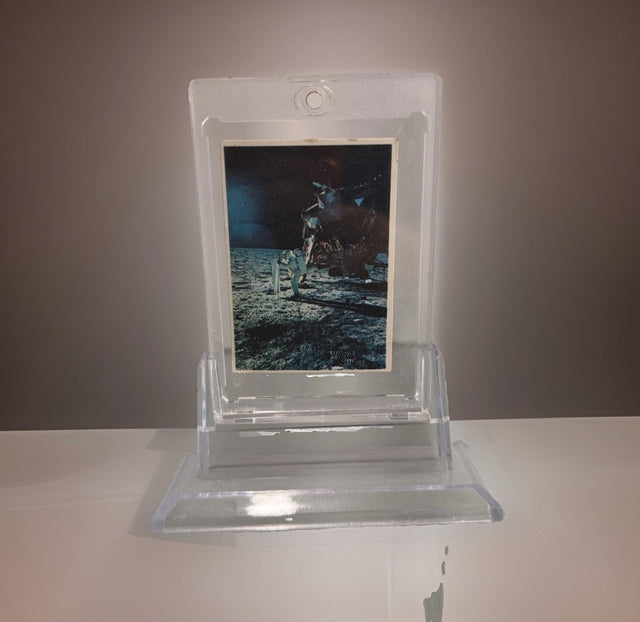
1969 Space Candy Buzz Aldrin Apollo 11 On The Moon Card #19 Taylor-Reed Display
$59.00 USD
-

1980 Polo Player Green Pink Chalk Pastel Bears Andy Warhol Signature AS-IS
$399.00 USD
-

After Andy Warhol Moon Landing Line Drawing 5/50 w/ Astronaut Autographs As-Is
$175.00 USD
-

After John Lennon "I Do" Framed Print, Marked A/P Unverified
$99.00 USD


Browse the collection for current listings.