The Buy-It-Now Premium: When Speed Beats Bidding
You find the piece. It's right. The authentication stacks up. The price is maybe 15% above what you'd expect to pay if you won the auction that closes in four days.
Do you wait?
Most experienced collectors don't. And the ones who do often lose the piece, then pay more for a lesser example three weeks later.
This is the Buy-It-Now premium in practice. It's not irrational. It's not impatience. It's a calculated decision that the secondary market rewards far more often than it punishes — when you understand what you're actually buying with that markup.
You're buying certainty. And in the collectibles market, certainty is genuinely scarce.
What the BIN Premium Actually Represents
Let's be precise about what we mean by "Buy-It-Now premium."
It's the spread between the fixed-price ask on a collectible and the realistic floor of what that same item might clear at open auction. That spread exists because the seller is absorbing your risk. They're guaranteeing supply. You're paying for the elimination of a variable outcome.
In efficient markets, that premium would be small and predictable. Collectibles are not an efficient market.
Prices on the same signed photograph can swing 40% between two auctions six weeks apart depending on who shows up to bid, what else closes the same afternoon, whether a major publication ran a piece on the subject that month, or whether a competing seller dumped three similar examples the same week. None of those variables are within your control as a bidder.
The BIN price removes all of them.
The Three Components of BIN Pricing
When a reputable dealer sets a fixed price, that number is carrying three things:
- Acquisition cost plus margin — what they paid, plus the business math required to stay operational.
- Authentication and provenance cost — grading fees, COA procurement, legal chain-of-title documentation. These are real line items that auction estimates frequently obscure.
- Availability premium — the cost of holding inventory rather than immediately liquidating it. Dealers who carry quality pieces carry capital risk. That premium belongs to them.
Understanding those three components reframes the conversation. You're not being overcharged. You're paying for a service: a curated, authenticated, available piece delivered without competitive friction.
The Auction Math Most Collectors Get Wrong
Here's the calculation collectors almost universally underweight.
Say you're tracking a signed print. Auction estimate is a range that suggests you could win it at a number below the BIN ask. You decide to bid.
Now run the actual cost of the auction path:
- Buyer's premium — major houses charge meaningful buyer's premiums on top of hammer price. That percentage eats directly into any apparent savings.
- Shipping and insurance — often not included in auction estimates. For fragile or high-value pieces, this is not trivial.
- Time cost — four to ten days of active monitoring, late-night snipe windows, calendar blocking.
- Emotional cost — this sounds soft, but it's real. Losing a piece you wanted affects your decision-making on the next purchase. Experienced collectors account for this.
- Opportunity cost — capital tied up in a pending bid is capital unavailable for another purchase that surfaces in the same window.
Add those up against the BIN price. The gap narrows faster than most people expect.
And that calculation assumes you win the auction. Which is not guaranteed.
The Sniping Illusion
There's a persistent belief among certain collector types that auction sniping — placing a maximum bid in the final seconds — produces reliably better outcomes than paying BIN.
Sometimes it does. Often it doesn't.
The sniping strategy assumes low competition and accurate price discovery. In liquid categories — major street art prints, top-tier signed sports memorabilia, high-demand music items — competition is not low. Sniping produces the same result as any other proxy bid: you pay your max or you lose.
For illiquid, niche, or highly specific items? The auction strategy has more merit. But those are also the categories where authentication uncertainty is highest, which introduces a different set of risks.
When was the last time you actually saved meaningful money sniping a high-demand, fully authenticated piece?Be honest with yourself about that answer before your next auction decision.
When BIN Wins, Category by Category
The premium-for-certainty argument doesn't apply equally across all collectible categories. Let's break it down.
Street Art and Contemporary Prints
This is where BIN logic is strongest.
For Banksy works, authentication runs exclusively through Pest Control — there is no alternative that holds market value. A BIN listing from a dealer who has done the Pest Control verification work and holds that documentation is worth meaningfully more than an auction listing where that paperwork's completeness is unclear.
Shepard Fairey presents differently. There's no artist-issued COA. Authentication lives in the signature, edition numbering, Obey Giant drop record, and provenance chain. A dealer who has assembled and verified all four of those elements before listing at a fixed price has done work that an auction house description rarely replicates in full.
For Death NYC, the standard is artist-signed COA plus studio gold seal — both, not one. A BIN listing that presents both items with documentation is a known quantity. An auction lot where the description is ambiguous about which of the two is present is not.
Pay the BIN premium here. The authentication stakes justify it.
Music Memorabilia
Music is where authentication complexity makes fixed-price buying particularly defensible.
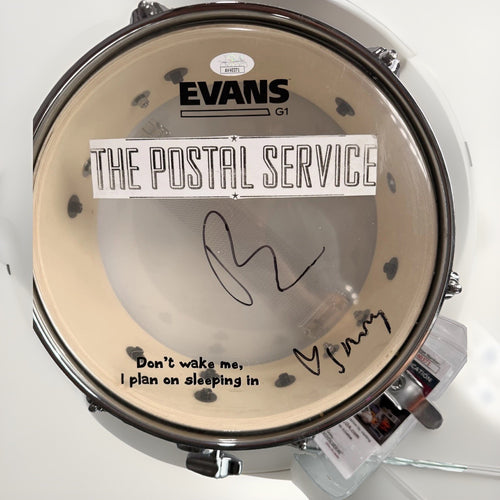
The tier structure matters: Beckett Authentication Services (BAS), JSA, and PSA/DNA are the three pillars. Within BAS, Roger Epperson REAL represents the music specialist tier — the level of scrutiny appropriate for significant signed instruments, handwritten lyrics, and historically important pieces.
There's also the JSA Basic versus LOA distinction that many collectors flatten into a single category. A JSA Basic is a witnessed signature. A JSA Letter of Authenticity is a forensic examination of a signature not witnessed. They are not equivalent, and auction descriptions sometimes present them as if they were.
PSA certification comes with a verification warning worth taking seriously: PSA has itself flagged that counterfeit PSA holders exist in the market. The PSA certification-verification system allows you to confirm a cert number is legitimate — a step that should be standard practice but often isn't exercised before auction payment clears.
A dealer selling at a fixed price who has done all of that verification work — confirmed the cert is real, confirmed the tier of authentication, confirmed the provenance chain — is providing a service that justifies a premium over a raw auction listing.
Sports Memorabilia
FBI Operation Bullpen cast a long shadow over signed sports memorabilia that has never fully lifted. The operation exposed a massive network producing forged signatures, many of which moved through what appeared to be legitimate channels, including auction platforms.
The lesson isn't that auctions are fraudulent. The lesson is that authentication chain diligence in sports memorabilia requires active effort, not passive assumption. A fixed-price dealer who has absorbed that effort — who has verified the Beckett or PSA cert is clean, who has confirmed provenance doesn't trace back to known forgery networks — is worth paying for.
The Bullpen precedent is also why BAS with Roger Epperson REAL carries particular weight for crossover items — musicians who were also cultural athletes, athletes with significant entertainment crossover — where the forgery risk from multiple vectors converges.
KAWS, BE@RBRICK, and Collectible Figures
The authentication framework here is more recent and more technical, but the BIN logic still applies.
For current KAWS and BE@RBRICK releases, the Medicom hologram sticker, molded copyright stamp, and documented release record are the standard. A seller who has properly matched the piece to its release record is offering something meaningfully more verifiable than an auction lot without that documentation.
For earlier pieces, authentication rests on original packaging integrity, hologram presence, and cross-referencing against Medicom release records. That's research-intensive due diligence. Fixed-price dealers who have done it are absorbing a real cost.
In the figure and designer toy space, auction lots frequently come from estate sales, storage unit finds, or private party sellers who don't know what they have. That's not inherently bad — it's how undervalued pieces surface — but it means the authentication burden lands on you, post-purchase. Price that in.
Space Memorabilia
This is a smaller but fast-growing category where fixed-price buying from specialist dealers is arguably more important than anywhere else.
The authentication framework uses the same three-pillar approach: BAS, JSA, and PSA/DNA. For significant pieces — flown hardware, mission-specific items, rare personnel signatures — a Zarelli specialist letter provides the historical and technical context those general authentication services can't fully supply.
Space memorabilia auction results vary wildly based on provenance documentation. The difference between "signed photograph" and "signed photograph with flown mission provenance and Zarelli documentation" is not incremental — it's categorical. A BIN listing that clearly establishes the full documentation stack is offering genuine certainty in a category where auction descriptions can be vague in ways that cost you significantly on resale.
The Liquidity Argument for BIN
There's a market efficiency argument for fixed-price purchasing that goes beyond the individual transaction.
When you buy at a verified BIN price with full documentation, you're buying with a known resale baseline. The auction market will confirm or exceed that price when you eventually sell — assuming you've maintained condition and documentation integrity. You have a floor.
When you win an auction at a price that felt like a deal, you don't always know your floor. If you paid below realistic market because of thin competition that day, you may discover on resale that the market is thinner than you thought — or that the authentication documentation you received is less complete than what dealers maintain, which suppresses your realized price.
BIN from established dealers often comes with implicit or explicit buyback relationships, authentication guarantees, and condition reports that establish resale documentation at the point of purchase. That's infrastructure that builds value into the holding period, not just the transaction moment.
Are you collecting, or are you just winning auctions?The question isn't rhetorical. Some people genuinely prefer the auction process. Others have convinced themselves they prefer it because they like the feeling of beating the market, even when the math doesn't support it.
When Auctions Genuinely Win
Honest market analysis requires saying this clearly: there are scenarios where the auction path is the correct play.
- Obscure or illiquid items with uncertain pricing — If price discovery is genuinely unclear and comparable sales are sparse, auction can establish value rather than force you to accept a dealer's estimate of it. Set a disciplined maximum. Let the market speak.
- Estate and liquidation sales with provenance upside — Sometimes the authentication and provenance story is incomplete because the seller doesn't know what they have. If you have the expertise to identify it and the patience to verify post-purchase, underdocumented auction lots can be legitimate opportunities.
- Categories with strong price transparency — In markets where comparable sales are dense, current, and publicly accessible, auction gives you the benefit of real-time price discovery. Modern trading cards with active parallel markets are an example. The information asymmetry between buyer and seller is lower.
- When your BIN alternative has authentication gaps — If the fixed-price listing doesn't have the documentation standard the category requires, the premium isn't justified. Pay the BIN price only when the authentication stack is complete.
The analysis isn't "BIN always" or "auction always." It's about mapping the decision to the specific item, the specific documentation, and the specific market conditions at the moment of purchase.
Dealer vs. Platform: The BIN Source Matters
Not all Buy-It-Now listings are created equal, and this is where collectors often make an error that costs them more than the premium they were trying to avoid.
A BIN price from an established gallery with a documented specialization in a category, a verifiable track record, and direct authentication relationships is a different product than a BIN price from an individual seller on a peer-to-peer platform who has set a fixed price because they don't want to risk auction price discovery going against them.
The premium from the former is justified. The premium from the latter deserves serious scrutiny.
There are legitimate private sellers using fixed pricing. There are also people who set a BIN price because they know they'd lose in an open market. Distinguishing between those two requires seller reputation research, comparable sales analysis, and authentication document review before you commit.
Red Flags
- BIN price significantly above all recent comparable auction results with no explanation. A modest premium is reasonable. A large premium requires a clear reason: demonstrably better provenance, a more complete authentication stack, or a materially better condition example.
- Authentication documentation described vaguely in a fixed-price listing. "Comes with COA" is not a specification. Know whose COA, what tier, and whether it's been independently verified. For music: is that JSA Basic or JSA LOA? For street art: is that Pest Control certification or a third-party opinion?
- PSA holders without cert verification. PSA has explicitly warned that counterfeit holders circulate. Before paying any BIN price based on PSA authentication, run the cert number through PSA's verification system. This takes two minutes and costs nothing.
- BIN listings that appeared immediately after a high-profile auction result. Opportunistic pricing that anchors to a single outlier auction result is common. One exceptional result doesn't establish market value. Look at the distribution of comparable sales, not the peak.
- Sellers who can't produce provenance documentation on request. In the fixed-price market, there's no time pressure. If a seller won't or can't provide chain-of-title documentation before you commit, that's not a premium worth paying. It's a risk you're absorbing at full price.
- KAWS or BE@RBRICK pieces listed at BIN without the packaging, hologram, and release-record documentation that should be present. The authentication expectations for these pieces are well established. A seller listing a piece without that documentation either hasn't verified properly or has a gap in the authentication chain. Neither is acceptable at a premium price point.
- Music or sports memorabilia without the three-pillar authentication (BAS/JSA/PSA) where any of the three should reasonably be present. Operation Bullpen demonstrated that unsigned pieces with added signatures and single-source authentication move through the market at full price. The three-pillar standard exists for exactly this reason.
Negotiating the BIN Gap
Fixed prices are not always fixed. This is a part of the market that newer collectors often don't engage with because it feels uncomfortable or presumptuous.
It's neither.
Established dealers maintain BIN prices that reflect their target margin, but they also maintain relationships and respond to serious offers. If you've done your comparable sales research, if you understand the authentication stack, and if you can make a credible, respectful offer with immediate payment readiness, many dealers will work with you on price.
The key word is serious. Lowball offers from buyers who clearly haven't researched the piece don't produce results and damage the relationship for future transactions. Informed offers from buyers who demonstrate they understand what they're looking at — and who come with clean payment history and no friction — often do.
The negotiating window tends to be narrower on highly liquid, high-demand pieces where the dealer knows they'll sell at ask. It's wider on pieces that have been listed for an extended period, on category overlaps where the buyer pool is smaller, and on situations where a buyer is making a multi-piece acquisition from the same seller.
Even a modest reduction from the ask price closes part of the premium gap while retaining all of the certainty benefits. It's worth attempting on meaningful purchases.
Building the BIN Into Your Collecting Strategy
The collectors who use fixed-price purchasing most effectively don't treat it as a last resort when they've lost too many auctions. They treat it as a primary channel for specific categories of purchase — the ones where authentication complexity is high, where demand is strong enough that auction competition is reliable, and where they've established relationships with dealers who give them first-look access before pieces hit the open market.
That last point is where the real premium-for-certainty value lives.
Established relationships with dealers who specialize in your collecting categories give you access to pieces before they're priced for the full market. The fixed price you pay in that context isn't the public BIN price — it's a relationship price that reflects your reliability as a buyer and the dealer's confidence in moving the piece without the friction of open listing.
That's the version of fixed-price buying that experienced collectors have always used. The public BIN market is a pale version of what happens between serious collectors and serious dealers transacting privately at agreed prices, with full documentation, before anything hits a platform.
Start building those relationships. The premium-for-certainty in the public BIN market is worth paying. The discount-for-relationship in the private market is worth earning.
Bottom Line
The Buy-It-Now premium is real. It's also rational.
When you're paying a fixed price to a reputable dealer with a complete authentication stack, verified provenance, and a trackable specialization in the category, you're not overpaying. You're pricing the elimination of multiple risk variables that the auction path leaves open.
Add buyer's premiums, shipping, authentication verification costs, time, and the probability of losing the piece entirely, and the actual gap between BIN and auction outcomes is smaller than it appears — often much smaller.
Know your categories. Know your documentation standards. Verify before you pay, regardless of format. And when the piece is right and the authentication is clean, pay the BIN price without apology.
The collectors who consistently build strong collections pay for certainty when certainty matters. They don't let a fixable variable — price format — become the reason they miss a piece they wanted.
Frequently Asked Questions
How much BIN premium is reasonable before I should just wait for auction?
There's no universal number, but a working framework: if the BIN premium is less than the combined buyer's premium plus shipping plus the realistic probability you don't win the auction multiplied by the cost of finding the next comparable example, BIN is probably correct. For high-authentication-complexity categories like signed music memorabilia or Banksy works, that threshold is higher than most collectors assume. For liquid, well-documented categories with dense comparable sales, it's lower.
Does the BIN premium logic apply to graded cards and modern trading cards?
With some modification. The trading card market has dense, real-time comparable sales data — price transparency is high relative to most collectibles categories. That compresses the BIN premium to something tighter than in authentication-complex categories. The certainty you're paying for in cards is more about condition confirmation and grade authenticity than provenance complexity. The PSA cert verification step matters here: run the number before you pay.
If I buy at BIN from a reputable dealer, do I have authentication protection if something later proves wrong?
This varies by dealer and should be confirmed explicitly before purchase. Reputable dealers in authentication-sensitive categories typically stand behind their provenance representations to some degree. Ask directly: what is the return or remediation policy if an authentication document is later found to be invalid or the cert is determined to be counterfeit? The answer tells you a great deal about how confident the seller is in their own due diligence.
Are major auction house BIN or "Buy Now" fixed-price options different from dealer BIN pricing?
Structurally similar, but with important differences. Major auction houses with private sales or fixed-price channels typically apply their full buyer's premium structure to those transactions as well. What looks like a fixed price may still carry fees that push the all-in cost above a comparable dealer price. Read the fee structure carefully before comparing prices across channels.
How does BIN logic apply to Warhol works given the dissolution of the Authentication Board?
The Warhol Authentication Board dissolved in 2012, which significantly changed the authentication landscape for Warhol works. The TrueCOA framework is now the operating standard. For fixed-price purchases of Warhol works, the documentation stack needs to be examined carefully — what existed before 2012, what has been reviewed under TrueCOA, and how the provenance chain is constructed across that transition period. This is a category where dealer specialization matters considerably, and where paying for a dealer who has navigated that documentation complexity is particularly justified.
What should I ask a dealer before paying a BIN price on a high-value signed piece?
Six questions worth asking on any significant fixed-price purchase:
- What is the complete authentication documentation, and can I see copies before purchase?
- Has the cert number been independently verified against the issuing authenticator's database?
- What is the provenance chain from the signer to the current listing?
- For JSA-authenticated music or entertainment items: is this Basic or LOA?
- What is the return policy if authentication documentation is later determined to be invalid?
- Has this piece appeared at auction previously, and if so, what was the realized price?
Is there a category where I should almost never pay the BIN premium and just wait for auction?
Yes: categories where price discovery is genuinely unclear, comparable sales are sparse or inconsistent, and the authentication standard is well-established and easy to verify independently. If you can verify the authentication yourself in five minutes, the primary value the dealer is providing is sourcing and availability — which is worth something, but not a large premium. Niche autograph categories with strong authentication infrastructure but thin buying pools sometimes fall here. Set your auction maximum, stick to it, and be patient.
Does paying BIN affect the resale value of a piece compared to buying the same piece at auction?
The purchase format doesn't directly affect resale value — the authentication documentation and condition do. What matters on resale is what you can prove about the piece, not what you paid for it or how you bought it. If anything, pieces purchased through dealers with strong documentation practices often have cleaner provenance chains on resale, which can support or improve realized prices compared to auction-sourced pieces where documentation was less systematically maintained.