The "Andre the Giant Has a Posse" sticker campaign, initiated by Shepard Fairey in 1989, began as an experimental art project rooted in skateboarding culture and phenomenology. It evolved from a simple, somewhat absurd sticker featuring the late wrestler Andre the Giant into the globally recognized OBEY Giant visual language, challenging viewers to question their surroundings and the pervasive nature of advertising. This seminal project, born from a casual lesson on stencil-making, quickly transcended its initial intent as an inside joke among skateboarders to become a widespread, enigmatic phenomenon that forced public engagement and contemplation about the nature of perception and authority.
The Genesis of a Phenomenon: 1989 and Beyond
In 1989, while attending the Rhode Island School of Design, Shepard Fairey created the first "Andre the Giant Has a Posse" sticker. During a stencil-making lesson, Fairey playfully chose an image of Andre the Giant from a newspaper. The initial stickers, crude and hand-cut, were distributed among Fairey's friends in the skateboarding and punk rock scenes. The phrase "Andre the Giant Has a Posse" was a nonsensical slogan, designed to provoke curiosity without immediate interpretation. This was an exercise in phenomenology – the study of how things appear to us and how we experience them.
Fairey aimed to explore the psychological impact of an image appearing without context. By placing these stickers in public spaces, he sought to disrupt the mundane visual landscape and prompt viewers to question the source and meaning of unsolicited imagery. This early phase was characterized by a guerrilla approach, with stickers appearing on lampposts, mailboxes, and walls. The ubiquity and enigmatic nature fostered a cult following and a sense of shared experience. This grassroots distribution was crucial, creating a sense of discovery and participation, laying the groundwork for a larger, more intentional artistic and social commentary.
From Sticker to Symbol: The Birth of OBEY
The transformation from "Andre the Giant Has a Posse" to "OBEY Giant" marked a significant shift. Facing legal challenges from the World Wrestling Federation (WWF) over Andre the Giant's likeness, Fairey abstracted the image, retaining distinctive features but rendering them in a stylized, iconic manner. This allowed visual continuity while circumventing copyright issues.
Crucially, the word "OBEY" was introduced during this period. Inspired by John Carpenter's 1988 film "They Live," which depicted subliminal messages of conformity, Fairey adopted "OBEY" as a provocative call to action. The film's themes resonated with Fairey's growing interest in challenging consumer culture and propaganda. Juxtaposing the abstracted Andre face with "OBEY" created a powerful, ambiguous symbol. This new iteration became a direct commentary on pervasive propaganda and the importance of critical thinking.
The "OBEY Giant" symbol retained guerrilla tactics but now carried a more explicit, open-ended political and social message. The ambiguity of "OBEY" – whether a command to obey the art, authority, or to question the act of obeying – forced intellectual engagement. This evolution solidified the project's status as significant street and conceptual art, moving beyond a simple visual experiment to become a potent tool for social critique. Collectors seeking to understand Fairey's comprehensive work often consult the Gauntlet Gallery Shepard Fairey Print & Fine-Art Index.
The Language of Dissent: Iconography and Message
The visual language of OBEY Giant is characterized by stark simplicity, bold graphics, and recurring motifs, all designed to convey critical engagement and dissent against authority. The core iconography, refined over decades, includes:
- The Andre the Giant Face (Abstracted): The most recognizable element, simplified and often in red-and-black, representing the everyman or an anonymous messenger.
- The Word "OBEY": The conceptual anchor, a direct command forcing a reaction of compliance, defiance, or critical inquiry.
- The Star Icon: A versatile symbol evoking military, corporate, or revolutionary emblems, adding layers related to power structures and counterculture.
- Propaganda Poster Aesthetics: Fairey employs 20th-century propaganda styles – bold colors, strong lines – to subvert and critique the systems they once promoted.
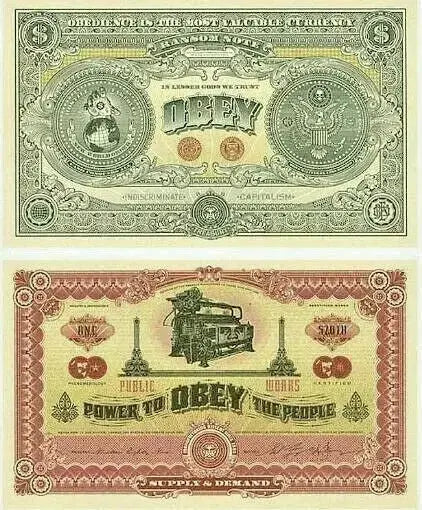
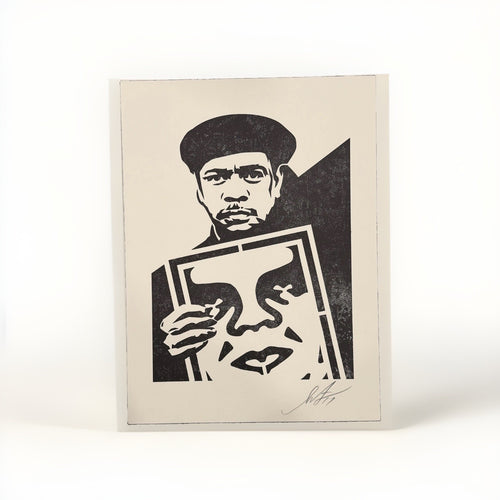
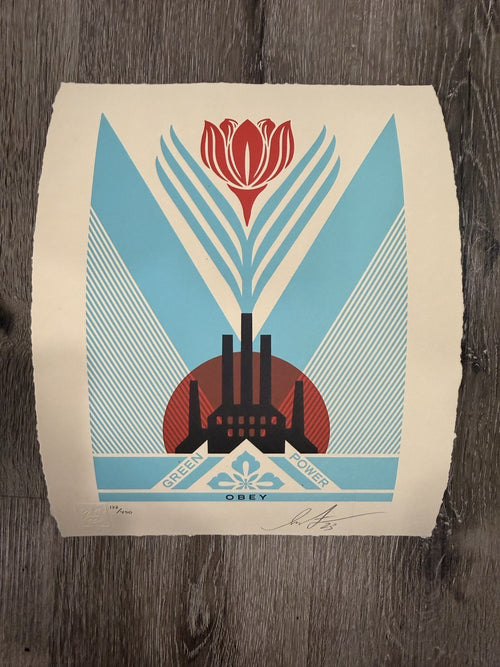
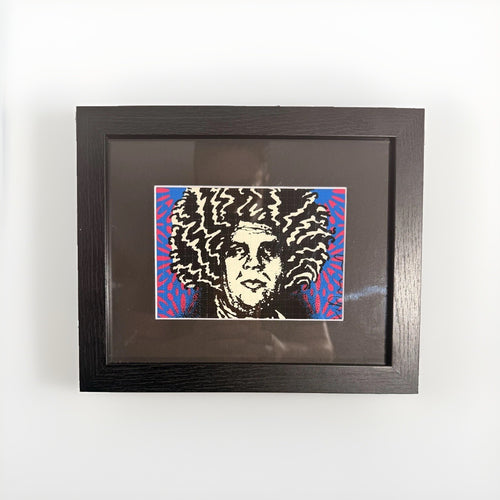
Fairey's broader work, documented in resources like the Shepard Fairey Buyer's Guide, expands on these themes through collaborations and diverse subjects. These include critiques of consumerism, advocacy for peace, celebrations of counterculture, and explorations of civil rights. Each piece contributes to a larger narrative encouraging viewers to question societal structures.
"The OBEY campaign is about questioning everything. It's about looking at what's presented to you and asking, 'Why?' It's a call to be an active participant in your own reality, not just a passive consumer of information."
This commitment to critical engagement elevates OBEY Giant from street art to a sustained artistic movement. The message is not literal obedience but critical examination of forces that influence us, fostering individual agency.
Early Ephemera vs. The Global Brand
Understanding the evolution of "Andre the Giant Has a Posse" requires distinguishing its formative, grassroots phase from its later manifestation as the global OBEY Giant brand. This distinction is crucial for collectors, impacting rarity, provenance, and historical significance.
Early Ephemera (1989-mid 1990s): This category includes initial stickers, hand-stenciled posters, and early screen prints. They are raw, experimental, often produced in small, unnumbered batches, distributed through guerrilla tactics, and intended for public display. Characteristics:
- Production: Hand-cut stencils, crude screen prints, photocopies; imperfections common.
- Distribution: Street placement, giveaways, informal sales.
- Rarity: Very rare due to limited production, ephemeral nature, lack of documentation.
- Condition: Often shows wear from street exposure; pristine examples are scarce.
- Intent: Pure art experiment, phenomenology, social commentary.
Later OBEY Giant Works (mid-1990s to present): The project matured into a formalized artistic and commercial enterprise, including mass-produced prints, apparel, and murals. While the core message remains, production and distribution shifted:
- Production: Professional screen printing, offset lithography, digital prints, factory-produced merchandise.
- Distribution: Galleries, art dealers, online stores, retail outlets.
- Rarity: Varies; limited edition prints are scarce, mass-produced merchandise is widely available.
- Condition: Generally better preserved, acquired for collection.
- Intent: Continued social commentary, alongside commercial ventures supporting the artist.
The market for early ephemera attracts collectors interested in street art history. Later works, especially limited edition prints, appeal to a broader base. For market trends and sold comparables, consult the Shepard Fairey Price Guide.
Authenticating Early Works and Collectibles
Authenticating early "Andre the Giant Has a Posse" ephemera and subsequent OBEY Giant works demands meticulous attention. Shepard Fairey does not issue Certificates of Authenticity (COAs). Authentication relies on a comprehensive approach:
- Coherent Provenance Chain: Critical is an unbroken chain of ownership from the artist or original distributor, supported by documentation like receipts or credible statements.
- Release Documentation: For prints and formal releases, evidence such as announcements and edition information from the time of creation is invaluable.
- Physical Inspection: Expert physical inspection examines materials, printing techniques, signatures (if present), and condition. Early street art has unique characteristics distinguishing it from reproductions.
- Artist's Signature: While adding value to later prints, a signature alone does not guarantee authenticity, especially for early, unsigned street art. Signatures require comparison against known examples and provenance.
Collectors must exercise caution with undocumented pieces, as counterfeits exist. Consulting reputable dealers and experts is highly recommended. The How to Spot a Fake Shepard Fairey guide offers further insights.
| Characteristic | Early "Andre the Giant Has a Posse" Ephemera | Later OBEY Giant Works (Prints & Merchandise) |
|---|---|---|
| Production Period | 1989 - mid-1990s | Mid-1990s - Present |
| Production Method | Hand-cut stencils, crude screen prints, photocopies. | Professional screen printing, offset lithography, digital, factory production. |
| Distribution | Guerrilla street placement, informal giveaways. | Galleries, art dealers, online stores, retail outlets. |
| Rarity | Extremely rare; many ephemeral, destroyed. | Varies (limited editions scarce, general merchandise common). |
| Condition | Often shows wear, fading from outdoor exposure. | Generally better preserved for collection. |
| Intent | Phenomenological experiment, street art, social commentary. | Artistic expression, social commentary, commercial enterprise. |
| Authentication Focus | Strong provenance, physical characteristics, historical context. | Provenance, release documentation, signature verification. |
Frequently Asked Questions About Andre the Giant Has a Posse
What was the original meaning behind "Andre the Giant Has a Posse"?
Initially, the phrase "Andre the Giant Has a Posse" was a nonsensical, inside joke. Its primary purpose was an exercise in phenomenology – to observe public reaction to an image and text without context. It aimed to provoke curiosity and disrupt the visual landscape, encouraging viewers to question unsolicited imagery, rather than conveying a specific political message at its inception.
How did the project evolve from Andre the Giant to OBEY Giant?
The evolution was driven by legal challenges and a deepening artistic vision. Facing WWF copyright issues, Fairey abstracted Andre's image. Inspired by the film "They Live," he introduced "OBEY" to explicitly challenge consumerism and conformity. This transformed the project from a phenomenological experiment into a direct, albeit ambiguous, social and political commentary.
Are early "Andre the Giant Has a Posse" stickers valuable?
Yes, early "Andre the Giant Has a Posse" stickers and ephemera can be highly valuable due to their extreme rarity, historical significance, and foundational role in Fairey's career and street art. Value depends on provenance, condition, and characteristics confirming early origin. Always seek expert advice and thorough documentation. Explore the Shepard Fairey collection at Gauntlet Gallery for context.
Explore the Legacy of OBEY Giant
The journey from an enigmatic sticker to a global artistic phenomenon testifies to Shepard Fairey's vision and street art's power to provoke thought. The "Andre the Giant Has a Posse" campaign laid the groundwork for a visual language that continues to challenge perceptions. Gauntlet Gallery documents and presents this influential artist's rich history. We invite you to explore our resources and collection to deepen your understanding of Shepard Fairey's profound impact on contemporary art and culture.