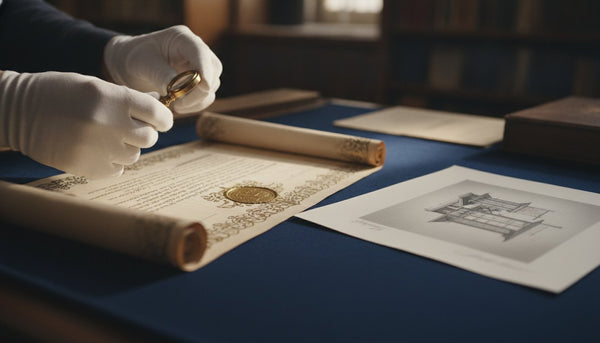
The Piece Came From an Estate. Now What?
Someone's grandmother collected. Someone's uncle spent forty years buying at auctions, at galleries, at art fairs nobody remembers the names of anymore. The collection sat in a house, then a storage unit, then it landed in front of you.
Estate-sourced pieces are some of the most exciting finds in the secondary market. They're also some of the most dangerous to buy without doing the work first.
The romance of provenance — the idea that a painting hung on someone's wall for fifty years, untouched by the dealer circuit — is real. So is the risk. Family members misremember. Records get lost. And bad actors know that the estate story is one of the most emotionally compelling covers a forgery can wear.
So what does it actually take to authenticate a piece that came out of a family collection?
This is the full process. Not the shortcut version. The actual work.
Why Estate Provenance Is Both an Asset and a Liability
First, let's be clear about what estate provenance gives you and what it doesn't.
On the asset side: an unbroken chain of family ownership can establish that a piece was acquired before certain forgery operations were active. FBI Operation Bullpen, which took down one of the largest sports and entertainment memorabilia forgery rings in history, is a good reference point here. If a piece can be documented as having entered a family collection before the forgery network it might otherwise be suspected of touching even existed, that's meaningful. Not conclusive, but meaningful.
On the liability side: estate provenance is often exactly what a sophisticated forger constructs. A backstory with no living witnesses, no receipts, no paper trail — just a family's word — is not authentication. It's a starting point.
Can you prove the piece was in the collection, or can you only prove someone says it was?
That's the question every serious buyer, every reputable authenticator, and every auction house specialist is going to ask. Build your chain to answer it with evidence, not testimony.
Step One: Interview the Estate — On the Record
Before you touch the piece, talk to the people. This sounds obvious. Most buyers skip it or do it casually.
Do it formally. Take notes. Ask specific questions and document the answers.
What You're Looking For in the Interview
-
Where was it acquired?
- Gallery? Auction? Private sale? Art fair?
- Do they remember the seller's name, the city, the approximate year?
- Even partial information is useful — it gives you threads to pull.
-
Where did it live?
- Which room? Did it move? Was it ever loaned, stored, or taken off the wall?
- Physical history affects condition assessment and can confirm long-term ownership.
-
Was it ever appraised, insured, or exhibited?
- Insurance appraisals are gold. They create dated third-party documentation that predates your involvement.
- Exhibition records, even local gallery shows, can establish presence in a specific location at a specific time.
-
Are there any original documents?
- Receipts, certificates, correspondence with the artist, gallery invoices.
- Anything paper. Anything at all.
-
Are there photographs?
- Family photos showing the piece on the wall — especially dated photos — are underused and incredibly valuable.
- Check old holiday photos, birthday parties, any image taken inside the home where the piece supposedly hung.
Get a signed statement from the estate representative. Not a formal legal affidavit necessarily, but a written account, signed and dated. This becomes part of your provenance file.
Step Two: Build the Paper Trail Before You Call an Authenticator
Authenticators are not detectives. Their job is to evaluate what's in front of them against established criteria for a specific artist's work. Your job, before you engage them, is to build the fullest possible documentary record.
Think of it as staging a case. You want to arrive at the authentication conversation with organized, legible evidence — not a shoebox of unsorted papers and a verbal summary.
Documents to Gather and Organize
- Original purchase receipts or gallery invoices — Even partial or handwritten. Check estate papers, files, drawers, safe deposit boxes.
- Insurance appraisals — Contact the estate's insurance carrier with appropriate authorization. Prior appraisals often describe the piece in detail and establish value at a documented date.
- Estate inventory lists — If the estate went through probate, there may be a formal inventory. Probate records are typically public and can independently corroborate the piece's presence in the estate.
- Correspondence — Letters, postcards, emails referencing the piece. A note from the original gallery saying "thank you for purchasing the Warhol print" is not authentication, but it's strong provenance.
- Exhibition or loan records — Contact any galleries, museums, or institutions the original collector was associated with.
- Photographs — Physical prints are often more useful than digital because metadata and dating on digital images is easier to manipulate. Look for photos with contextual dating clues: decor, clothing, hairstyles, visible newspapers or calendars.
Scan everything. Create a single organized PDF file with a cover sheet summarizing the contents. This is your provenance dossier. Every authenticator and every future buyer will want it.
Step Three: Identify the Correct Authentication Authority for the Specific Artist
This is where a lot of collectors make an expensive mistake. They pick an authentication service without understanding that authentication is artist-specific, and that using the wrong authority can actually harm a piece's marketability.
There is no universal authentication body. There is no single certification that covers all art.
Do you know which body actually carries weight for the artist you're holding?
Here's how to think through the major categories you're likely to encounter in estate contexts:
Street Art and Contemporary Prints
Banksy: Pest Control only. Full stop. There is no other authentication authority the serious market recognizes for Banksy. Gauntlet Gallery does not claim Pest Control authentication. No reputable dealer should. If a Banksy piece in an estate doesn't have a Pest Control certificate, you're working with provenance and physical evidence only — and the market will price that uncertainty accordingly.
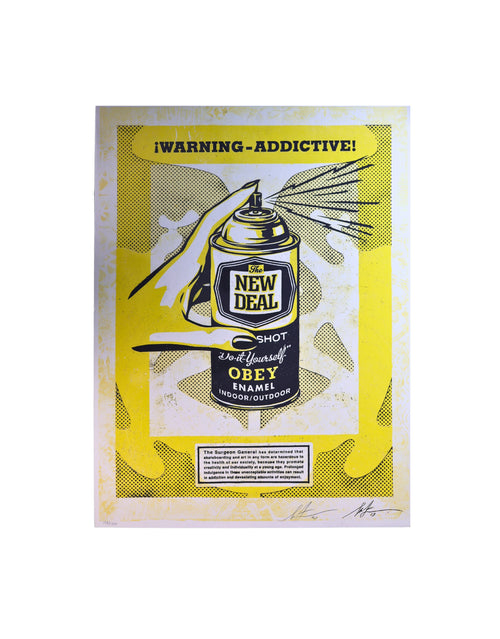
Shepard Fairey: No artist-issued COA exists. Authentication here runs through the signature, edition numbering, the Obey Giant drop record, and the provenance chain. For estate pieces, the provenance chain becomes even more central because you're establishing continuity from the original drop or gallery release through to the current holder.
Death NYC: Authentication requires both the artist-signed COA and the studio gold seal. Estate pieces should have both. If the COA is present but the seal is missing, or vice versa, treat that as an incomplete authentication, not a partial one.
Collectibles and Designer Toys
KAWS and BE@RBRICK: Authentication relies on original packaging integrity, hologram verification, the molded copyright markings, and Medicom release records. Estate pieces here often mean an older collector who bought at retail and kept everything — in which case original packaging and receipts can be extremely strong evidence.
Warhol
The Warhol Authentication Board dissolved in 2012. Authentication now operates under the TrueCOA framework. Any estate piece attributed to Warhol needs to be evaluated within that structure. Do not rely on pre-2012 informal attributions without verifying their standing under the current framework.
Music and Entertainment Memorabilia
This category is where estate pieces get complicated fast. Signed guitars, photographs, programs, and personal effects from musicians are prime targets for forgery — and family collections are exactly where forged pieces are salted with a plausible backstory.
The three primary authentication services for music memorabilia are Beckett Authentication Services (BAS), JSA (James Spence Authentication), and PSA/DNA. Within BAS, the Roger Epperson REAL tier is recognized as the specialist-level service for music signatures specifically. For high-value music pieces coming out of an estate, you want Epperson-level review, not just a standard BAS sticker.
Understand the distinction between JSA Basic and JSA LOA. A JSA Basic certification is a sticker — it confirms the signature was reviewed. A JSA Letter of Authenticity (LOA) is a full written opinion with the examiner's reasoning. For estate pieces, where you're already working against a provenance gap, the LOA matters enormously. The sticker alone is not enough.
PSA certification comes with its own verification process. PSA's website provides a certification verification system, and PSA itself has issued warnings about counterfeit PSA holders and labels in the marketplace. When you receive a PSA-certified item from an estate, verify the certification number directly through PSA's system before assuming the cert is genuine.
Space Memorabilia
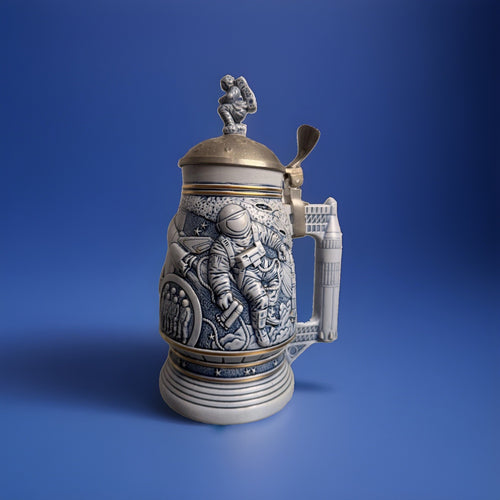
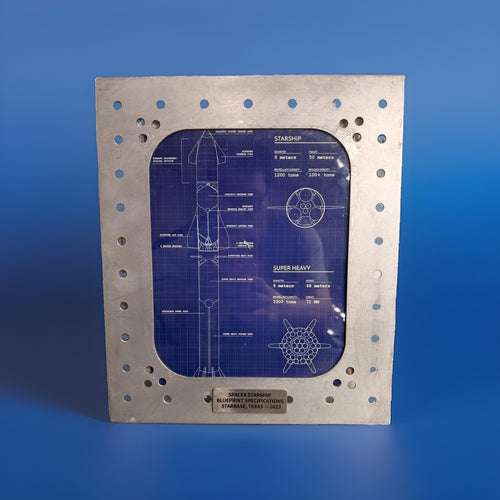
Autographed NASA materials, mission-flown artifacts, and astronaut-signed items follow a similar three-service model (BAS, JSA, PSA/DNA) with the addition of a Zarelli specialist letter for significant pieces. Estate-sourced space memorabilia is a particularly interesting category because early space program collectors were often serious and well-documented. Look hard for acquisition records here — this community was organized.
Step Four: Condition Assessment and Physical Examination
Authentication and condition assessment are separate processes that should happen in the right order.
Get a physical examination done before the formal authentication submission. This serves multiple purposes.
First, it protects you from submitting a piece that has undisclosed condition issues that will affect authentication review. Some physical interventions — overpainting, paper backing changes, substrate repairs — can complicate or invalidate authentication opinions.
Second, the condition report becomes part of your provenance dossier. A conservator's report that describes aging patterns, paint layering, paper foxing, or material composition consistent with the claimed period is supporting evidence for the piece's authenticity and age.
Third, for estate pieces specifically, a condition examiner can sometimes identify physical evidence of long-term domestic display: UV exposure patterns, dust accumulation in frame channels, hanging hardware wear consistent with decades of use. This kind of physical evidence isn't determinative, but it's the kind of detail that builds a convincing overall case.
Use a conservator with specific experience in the relevant medium. A paper conservator for works on paper. A paintings conservator for oil and acrylic. A conservator who works on textiles for signed garments. The specialty matters.
Step Five: Submit to Authentication — With the Full Dossier
When you submit to the relevant authentication authority, submit everything. Don't hold back the provenance dossier thinking the authenticator only wants to see the piece itself.
Authenticators are making a judgment call. The physical evidence of the piece is central, but provenance context matters. A strong dossier that places the piece in a collection before a known forgery operation was active, supported by insurance records and dated photographs, is information an authenticator needs to complete their assessment accurately.
Be transparent about what you have and what you don't. If there's a gap in the chain — say, the piece was acquired in the 1970s and the original receipt is lost but there's an insurance appraisal from the 1990s — document that gap explicitly and explain what evidence bridges it. Trying to paper over gaps with vague language doesn't fool experienced reviewers. It raises suspicion.
Understand the timeline. Authentication is not fast. Build your schedule accordingly, especially if you're planning a sale or consignment.
Step Six: Establish Forward-Chain Documentation
Once you have authentication in hand, your job is to make sure the chain you've built is durable — that it survives the next transaction and the one after that.
This means creating a clean, complete transfer document that accompanies the piece when it moves. The document should include:
- A summary of the provenance chain — Who owned it, when, and what evidence supports each link.
- Copies of all supporting documents — Not originals. Originals should stay with the primary owner. Certified copies travel with the piece.
- The authentication certificate or letter — Clearly identified with the issuing body, the reviewer, and the date of review.
- The condition report — Dated and signed by the conservator.
- Your own acquisition record — How you acquired it from the estate, from whom, and when.
The goal is that anyone who holds this piece twenty years from now can trace the chain back without having to track down witnesses. Paper survives people. Build accordingly.
Red Flags: When the Estate Story Is the Problem
Most estate-sourced pieces are legitimate. But the estate narrative is also one of the most commonly deployed covers in the forgery world. Here's what should stop you cold.
- The family can't agree on basic facts. Different family members give materially different accounts of how the piece was acquired, where it lived, or when the original collector obtained it. Memory degrades, but major contradictions about provenance are a serious warning sign.
- There are no documents of any kind. For a piece of any significant value, a serious collector almost always has something — an insurance policy, a receipt, a letter. Complete documentary absence is not impossible, but it should make you cautious.
- The piece is suspiciously condition-perfect for its claimed age. Thirty-year-old signed memorabilia doesn't look like it was signed yesterday. Paper ages, ink oxidizes, materials interact with each other over time. If it looks too fresh, ask why.
- The estate is offering the piece at a significant discount with pressure to move fast. Urgency and underpricing are classic pressure tactics. Legitimate estates don't have a deadline that prevents proper authentication.
- Prior authentication is from a service with no standing. There are dozens of authentication services operating in the market with no peer recognition, no transparent methodology, and no accountability. A certificate from an unrecognized body is not evidence of authenticity. PSA itself has noted the proliferation of counterfeit certifications — verify any cert you receive directly with the issuing body's online system.
- The piece matches a known forgery type. FBI Operation Bullpen focused heavily on sports and entertainment memorabilia. If the piece is in a high-forgery category — Beatles signatures, Babe Ruth items, Jordan game-worn items — your due diligence threshold needs to be higher, not lower, regardless of how compelling the estate story is.
- The attribution is based on family oral history alone. "My grandfather always said it was a real Warhol" is not provenance. It's a story. Stories need corroboration.
- The piece has been recently reframed, rebacked, or restored without documentation. Physical interventions that remove or alter original materials can destroy authentication evidence. If someone "cleaned it up" before showing it to you, find out exactly what was done and by whom.
Bottom Line
Estate-sourced pieces can be extraordinary finds. Some of the best material in any serious collection came out of a family's possession — acquired directly from artists, from early galleries, from markets that no longer exist in the same form.
But the estate story is not authentication. It's provenance context — valuable, sometimes essential, but not sufficient on its own.
The authentication chain you build for an estate piece has to do more work than for a piece with a clean documented gallery-to-auction history, because you're establishing what that unbroken chain can't show by itself: that the piece is what it's claimed to be, and that its presence in the collection is what the family says it is.
Do the interview. Build the dossier. Engage the right authentication authority for the specific artist. Get the condition report. Document the transfer forward.
If the piece is real and the estate story is accurate, the work you put into building that chain protects the value for every future holder. If the piece doesn't survive the process, you've saved yourself something much more expensive than the cost of proper due diligence.
How much is the right authentication chain worth?
Exactly as much as the piece it protects.
FAQ: Estate-Sourced Authentication
Q: The family has an old appraisal letter saying the piece is authentic. Is that enough?
No. An appraisal establishes value, not authentication. Even if the appraiser made an attribution, they were functioning as a valuation professional, not an authentication specialist. The appraisal is useful as a provenance document — it's a dated third-party record of the piece's presence in the collection — but it does not replace formal authentication by a recognized body. Use it as one link in the chain, not as the chain itself.
Q: How far back does the provenance chain need to go?
As far back as you can take it, but the practical answer depends on the artist and the authentication authority you're working with. For some pieces, establishing ownership to the first decade after the work was created is ideal. For others, a chain going back twenty years through two documented owners may be sufficient when combined with strong physical authentication. Ask the specific authentication authority what provenance documentation strengthens their review for that artist. They'll tell you.
Q: The estate says they bought it directly from the artist. Does that help?
It helps if you can corroborate it. A direct-from-artist purchase story is excellent provenance context — if there's supporting evidence. A thank-you card from the artist, a studio receipt, a photograph of the collector with the artist at the time of purchase, a reference in the artist's records — any of these turn the story into a documented link. Without corroboration, it's a claim, and claims don't survive the secondary market the way evidence does.
Q: I found family photos showing the piece on the wall. How do I establish when the photos were taken?
Physical prints often carry dating information on the back — photo lab timestamps, processing dates, or handwritten notations. Contextual clues in the image itself (decor, clothing, visible publications, television sets, other datable objects) can establish approximate periods. For important pieces, a forensic photography analyst can review original prints for paper stock dating and processing chemistry characteristics consistent with a claimed period. This sounds expensive for most pieces, and it is — but for a high-value attribution, it's a legitimate tool.
Q: The piece is a Banksy screen print and came from a collector who bought it decades ago. Pest Control won't authenticate older pieces without documentation. What are my options?
This is a real and common challenge. Pest Control's authentication process requires documented evidence of the piece's origin. For older pieces without that documentation, you're working in a narrower market. Be honest about what you have: strong provenance, physical evidence consistent with the claimed period, and an absence of Pest Control authentication. The market will price the uncertainty. Gauntlet Gallery does not claim Pest Control authentication, and the honest position is that no reputable dealer can substitute their own opinion for Pest Control on a Banksy attribution. Work with what the evidence actually supports.
Q: The estate piece is signed memorabilia. Do I need all three services — BAS, JSA, and PSA/DNA?
Not necessarily all three for every piece, but for significant estate-sourced memorabilia, multiple authentications meaningfully strengthen your chain. Different services have different areas of recognized expertise and different examiner pools. For music signatures specifically, BAS with Roger Epperson REAL review is considered the specialist tier. For sports, PSA/DNA carries particular weight in certain categories. Getting two reputable opinions on a high-value piece is not overkill — it's how serious collectors protect serious acquisitions. And remember the JSA Basic versus LOA distinction: for estate pieces, you want the LOA, not just the sticker.
Q: How do I handle gaps in the provenance chain — for instance, if the piece was in storage for a decade with no documentation?
Document the gap explicitly in your provenance dossier and provide whatever evidence bridges it. If the piece went into storage in year X and came out in year Y, what evidence exists on either side of that gap? Insurance records that name the piece in coverage during the storage period? A storage facility contract? A photograph from before and after? The goal is not to pretend the gap doesn't exist — it's to show that the piece's identity is continuous across it. Authentication reviewers see gaps regularly. Honesty about them builds credibility. Trying to paper over them destroys it.
Q: Should I buy an estate piece before authentication is complete, or wait?
That depends on your risk tolerance and your relationship with the estate. Buying contingent on successful authentication — with the authentication cost agreed in advance — is a standard structure for exactly this situation. What you want to avoid is paying full authenticated value for an unverified piece on the assumption that authentication will follow cleanly. The estate story is compelling. The asking price should reflect the authentication risk until that risk is resolved. Price the uncertainty into your offer. If the piece authenticates, everyone wins. If it doesn't, you haven't overpaid for a story.