Direct answer
Yes. A disclosed custom BE@RBRICK is generally described as an item altered or created outside the original release context, while a counterfeit or misrepresented item is offered as something it is not. But the object alone may not reveal intent, and labels such as “custom,” “repaint,” “bootleg,” “replacement part,” and “fake” are often used inconsistently. The responsible approach is to describe what can be observed, compare it with the documented candidate release, ask direct questions about alterations and provenance, and disclose uncertainty rather than treating one finish, box, or story as conclusive proof.
Table of contents
- Why the vocabulary matters
- Scope and overlap check
- Four different questions hiding in “is it fake?”
- What a disclosed custom can be
- Repaints, restorations, and parts mixes
- When a listing becomes a misrepresentation problem
- How to evaluate an item without accusing a person
- Practical comparison and disclosure checklist
- Buyer and seller workflows
- Related guides
- FAQs
- Source notes and limitations
- Nano Banana image briefs
Why the vocabulary matters
“Fake” is a useful warning word, but it can become imprecise fast. It may refer to a reproduction designed to resemble a known release, a poorly described custom, a loose figure with the wrong packaging, a replacement part, a repaired object, or a marketplace listing whose title overstates the evidence. Those cases create different risks and call for different disclosures.
For collectors, the difference matters because a custom may be a legitimate creative object when it is honestly described, while a piece marketed as an unaltered, release-specific collectible without support may expose a buyer to a mismatch between description and object. For sellers, the difference matters because a careful description can avoid misleading claims even when the item’s full history is unknown. For researchers, the difference matters because it keeps object facts, release identification, transaction terms, and legal conclusions from getting blurred together.
This guide uses neutral, evidence-led language. It does not diagnose a specific item remotely or determine anyone’s intent. If an item is connected to an active dispute, an alleged infringement, a suspected fraud, or a significant financial decision, preserve the listing and communications, review the platform’s current process, and obtain appropriate professional advice for your circumstances.
Scope and overlap check
This page was designed not to duplicate the existing Gauntlet Gallery guides checked before drafting:
- How to Spot Fake BE@RBRICK Figures: The Complete Guide focuses on comparing visible details and verification signals.
- How to Authenticate a BE@RBRICK: Complete Verification Guide provides a broader inspection framework.
The distinct intent here is classification and disclosure: how to distinguish a candidly described custom, repaint, restoration, or parts mix from an item that is being presented beyond the evidence available. It is not a replacement for release-specific inspection. Before using any label, first build a release record through the sibling draft How to Identify a BE@RBRICK Release. Once you know the likely configuration, use BE@RBRICK Condition Grading Before Buying to record whether wear, repair, packaging loss, or modification affects the exact object.
Four different questions hiding in “is it fake?”
When a buyer asks “Is this fake?” they may be asking one—or several—of these questions:
- Does this object match a known release? This is a release-identification question.
- Has the object been altered since its documented release state? This is a condition and modification question.
- Does the presentation match the item? This is a packaging, documentation, and configuration question.
- Is the seller’s description supportable? This is a transaction-disclosure question.
These are related but not interchangeable. A figure may be a match for a known release yet have a later repaint. A genuine box may be present with a different loose figure. A skilled custom may be visually close to a release while still needing to be sold as custom work. A listing may be misleading even when some of its physical components are real.
Starting with the precise question changes the evidence you request. For the first question, ask for clear overall and marking images, measurements, and an exact release comparison. For the second, ask about paint, repairs, replacement pieces, cleaning, and UV exposure. For the third, ask for every side of the box, inserts, seals as found, and photographs of the object inside. For the fourth, compare the seller’s words against what they can show.
This also improves buyer communication. Rather than sending “Is this real?” you can ask: “Can you confirm whether the figure has been repainted, repaired, or assembled from parts?” “Is this box the original box for this figure, or is it included only for storage?” “Which release record supports the title?” These are answerable questions. They invite documentation rather than a reassurance.
What a disclosed custom can be
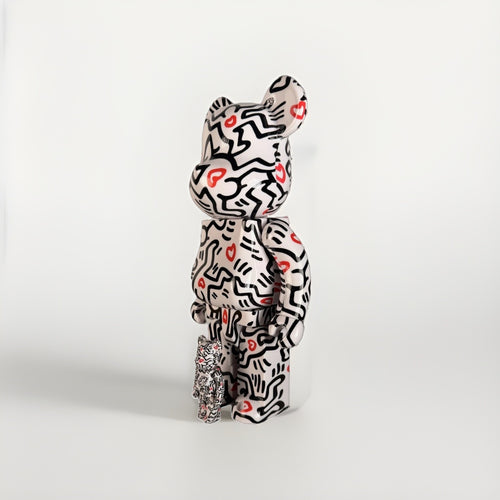
A custom is not one fixed category. It can mean an original artist intervention on a pre-existing figure, a hand-painted transformation, a sculptural alteration, a finish change, or a new object built in a similar toy format. The important point is not whether the work is aesthetically successful; it is whether its relationship to a named, factory-issued, or release-specific object is accurately stated.
A clear custom description typically says what the object began as if known, what was changed, who made the change if that information is available, when it was altered if known, whether the work carries a signature or studio mark, and what parts of the original figure remain. It should include actual-item photographs that make the intervention visible rather than relying on a generic stock image.
For example, a careful listing might say: “Hand-painted custom on a previously owned bear-shaped vinyl figure; exact base release not established; paintwork and finish are later interventions; no original retail box included.” This is less glamorous than attaching a famous collaboration name, but it tells a buyer what they are considering.
Do not use “custom” as a blanket cure for uncertainty. If a seller cannot say whether the object was altered, it is more accurate to say “alteration history unknown” than “custom.” A custom attribution should be based on an identifiable maker, a disclosed intervention, or other support—not simply on the fact that an object differs from a reference image.
Similarly, a custom should not be presented as a factory issue merely because it uses a familiar silhouette. The underlying form does not transfer the release identity of a well-known collaboration to a later intervention. Buyers deserve a separation between the base object, the alterations, and the evidence for each.
Repaints, restorations, and parts mixes
Repaints
A repaint changes all or part of the visible finish. It may be obvious, such as a radical new graphic treatment, or subtle, such as touch-up paint over chips, a changed gloss level, or an attempt to recreate a design. Repainting is not automatically a moral failure, but it is material information. It can affect how a release comparison works, how condition is described, and whether an item can be represented as unchanged.
Look for practical signs without treating any one as decisive: inconsistent gloss between adjacent areas, paint sitting across a joint or seam, obscured molded detail, unusual overspray, differences between left and right sides, or a surface texture unlike the candidate reference. These observations should be recorded as observations—“finish appears uneven near right shoulder”—rather than as a declaration of motive.
If repainting is known, write it plainly. If only suspected, say why the finish is inconsistent with the available reference record and what additional evidence would be needed. Avoid careless labels such as “factory repaint” unless the source is release-specific and documented.
Restorations and repairs
Restoration can be modest: cleaning, reattaching a loose part, stabilizing a crack, or retouching a chip. It can also be extensive. A repaired joint or a stabilized break may make an item usable for display but alters its condition history. The issue is disclosure, not an automatic rule that every repair makes an item unsuitable.
Photograph repairs in normal light and raking light. Describe materials only if you know them. “Clear adhesive visible at inner arm joint” is better than naming a glue you have not identified. A prior repair that is invisible in a photo can still be material if the seller knows about it; sellers should retain and disclose that history.
Do not confuse age-related wear with a repair. Fading, dust, or surface abrasion may explain color variation. Conversely, do not dismiss an obvious modification as “normal age” simply because a figure is no longer new. A condition record should acknowledge both possibilities and separate observed facts from inferences.
Parts mixes and composite objects
A parts mix occurs when components from more than one object are combined. It may involve head, torso, limbs, an internal part, accessories, packaging, or an unrelated base. Sometimes this is a transparent creative or repair decision; sometimes it is unknown. The key question is whether the finished object matches the documented configuration it is being sold as.
Measure and photograph the whole object and relevant connection points. Compare print alignment, color, finish, and wear across components. A mismatch can mean several things: a replaced part, a custom conversion, a condition repair, a different production variation, or a bad reference image. Never jump directly from “mismatch” to “counterfeit.” Document the discrepancy and ask for clarification.
If a parts mix is disclosed, describe it as such. Do not call it “complete” or “all original” merely because it is displayable. “Composite figure assembled from components; component history not fully known” gives a buyer a usable starting point.
Packaging substitutions
A box can be original packaging for some item and still not belong to the item currently inside it. That distinction is particularly important when a box creates the appearance of a more valuable or more specific configuration. Compare the exact figure, scale, title, product string, dimensions, inserts, and presentation style. If you cannot establish the relationship, use “box included” rather than “original box.”
When a listing becomes a misrepresentation problem
The most useful consumer question is not “Can I prove bad intent?” It is “Does the listing make claims that the seller’s evidence does not support?” A listing may create risk when it calls an object factory-issued, sealed, complete, unchanged, original, signed, or a named release without showing the exact object and corresponding evidence. The problem grows when contradictory facts are omitted.
Misrepresentation can be accidental. A seller may have inherited a label from a prior listing, repeated what they were told, or misunderstood a custom. That is why an evidence-first conversation is usually more productive than an accusation. Ask for actual-item photographs, specific answers, and a correction if the title or description exceeds the evidence.
Buyers should look for these transaction signals:
- Photos show a generic promotional figure rather than the exact item.
- The listing title names a specific release, but the description avoids measurements, markings, or packaging details.
- A box is pictured only from the front, with labels or condition hidden.
- The seller calls an item “sealed” but does not show seals as found or describe whether they are intact.
- Multiple claims use absolute language while documentation is vague or absent.
- Questions about repainting, repairs, or component history are not answered directly.
None of those signals proves one outcome. Together, they tell you to slow down, request more documentation, or decline the purchase. A seller who cannot provide additional evidence may still be honest, but the information gap remains part of the transaction.
Sellers can reduce risk by using an evidence ladder. State the release name only to the level you can support; use “appears consistent with” when the record is incomplete; disclose known modifications; label unknown packaging relationships as unknown; and include actual-item photographs. Do not use another seller’s assertion as your main proof. The shorter, plainer description is often the safer one.
How to evaluate an item without accusing a person
The object and the seller are different subjects. You can document an object mismatch without declaring that a person intended deception. This is not simply etiquette; it preserves accuracy when provenance is incomplete.
Use these phrases:
- “The available photographs do not establish a match to the named release.”
- “The packaging relationship has not been documented.”
- “The finish appears inconsistent with the reference images reviewed; alteration history is unknown.”
- “The item is best described as a custom or altered figure only if the seller can document that intervention.”
- “The configuration includes components whose shared origin is not established.”
Avoid phrases that convert uncertainty into an allegation: “The seller is lying,” “definitely counterfeit,” or “guaranteed factory” are not appropriate without evidence that supports those claims. Likewise, a vague disclaimer buried at the end of a listing does not fix a title that makes a stronger unsupported claim.
If you believe a listing description is materially inaccurate, preserve screenshots of the listing, date, photographs, item ID, and communication. Use the marketplace’s current reporting or return process if applicable; rules differ by platform and can change. Do not alter, disassemble, or clean the object while a return or claim may depend on documenting its received state.
For an in-person transaction, prepare the same calm questions in advance. Gauntlet Gallery is a digital-first gallery, not a public retail storefront. For an in-person purchase, inspect the exact figure and documentation; online, prioritize actual-item photos, release details, condition, and return terms.
Practical comparison and disclosure checklist
| Situation | What to document | Safer description while evidence is incomplete | Avoid saying |
|---|---|---|---|
| A named release with no supporting record | Exact figure photos, measurements, markings, and source search | “Release attribution unconfirmed” | “Verified edition” |
| A visible paint intervention | Close-ups in normal and raking light; known alteration history | “Later paintwork/finish noted” | “Factory finish” |
| A repaired crack or joint | Location, stability, photos before/after if available | “Repair visible/known; material not identified” | “Mint” or “untouched” |
| Parts with mismatched wear or finish | Each component, connection points, comparison images | “Composite or component history unconfirmed” | “All original” |
| A box included with a loose figure | All box panels, labels, dimensions, and figure-in-box photos | “Box included; original pairing not established” | “Complete with original box” |
| A disclosed artist intervention | Maker, date, materials if known, base figure details | “Custom work; changes described above” | The name of a factory collaboration it does not match |
| A vague “sealed” claim | Seals as received, all sides of packaging, receipt details | “Packaging condition shown; seal status documented in photos” | “Never opened” without support |
Buyer and seller workflows
Buyer workflow: before you commit
- Ask the seller whether the figure has been repainted, repaired, modified, or assembled from parts.
- Request actual-item images that show the entire figure, markings, joints, condition issues, box labels, inserts, and any seals as found.
- Use the release-identification record to compare scale, design, and packaging configuration.
- Read the return terms and platform protections currently in force; do not assume they apply the same way across sellers or regions.
- Decide whether the disclosed object—not the hoped-for release—is acceptable at the offered terms.
The fifth step is the most important. A custom may be a worthwhile purchase if you want a custom. A repaired figure may be suitable if repair is disclosed and you want a display object. A box mismatch may be acceptable if you are buying the loose figure. The error is paying for an unsupported story rather than the object actually described.
Seller workflow: before you list
- Create an object file before writing a title.
- Separate known facts, informed comparisons, and unknowns.
- Describe modifications and condition issues in the listing body as well as the photographs.
- Do not use “authentic,” “official,” “factory,” “sealed,” “complete,” or a named release as a shortcut around missing evidence.
- Preserve your source notes and customer communications in case a buyer needs clarification.
If your item is an artist custom, give the maker’s contribution its own space. Explain the base figure if known, the medium if known, and whether the work is one of a series. Do not borrow prestige from another creator or release by leaving the relationship ambiguous. A buyer who understands what they are buying is more likely to be satisfied with it.
Related guides
- How to Spot Fake BE@RBRICK Figures: The Complete Guide — use it for close inspection once you have identified the claimed release.
- How to Authenticate a BE@RBRICK: Complete Verification Guide — use it to organize visual and documentation checks without relying on a single signal.
- How to Identify a BE@RBRICK Release — identify the candidate configuration before calling a feature a modification.
- BE@RBRICK Condition Grading Before Buying — record observed wear, repairs, finish changes, and packaging state proportionately.
- Contextual CTA, verify before publication: if a current BE@RBRICK collection is available, compare actual-item photos and written condition disclosures rather than relying on thumbnails or catalog imagery.
FAQs
Is every custom BE@RBRICK a fake?
No. A custom can be a separately created or altered object when that relationship is disclosed accurately. It should not be presented as an unchanged factory release or a named collaboration without evidence that supports that description.
How can I tell if a BE@RBRICK has been repainted?
Look for observable differences in finish, coverage, seams, paint texture, and wear across the object, then compare them against release-specific reference material. One visual clue is not conclusive. Record what you see and ask about known repairs or modifications.
What if the figure is real but the box is wrong?
Describe the figure and box separately. A box can be included for storage without being the original pairing. Do not call the item complete with its original box unless the relationship is supported by compatible release details.
Can I call an item “bootleg” in a listing?
Use care. The word is used differently across collecting communities and can imply facts about origin or intent you may not be able to prove. A clearer disclosure is often “unverified reproduction,” “custom,” “alteration history unknown,” or a factual description of the mismatch, depending on the evidence.
What should I do if I think I received an inaccurately described item?
Preserve the received condition with photos, save the listing and communications, read the platform’s current process and timing, and contact the seller through the documented channel. Avoid altering or cleaning the item while an evidence-based return or claim is being considered.
Source notes and limitations
- Marketplace terminology, return policies, reporting channels, customs rules, and consumer protections vary by platform and jurisdiction and may change. Check current official terms before acting.
- A generic appearance, marking, package, or certificate is not universal proof of origin, issue status, or condition. This guide teaches documentation and disclosure, not guaranteed authentication.
- Existing Gauntlet article URLs above were checked as live pages on August 6, 2026. Confirm every link and collection availability again at publication.
- Nothing here is legal, tax, or dispute-resolution advice. A particular transaction may require evidence review by an appropriate specialist.