How do I authenticate a BE@RBRICK figure? Run five tests in order: check the molded foot stamp and copyright markings against the release records, inspect mold quality for flash and sink marks, compare paint application against Medicom's release photos, verify box weight and Pantone colors, and confirm hologram placement on older pieces. Pass all five and the figure is authentic.
BE@RBRICK, the iconic ursine collectible produced by Medicom Toy of Tokyo since its 2001 debut, has become one of the most counterfeited designer toys in the secondary market. With authentic 1000% collaboration pieces clearing five to six figures at auction, the incentive to fake them is enormous. This guide walks through the same five-test framework Gauntlet Gallery uses against its database of 160,000+ comparable sales before listing any BE@RBRICK for resale.
Why BE@RBRICK Authentication Matters
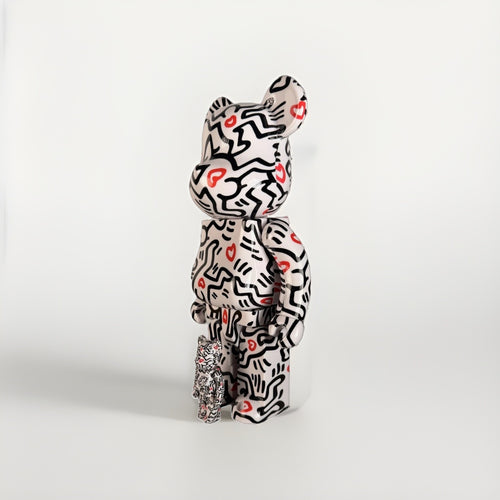
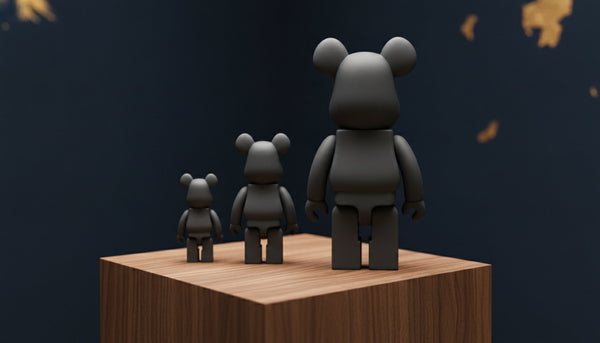
Medicom Toy launched BE@RBRICK in 2001 at the World Character Convention in Tokyo. The platform has since produced thousands of releases spanning artist collaborations (KAWS, Daniel Arsham, Futura), fashion partnerships (Chanel, Comme des Garcons), and pop-culture licensing. The two flagship sizes that drive collector value are 400% (28cm) and 1000% (70cm). Both sizes are heavily counterfeited, and a single bad acquisition can erase the margin on ten clean ones.
For a broader overview of sizing, history, and market values, see our BE@RBRICK complete guide to sizes, authentication, and value.
The 5-Test BE@RBRICK Authentication Framework
Test 1: Foot Stamp and Copyright Markings
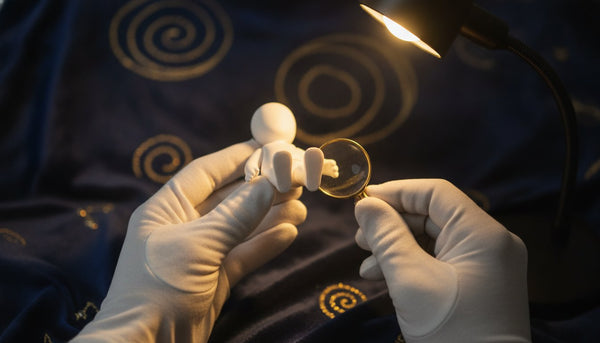
Every authentic BE@RBRICK carries molded markings — the BE@RBRICK logotype and the Medicom Toy copyright line with the release year — stamped into the figure. Check the stamp under raking light and compare it against documented examples from the same release.
- Authentic: Markings are crisp and correctly spelled, and the year matches the figure and box.
- Counterfeit: Markings are shallow or smudged, misspelled, or do not match Medicom's release records.
The foot stamp is the fastest decisive test on any release. If the markings are soft or the year does not match the documented release, the figure is fake until proven otherwise.
Test 2: Mold Quality - Flash and Sink Marks
Authentic BE@RBRICKs come out of Medicom's tooling clean. Run a finger across every seam line, around the ears, under the arms, and along the leg joints.
- Authentic: Smooth seams, no excess plastic flash, no sink marks (small dimples) on the head or torso.
- Counterfeit: Visible flash along the head seam, sink marks on the chest or back, gritty texture from worn-out bootleg molds.
Test 3: Paint Application Against Release Photos
Pull up Medicom's announced release photos before judging paint. Authentic BE@RBRICKs ship with paint registration that matches the announcement imagery to within a millimeter.
- Authentic: Even paint coverage, clean edges, accurate color match to release photos, crisp printed graphics with no bleed.
- Counterfeit: Overspray onto adjacent panels, blurry print transfers, off-shade colors (often slightly too dull or too saturated), inconsistent gloss vs matte zones.
Test 4: Box Specifications - Weight, Pantone, Typography
The box is often the fastest tell. Medicom uses heavyweight stock, specific Pantone inks, and consistent typography across the full release run.
- Authentic: Box has the documented gross weight, Pantone colors match release samples, typography is sharp and correctly kerned, fold lines are clean.
- Counterfeit: Box feels noticeably lighter, colors print slightly off-shade, typography is fuzzy or mis-kerned, fold lines are sloppy.
Test 5: Hologram Sticker Placement
Medicom uses a holographic authenticity sticker on its packaging. Placement varies by release year but is consistent within a release.
- Authentic: Hologram is in the documented position, shifts color cleanly when tilted, sits flush with the box surface.
- Counterfeit: Hologram is missing, misaligned, peeling, or shows a flat printed pattern instead of true holographic shift.
Test Summary Table
| Test | What to Check | Authentic Signal | Counterfeit Signal |
|---|---|---|---|
| 1. Foot stamp | Molded markings and year | Crisp markings, year matches release | Soft, misspelled, or wrong-year stamp |
| 2. Mold | Seams, ears, joints | Clean, no flash or sink marks | Flash, dimples, gritty texture |
| 3. Paint | Compare to release photos | Even, edge-accurate, color match | Overspray, bleed, off-shade colors |
| 4. Box | Weight, Pantone, typography | Spec weight, sharp print, clean folds | Light box, fuzzy print, mis-kerning |
| 5. Hologram | Placement and shift | Correct position, true color shift | Missing, misaligned, flat pattern |
Common Counterfeit Patterns
Across the BE@RBRICK counterfeits Gauntlet Gallery has logged, the recurring failures cluster around proportion and paint detail errors. Bootleg molds drift over time, so head-to-body ratios skew, ear placement angles inward, and arm length shortens. Paint registration is the next most common tell - fakes routinely show overspray onto adjacent panels and slightly muddied color blends. Box specifications are the fastest tell of all: holding a counterfeit box next to an authentic one of the same release usually reveals the weight gap within seconds.
Why Buy From an Authentication-First Dealer
Gauntlet Gallery was founded in 2012 and has built its BE@RBRICK practice on Medicom's official documentation, documented release records, and a 160,000+ comparable sales database. Every BE@RBRICK we list passes the full five-test framework before going live. For collectors building a position in 400% and 1000% pieces, that authentication chain is the difference between a portfolio and a hobby.
Browse the full Gauntlet Gallery collection to see authenticated BE@RBRICK and related designer toy listings.