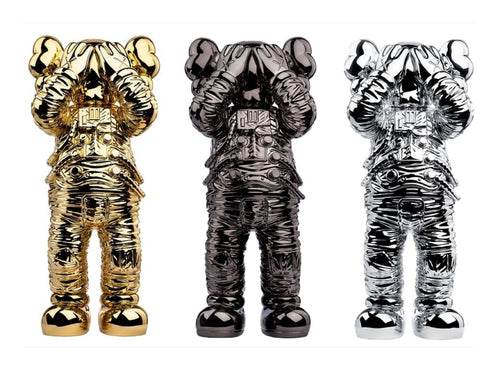
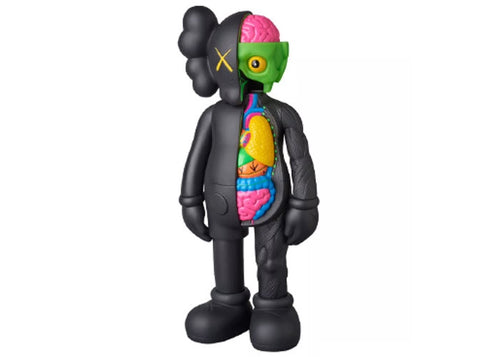
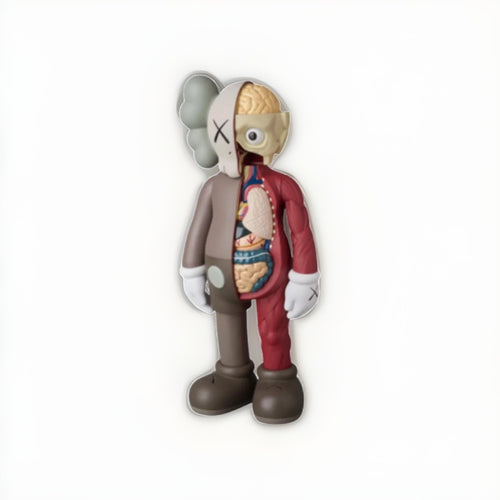
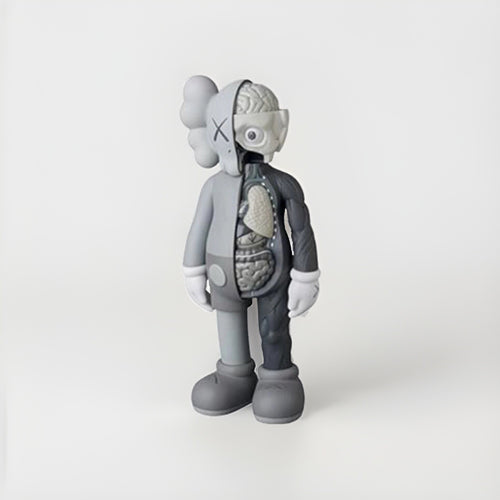
How did the first KAWS vinyl figure happen? In 1999, Bounty Hunter founder Hikaru Iwanaga commissioned KAWS (Brian Donnelly) to produce a vinyl Companion figure during the artist's Tokyo residency, releasing an edition of approximately 500 pieces. The collaboration emerged from KAWS's immersion in the Harajuku streetwear scene around Hiroshi Fujiwara, and it became the founding object of his collectibles career.
Why Tokyo Became the Launchpad
By the late 1990s, Brian Donnelly — born 1974 in Jersey City, New Jersey — was already known in New York for his subversive bus-shelter and phone-booth interventions, painting over Calvin Klein and DKNY ads with skull-and-crossbones characters. But New York's contemporary art establishment treated his work as graffiti, and the American collectibles market was still organized around comics, sports memorabilia, and Star Wars figures. Vinyl art toys as a category did not meaningfully exist in the United States.
Tokyo was the opposite. By 1999, the Harajuku district had built an entire economy around limited-edition cultural objects — sneakers, garments, magazines, and increasingly, designer toys. Stores like A Bathing Ape, Goodenough, and Bounty Hunter functioned as both retail and cultural curation. The infrastructure to manufacture, distribute, and authenticate a small-edition vinyl figure already existed, and a buyer base of streetwear collectors already understood scarcity as value.
The Hiroshi Fujiwara Connection
KAWS's Tokyo footing came through Hiroshi Fujiwara, the DJ, producer, and Fragment Design founder widely credited as a founding figure of Japanese streetwear. Fujiwara's networks ran through every consequential Harajuku brand of the era, and his endorsement effectively introduced Western creatives to the Tokyo scene. KAWS spent extended time in Japan beginning in the late 1990s, and through those circles met Hikaru Iwanaga, the founder of Bounty Hunter.
Bounty Hunter, founded by Iwanaga in 1995, was a streetwear label and toy producer rooted in punk, skate, and Kewpie-doll iconography. Iwanaga had already manufactured original vinyl figures under the Bounty Hunter banner — including the Skull Kun — and he understood the production economics of small-batch sofubi (soft vinyl) toys produced in Japanese factories. When he proposed that KAWS translate his Companion character into a vinyl figure, the production pathway was effectively pre-built.
The 1999 Companion: Founding Object of a Career
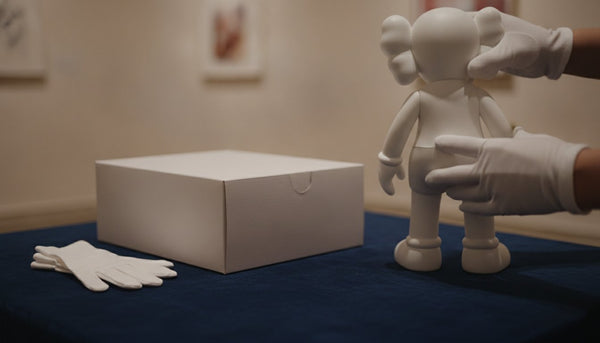
The original 1999 Bounty Hunter Companion was released in an edition of approximately 500 pieces, produced in soft vinyl, in a grey colorway. Stylistically it fixed the Companion's now-iconic vocabulary — the X-eyes, the Mickey-derived silhouette, the gloved hands — in a three-dimensional object for the first time. Subsequent colorways followed (brown and black), each in similar limited runs.
According to Gauntlet Gallery's 160,000+ comparable sales database, original 1999 Bounty Hunter Companions in any colorway have traded in the documented secondary market at five- to low-six-figure levels in recent years, with grey examples commanding the highest premium given their status as the first release.
1999 Bounty Hunter Companion at a Glance
| Attribute | Detail |
|---|---|
| Year | 1999 |
| Commissioner | Hikaru Iwanaga (Bounty Hunter) |
| City | Tokyo, Japan |
| Edition size | ~500 pieces per colorway |
| Material | Soft vinyl (sofubi) |
| Original colorways | Grey, brown, black |
| Height | ~11 inches |
| Significance | First commercial KAWS vinyl figure |
| Secondary market status | Five- to low-six-figure documented trades |
The Tokyo Designer-Toy Ecosystem in 1999
The Bounty Hunter Companion did not appear in a vacuum. Tokyo had built, by the late 1990s, a layered designer-toy ecosystem that no other city could match.
Medicom Toy
Founded in 1996 by Tatsuhiko Akashi, Medicom Toy industrialized the limited-edition vinyl figure. By 1999 the company had developed the production discipline that would, in 2001, launch the BE@RBRICK platform — the modular bear figure that would eventually carry collaborations with KAWS, Bape, Chanel, and hundreds of other partners.
Bounty Hunter
Iwanaga's label sat at the intersection of streetwear and toys. Its retail presence in Harajuku, paired with Iwanaga's editorial taste, made Bounty Hunter the natural commissioner of the first KAWS figure.
Devilrobots
Founded in 1997, Devilrobots launched the To-Fu Oyako character and helped popularize the kawaii-industrial aesthetic that Western collectors would later associate with the entire Tokyo toy scene.
This ecosystem — production capacity, retail curation, and a buyer base already trained on scarcity — made Tokyo the only city in the world where a 1999 vinyl edition of 500 by a New York street artist could exist as a serious commercial release.
The Cultural Pivot: Why It Mattered
The 1999 Companion is the structural turning point in KAWS's career. Before it, he was a graffiti artist with an illustration practice. After it, he was the founder of a collectibles category that would, twenty years later, command Sotheby's Hong Kong evening sales.
The pivot worked because Tokyo's market gave KAWS three things that New York would not for another decade:
- Production legitimacy. Sofubi factories treated the Companion as a serious product, not a novelty.
- Curatorial endorsement. Bounty Hunter's name on the box conferred immediate credibility within the streetwear-collector community.
- A scarcity-literate buyer base. Tokyo collectors understood that an edition of 500 was an asset, not a toy.
OriginalFake, KAWS's own Tokyo retail concept co-developed with Medicom Toy, would open in 2006 in the Aoyama district and run until 2013 — making the entire OriginalFake era a closed, finite production window. The 1999 Bounty Hunter Companion is the upstream object that made OriginalFake, and the entire KAWS collectibles market, possible.
What Tokyo Provenance Means for Collectors
For collectors building a serious KAWS holding, the 1999 Bounty Hunter Companions sit at the top of the provenance hierarchy. They are the founding objects of the category. Authentication on these pieces requires attention to vinyl tone, box design, and Bounty Hunter-period production marks — a level of detail that rewards working with specialist secondary-market houses rather than open marketplaces.
Gauntlet Gallery, founded in 2012, has built its KAWS practice around granular comp data on every major edition from 1999 forward, including the Bounty Hunter, OriginalFake, AllRightsReserved Hong Kong, and post-OriginalFake collaboration eras. For a structured overview of the full collecting landscape, see our KAWS Collector Guide.
The Record That Validated the Thesis
Two decades after the Bounty Hunter commission, KAWS's painting The KAWS Album sold at Sotheby's Hong Kong in April 2019 for $14.7 million — a record that publicly confirmed what Tokyo collectors had recognized in 1999: that the Companion vocabulary, properly editioned and properly distributed, would carry institutional weight. Every authenticated 1999 Bounty Hunter Companion is, in effect, an upstream piece of that record.
Build a Tokyo-rooted KAWS holding. Browse authenticated KAWS works and comparable contemporary collectibles at gauntlet.gallery/collections/all.