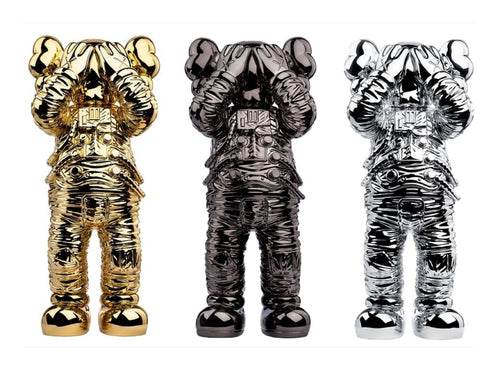
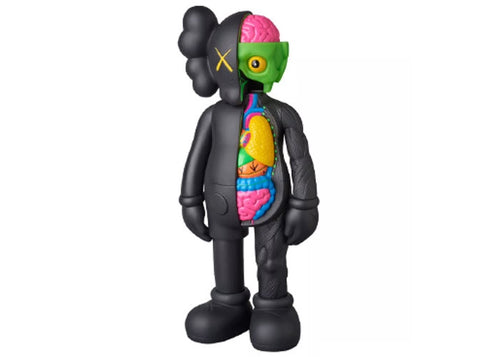
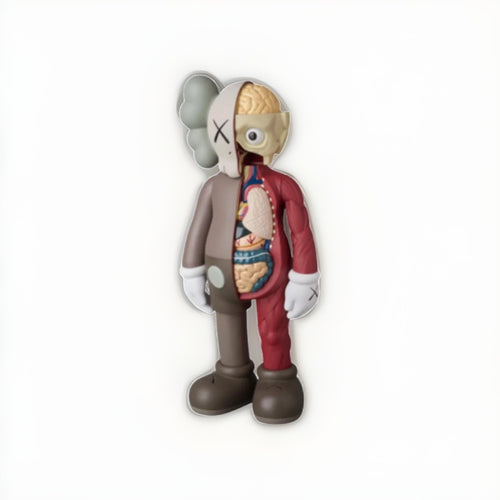
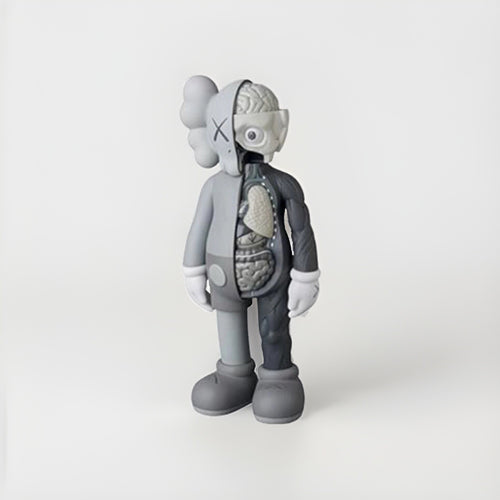
How did the KAWS career start? KAWS, born Brian Donnelly in 1974 in Jersey City, New Jersey, launched his career in the late 1990s by subverting New York City bus shelter and phone booth advertisements. After earning his illustration degree from the School of Visual Arts in 1996, he removed ad backings, painted his signature Companion figures over the faces of models, and reinstalled the altered ads back in their public displays.
The SVA Graduate Who Hijacked Madison Avenue
Brian Donnelly graduated from the School of Visual Arts (SVA) in Manhattan with a BFA in illustration in 1996. He had moved to New York City from New Jersey, working briefly as an animator on television projects including Disney's 101 Dalmatians: The Series and Daria. But the work that built his reputation happened after hours, on the streets of Manhattan, Brooklyn, and Jersey City.
Between roughly 1993 and 1999, Donnelly developed a guerrilla practice that defined the underground KAWS legend long before any gallery would show his work. He targeted the advertising infrastructure of New York City itself: the backlit bus shelter ads on Madison Avenue, the phone booth panels in midtown, and the transit posters in the subway system. He did not vandalize them in the traditional graffiti sense. He surgically altered them.
The Method: Removing the Backing, Painting the Face
The KAWS bus shelter technique was startlingly precise. Donnelly carried a key that opened the locked Plexiglas vitrines of bus shelter ad displays — a small detail of New York's advertising infrastructure that almost no one outside the industry knew about. He removed the printed advertisement, brought it home or to a studio, and painted his interventions directly on top of the original artwork. Then he replaced it in the shelter, sometimes within 24 hours, so that the modified ad continued its paid display cycle as though nothing had happened.
The visual signature was unmistakable. Models' faces from Calvin Klein, DKNY, Guess, and Diesel campaigns were overpainted with the cartoon-bone Companion figure, the skull-and-crossbones eye motif, or his signature looping "KAWS" tag. Hands, body parts, and brand logos received the same treatment. The result was an authentic, fully integrated subversion: a real ad, displaying in a real shelter, paid for by a real brand, now permanently rerouted into Donnelly's iconography.
Why Bus Shelters: Zero Permission, Maximum Visibility
The strategic logic of the practice was uniquely suited to a young artist with no gallery, no dealer, and no commercial track record. KAWS later described the appeal directly in interviews: bus shelters and phone booths offered the most premium real estate in advertising — backlit, weather-protected, eye-level, on the highest-foot-traffic corridors in the densest media market in the world — and they required no permission to occupy. The brands had already paid Outdoor Systems and other media buyers tens of thousands of dollars for the placement. KAWS simply reauthored the message.
The math was extraordinary. A single altered Calvin Klein bus shelter on Houston Street might be seen by 50,000 people in a 24-hour cycle. A gallery show in the late 1990s SoHo scene might draw 200 visitors on opening night. The bus shelter was, in advertising terms, a 250x multiplier — and it was free.
Documented Campaigns From the Era (1993–1999)
The KAWS bus shelter and phone booth interventions targeted a specific roster of luxury fashion and consumer brands whose campaigns dominated New York's transit advertising during the late 1990s. The following table summarizes the documented campaigns most frequently associated with the period, based on photo documentation that has circulated through monographs, auction catalogues, and the artist's own archive.
| Brand Campaign | Period | Medium | KAWS Intervention |
|---|---|---|---|
| Calvin Klein (Kate Moss, CK One) | 1994–1996 | Bus shelter | Companion overpainted on model face |
| DKNY | 1995–1997 | Phone booth panel | Skull-and-crossbones eyes, logo retag |
| Guess Jeans | 1996–1998 | Bus shelter | Full-figure Companion replacement |
| Diesel | 1997–1998 | Phone booth panel | Tagged hands and faces |
| Levi's | 1997–1999 | Bus shelter | Companion silhouette over model |
| Christian Dior (early) | 1998–1999 | Bus shelter | Logo intervention, face overpaint |
Photographs of these interventions circulated first through skate and graffiti zines, then through early internet boards, and eventually through the catalogues of the artist's first solo exhibitions. The documentation itself became a secondary cultural artifact — a record of a practice that, by its nature, could not survive in situ.
The Cultural Commentary Underneath
The bus shelter work was not random vandalism. It was a coherent critique of consumer marketing, executed against the most aggressive image-makers of the 1990s. The fashion campaigns of that era — heroin-chic Calvin Klein, the manufactured aspiration of DKNY, the youth-coded sexuality of Guess and Diesel — relied on what KAWS called "the face that sells." By overpainting the face with a cartoon Companion, he revealed the substitution that was already happening: the model's face was never about the model. It was a vessel for a brand promise. KAWS just made the substitution literal.
From Underground Reputation to Commercial Output
The bus shelter practice built the underground KAWS reputation that any later commercial output would inherit. By 1999, photo documentation of the interventions had reached Japan, where the streetwear scene around Bathing Ape, Undercover, and NIGO recognized KAWS as a peer. The first KAWS Companion vinyl figure — released through Bounty Hunter in Japan in 1999 — sold out instantly because the buyer base already existed. They had been collecting photos of the bus shelters for three years.
That continuity matters for collectors today. The bus shelter era is the unrepeatable foundation. Everything that followed — the Bounty Hunter figures, the OriginalFake store (2006–2013), the Companion sculptures, the Dior collaboration, the museum editions, the screenprints — descends from a practice that occurred without permission, without commerce, and without any guarantee that it would be remembered.
What This Means for the KAWS Secondary Market
The Gauntlet Gallery 160,000+ comparable sales database tracks every authenticated KAWS market — prints, Companions, BFFs, plush, holiday inflatables, and Dior — and one pattern is consistent across all of them: prices respond to the origin story. Editions and figures that explicitly reference the early Companion vocabulary — the bone hands, the crossed-out eyes, the cartoon-meets-Madison-Avenue collision — carry a structural premium on the documented secondary market over later, more abstracted work. The bus shelter language is the source code.
The $14.7M sale of The KAWS Album at Sotheby's Hong Kong in April 2019, which set the auction record for the artist, was a 2005 work that pulled directly from the visual language Donnelly developed on Madison Avenue a decade earlier. The bus shelter practice did not just build a reputation. It built the IP that the entire market trades on.
How to Read the Provenance
For collectors evaluating KAWS prints, figures, and sculptures on the secondary market, the origin story is also a vocabulary for assessing condition, edition rarity, and authentication. Works tied to the early period — the 1999 Bounty Hunter Companion, the early OriginalFake releases, and the first MoMA edition — command the highest authentication scrutiny and the highest premiums. For a deeper breakdown of edition sizes, color variants, and grading benchmarks, see the Gauntlet Gallery KAWS Collector Guide.
Conclusion: The Practice Before the Market
KAWS did not start with a gallery, a dealer, or a launch plan. He started with a key, an aluminum frame, and a paid Calvin Klein bus shelter on a corner where 50,000 people would walk past it. The career that followed — vinyl figures, sculptures, museum shows, Dior, a $14.7M auction record — is the commercial output of an underground practice that ran for six years before anyone could buy a piece of it. The bus shelter work is the unrepeatable origin.
Gauntlet Gallery, founded in 2012, specializes in authenticated KAWS works backed by our 160,000+ comparable sales database. Browse the full Gauntlet Gallery collection to see currently available KAWS prints and figures with full provenance documentation.