Yes — DEATH NYC Snoopy prints are genuinely collectible, and they occupy one of the most approachable corners of the contemporary pop-art print market. They are signed, numbered, limited-edition works by a prolific New York artist, they trade actively on the secondary market, and the Snoopy mashups in particular benefit from the enormous crossover appeal of Peanuts among art collectors, streetwear fans, and character-collectible enthusiasts. That said, "collectible" is not the same as "rare" or "blue-chip." DEATH NYC works in high volume, so the collectibility of any individual Snoopy print depends heavily on its documentation — the artist-signed certificate of authenticity and the official gold seal — along with its condition, its subject matter, and how well its provenance has been recorded. This guide explains exactly how to evaluate all of that.
If you are weighing your first purchase, or you already own a DEATH NYC Snoopy piece and want to understand what you have, the sections below walk through the artist's practice, why Snoopy imagery matters within it, what separates a keeper from a commodity, and how our gallery evaluates these prints against verified sales data before we ever list one in our DEATH NYC collection.
Who Is DEATH NYC — and Why Does the Practice Matter for Collectibility?
DEATH NYC is a New York–based artist known for a remarkably disciplined studio practice: limited-edition prints released at a steady, high-frequency cadence, each one a collage-style mashup of pop-culture icons, luxury-fashion motifs, art-history references, and street-art attitude. The name — stylized in capitals, usually rendered boldly within the composition itself — functions as both signature and brand. Where many street-adjacent artists release a handful of editions per year, DEATH NYC has built an entire ecosystem around frequent, small, numbered editions, which means the total body of work is large even though each individual edition is tightly limited.
This publishing model is the single most important thing to understand before you ask whether any DEATH NYC print is collectible. The market for this artist is not driven by scarcity of output overall; it is driven by scarcity within each edition, by demand for specific images, and by the completeness of each print's documentation. A signed, numbered Snoopy print with its artist-signed certificate of authenticity and the official metal gold seal is a fundamentally different object — and a fundamentally different asset — than a loose, undocumented sheet with the same image. Collectors who internalize this distinction early tend to build far stronger collections.
It also helps to understand where DEATH NYC sits in the broader landscape. The work belongs to the same cultural current as other pop-remix artists who sample recognizable characters and brands, recontextualizing them with irony and affection. But DEATH NYC's price point is deliberately accessible. This is entry-level collecting in the best sense: real signed editions, real documentation, and a real secondary market, at a cost that lets a new collector participate without the capital commitment demanded by blue-chip prints. Many collectors who now hold serious pop-art portfolios started with exactly this kind of purchase — you can see how the category fits into a broader collecting journey in our Collector's Hub.
Why Snoopy? The Peanuts Effect in Pop Art
Among the recurring characters in DEATH NYC's universe, Snoopy holds a special place — and the reasons go well beyond nostalgia.
A character with genuine art-world pedigree
Charles M. Schulz's Peanuts is one of the most beloved and widely syndicated comic strips ever created, and Snoopy is its breakout star. Crucially for collectors, Snoopy has decades of history as a subject in fine art, fashion collaborations, and designer collectibles. Museums have mounted Peanuts-themed exhibitions; luxury houses and streetwear labels alike have licensed the character; and contemporary artists across the spectrum have riffed on the beagle's instantly readable silhouette. When DEATH NYC places Snoopy into a composition — often draped in luxury-brand patterning or juxtaposed against a famous art-historical backdrop — the work plugs directly into that long tradition of Peanuts-as-art.
Crossover demand from multiple collector bases
A DEATH NYC Snoopy print appeals simultaneously to several distinct audiences: pop-art print collectors, Peanuts and character-collectible enthusiasts, streetwear and hype-culture buyers, and casual decorators who simply love the image. This crossover is the engine of collectibility. Prints with single-audience appeal depend on one market staying healthy; Snoopy imagery draws bids from several directions at once, which historically supports steadier demand on resale platforms. Compare the exact image, edition, medium and presentation with dated completed sales, distinguishing hand-sprayed originals from editioned prints. Future resale value is uncertain.
Instant readability
Collectible pop art tends to reward images that read from across a room. Snoopy's silhouette is arguably one of the most recognizable shapes in global popular culture. In a market where display value matters — where most buyers intend to frame and hang the work, not vault it — that readability translates directly into demand.
What "Collectible" Actually Means for a DEATH NYC Snoopy Print
Collectibility is a spectrum, not a yes/no switch. For DEATH NYC Snoopy prints, we find it useful to break the question into five concrete factors. A print that scores well on all five is a genuinely collectible object worth documenting, insuring, and holding. A print that fails on several is a decorative poster — enjoyable, but not an asset.
1. Signature and numbering
DEATH NYC editions are hand-signed and numbered. The pencil signature and the edition fraction are the baseline of collectibility: they tie the individual sheet to the artist's hand and to a fixed, limited print run. Always confirm both are present, legible, and consistent with the way the artist customarily executes them — our DEATH NYC authentication guide covers what to look for in detail. Unsigned or unnumbered sheets bearing DEATH NYC imagery should be treated as reproductions unless documentation proves otherwise.
2. The certificate of authenticity and the official gold seal
For this artist, documentation is the heart of the matter. Authentic DEATH NYC prints are accompanied by a certificate of authenticity signed by the artist, and each piece carries the official metal gold seal affixed to it. Together, the artist-signed COA and the gold seal are the recognized markers of a legitimate release. A Snoopy print offered without them is not automatically fake — paperwork does go missing — but the absence materially reduces both confidence and resale value, and it should be priced accordingly. When our gallery lists a DEATH NYC work, the presence and condition of the COA and seal are among the first things we verify.
3. Edition discipline
Because the artist publishes frequently, each release is kept to a small numbered run. Check the edition fraction on your print and keep any release documentation that came with it. Smaller editions and earlier numbers do not automatically command premiums, but a clearly documented edition is always easier to resell than an ambiguous one. When in doubt about a specific release, compare the numbering against the edition documentation rather than relying on seller claims.
4. Subject matter and composition
Not all Snoopy prints are equal. Within the DEATH NYC catalog, collectors tend to gravitate toward compositions where the character mashup is especially clever — Snoopy woven into a luxury-fashion pattern, set against a recognizable art-history reference, or paired with another icon in a way that creates real visual tension. Images that circulate widely on social media, or that connect to a moment in fashion or culture, tend to see more bidding activity. This is qualitative, but it is real: two prints from the same year, in identical condition, can trade very differently based purely on how desirable the image is.
5. Condition and presentation
Prints are condition-sensitive assets. Corner dings, handling creases, sun-fading, and trimmed margins all suppress value; crisp sheets with full margins, clean verso, and no light damage sit at the top of the market. Because DEATH NYC prints are affordable, many were handled casually by their first owners — which means well-preserved examples are scarcer than the edition sizes alone suggest. Condition is one of the quiet ways patient collectors get ahead in this category.
Collectibility Tiers: A Quick Comparison
Here is how we mentally sort the DEATH NYC Snoopy material that crosses our desk. Use it as a first-pass filter before you buy.
| Tier | What it looks like | Collectible? | What to do |
|---|---|---|---|
| Fully documented | Hand-signed and numbered; artist-signed COA present; official gold seal affixed; clean condition; purchase records retained | Yes — the standard collectors want | Frame archivally, file the COA, log the provenance |
| Signed, incomplete paperwork | Signature and numbering present, but COA or seal missing | Conditionally — value discounted | Verify against edition documentation; price in the gap; keep every record you do have |
| Undocumented sheet | DEATH NYC-style Snoopy image with no signature, numbering, COA, or seal | No — treat as decorative | Enjoy it on the wall; do not pay collectible prices |
| Damaged example | Documented print with fading, creases, tears, or trimming | Marginally — condition caps upside | Buy only at a steep discount, or pass and wait for a clean copy |
The pattern is obvious once you see it laid out: documentation and condition do most of the work. The image gets a buyer interested; the paperwork and the sheet itself determine what the print is actually worth.
How the Market for DEATH NYC Snoopy Prints Actually Behaves
We deliberately avoid quoting specific dollar figures in evergreen guides, because print markets move and stale numbers mislead more than they inform. But the structural behavior of this market is consistent enough to describe with confidence.
High liquidity at accessible levels
DEATH NYC prints change hands constantly. This is one of the category's underrated strengths: when you decide to sell, there is almost always a functioning market waiting. Liquidity of this kind is rare in art collecting, where many works can take months or years to find the right buyer. The trade-off is that high liquidity comes with high supply, which keeps most individual prints in an accessible price band rather than an appreciating spiral.
Wide spreads between documented and undocumented examples
Because the volume of circulating material is large, buyers pay decisive premiums for completeness. If you take only one practical rule from this article, make it this: in the DEATH NYC market, you are buying the documentation as much as the image.
Image-driven demand cycles
Demand rotates with culture. When a luxury brand referenced in a mashup has a moment, or when Peanuts enjoys a wave of attention from a collaboration or anniversary, related imagery sees more bidding. Snoopy's advantage is that Peanuts rarely leaves the cultural conversation for long, giving these prints a steadier demand floor than mashups built on more fleeting references.
Where to check before you buy or sell
Rather than anchoring on asking prices — which in this category are often aspirational — compare recent verified sales of the same or closely similar images in comparable condition with comparable documentation. Our DEATH NYC price guide explains the practical method, and our Financial Insights hub shows how we read market data across the categories we handle.
Authentication: The COA and the Gold Seal
Authentication for DEATH NYC is refreshingly straightforward compared to many corners of the art market, because the artist's studio built verification into the release model from the start.
Every legitimate DEATH NYC print is accompanied by a certificate of authenticity signed by the artist, and each piece carries the official metal gold seal affixed to it. When you evaluate a Snoopy print, work through the elements in order:
- The signed COA. Confirm the certificate is present, that it corresponds to the specific print in hand (image, title, and edition details should align), and that it bears the artist's signature. A generic or mismatched certificate is a red flag worth resolving before money changes hands.
- The official gold seal. Confirm the metal gold seal is affixed to the piece. Its presence is one of the clearest markers separating studio releases from reproductions.
- Signature and numbering on the sheet. Cross-check the hand-signed signature and edition fraction against the certificate.
- Paper, printing, and scale. Authentic editions are produced to consistent studio standards. Prints that feel off in size, paper weight, or print quality warrant closer scrutiny — our guide to spotting a fake DEATH NYC walks through the comparison points step by step.
Note what is not on this list: there is no third-party authentication body for DEATH NYC, and none is needed. The artist-signed COA plus the gold seal is the chain of authenticity, full stop. Buyers coming from other collecting categories sometimes look for outside certification that simply does not exist here; understanding the correct chain for each artist you collect is a core skill, and our authentication FAQ covers how these chains differ across the market.
Provenance and Record-Keeping: The Collector's Multiplier
Provenance — the documented history of ownership — is where good collectors quietly compound value. For an accessible category like DEATH NYC, meticulous records might feel like overkill. They are not. They are the cheapest value-add available to you.
Build a simple file for every print you own:
- The artist-signed certificate of authenticity, stored flat and safe (never taped or glued to anything)
- Your purchase receipt or invoice, with the seller's name and date
- Photographs of the front, the signature and numbering, the gold seal, and the verso at the time of purchase
- Any release documentation, correspondence, or listing screenshots from the original sale
- Notes on framing, storage, and any condition events
When you eventually sell, this file does three things: it shortens the buyer's diligence, it justifies a premium over undocumented competitors, and it protects you if a question ever arises. Documented provenance is one of the pillars of how our gallery sources and sells — every piece we list carries its paperwork forward to the next owner. If any of the terminology in this process is unfamiliar, our collector's glossary defines the vocabulary collectors and dealers actually use.
Condition and Care: Protecting a Paper Asset
DEATH NYC Snoopy prints are works on paper, and paper is unforgiving. A few habits preserve both the object and its value:
- Frame archivally. Acid-free matting, UV-filtering glazing, and hinging that never touches the image area. Never dry-mount a limited-edition print.
- Control light. Even with UV glazing, avoid direct sunlight. Fading is cumulative and irreversible, and bold pop palettes show it cruelly.
- Mind humidity and temperature. Stable, moderate conditions prevent cockling, foxing, and mold. Avoid hanging prints in bathrooms, kitchens, or against exterior walls prone to condensation.
- Store unframed prints flat. Acid-free folders or a flat file, interleaved with archival tissue. If you must tube a print for shipping, use a wide-diameter tube, roll gently around the outside curve, and unroll promptly on arrival.
- Handle with clean, dry hands — or cotton gloves — touching only the extreme edges. Skin oils leave marks that surface years later.
- Keep the COA separate but linked. Store certificates in your provenance file, not sandwiched in the frame where they can transfer or be forgotten.
Because so much DEATH NYC material was casually handled by first owners, the collector who preserves condition rigorously ends up holding examples that stand out in a crowded field. In an edition of otherwise identical prints, the cleanest sheet with the best paperwork wins the sale.
How Gauntlet Gallery Evaluates DEATH NYC Snoopy Prints
Our approach to this category reflects how we handle everything we sell: authenticated sourcing first, data second, and full transparency with the buyer.
Before a DEATH NYC print enters our collection, we verify the signature and numbering, confirm the artist-signed certificate of authenticity matches the piece, and confirm the official gold seal is present and intact. We photograph and disclose condition honestly — margins, verso, and any handling evidence — because we would rather under-promise than surprise a collector.
We take the same educational approach across our buyer's guides, because an informed collector is a repeat collector. If you are comparing DEATH NYC against other accessible entry points into pop and street art, browsing the breadth of our pop art collection is a useful way to calibrate your eye across artists and formats before committing.
Buying Checklist: Evaluating a DEATH NYC Snoopy Print in Ten Steps
Print this list, or keep it open on your phone, the next time a Snoopy piece catches your eye:
- Confirm the hand signature. Pencil-signed by the artist, consistent with known examples.
- Confirm the edition number. A clear fraction, consistent with the release's documentation.
- Ask for the COA up front. The artist-signed certificate should exist, match the print, and transfer to you with the sale.
- Verify the official gold seal. The metal seal should be affixed to the piece.
- Inspect condition in raking light. Look for creases, dings, fading, stains, and trimmed margins. Request verso photos.
- Check measurements and paper. Compare against studio standards for the release; inconsistencies deserve explanation.
- Research the image. Is this a composition with real crossover appeal, or filler? Sold-listing history tells you how the market votes.
- Compare verified sales, not asking prices. Use recent sold comps for the same or similar images in similar condition — our DEATH NYC buyer's guide shows the workflow.
- Weigh the seller. Established dealers who document provenance and stand behind authenticity reduce your risk profile meaningfully.
- Start your provenance file the day it arrives. Photograph everything, file the paperwork, and note the purchase details while they are fresh.
A print that clears all ten steps is a piece you can hold with confidence. A print that stumbles on the paperwork steps should be renegotiated or passed on — in a high-volume market, another example will come along.
The Honest Verdict: Collectible, With Eyes Open
So, are DEATH NYC Snoopy prints collectible? Yes — provably so. They are signed, numbered, limited editions with a built-in authentication chain, an active resale market, and subject matter with unusually broad crossover appeal. They are among the most sensible first purchases in contemporary pop-art collecting: real editions with real documentation at a genuinely accessible entry point.
The eyes-open part: this is a high-volume artist, and volume tempers scarcity. Collect DEATH NYC Snoopy prints primarily because you love the images and want authentic, documented pop art on your wall. Choose fully documented examples, protect their condition, keep meticulous records, and let any appreciation be a bonus rather than the thesis. Collectors who buy this way are consistently the happiest ones we meet — and they are the ones holding the examples the market wants when demand rotates back to a favorite image.
When you are ready to look at authenticated, fully documented examples, our DEATH NYC collection is curated exactly to the standards described above, and our team is always glad to talk through a specific print before you commit.
Frequently Asked Questions
Do DEATH NYC Snoopy prints hold their value?
Fully documented examples — hand-signed, numbered, with the artist-signed COA and official gold seal — hold value best, supported by an active resale market. Because the artist publishes frequently, most prints trade in an accessible band rather than appreciating steeply. Condition, documentation, and image desirability drive outcomes; compare recent verified sales before buying or selling.
How can I tell if a DEATH NYC Snoopy print is authentic?
Check the chain the studio built into every release: a hand signature and edition number on the sheet, a certificate of authenticity signed by the artist that matches the piece, and the official metal gold seal affixed to it. Cross-check paper, printing quality, and dimensions against studio standards, and review our step-by-step spot-a-fake guide before purchasing from unfamiliar sellers.
Is a DEATH NYC print without a COA worth buying?
Only at a meaningful discount, and only if the signature, numbering, and gold seal check out. Missing paperwork does not automatically mean a print is inauthentic, but it reduces buyer confidence and resale value. In a market with plentiful supply, patient collectors are usually better served waiting for a fully documented example.
Why is Snoopy such a popular subject in DEATH NYC's work?
Snoopy carries decades of art, fashion, and collectible pedigree, and his silhouette is among the most recognizable in popular culture. That gives Snoopy mashups crossover demand from pop-art collectors, Peanuts enthusiasts, and streetwear buyers simultaneously — a broader bidding base than single-audience imagery, which historically supports steadier secondary-market activity.
Are these prints a good first art purchase?
They are one of the most sensible entry points in contemporary collecting: authentic signed and numbered editions with built-in documentation at an accessible cost. They teach the fundamentals — verifying signatures, checking certificates, reading condition, comparing sold prices — that transfer directly to higher-value categories as a collection grows.
What should I record when I buy one?
File the artist-signed certificate of authenticity, your receipt with seller and date, photographs of the front, signature, numbering, gold seal, and verso, plus any original listing or release documentation. This provenance file shortens future buyers' diligence, supports a premium at resale, and protects you if questions ever arise.
Shop Death NYC
Explore current pieces available from the gallery.
-
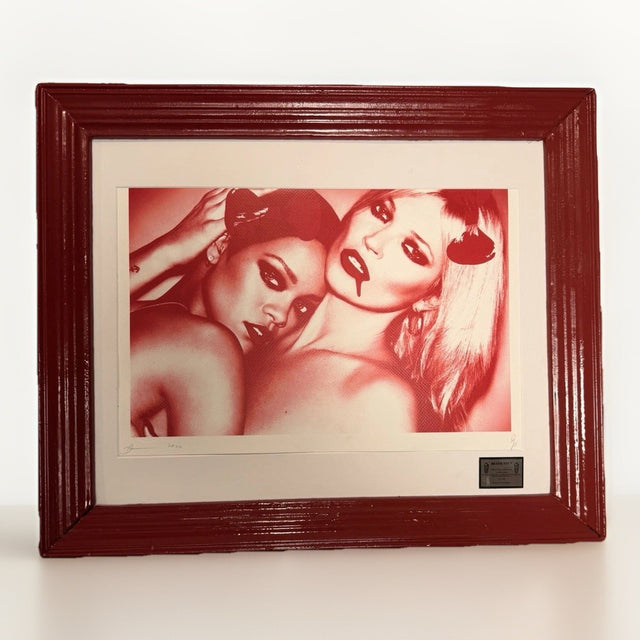
Death NYC — Kate Moss Rihanna Red Drip 2020 A/P Artist Proof Framed
$91.88 USD
-
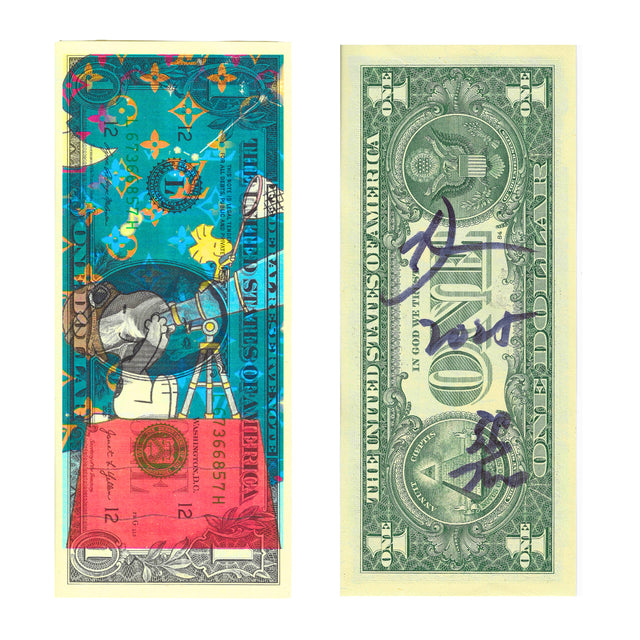
Death NYC Snoopy Woodstock Telescope LV Dollar Bill Art Signed Numbered COA
$55.00 USD
-
Death NYC Star Wars Stormtrooper LV Dollar Bill Art Signed Numbered COA
$55.00 USD
-
Death NYC Gun Dollar Bill Art Signed Numbered COA Black White Pop Street Art
$50.00 USD
-
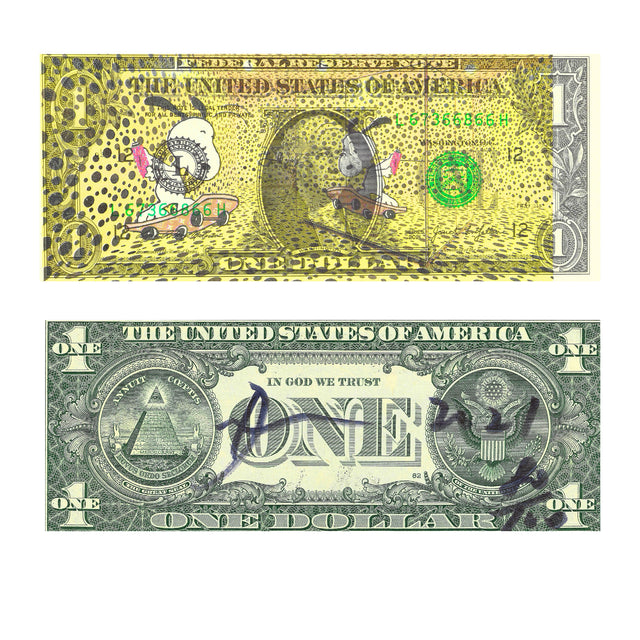
Death NYC Snoopy Skateboard Dollar Bill Art Signed Numbered COA Pop Street Art
$75.00 USD
-
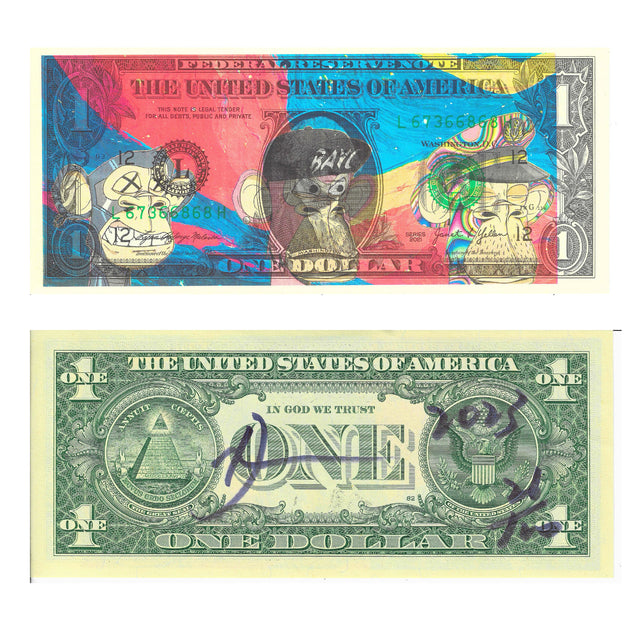
Death NYC Bored Ape Dollar Bill Art Signed Numbered COA Pop Street Art
$40.00 USD
Browse the collection for current listings.