What Should I Inspect Before Buying a Vintage Beatles Poster?
Before buying a vintage Beatles or concert poster, inspect five things in order: whether it is an original printing rather than a reprint or bootleg, the paper and printing method and how they have aged, the condition (tears, foxing, restoration, or linen-backing), the dimensions against known original sizes, and the provenance and seller reputation. When a poster is expensive, rare, or you feel any uncertainty, get independent expert authentication before you pay. The single most reliable protection is buying from a reputable dealer or auction house who stands behind the piece and documents its history.
Vintage music memorabilia is one of the most rewarding and most misunderstood corners of collecting. Beatles material in particular has been reprinted, reproduced, and outright faked for six decades, so a confident, methodical inspection matters more here than almost anywhere else. This guide walks you through exactly what to look at, in what order, and when to bring in a specialist. It is written for the smart new-to-intermediate collector who wants to buy with conviction rather than hope.
Original vs. Reprint vs. Bootleg: The First Question That Matters
Almost every mistake in this category traces back to confusing three very different things. Getting this distinction clear is the foundation of every other inspection step.
- Original (period) printing: Produced at or near the time of the event or release, using the printing technology and paper of that era. These carry the most value and the most collector demand.
- Reprint / re-strike / commemorative: A later, often officially licensed reproduction. Reprints are not inherently dishonest, and some are collectible in their own right, but they are worth a fraction of an original and must be described as reprints.
- Bootleg / fake: An unlicensed reproduction, sometimes deliberately aged or trimmed to pass as an original. This is the category that costs collectors money.
The practical takeaway: a poster is not "an original" simply because it looks old or the seller calls it vintage. Age, wear, and even yellowing can be manufactured. Originality is established by the convergence of printing method, paper, dimensions, and documented history, not by any single dramatic "tell."
Why the Beatles Are a Special Case
The Beatles have been continuously merchandised since the early 1960s, which means the market is unusually deep in both genuine period pieces and later reproductions. Popular images have been reproduced so many times that a familiar-looking design tells you very little on its own. Treat fame as a reason for more scrutiny, not less.
Paper, Printing Method, and How They Age
The physical object carries most of the honest evidence. You do not need to be a print historian, but you should understand the general principles of how period posters were made and how paper behaves over time.
Printing Method
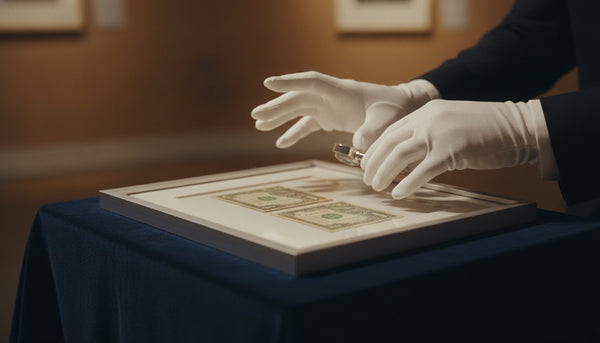
Period concert and promotional posters were typically produced with commercial printing processes of their day, such as offset lithography or letterpress, depending on the era and the printer. Under magnification, older commercial printing often shows a characteristic dot or line structure and ink that sits differently than a modern digital print. Many modern reproductions are produced on inkjet or laser printers, which under a loupe can reveal a fine, regular spray of dots or a flat, uniform ink layer that differs from period printing. This is why a jeweler's loupe or a good magnifier is the most useful tool you can carry.
Important caveat, consistent with careful practice: printing-method clues are indicators, not proof. Skilled fakers can use period-appropriate methods, and some genuine pieces were printed cheaply. Use magnification to raise or lower your confidence, then corroborate with paper, size, and provenance rather than relying on it alone.
Paper and Aging
Paper is a quiet witness. A few general principles hold across most vintage paper:
- Toning: Older paper often develops an even, gradual warm tone as it ages, especially if it was displayed or stored in light. Aging that looks blotchy, artificially uniform, or applied only to the surface deserves scrutiny.
- Brightness and "whiteness": Many modern papers contain optical brighteners that can fluoresce under ultraviolet light in ways period papers typically do not. A UV/blacklight check is a simple, non-destructive test many collectors use as one data point.
- Weight and feel: Period posters have a particular hand and thickness. A poster that feels conspicuously modern, coated, or glossy relative to what you would expect from the era is worth questioning.
- Edges: Original trim edges age consistently with the rest of the sheet. Freshly cut or suspiciously clean edges on an otherwise "aged" poster can indicate trimming to disguise a reproduction or to remove damage.
None of these is a verdict by itself. Think of paper evidence as a series of small, converging signals.
Condition Grading: Tears, Foxing, Restoration, and Linen-Backing
Condition drives value as much as authenticity does. Two genuine originals of the same poster can differ enormously in price based on condition and how honestly it is described. Learn the vocabulary so you can read a listing accurately and inspect in person with intent.
The Condition Vocabulary
| Term | What it means | What to check |
|---|---|---|
| Tears / edge wear | Physical rips, nicks, or fraying, often at edges and fold lines | Hold to raking light; check corners and any fold intersections, which are common stress points |
| Foxing | Small brown or rust-colored age spots caused by humidity and impurities in paper | Look across the whole sheet, including margins; note whether it is light and scattered or heavy |
| Fading | Loss of color intensity from light exposure | Compare shaded and exposed areas; strong, even color usually reads as better condition |
| Restoration | Professional repair: fills, in-painting, color touch-up, deacidification | Under raking light and UV, look for areas of different texture or fluorescence; ask for a restoration disclosure |
| Linen-backing (or paper-backing) | An archival conservation mount where the poster is adhered to linen or Japanese paper | Standard and accepted for many vintage posters; confirm it was done professionally and is disclosed |
How to Think About Restoration and Linen-Backing
Restoration and linen-backing are normal in the vintage poster world and are not inherently negative. A professionally linen-backed poster can be more stable and easier to frame and display. What matters is disclosure and quality. Undisclosed restoration is the problem, not restoration itself. A trustworthy seller will tell you what has been done, who did it, and how it affects value. If a listing is silent on condition for an obviously old paper object, ask directly and get the answer in writing.
Grading Language
Sellers and specialists often describe posters along a spectrum from "mint/near-mint" down through "very good," "good," and "fair/poor." These terms are not perfectly standardized across every dealer, so treat them as a starting point and always ask for detailed, well-lit photographs of the full sheet, all four corners, the edges, and the back. When possible, inspect in person under good light.
Dimensions: A Simple Check That Catches Many Reproductions
Size is one of the most under-used verification tools. Many reproductions are printed at convenient modern paper sizes rather than the original poster's true dimensions. Before buying, learn the known original dimensions for the specific poster you are considering, then measure carefully.
- Measure height and width precisely and compare against documented originals from a reputable reference or dealer.
- Be alert to posters that have been trimmed. Trimming to remove damage or to hit a "cleaner" look changes dimensions and can reduce value even on a genuine piece.
- Remember that framing can hide edges. Ask for measurements of the actual sheet, not the frame or the visible window.
If a poster's measurements do not match the known original size and the seller cannot explain why, treat that as a meaningful warning sign worth resolving before purchase.
Provenance: The History That Backs the Object
Provenance is the documented ownership and origin history of a piece, and in memorabilia it often carries as much weight as the object's physical traits. Strong provenance both supports authenticity and protects resale value.
- Chain of ownership: Prior sales records, dealer invoices, auction catalog entries, or a credible collection history.
- Documentation: Any period context, receipts, or reputable third-party authentication that accompanies the piece.
- Consistency: Provenance should be consistent with the object. A story that conflicts with the printing, paper, or dimensions is a reason to pause.
Be appropriately cautious with a Certificate of Authenticity. A COA is only as good as the party who issued it. A certificate from an unknown or self-referential source adds little; independent, well-regarded authentication adds a great deal. For signed music memorabilia specifically, the widely recognized third-party authenticators in the autograph world are Beckett, JSA, and PSA. If a poster is described as signed, third-party authentication of the signature is the standard you should expect.
Where to Buy: Reputable Dealers and Auction Houses
The fastest way to reduce your risk is to buy where accountability exists. Reputable galleries, established memorabilia dealers, and major auction houses put their reputation behind what they sell, document provenance, describe condition candidly, and typically offer a clear path if something is later found to be misrepresented.
- Reputable dealers and galleries that specialize in authenticated art and collectibles, describe condition honestly, and disclose restoration.
- Established auction houses with cataloged provenance and specialist departments for music and entertainment memorabilia.
- Marketplaces can hold genuine pieces, but they place the burden of verification on you. Favor sellers with deep, specific listings, strong feedback, generous photography, and clear return terms.
At Gauntlet Gallery we take the dealer's role seriously: we authenticate, document, and describe pieces so collectors can buy with confidence. If you are early in your journey, our Collector's Hub and buyer's guides lay out how we think about authentication, condition, and value across categories, and our Financial Insights resource offers market context so you can judge whether a price is reasonable rather than guessing.
General Red Flags to Watch For
No single red flag proves a poster is fake, but a cluster of them should stop a purchase until resolved. Watch for:
- A price that seems too good to be true for a genuinely rare piece.
- Vague or evasive answers about origin, condition, or restoration.
- No provenance and no willingness to provide additional photos, measurements, or documentation.
- Dimensions that do not match known originals, or edges that appear freshly trimmed.
- Aging that looks applied rather than natural, or paper that feels conspicuously modern.
- Reliance on a certificate from an unknown issuer in place of independent authentication.
- Pressure to buy quickly, "before someone else does."
- Stock-style photography rather than photos of the actual item you will receive.
When to Get Expert Authentication
Bring in a specialist whenever the stakes or the uncertainty are high. Specifically:
- The piece is expensive relative to your budget or to the category.
- The poster is described as rare, early, or unusually valuable.
- The item is signed, in which case third-party signature authentication (Beckett, JSA, or PSA) is the standard.
- Your own inspection leaves any doubt across printing, paper, dimensions, or provenance.
- The seller cannot provide a clear ownership history.
Independent authentication is a small cost relative to the price of a serious mistake, and reputable sellers welcome it. If a seller resists reasonable verification, that resistance is itself informative.
Your Pre-Purchase Inspection Checklist
Use this practical checklist before you buy any vintage Beatles or concert poster:
- Classify it. Confirm whether you are being offered an original, a reprint, or something unverified. Get the seller to state it plainly.
- Examine the printing. Use a loupe to study the dot or line structure and how the ink sits. Note whether it reads as period printing or modern digital.
- Read the paper. Check toning, feel, and weight. Consider a UV check for optical brighteners as one data point.
- Measure it. Compare precise sheet dimensions against documented originals. Watch for trimming.
- Grade the condition. Inspect for tears, foxing, fading, and restoration. Confirm whether it is linen-backed and whether that was done professionally.
- Demand provenance. Ask for ownership history, documentation, and, for signed pieces, third-party (Beckett/JSA/PSA) authentication.
- Vet the seller. Prefer reputable dealers and auction houses; scrutinize marketplace listings harder.
- Escalate if unsure. When the piece is costly, rare, signed, or ambiguous, get independent expert authentication before paying.
Frequently Asked Questions
How can I tell if a Beatles poster is an original or a reprint?
Look for a convergence of evidence rather than a single clue: period-appropriate printing under magnification, paper that ages and feels consistent with the era, dimensions that match documented originals, and a credible ownership history. A poster is not original just because it looks old, since age and wear can be faked. When the signals do not line up, treat it as unverified and seek expert authentication.
Is a linen-backed poster worth less?
Not necessarily. Professional linen-backing is a widely accepted conservation method that can stabilize a vintage poster and make it easier to display. What matters is that the backing was done professionally and is disclosed. Undisclosed or amateur restoration is the real concern, not linen-backing itself.
What is foxing, and does it ruin a poster's value?
Foxing refers to small brown or rust-colored age spots caused by humidity and impurities in the paper. Light, scattered foxing is common on vintage paper and does not necessarily ruin value, though heavy foxing lowers the grade. Judge it in the context of the poster's overall condition and price, and make sure it is disclosed and visible in detailed photographs.
Do I need a Certificate of Authenticity to buy a vintage poster?
A COA is only as trustworthy as the party who issued it. A certificate from an unknown or self-referential source adds little confidence, while independent, well-regarded authentication adds a great deal. For signed music pieces, expect third-party signature authentication from Beckett, JSA, or PSA. Strong provenance and a reputable seller often matter more than a generic certificate.
When is it worth paying for expert authentication?
Whenever the piece is expensive, described as rare or early, signed, or when your own inspection leaves any doubt across printing, paper, dimensions, or provenance. The cost of independent authentication is small compared with the cost of a misattributed purchase, and reputable sellers welcome the scrutiny.
Where is the safest place to buy vintage concert posters?
Buy where accountability exists: reputable dealers and galleries that authenticate and disclose condition, and established auction houses with cataloged provenance. Marketplaces can hold genuine pieces, but they place verification on you, so favor sellers with detailed listings, strong feedback, thorough photography, and clear return terms.
Buy and Authenticate With Confidence
A vintage Beatles or concert poster can be a beautiful, meaningful, and appreciating piece of cultural history when it is genuine, honestly graded, and well documented. Inspect methodically, insist on provenance, respect the power of a simple dimension check, and never hesitate to bring in a specialist when the stakes are high. When you are ready to buy, start with sellers who stand behind their pieces. Explore authenticated works across our full collection, ground yourself in our buyer's guides and Collector's Hub, and use our Financial Insights to judge value with data rather than guesswork. Buy the object, but buy the history and the confidence that comes with it too.