Paper COA vs Blockchain COA (TrueCOA): What Actually Protects You
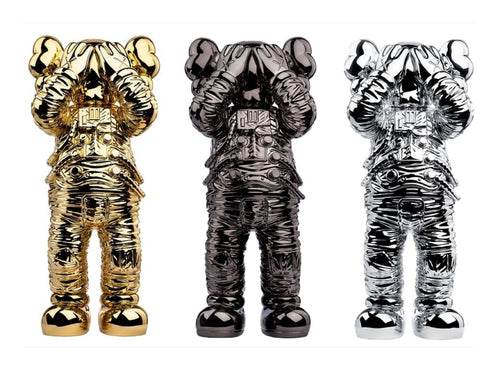
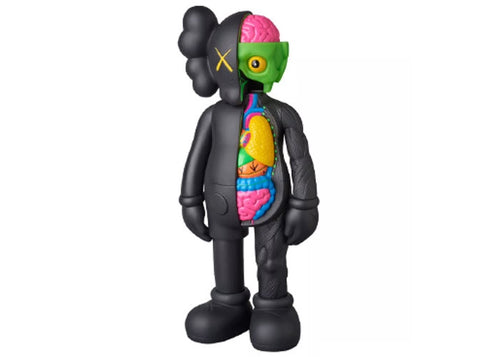
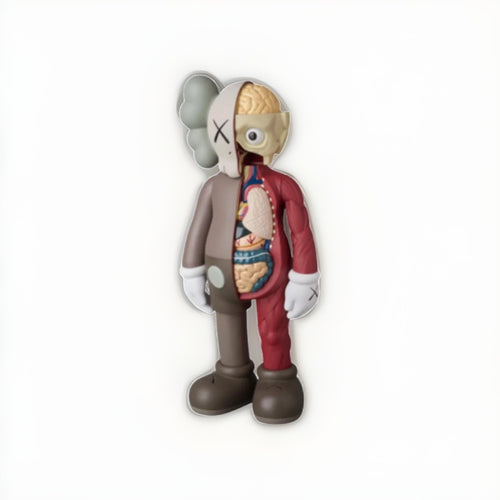
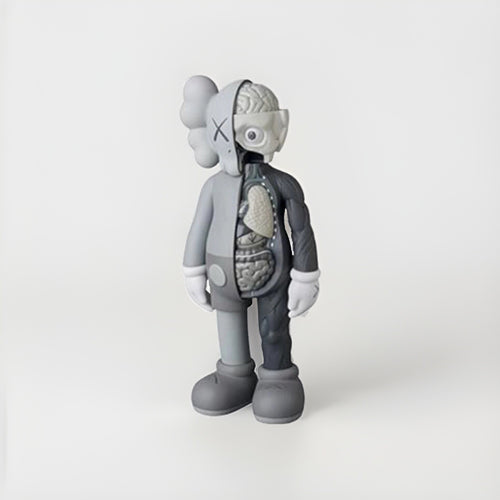
The difference between a paper COA and a blockchain certificate of authenticity comes down to two things: who stands behind it, and how hard it is to fake or separate from the artwork. A paper certificate of authenticity is a printed document that vouches for a piece — but paper can be forged, swapped, lost, or copied, and it is only ever as trustworthy as the person or company who signed it. A blockchain COA (such as TrueCOA, which Gauntlet Gallery uses for KAWS, BE@RBRICK, and Warhol works) records that same claim in a tamper-resistant digital ledger, so the certificate is far harder to counterfeit and can be re-verified at any time by anyone with a phone. Neither format authenticates the art by itself — a COA is a supporting record, not proof — but a well-issued blockchain COA closes several of the gaps that plague paper.
Below we break down exactly where paper certificates fall short, how blockchain verification adds real security, what a COA does and does not prove, and how to evaluate any certificate's issuer before you buy. We also cover why different artists legitimately use different systems — so you know what a "correct" COA looks like for a Fairey versus a Banksy versus a signed guitar.
What a certificate of authenticity actually is
A certificate of authenticity (COA) is a document — physical or digital — that states a specific work is genuine and records key facts about it: the artist, title, medium, edition or size, and often the issuer's identity and signature. At its best, a COA is a piece of provenance: part of the paper trail that helps establish an object's history and legitimacy.
The critical thing to understand is that a COA is evidence, not proof. It is a claim made by whoever issued it. Its value is entirely a function of that issuer's authority, reputation, and accountability. A certificate signed by the artist's official authentication body or a respected dealer carries weight. A generic certificate printed by an anonymous seller carries almost none — no matter how official the gold foil looks.
Why collectors care so much about the certificate
In the contemporary art and collectibles market — prints, figures, memorabilia — the physical object is often relatively easy to reproduce. What separates a $2,000 authenticated piece from a $40 poster is frequently the documentation and provenance around it. That is why forgers target the paperwork as aggressively as they target the art. If you can fake a convincing certificate, you can lift the perceived value of a copy dramatically. Understanding how certificates can fail is the first step to not overpaying for one.
The limits of paper COAs
Paper certificates have protected collectors for decades and still have a place. But they carry structural weaknesses that every buyer should understand before treating one as a guarantee.
1. Paper is forgeable
A certificate is just ink on card. Modern printing, scanning, and design tools make it straightforward to reproduce logos, seals, signatures, and layouts. A holographic sticker or embossed seal raises the effort slightly, but none of it is beyond a determined counterfeiter. When the certificate is the main thing being checked, faking the certificate is the entire game.
2. Paper is separable from the object
This is the quietest and most damaging weakness. A paper COA has no permanent, physical connection to the artwork it describes. That creates several failure modes:
- Marriage: a genuine certificate gets paired with a counterfeit or different piece.
- Orphaning: the real piece and its certificate get separated in a resale, and the buyer receives an unverifiable object.
- Duplication: one certificate is photocopied and used to "authenticate" multiple copies.
Because the document and the object are independent, nothing in a paper system stops a valid-looking certificate from ending up next to the wrong item.
3. A COA is only as good as its issuer
A certificate inherits all of its credibility — and all of its worthlessness — from whoever issued it. A certificate from an artist's official body, a recognized authentication service, or an established dealer means something. A certificate that simply says "Certificate of Authenticity" with a signature you cannot trace means very little. Many disappointed buyers discover that the impressive-looking COA in their frame was issued by the same anonymous seller who sold them the fake.
4. Paper degrades and gets lost
Documents fade, tear, get damaged in storage, or simply go missing over years of ownership and resale. Once the certificate is gone, re-establishing provenance can be difficult or impossible, and the piece's resale value often suffers even if it is completely genuine.
How blockchain COAs add protection
A blockchain certificate of authenticity addresses the paper weaknesses by changing where the record lives and how it connects to the object. Services like TrueCOA — which Gauntlet Gallery uses for its KAWS, BE@RBRICK, and Warhol pieces — record the certificate on a blockchain, where it can be looked up and re-verified by any future owner.
Tamper-resistant records
A blockchain is an append-only ledger: once a certificate entry is written, it cannot be quietly altered or backdated without the change being detectable. This does not make the original claim automatically true — a bad actor can still record a false statement — but it does mean that a legitimately issued record can't be silently edited, and its issuance date and details are fixed and auditable. That removes a whole category of after-the-fact tampering that paper invites.
Persistent, re-checkable verification
With a paper COA, verification is a one-time glance at a document. With a blockchain COA, verification is a repeatable action: at any point — before purchase, at resale, years later — anyone can look up the record and confirm it still exists and matches the piece. The certificate does not fade, and it cannot be lost the way a card can. If you sell the piece, the next buyer can independently verify the same record without trusting your photocopy.
The record describes the specific object
Another meaningful upgrade is specificity. A well-issued digital certificate is tied to a documented description of the piece — its edition, markings, and identifying details — rather than existing as an interchangeable card. This attacks the "separable" problem head-on: a record that describes this specific item is far harder to marry to the wrong object. It is not a perfect safeguard on its own, but it dramatically raises the difficulty of swapping certificates between pieces.
A quick comparison
| Attribute | Paper COA | Blockchain COA (e.g. TrueCOA) |
|---|---|---|
| Ease of forgery | Low effort to reproduce | Much harder; record is centralized and auditable |
| Link to the object | None — a loose document | Record documents the specific item |
| Tampering after issue | Hard to detect | Detectable — ledger is append-only |
| Re-verification | One-time visual check | Anytime, by anyone, on a phone |
| Loss / degradation | Fades, tears, gets lost | Record persists digitally |
| Still depends on issuer | Yes | Yes — technology does not replace trust |
The honest limits: blockchain is not magic
It would be dishonest to sell blockchain verification as infallible, so let's be clear about what it does not do.
- It cannot make a false claim true. If someone records "this is a genuine Warhol" on-chain but it isn't, the blockchain faithfully preserves a lie. The record is tamper-resistant, not truth-guaranteeing.
- The issuer still matters most. A blockchain COA from an unknown party is not more trustworthy than a paper one from the same party. The ledger secures the record; it does not vouch for the person who wrote it.
- It is a supporting record, not the whole story. Provenance, condition, edition transparency, and dealer reputation still carry the case. The COA is one strong pillar, not the entire structure.
The right way to think about it: a well-issued blockchain COA removes several of paper's failure modes and makes verification durable and repeatable. That is a genuine, meaningful upgrade — not a replacement for judgment.
What a COA does — and does not — prove
What a good COA supports
- That a credible, identifiable issuer has stated the piece is authentic.
- Key attributes on the record: artist, title, medium, edition or size.
- A verifiable point in your provenance chain, especially if it is durable and re-checkable.
What a COA does not prove on its own
- That the object in your hands is the one described. A loose certificate proves nothing about which item it's sitting next to.
- That the issuer had any authority. Anyone can print or even mint a certificate. Authority comes from reputation and accountability, not format.
- That the work is what you think it's worth. Authenticity and market value are different questions; for realistic pricing context see our Financial Insights market data rather than relying on a certificate's implied value.
How to evaluate any COA's issuer
Because a certificate's worth is inherited from its issuer, evaluating the issuer is the single most useful skill a collector can build. Run any COA — paper or blockchain — through this checklist:
- Who issued it, exactly? A named artist authentication body, a recognized third-party service, or an established dealer is meaningful. "Certificate of Authenticity" with no traceable issuer is not.
- Is the issuer independent and accountable? A certificate from the same anonymous party selling the piece carries the least weight. Third-party or reputable-dealer issuance carries the most.
- Can you verify it independently? Can you look up the record, contact the issuer, or check a public ledger — without going through the seller?
- Is it tied to the object? A record that documents the specific piece beats a generic loose card every time.
- Is the correct system being used for this artist? Different artists use different, legitimate authentication norms (see below). A COA claiming the "wrong" chain of authority for a given artist is a red flag.
- Does the wider provenance agree? The certificate should sit inside a consistent story — purchase history, condition, edition details — not stand alone as the only evidence.
Different artists, different (legitimate) systems
One of the most common mistakes new collectors make is expecting every artist to authenticate the same way. They don't — and a dealer who claims a one-size-fits-all COA for everything is a warning sign, not a reassurance. Here is how authentication legitimately differs across the artists Gauntlet Gallery handles. You can dig deeper in our buyer's guides.
- Shepard Fairey / OBEY: Fairey works do not come with an artist-issued COA. Authentication here is "silent" — it rests on provenance, edition details, and dealer trust rather than a certificate. Buy on the strength of the source, not a piece of paper.
- Banksy: authenticated genuine screenprints are handled through Pest Control, Banksy's official authentication body. Pest Control authenticates Banksy — and only Banksy. Any claim that Pest Control certifies another artist is false.
- DEATH NYC: pieces typically come with a signed COA and a gold seal. That specific combination is the norm to look for.
- KAWS & BE@RBRICK / Medicom: Gauntlet Gallery uses TrueCOA to give these pieces durable, re-verifiable certification.
- Andy Warhol works: certified via TrueCOA in our inventory, providing a tamper-resistant, re-checkable record.
- Signed music memorabilia: the market standard is third-party authentication from services such as Beckett (BAS), JSA, or PSA. Look for their authentication rather than a house certificate alone.
- Apollo / space memorabilia: authenticated through provenance and recognized specialists (for example, Zarelli for space-flown and autograph material). This is a provenance-first category.
The takeaway: the "right" COA depends on the artist. Blockchain certification (TrueCOA) is the strongest option where it applies — KAWS, BE@RBRICK, Warhol — but for a Fairey or an Apollo artifact, provenance and specialist authentication are the correct standard, and no blockchain certificate should be expected or invented.
Practical guidance for your next purchase
- Match the COA to the artist. Confirm the piece uses the authentication norm appropriate to its artist, not a generic certificate.
- Prefer bound, re-verifiable certification where it exists. For KAWS, BE@RBRICK, and Warhol, a TrueCOA record is a real advantage over a loose card.
- Vet the issuer before the object. Independent, accountable, reputable issuance is worth more than any seal or hologram.
- Buy from sources that stake their reputation on it. A dealer who authenticates transparently and stands behind every piece is your strongest protection — stronger than any single document.
- Keep and pass on the provenance. Retain records and, for digital COAs, note how the next owner can re-verify.
Frequently asked questions
What is the difference between a paper COA and a blockchain certificate of authenticity?
A paper COA is a printed document that vouches for a piece; it can be forged, separated from the artwork, duplicated, or lost, and it is only as trustworthy as whoever issued it. A blockchain certificate of authenticity records the same claim on a tamper-resistant digital ledger, making it much harder to counterfeit, impossible to silently alter, and re-verifiable by anyone at any time. Both still depend on a credible issuer — the technology secures the record, not the truth of the claim.
Is a blockchain COA proof that my artwork is authentic?
No. A blockchain COA proves that a specific record was created and has not been tampered with. It does not, by itself, prove the underlying claim is true — a false statement can still be recorded on-chain. Authenticity ultimately rests on a credible issuer plus provenance, condition, and edition transparency. The blockchain COA is a strong supporting pillar, not the whole case.
Can a paper COA still be trustworthy?
Yes, when it comes from a credible, accountable issuer and sits inside consistent provenance. For several artists — Shepard Fairey (silent/provenance-based), DEATH NYC (signed COA with gold seal), and signed music (Beckett/JSA/PSA) — a paper or third-party certificate is the correct and legitimate standard. The weakness of paper is not the paper itself; it's an untraceable issuer and the lack of a physical link to the object.
Why do different artists use different COA systems?
Because authentication norms developed differently across markets. Banksy is authenticated only through Pest Control; Fairey relies on provenance with no artist COA; KAWS, BE@RBRICK, and Warhol are well suited to TrueCOA certification; music memorabilia uses third-party graders like Beckett, JSA, and PSA; and space memorabilia is provenance-and-specialist driven. A trustworthy dealer applies the correct system per artist rather than issuing one generic certificate for everything.
What should I check before trusting any COA?
Identify exactly who issued it and whether they are independent and accountable; confirm you can verify the record without relying on the seller; make sure the authentication system matches the artist; and confirm the wider provenance agrees. If the certificate is the only evidence and the issuer can't be traced, treat it as close to worthless regardless of how official it looks.
Does Gauntlet Gallery use blockchain COAs?
Yes, where it's the right tool. Gauntlet Gallery uses TrueCOA for KAWS, BE@RBRICK, and Warhol pieces, giving those works durable, re-verifiable certification. For artists whose legitimate standard is provenance-based or third-party (Fairey, Banksy via Pest Control, DEATH NYC, signed music, space memorabilia), we apply the correct system for that artist rather than forcing a blockchain certificate where it doesn't belong.
Buy & authenticate with confidence
The best protection isn't a single certificate — it's buying from a source that authenticates transparently, applies the right system per artist, and stands behind every piece. Explore the full range in our complete collection, learn the specifics for each artist in our buyer's guides, get grounded on realistic values in Financial Insights, and start with the fundamentals of smart, protected collecting in The Collector's Hub. When you understand what a COA can and cannot do, no seal, sticker, or app can talk you into overpaying — and the right verification, paper or blockchain, becomes a tool you control rather than a story you're asked to believe.