The artist collaboration segment is where BE@RBRICK collecting gets serious: these are the releases tied to major names in contemporary art, and they attract both the strongest collector demand and the most aggressive replication. Buy sealed where possible, buy documented always, and compare against real comparable sales before you commit. For a KAWS or BE@RBRICK purchase, check the individual listing for release-specific packaging, production marks, condition and provenance. Manufacturer NFC is relevant only on releases that include it; a certificate alone does not establish authenticity.
That is the short answer. The longer answer — the one that separates confident collectors from anxious ones — involves understanding what an artist-collaboration BE@RBRICK actually is, how Medicom Toy structures its releases, what "complete" really means for a collectible figure, and how to read a listing the way a dealer reads it. This guide walks through all of it. Compare the same BE@RBRICK release, size and collaboration using dated completed sales, including packaging, condition and provenance. A format-wide growth rate does not value an individual figure. Research references: BE@RBRICK collection.
What Counts as an Artist-Collaboration BE@RBRICK?
BE@RBRICK is the collectible bear-shaped figure line created by Medicom Toy, the Tokyo-based company that launched the platform in 2001. The figure itself is deliberately simple — a stylized bear body with multiple points of articulation — and that simplicity is the point. The blank form functions as a three-dimensional canvas, and over two decades Medicom has invited an extraordinary range of collaborators to decorate it: contemporary artists, artist estates and foundations, fashion houses, musicians, film studios, and streetwear brands.
Within that universe, "artist collaboration" refers to releases produced with a named visual artist or an artist's estate. The best-known examples include collaborations drawing on the work of Andy Warhol, Jean-Michel Basquiat, and Keith Haring through their respective estates and foundations, alongside living artists from the street art, pop art, and designer toy worlds. These artist editions occupy a different position in the market from character-license or brand releases. They are collected as art objects — extensions of an artist's printed and painted output into sculptural multiple form — and their values tend to track the broader market for that artist's work, not just the toy market.
That dual identity matters for buyers. An artist-collaboration BE@RBRICK is judged by collectible-figure standards (condition, packaging, completeness) and by art-market standards (provenance, authenticity, comparable sales) at the same time. A buyer who only applies one lens will overpay, or worse, buy something that isn't right. The rest of this guide applies both lenses in order.
First Principles: The Five-Point Evaluation
Every artist-collaboration BE@RBRICK we consider for our gallery passes through the same five-point evaluation. Use it as your master framework and the rest of the details slot into place.
- Authenticity. Is this a genuine Medicom Toy product from the stated release?
- Completeness. Does the piece include everything it shipped with — the figure, the correct box or blind-box packaging, any inserts or cards the release included? Missing packaging is the single most common value reducer in this category.
- Condition. Both the figure and the packaging are graded. Paint quality, joint tightness, surface marks, box corners, seal integrity — all of it counts, and sealed versus opened is the first fork in the road.
- Release identity. Are you certain which release this is? Artist collaborations frequently exist in multiple size designations and sometimes in multiple colorways or versions. Confirm the exact release before comparing prices.
- Price context. Is the asking price supported by recent verified sales of the same release in comparable condition? Asking prices are marketing; sold prices are data.
Each of these deserves a deeper look, and we will take them roughly in order — but first, a short detour into how BE@RBRICK sizing and release structure work, because you cannot evaluate release identity without it.
Understanding BE@RBRICK Sizes and Release Structure
The percentage sizing system
BE@RBRICK sizes are expressed as percentages of the standard figure. The 100% figure is the baseline, standing roughly seven centimeters tall — about the height of a credit card turned on end. Every other size is scaled from there. The sizes you will encounter most often in the artist-collaboration segment:
| Size designation | Approximate height | Typical role in artist collaborations |
|---|---|---|
| 100% | ~7 cm | The standard figure; often sold paired with a 400% in a boxed set |
| 400% | ~28 cm | The workhorse display size for artist editions; the most common "serious collector" format |
| 1000% | ~70 cm | The statement piece; large-format editions that function as sculpture in a room |
Smaller designations such as 50%, 70%, and 200% exist across the broader BE@RBRICK universe as keychains, accessories, and special formats, but the 100%/400% pairing and the 1000% are where most artist-collaboration collecting happens. Two practical implications follow. First, always confirm which size you are buying — listings sometimes photograph a 400% and describe it ambiguously, and the value difference between sizes of the same design is substantial. Second, when a release was sold as a 100% and 400% set, a lone figure without its partner is an incomplete set, and it should be priced as such.
Blind-box series versus standalone releases
Medicom releases BE@RBRICKs through two main channels. The numbered blind-box series arrive on a regular cadence with themed category slots — including artist slots and rarer chase figures pulled at random from sealed cases. Standalone releases, by contrast, are announced as specific products: a named artist collaboration in a stated size, sold through Medicom's own channels, select retailers, gallery partners, or the collaborating artist's ecosystem.
Most high-value artist collaborations are standalone releases, but artist figures inside blind-box series have their own collector following, and the rarest series figures can be genuinely hard to find. For buyers, the distinction matters mainly for packaging expectations: a blind-box figure comes with different packaging than a boxed standalone release, and knowing which format your target release used is part of confirming release identity. Our BE@RBRICK index exists precisely to help collectors pin down release details before they buy.
Materials beyond standard vinyl
The standard BE@RBRICK is ABS plastic, but Medicom has produced editions in other materials — most famously the wooden editions produced with the Japanese furniture maker Karimoku, which occupy a premium niche of their own. Material affects everything downstream: weight, fragility, how condition issues present, and how the piece should be stored and displayed. If a listing claims a special material, that claim should be verifiable against the documented release. When in doubt, check the release documentation before assuming.
Authenticity: The Non-Negotiable Foundation
The artist-collaboration segment attracts replication for an obvious reason: these are the most valuable BE@RBRICKs, and the figure's simple form is easier to imitate than a complex sculpt. That is not a reason to avoid the category — it is a reason to buy the way experienced collectors buy. Authentication here is constructive, not fearful: it is simply the process of establishing, with evidence, that a piece is what it claims to be. Done properly, it protects your purchase and your eventual resale.
Sealed original packaging and the hologram
Genuine Medicom Toy products carry the company's hologram sticker on their packaging, and a factory-sealed box with intact hologram is the strongest single physical indicator a buyer can start from. Sealed-with-hologram is the default condition standard for the authenticated BE@RBRICKs we offer. When a piece is opened, the packaging still matters enormously — the correct box for the release, the correct printing, the hologram still present — but the evidentiary chain has one more link to examine, which is why opened pieces lean harder on provenance and third-party verification.
We deliberately avoid publishing checklists of specific counterfeit "tells" — those lists age quickly and mostly teach counterfeiters what to fix. The durable approach is structural: buy sealed where possible, verify packaging against documented examples of the release, and buy from sources that stand behind authenticity with documentation. Our guide to spotting a fake BE@RBRICK covers the buyer's side of that process in depth and sets out the general method that applies across categories.
Modern verification: blockchain certification
Physical inspection has a modern complement. The practical benefit is twofold. At purchase, you are not relying solely on your own eye or the seller's word; an independent verification layer already exists. At resale, the certificate travels with the piece, which makes your BE@RBRICK easier to sell and easier to sell well, because the next buyer's authenticity question is already answered.
Whatever source you buy from, the principle generalizes: prefer sellers who put authentication in writing and attach it to the specific piece, not sellers who merely assert it in a listing. The difference between "100% authentic, trust me" and a documented, verifiable certification is the difference between a claim and evidence. Our authentication FAQ answers the most common questions collectors raise about how this works in practice.
Provenance: the paper trail
Provenance — the documented history of where a piece came from — is authentication's quieter partner. For artist-collaboration BE@RBRICKs, useful provenance includes original purchase receipts or order confirmations from the release channel, documentation from a recognized dealer or gallery, and continuity of ownership records. A sealed figure with a receipt from the original release channel is about as clean as this market gets. A piece with no story at all is not automatically wrong, but it should be priced and verified accordingly. When we source pieces for our BE@RBRICK collection, documented provenance is part of the acquisition standard, and it is part of what transfers to you at purchase.
Condition and Completeness: Reading a Piece Like a Dealer
Sealed versus opened
The first condition question is binary: is the piece factory sealed or has it been opened? Sealed commands a premium for two connected reasons — it is the strongest authenticity position, and it guarantees the contents are untouched. Opened-but-complete pieces in excellent condition remain highly collectible, particularly for buyers who intend to display the figure. There is no wrong answer on sealed versus opened as a collecting philosophy; there is only a wrong answer on price, which is paying sealed money for an opened piece.
Grading the figure
For opened pieces, examine the figure itself methodically:
- Surface and paint. Look for scuffs, scratches, paint rubs at contact points, and any fading or discoloration. Artist collaborations often carry complex printed artwork across the body — the print quality and registration should be crisp and consistent with documented examples of the release.
- Joints and articulation. Joints should hold poses and feel consistent. Loose or damaged joints are a real condition deduction, especially on larger figures where the arms carry more weight.
- Sun and light exposure. Vinyl and printed surfaces can yellow or fade with prolonged UV exposure. Compare white or light areas against protected areas (inside joints, undersides) for evenness.
- Odor and environment. Smoke exposure and damp storage leave evidence. A figure that has lived in a poor environment often tells you so before you see a single mark.
Grading the packaging
Packaging is not an accessory in this market; it is part of the collectible. Grade it with the same seriousness as the figure: corner wear, crush damage, tears, sticker residue, fading on printed surfaces, and the integrity of any factory seal. For blind-box figures, the presence of the correct box and any insert card matters. For boxed standalone releases, the box is often large and easily damaged in shipping — which is also a reminder to take shipping method seriously when you buy, particularly for 400% and 1000% figures. A well-preserved box can be the difference between an average example and a top-of-market example of the same release.
Completeness
Confirm what the release originally included and verify every element is present. Depending on the release, that can mean the figure, the box, inner trays or protective wrapping, and printed inserts. For paired 100% and 400% sets, both figures and the original set packaging. The completeness standard is simple: the closer a piece is to the state it left Medicom in, the stronger its position — today and at resale.
Pricing an Artist-Collaboration BE@RBRICK: Data Over Vibes
Artist-collaboration BE@RBRICKs span an enormous price range — from accessible entry points to serious art-market territory for the rarest large-format editions. Within any single release, price is driven by the factors above: sealed versus opened, condition, completeness, and documentation. Across releases, the drivers are the artist's broader market strength, the size designation, the edition's scarcity, and the release's cultural standing within the collecting community.
The discipline that protects you is comparable-sales analysis. Never anchor on asking prices — listings can sit unsold for months at fantasy numbers. Anchor on what identical releases in comparable condition have actually sold for, recently and verifiably. For a structured overview of how BE@RBRICK values behave by size, artist, and condition tier, start with our BE@RBRICK price guide , and for the wider market picture our financial insights hub tracks how the collectible art categories we handle have moved over time.
A few qualitative pricing principles that hold up across the category:
- Size scales value, but not linearly. A 1000% is not simply "ten times" a 100% — large formats are scarcer, harder to store, and priced as statement sculpture.
- Sealed premiums are real but vary by release. The gap between sealed and opened pricing widens for releases where sealed survivors are genuinely scarce.
- Artist-market strength moves the whole shelf. When an artist's print and painting market strengthens, their BE@RBRICK editions tend to follow, and vice versa. Judge the artist, not just the toy.
- Documentation compounds. Two identical figures diverge in value when one carries certification and provenance and the other carries a shrug.
Where You Buy Matters as Much as What You Buy
The same figure can be a great purchase or a bad one depending on the source. Evaluate sellers on four axes:
| What to evaluate | Weak signal | Strong signal |
|---|---|---|
| Authentication | "100% authentic" asserted with no documentation | Check release-specific physical evidence and the documentation stated in the individual listing. |
| Photography | Stock photos or a single angle | Full photography of the actual piece: figure, box, hologram, seal, and any flaws disclosed |
| Release knowledge | Vague or copied descriptions, wrong size terminology | Exact release identification — artist, size, version, and what completeness means for that release |
| Accountability | No return path, anonymous seller | An identifiable dealer with a track record who stands behind the sale |
None of this means secondary marketplaces are off-limits — good pieces surface everywhere. It means the burden of verification shifts to you in proportion to how little the seller documents. Part of what you pay a specialist dealer for is the collapsing of that burden: the authentication, the release identification, the condition grading, and the pricing context arrive already done. That is the model our gallery runs on, and it is why every piece in our figurines collection ships with its documentation attached.
A Note on KAWS and the Designer-Figure Crossover
No discussion of artist-collaboration BE@RBRICKs is complete without acknowledging the crossover audience: collectors who move between BE@RBRICK editions and standalone designer figures by artists such as KAWS, whose own Medicom-produced works helped define the entire art-toy category. If your collecting interest runs in that direction, our KAWS collection and the companion KAWS buyer's guide apply this same methodology to that market. Many collectors find that skills learned pricing one category sharpen their judgment in the other.
Care, Storage, and Records After You Buy
Buying well is half the job; keeping the piece well is the other half, and it directly protects your investment.
- Light. Keep figures out of direct sunlight and away from strong UV sources. Fading and yellowing are the most common preventable condition losses in vinyl collectibles. If you display in a bright room, consider UV-filtering cases.
- Temperature and humidity. Stable, moderate conditions. Avoid attics, garages, and basements where temperature swings and moisture do slow damage to both vinyl and packaging.
- Dust and handling. Display cases beat open shelves. When handling, clean dry hands are fine for casual repositioning, but treat printed surfaces gently — artwork layers are the piece's value.
- Packaging preservation. If you open a sealed figure, keep everything — box, trays, inserts — stored flat, dry, and dark. The packaging remains part of the piece's value permanently.
- Records. Keep your purchase documentation, certification, and photographs together. A tidy provenance file is an asset you build for free, and it pays out whenever you insure, sell, or trade the piece.
For terminology you will meet along the way — edition language, condition vocabulary, authentication terms — our collector's glossary is a useful companion reference.
The Buying Checklist
Print this, or keep it open in a tab. Before purchasing any artist-collaboration BE@RBRICK:
- Identify the exact release. Artist, size designation, version or colorway, and release format (standalone boxed or blind-box series). Cross-reference against release documentation or our BE@RBRICK index.
- Confirm authenticity evidence.
- Verify completeness. Everything the release shipped with, present and correct — including both figures for 100%/400% sets.
- Grade the condition honestly. Figure surface, print quality, joints, and the packaging itself. Ask for photos of any area the listing does not show.
- Check provenance. Receipts, dealer documentation, ownership history. More is better; none demands a discount and extra verification.
- Price against sold comparables. Recent, verified sales of the same release in comparable condition — not asking prices. Consult the price guide and, when in doubt, ask us to pull comps.
- Evaluate the seller. Documentation, photography, release knowledge, accountability.
- Plan the logistics. Insured, well-packed shipping appropriate to the size — a 1000% figure is a freight problem as much as a purchase.
A buyer who runs this checklist every time will occasionally miss a bargain that required a leap of faith. That is a trade worth making. The collectors who build enviable BE@RBRICK collections over years are not the ones who gambled well; they are the ones who verified consistently. For the fuller version of this methodology across the whole category, our BE@RBRICK buyer's guide goes deeper on every point above, and the Collector's Hub gathers our guides, glossaries, and market resources in one place.
Frequently Asked Questions
Is it better to buy a sealed or an opened artist-collaboration BE@RBRICK?
Sealed is the stronger position for authenticity and value preservation, and it typically commands a premium. Opened pieces in excellent, complete condition remain highly collectible and are the natural choice for display-focused collectors. The only mistake is paying sealed-level prices for an opened example — let condition and documentation set the price, and buy the format that fits how you collect.
Which BE@RBRICK size should a new collector start with?
Most collectors gravitate to the 400% (~28 cm) as the ideal balance of display presence, availability, and cost. The 100% (~7 cm) is the accessible entry point and often comes paired with a 400% in sets, while the 1000% (~70 cm) is a statement sculpture with storage and shipping demands to match. Start where your budget and display space genuinely fit.
How do I verify a BE@RBRICK is a genuine Medicom Toy product?
Start with the packaging: genuine Medicom products carry the company's hologram sticker, and factory-sealed original packaging is the strongest physical evidence. Verify the release details against documented examples, and prefer sellers who attach written, piece-specific authentication.
Do artist-collaboration BE@RBRICKs hold their value?
They behave more like art multiples than toys: values track the collaborating artist's broader market, the release's scarcity, and the piece's condition and documentation. Sealed, complete, well-documented examples of sought-after releases have historically been the strongest performers. As with any collectible, buy quality you would be happy to own regardless, and ground every purchase in recent verified comparable sales.
Does the box really matter if I plan to display the figure?
Yes. Packaging is part of the collectible, and the market prices it that way. Even for a permanently displayed figure, retaining the box, trays, and inserts in good condition materially improves resale value and strengthens the piece's authenticity story. Store packaging flat, dry, and out of light, and think of it as the piece's passport.
What provenance should I ask a seller for?
Ask what documentation accompanies the piece: original purchase receipts or order confirmations, dealer or gallery paperwork, certification, and any ownership history. Strong provenance reduces your verification burden and travels with the piece to benefit your own eventual sale. A piece with no documentation is not automatically wrong, but it warrants a more careful price and closer verification.
Shop BE@RBRICK
Explore current pieces available from the gallery.
-
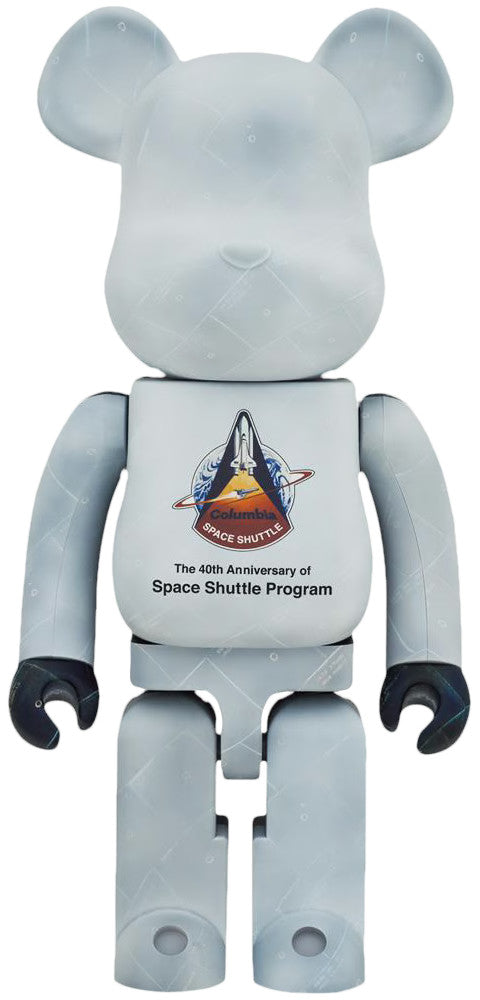
BE@RBRICK NASA Space Shuttle 40th Anniversary 1000% Medicom Toy Bearbrick
$600.00 USD
-
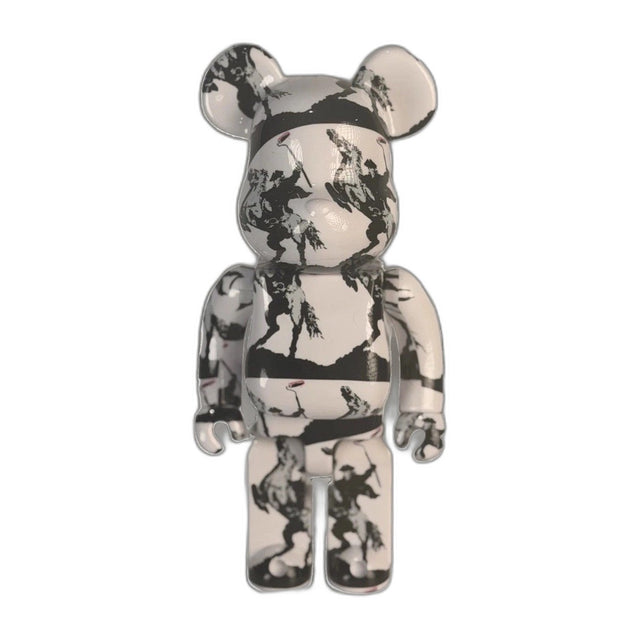
BE@RBRICK Brandalism Sync Banksy Medicom Toy Art Figure du-al.io Authenticated
$199.00 USD
-
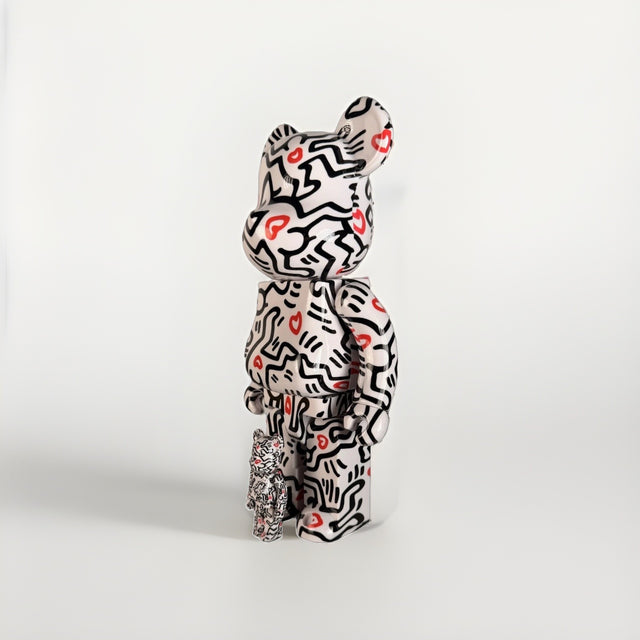
BE@RBRICK Keith Haring 400% + 100% Set Medicom Toy Bearbrick Foundation Art New
$199.00 USD
-
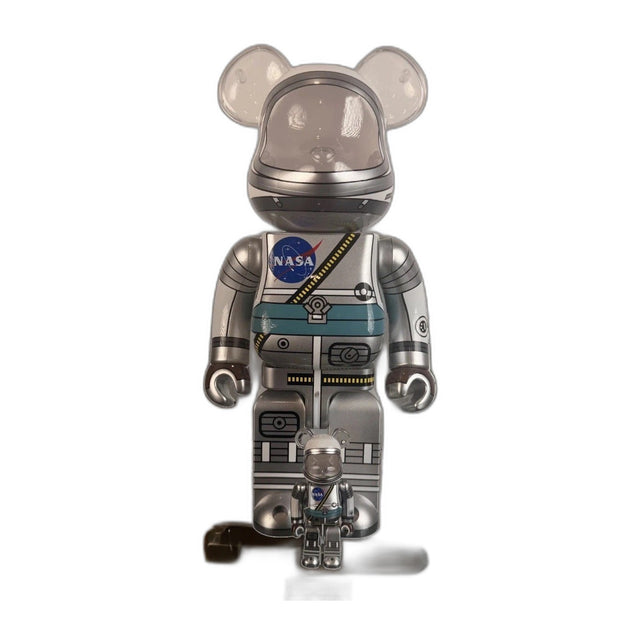
Bearbrick BE@RBRICK Mercury Astronaut 400% 100% Set NASA Medicom Toy Sealed New
$225.00 USD
-
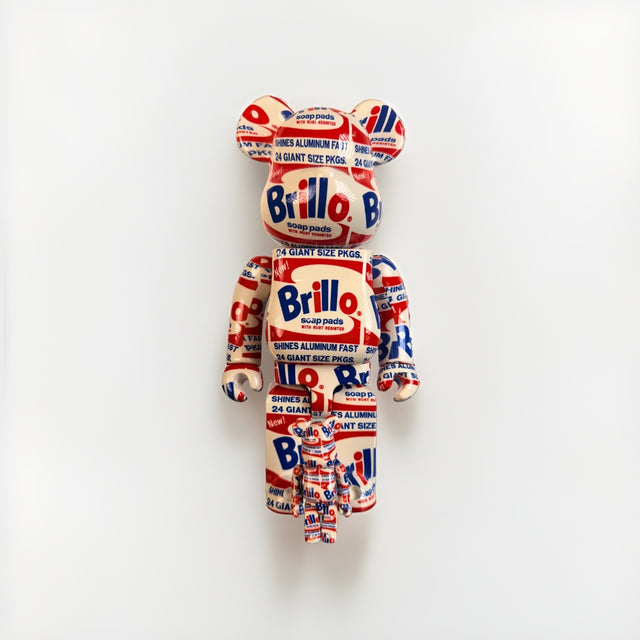
Bearbrick BE@RBRICK Andy Warhol Brillo 400% 100% Set Original 2020 Medicom New
$275.00 USD
Browse the collection for current listings.