Before buying a framed DEATH NYC print, inspect six things: the hand-signed signature and edition numbering in the margin, the artist-signed Certificate of Authenticity and the metal official gold seal that accompanies each piece, the print surface and paper quality as seen through the glazing, the condition of the sheet inside the frame (looking for ripples, foxing, fading, or trimmed margins), the quality of the framing itself (archival mat, hinging method, and UV-protective glazing), and the seller's provenance documentation. A frame can flatter a print — and it can also hide problems. The single most important habit is simple: never let the frame do the talking. Ask to see the print's documented history, compare the piece against verified examples, and when possible, request photos of the unframed sheet. Everything below expands each of those steps into a practical, repeatable inspection routine.
Why a Framed Print Deserves a Different Inspection Than a Loose One
When you buy an unframed print, almost nothing is hidden. You can examine the full sheet, run your eyes along every edge, check the verso (the back of the paper), and confirm the margins are intact. A framed print reverses that situation. The mat window may cover an inch or more of the sheet on every side. The backing board conceals the verso entirely. Glazing introduces reflections that can mask surface issues, and a sealed frame package makes it impossible to know how the sheet is attached inside without opening it up.
None of this means framed prints are bad purchases. A professionally framed DEATH NYC print, done with archival materials, is arguably in a safer long-term state than a loose sheet passed from tube to tube. The point is that framing shifts the burden of verification from your eyes to the seller's documentation. That is why the inspection routine for a framed print leans harder on paperwork — the artist-signed COA, the metal gold seal, purchase records, and provenance — and on targeted questions about what is happening behind the glass.
Our gallery frames this positively for a reason: the overwhelming majority of framed prints on the market were framed by collectors who loved the work and wanted to protect it. Your job as a buyer is not to assume the worst. It is to confirm the good — methodically, and before money changes hands. Our DEATH NYC buyer's guide covers the artist's market more broadly; this article focuses specifically on what changes when the print arrives behind glass.
First, Know What You Are Looking At: DEATH NYC Basics
DEATH NYC is an anonymous New York–based artist known for dense, pop-culture mash-up prints that remix familiar imagery — luxury fashion motifs, cartoon iconography, street-culture references — into bold collage compositions. The work is prolific by design: the artist releases editions frequently, and the prints are typically hand-signed and numbered, which is precisely what makes them approachable for newer collectors and satisfying to verify for experienced ones.
Two features define an authentic DEATH NYC package as our gallery presents it:
- A Certificate of Authenticity signed by the artist. This is not a generic gallery certificate — it is documentation signed by DEATH NYC that accompanies the print.
- The metal official gold seal affixed to each piece. This physical seal is part of how the artist's studio marks legitimate work, and it should travel with the print.
When you inspect a framed example, those two items become your anchor points. The frame may hide the sheet's edges, but it cannot hide whether the seller can produce the signed COA and show you the gold seal. If either is missing, that is not automatically disqualifying — collectors do occasionally misplace paperwork — but it changes the conversation, and it should change the price and the depth of your remaining inspection. Our DEATH NYC authentication guide walks through the documentation side in detail.
The Framed-Print Inspection: Nine Points, In Order
Work through these in sequence. Each point is something you can check in person at a gallery or fair, or request photographs of when buying remotely.
1. The Signature and Edition Number
Start where every print inspection starts: the margin. DEATH NYC prints are typically signed and numbered by hand. Confirm that the signature and the edition fraction are visible within the mat window — a competent framer leaves the signature and numbering exposed, because covering them undermines both enjoyment and resale. If the mat covers the signature area, ask why, and ask for photographs taken before framing.
Look at the signature under good, raking light if you can. Hand-applied graphite or ink sits on the paper differently than a printed reproduction of a signature: it has slight pressure variation, occasional sheen at an angle, and it does not share the perfectly uniform dot structure of the printed image around it. Through glazing this is harder to judge, which is why angle and lighting matter — tilt your view and let reflections work for you rather than against you. Compare what you see against verified examples; our guide to spotting problem DEATH NYC pieces collects the comparison points worth knowing.
On numbering: do not fixate on any single "correct" edition size from memory. Edition sizes vary across releases. What matters is that the numbering is consistent with the edition documentation for that specific release, written in the same hand and medium as the signature, and positioned where that release's numbering normally sits.
2. The Artist-Signed COA
Ask to see the Certificate of Authenticity before you discuss anything else about condition. For DEATH NYC, the COA should be signed by the artist. Check three things:
- Correspondence. The COA should describe the actual print in the frame — the title or image, the edition details, and any identifying information should match what you are looking at. A certificate that describes a different image or a different edition number is a certificate for a different print.
- The signature on the certificate. Compare it to the signature on the print itself. They were made by the same hand and should read as such.
- Physical originality. An original signed document has ink on paper. A photocopy or a printout of a scan is not a signed COA — it is a picture of one. If the seller only has a copy, treat the piece as if the COA were absent and weigh the rest of the evidence accordingly.
If terminology on a certificate is unfamiliar, our authentication glossary defines the standard vocabulary — provenance, edition fraction, verso, hinging, and the rest — so you can read documentation with confidence.
3. The Metal Gold Seal
Each authentic piece carries the metal official gold seal. On a framed print, establish where the seal is. Depending on how the piece was prepared and framed, the seal may be visible with the work or documented with the accompanying materials. What you want to avoid is a vague answer. "It's in there somewhere" is not documentation. A seller who knows the piece will know exactly where the seal is and can show it to you or photograph it. If the seal is described as present but concealed by the frame package, ask for pre-framing photographs — most collectors who frame a print professionally have them, and framers routinely photograph works at intake.
4. The Image and Paper, Through the Glass
Now look at the print itself. Even through glazing, you can evaluate a great deal:
- Color density and saturation. DEATH NYC's compositions are chromatically loud. Washed-out color can indicate a poor-quality reproduction — or UV fading from years of bad display. Either way, it affects value.
- Print sharpness. Examine fine details and text elements within the collage. Authentic printing shows crisp edges at normal viewing distance. Blurry or muddy detail through the glass warrants closer investigation.
- Paper tone. The visible margin should show clean, evenly toned paper. Yellowing that intensifies toward the mat window's edge is a classic sign of acid burn from a non-archival mat — a framing problem that is fixable, but that may hide a tan line on the sheet.
- Surface texture. Tilt your viewing angle and watch how light moves across the sheet. An even sheen is normal; isolated glossy or matte patches can indicate moisture exposure, surface abrasion, or past restoration.
5. Condition Clues Inside the Frame
Frames hide flaws, but they also produce telltale evidence when something is wrong. Scan for:
- Ripples or waves in the sheet. Undulation visible through the glass usually means the print was mounted poorly, exposed to humidity, or is reacting to a non-archival backing.
- Foxing. Small rust-colored spots, often starting near the edges of the visible area, indicate mold or metallic impurities interacting with humidity.
- Contact with the glazing. The print surface should never touch the glass. If it does — look for flattened sheen or, in bad cases, sticking — humidity cycles can bond the sheet to the glazing over time. A proper mat or spacer prevents this.
- Tape shadows or stains at the edges. Discoloration creeping in from behind the mat can indicate pressure-sensitive tape (the kind that yellows and embrittles paper) rather than archival hinging.
- Insect evidence. Tiny irregular losses at margins or specks along the frame's interior edge are worth asking about.
6. The Framing Job Itself
The frame is part of what you are paying for, so evaluate it as a component, not decoration:
- Glazing type. Ask whether the glazing is standard glass, UV-filtering glass, or UV-filtering acrylic. UV protection meaningfully slows fading, and its presence signals a careful owner.
- Mat quality. Archival, acid-free (often called "museum" or "conservation") matboard protects the sheet; ordinary paper-pulp mat slowly burns it. Bevel-cut edges that have yellowed to a brownish core are a visual tell of non-archival board.
- Backing. Ask what sits behind the print. Acid-free foam board and a sealed dust cover are good signs. Corrugated cardboard directly against the sheet is not.
- Mounting method. The gold-standard answer is that the print is hinged with archival tissue or held with corner mounts — both fully reversible. The answer you do not want is "dry-mounted" or "glued down." Permanent mounting flattens the sheet nicely but is generally considered a condition impairment for collectible prints, because it cannot be undone without risk.
7. What You Cannot See: The Verso Question
The back of the sheet carries information — stamps, inscriptions, prior hinge remnants, condition history — and in a framed piece it is invisible. You have three ways to handle this:
- Pre-framing photographs. The best answer. Many collectors and virtually all professional framers photograph works before framing.
- Seller disclosure in writing. Ask the seller to state, in the invoice or listing, the condition of the sheet including the verso, and the mounting method. A seller confident in the piece will do this readily.
- Agreed inspection terms. For higher-value purchases, it is entirely reasonable to agree that the piece may be opened by a professional framer after purchase, with a return window if undisclosed issues (trimming, dry-mounting, repairs) appear. Reputable sellers accommodate this because their descriptions are accurate.
8. Margins and Sheet Size
One of the quiet risks of any framed print purchase is trimming — a sheet cut down to fit a frame or to remove edge damage. Because the mat hides the true sheet edge, ask directly: is the sheet full-size for this release, with intact margins? Cross-check the visible composition against the documented dimensions for the edition wherever documentation exists. A trimmed sheet is still the artwork, but the market discounts it, and you should not pay full-sheet price for one.
9. Provenance and the Paper Trail
Finally, zoom out from the object to its history. Where did the seller get it? An original purchase receipt, prior gallery invoice, or documented chain of ownership adds real weight — and for a framed print, where physical inspection is constrained, provenance carries proportionally more of the burden. You should expect any serious seller to explain a piece's history without hesitation. Browse our current DEATH NYC collection to see what complete documentation looks like in practice. Compare the exact image, edition, medium and presentation with dated completed sales, distinguishing hand-sprayed originals from editioned prints. Future resale value is uncertain.
Framed vs. Unframed: What Changes at a Glance
| Inspection point | Unframed print | Framed print |
|---|---|---|
| Signature & numbering | Direct examination, any angle and magnification | Through glazing; confirm visibility in mat window, use raking light |
| Sheet edges & margins | Fully visible; trimming obvious | Hidden by mat; requires seller disclosure or pre-framing photos |
| Verso (back of sheet) | Fully inspectable | Concealed; rely on photos, written disclosure, or post-purchase opening |
| Surface condition | Direct raking-light exam | Partially visible through glass; reflections complicate reading |
| Storage risk | Handling and rolling damage possible | Protected — if materials are archival; harmed if they are not |
| COA & gold seal | Same requirement | Same requirement — paperwork matters even more |
| Shipping | Flat or tubed; lower cost | Glazing adds breakage risk; insist on proper glass-safe packing |
The table's message is consistent: framing trades away some inspectability in exchange for protection. Good documentation restores the balance. That is why the COA, the gold seal, and provenance sit at the top of the framed-print checklist rather than the bottom.
Questions to Ask the Seller Before You Commit
Whether you are standing in a booth or messaging about an online listing, these questions do most of the work. None of them are confrontational — they are the questions every experienced collector asks, and sellers who deal in authentic material answer them easily.
- Can I see the artist-signed COA, and does it describe this exact print and edition number?
- Where is the metal gold seal, and can you show it to me or photograph it?
- Do you have photographs of the print before it was framed, including the back of the sheet?
- Is the sheet full-size with intact margins, or has it been trimmed?
- How is the print mounted — hinged, corner-mounted, or dry-mounted?
- Is the mat and backing archival, and is the glazing UV-protective?
- Where did you acquire the piece, and is there a receipt or invoice in the chain?
- What is your return policy if the frame is opened and an undisclosed condition issue appears?
Keep the answers. Screenshots of a listing, saved messages, and the invoice itself all become part of the print's provenance file the moment you buy it. For more on how records support long-term value, our Collector's Hub gathers our full library of guidance in one place.
Reading the Price: What a Frame Should and Should Not Add
A frame adds real replacement cost, and a genuinely archival, well-executed framing job is worth something — you would otherwise pay a framer for it yourself. But a frame should never be the reason a print costs dramatically more than comparable examples of the same edition. We deliberately avoid quoting figures here because DEATH NYC's market moves with releases and demand; the right method is comparative, not memorized. Pull recent verified sales for the same or similar releases, note whether those comps were framed or unframed, and let the spread tell you what the frame is worth in practice. Our DEATH NYC price guide explains how we structure that comparison, and our Financial Insights hub shows how we read edition markets using our comparable-sales database rather than instinct.
Two pricing cautions specific to framed pieces:
- Do not pay a premium for framing that fights the print. Non-archival materials are a future expense, not an asset. If the mat is burning the sheet, you will pay to reframe, and possibly to conserve.
- Discount for permanent mounting. A dry-mounted sheet looks flat and clean, but the market treats irreversible mounting as a condition issue. Price it like one.
How Our Gallery Handles Framed DEATH NYC Prints
It is worth saying plainly how we approach the same inspection from the dealer's side, because it doubles as a model for what you should expect anywhere. Before a DEATH NYC print enters our inventory, we verify the artist-signed COA and the metal gold seal, document the sheet's condition — photographing it before any framing — and record the provenance chain. When a piece is framed, we disclose the mounting method and materials, because a buyer who cannot see behind the glass deserves to know what is there.
None of that is exotic. It is simply the standard that makes framed prints safe to buy, and any seller can meet it. Our buyer's guides hub exists to spread that standard across every category we handle, from prints to figures to memorabilia.
After You Buy: Protecting the Print and the Paperwork
The inspection mindset should not end at purchase. Three habits preserve both the object and its value:
- Build the provenance file immediately. Store the COA, the invoice, the seller's written condition statements, and your own photographs together — physically and as scans. Photograph the gold seal. If you ever sell, this file is the first thing the next careful buyer will ask for.
- Audit the framing within the first year. If you bought a piece framed with unknown materials, have a framer open it, photograph the full sheet and verso for your records, and upgrade to archival mat, backing, and UV glazing if needed. This one-time step converts an unknown into a documented known.
- Hang it wisely. Keep the print out of direct sunlight and away from humidity swings — exterior walls, bathrooms, and kitchens are the usual offenders. Even UV glazing only slows light damage; it does not stop it.
Collectors who want to go deeper on storage, insurance, and record-keeping terminology will find every relevant term defined in our collector's glossary.
The Complete Pre-Purchase Checklist
Print this, or keep it on your phone. If you can check every box, you are buying well.
- Signature and edition number visible in the mat window and consistent with the release's documentation.
- Artist-signed COA present, original (not a copy), and matching this exact print.
- Metal official gold seal located, seen, or photographed.
- Color, sharpness, and paper tone read correctly through the glazing under good light.
- No ripples, foxing, glazing contact, tape shadows, or mat burn visible.
- Mounting method disclosed and reversible (hinged or corner-mounted, not dry-mounted).
- Mat, backing, and glazing confirmed archival — or the price reflects a reframe.
- Sheet confirmed full-size and untrimmed, in writing.
- Pre-framing photographs of the sheet and verso obtained, or inspection terms agreed.
- Provenance documented: where the seller got it, with receipts where possible.
- Price checked against recent verified sales of comparable examples, framed and unframed.
- Return terms confirmed in writing before payment.
Twelve boxes sounds like a lot; in practice, an organized seller gets you through all of them in minutes. That speed is itself a signal. The sellers you want to buy from have already done this inspection themselves.
Frequently Asked Questions
Should I ask a seller to remove a DEATH NYC print from its frame before buying?
For most purchases, pre-framing photographs and written condition disclosure are sufficient, and many sellers reasonably decline to open a sealed, professionally finished frame on request. For higher-value pieces, agree in writing that you may have the frame opened by a professional after purchase, with a return option if undisclosed issues such as trimming or dry-mounting appear. Reputable sellers accept those terms because their descriptions are accurate.
Does a frame make a DEATH NYC print more valuable?
A quality archival framing job adds roughly its replacement cost and signals careful ownership, but it does not transform the print's underlying market value — that is set by the edition, condition, and demand. Compare recent verified sales of the same release and let the framed/unframed spread guide you. Never pay a large premium purely for a frame, and discount for non-archival materials or permanent mounting.
What if the framed print comes without the signed COA or gold seal?
Missing paperwork is not automatically fatal — documents do get lost — but it shifts the burden onto everything else: signature comparison against verified examples, provenance records, and the seller's history. Expect the price to reflect the gap, buy only with solid return terms, and weigh whether the piece's history is strong enough to stand without the documentation the artist's studio normally provides.
How can I check the signature through glass?
Use angle and light. View the signature under bright, raking light and tilt your line of sight so reflections move off the signature area. Hand-applied signatures show pressure variation and sit on the paper's surface differently than printed marks, which share the uniform structure of the surrounding image. When in doubt, request high-resolution photographs taken without the glazing, or before framing, and compare against verified examples.
What are the biggest condition risks hiding inside a frame?
The most common are acid burn from non-archival mats, yellowing tape hinges, trimmed margins concealed by the mat window, dry-mounting that cannot be reversed, print-to-glass contact, and humidity ripples. Most announce themselves subtly — tan lines near the mat edge, waviness across the sheet, discoloration creeping in from the edges — so scan for those tells and ask for the mounting method in writing.
Is it safe to buy a framed print online without seeing it in person?
Yes, when documentation substitutes for inspection. Insist on the artist-signed COA photographed alongside the print, images of the gold seal, pre-framing photos if they exist, close-ups of the signature and numbering, written condition and mounting disclosures, and clear return terms. A seller who provides all of that has effectively performed the in-person inspection for you and put it on the record.
Shop Death NYC
Explore current pieces available from the gallery.
-
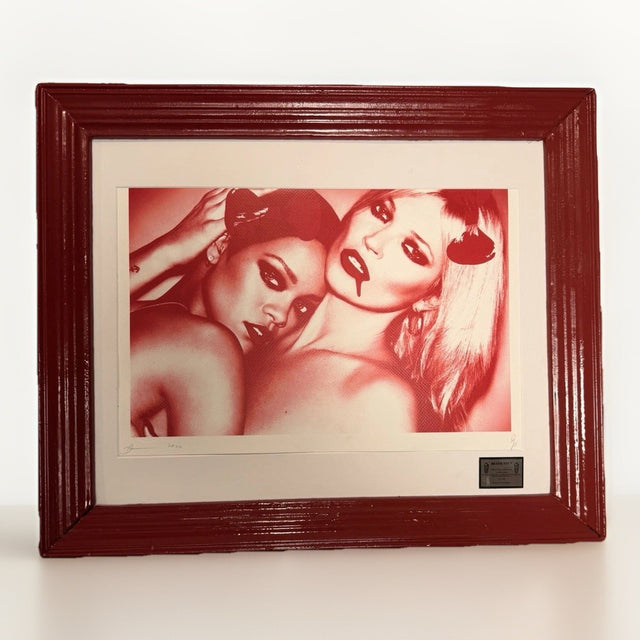
Death NYC — Kate Moss Rihanna Red Drip 2020 A/P Artist Proof Framed
$91.88 USD
-
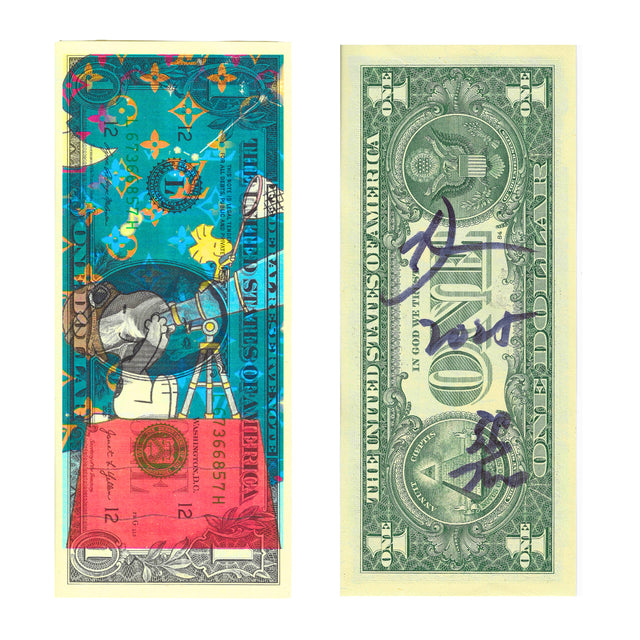
Death NYC Snoopy Woodstock Telescope LV Dollar Bill Art Signed Numbered COA
$55.00 USD
-
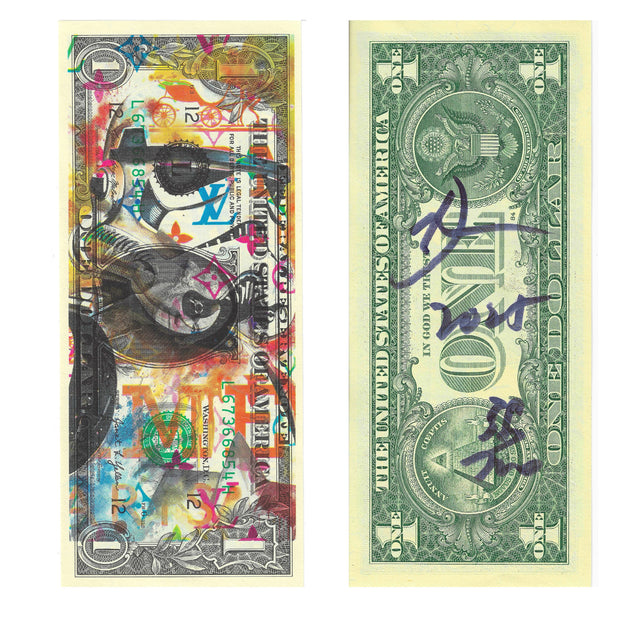
Death NYC Star Wars Stormtrooper LV Dollar Bill Art Signed Numbered COA
$55.00 USD
-
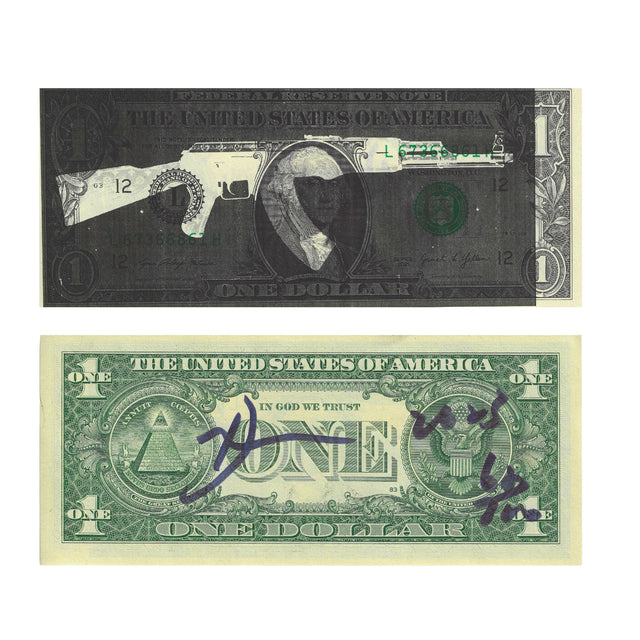
Death NYC Gun Dollar Bill Art Signed Numbered COA Black White Pop Street Art
$50.00 USD
-
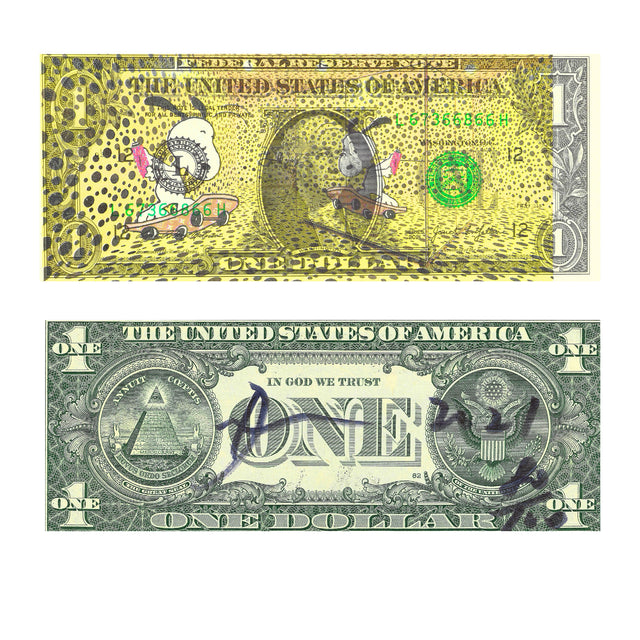
Death NYC Snoopy Skateboard Dollar Bill Art Signed Numbered COA Pop Street Art
$75.00 USD
-
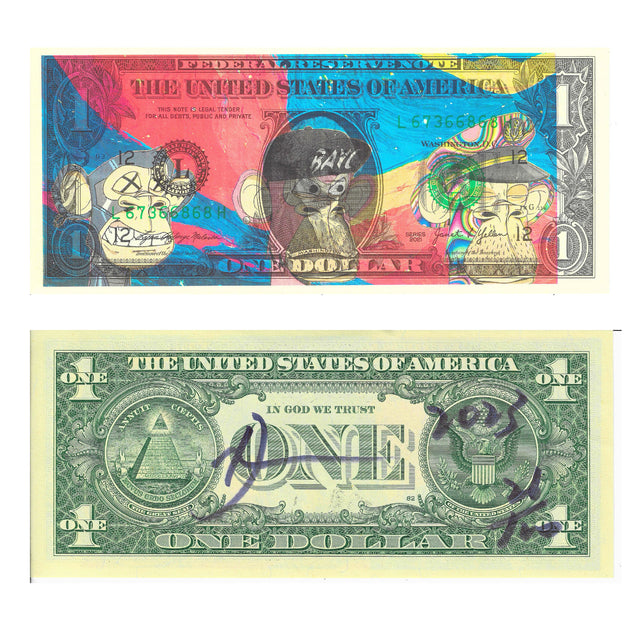
Death NYC Bored Ape Dollar Bill Art Signed Numbered COA Pop Street Art
$40.00 USD
Browse the collection for current listings.