Vinyl vs Chrome vs Wood vs Crystal vs Porcelain BE@RBRICKs: What's the Difference?
The difference between vinyl, chrome, wood, crystal, and porcelain BE@RBRICKs comes down to material, and material changes almost everything else about the figure. The vast majority of BE@RBRICKs are standard ABS/vinyl production pieces made in large runs, so they are the most affordable and the most durable. Chrome (metallic-plated), wood (typically Medicom's Karimoku collaborations), crystal (faceted, Swarovski-style), and porcelain/ceramic BE@RBRICKs are special-material releases produced in far smaller quantities. They command higher prices, are more fragile, and often require different care and display, but they follow the same iconic bear silhouette and the same 100% and 400% size language collectors already know.
Below we break down each material, how it affects rarity, price, fragility, size, authentication, and care, and give you a side-by-side comparison table so you can decide which kind of BE@RBRICK fits your collection and your budget.
First, what a BE@RBRICK actually is
BE@RBRICK (styled with the "@" but pronounced "bearbrick") is a bear-shaped collectible figure created by the Japanese company Medicom Toy, first released in 2001. Every BE@RBRICK shares the same instantly recognizable body: a rounded bear head, cylindrical torso, and blocky limbs with nine points of articulation. What changes from release to release is the surface — the artwork printed or molded onto it, and the material it is made from.
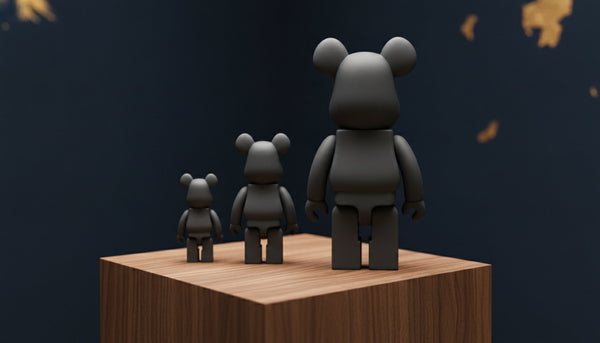
Medicom produces BE@RBRICKs across a standardized size system. Understanding those sizes matters because material availability differs by size, and so does price.
The BE@RBRICK size language
- 100% — roughly 7 cm (about 2.75 in) tall. The pocket-size standard, usually sold blind-boxed in series or paired with a 400%.
- 400% — roughly 28 cm (about 11 in). The most popular collector size and the one most special-material editions use.
- 1000% — roughly 70 cm (about 27.5 in). A large statement piece; commands the highest prices.
- 50%, 200%, 500% and others also exist for specific releases.
You'll frequently see figures sold as a 100% + 400% set. When you shop material variants, always confirm the percentage size and whether it's a single figure or a set, because that heavily affects value.
Standard vinyl (ABS) BE@RBRICKs: the baseline
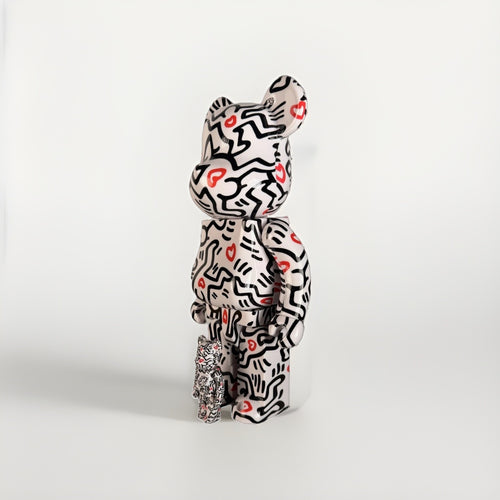
When most people picture a BE@RBRICK, they're picturing the standard production figure. These are molded primarily from ABS plastic with PVC/vinyl parts — a hard, lightweight, impact-resistant plastic that takes printed graphics and painted finishes exceptionally well. This is the canvas for the overwhelming majority of BE@RBRICK collaborations, from streetwear brands and musicians to fine-art estates and film franchises.
Why vinyl is the collector's baseline
- Availability: Produced in the largest runs, so entry prices are the most accessible and there's the deepest secondary market.
- Durability: ABS shrugs off minor bumps far better than crystal or porcelain. It's the most forgiving material to own and display.
- Artwork range: Nearly every notable BE@RBRICK collaboration exists in vinyl, so this is where you'll find the widest choice of designs.
- Liquidity: Because vinyl editions are the most traded, they're generally the easiest to buy and resell at transparent market prices.
Rarity within vinyl still varies enormously. A common series figure and a sought-after artist collaboration can be worlds apart in value even though both are "just" vinyl. With standard pieces, the design, the collaborator, the size, and the condition of the box drive price far more than the material itself.
Blind-box vs. standalone vinyl
A lot of 100% vinyl BE@RBRICKs are sold in blind-box series, where a mix of designs is distributed across sealed boxes and you don't know which figure you'll get until you open it. These series are a fun, affordable way in, and "chase" figures within a series — the rarer designs — can carry a premium. Larger 400% and 1000% vinyl pieces, by contrast, are usually sold as known, standalone releases, often tied to a specific collaboration. As a collector, knowing whether a figure came from a blind-box series or was a dedicated release helps you understand both its scarcity and how to verify it's complete and unopened.
Chrome and metallic BE@RBRICKs: the mirror finish
Chrome BE@RBRICKs take the standard ABS body and apply a metallic, mirror-like plated finish — most often a bright silver or gold chrome, sometimes iridescent or "rainbow" electroplating. The underlying figure is still plastic; the drama is entirely in the reflective surface.
What the chrome finish changes
- Look: A high-specular mirror surface that reflects its surroundings, making these superb display centerpieces under gallery lighting.
- Rarity and price: Chrome and metallic editions are typically limited relative to standard vinyl, so they usually sit above baseline vinyl in price — though still generally below wood, crystal, and porcelain grails.
- Fragility of the finish, not the body: The ABS core is durable, but the plated surface shows fingerprints, smudges, and fine scratches easily. A scuffed chrome coat is very visible and hard to restore.
If you love the metallic look, handle these with clean cotton gloves and keep them away from abrasive surfaces. The plastic will survive a knock; the mirror finish won't forgive one.
Wood BE@RBRICKs: the Karimoku craft pieces
Wood BE@RBRICKs are among the most respected special-material figures, and the name most associated with them is Karimoku — a heritage Japanese furniture maker whose collaborations with Medicom produce hand-finished wooden BE@RBRICKs. These are carved and assembled from real wood (oak and other hardwoods are common), showcasing natural grain, joinery, and a warm, tactile finish that plastic simply can't imitate.
Why wood pieces stand apart
- Craftsmanship: Each figure carries visible grain and hand-finishing, so no two are identical. This artisan quality is a big part of their appeal.
- Production scale: Wood editions are made in small quantities compared to vinyl, which supports stronger pricing and steadier demand among serious collectors.
- Size availability: Wood BE@RBRICKs commonly appear at 100%, 400%, and 1000%, sometimes as multi-wood or two-tone editions.
- Fragility: Wood can dent, chip at the joints, and is sensitive to humidity swings and direct sun, which can crack or fade the finish over time.
Because they're crafted objects rather than mass-molded ones, wood BE@RBRICKs reward buyers who care about provenance and condition. Original box and any accompanying documentation matter here.
Crystal BE@RBRICKs: faceted and light-catching
Crystal BE@RBRICKs are the jewel-box end of the spectrum. Produced in faceted, transparent crystal — including Swarovski-style cut-crystal collaborations — these figures refract light into prismatic sparkle and are among the most visually spectacular variants Medicom offers.
What to know before buying crystal
- Prestige and price: Crystal editions are typically produced in very limited numbers and sit at the premium end of the market, often alongside porcelain as grail-tier pieces.
- Weight and feel: Real crystal is dense and heavy, with a cool, glassy hand-feel that immediately reads as luxury.
- Fragility is real: Crystal is the most breakable material here. Chips, cracks, and internal fractures from a single drop can destroy value. Facet edges are especially vulnerable.
- Display: These reward dedicated lighting and a stable, cushioned shelf. Never crowd them against harder objects.
Crystal is a display-first material. If you handle it, handle it rarely and carefully, and keep the original protective packaging for storage and resale.
Porcelain and ceramic BE@RBRICKs: the fine-china variant
Porcelain (and broader ceramic) BE@RBRICKs bring a fine-china aesthetic to the format — smooth glazes, matte or satin surfaces, and sometimes traditional decorative techniques such as hand-painted patterns or metallic overglaze. They occupy a similar premium tier to crystal and wood, prized for their refined, gallery-object presence.
Porcelain characteristics
- Finish: A ceramic glaze gives a depth and softness of surface that plastic can't match; decorative editions can feel like collectible china.
- Rarity: Small production runs place these above standard vinyl, typically in the premium collector bracket.
- Fragility: Like crystal, porcelain can chip and shatter. Glaze can craze or scratch. It demands careful handling and stable display.
- Cleaning: Dust gently with a soft dry cloth or brush; avoid soaking, harsh chemicals, and abrasive contact that can damage the glaze.
How material changes display and presentation
One underrated difference between these materials is how they want to be displayed. Because BE@RBRICKs are as much design objects as collectibles, the right presentation can meaningfully change how a piece reads in a room — and, for premium editions, how well it holds condition over time.
- Vinyl is happy almost anywhere: open shelves, cabinets, or grouped in colorful clusters. Its durability means you can rotate and rearrange freely, which is why vinyl is ideal for larger, evolving collections.
- Chrome and metallic figures come alive under directional lighting — a spotlight or LED strip turns the mirror surface into a moving reflection of the room. Keep them on their own so fingerprints and dust are easy to manage, and consider a low-glare backdrop so the reflections read as intentional rather than busy.
- Wood pieces suit warm, natural settings — think wood shelving, neutral tones, and soft ambient light that flatters the grain. Avoid harsh direct sun, which can fade and dry the finish over months.
- Crystal is the ultimate display-case material. Behind glass, on a cushioned base, with focused lighting, a crystal BE@RBRICK becomes a centerpiece. The enclosure also protects it from the accidental knocks that are its biggest enemy.
- Porcelain reads like fine china and pairs beautifully with minimalist, gallery-style plinths or lit cabinets. Keep it away from high-traffic edges where a sleeve or elbow could catch it.
For grail-tier crystal and porcelain especially, a dedicated display case isn't just aesthetic — it's practical condition insurance. Dust management, UV control, and physical protection all extend the life and preserve the value of the most fragile materials.
Material comparison table
Use this as a quick-reference for how the five materials compare across the factors that matter most to collectors. Rarity and price are described in relative terms because exact figures vary enormously by specific edition, size, collaborator, and condition.
| Material | Typical rarity | Relative price | Fragility | Common sizes | Best for |
|---|---|---|---|---|---|
| Vinyl / ABS (standard) | Most common; largest runs | Most accessible baseline | Low — impact-resistant | 100%, 400%, 1000% | Entry, artwork range, easy resale |
| Chrome / metallic | Limited vs. vinyl | Above baseline vinyl | Body low; finish scratches/smudges easily | 100%, 400%, 1000% | Reflective display centerpieces |
| Wood (e.g., Karimoku) | Small artisan runs | Premium | Medium — dents, humidity-sensitive | 100%, 400%, 1000% | Craft-focused, provenance collectors |
| Crystal (Swarovski-style) | Very limited | High / grail-tier | High — chips and shatters | Often 100%, 400% | Luxury statement pieces |
| Porcelain / ceramic | Small runs | Premium / grail-tier | High — chips, glaze crazing | Often 100%, 400% | Fine-china aesthetic, display |
How material affects value and collecting strategy
Material sets a baseline, but it isn't the only lever on value. A standard vinyl BE@RBRICK from a landmark artist collaboration can outprice a special-material figure from a less-sought release. When you weigh a purchase, hold material alongside these factors:
- Collaborator / artwork: The name and design behind the figure is often the single biggest price driver, especially within vinyl.
- Size: 1000% pieces command the most; 400% is the collector sweet spot; 100% is the accessible entry point.
- Edition size: Smaller runs, common in wood, crystal, and porcelain, support stronger long-term demand.
- Condition and completeness: Original box, inserts, and any documentation matter a great deal — and matter more as fragility rises.
A sensible way to build a collection is to anchor with durable vinyl pieces you love, then add one or two special-material grails as display anchors once you're comfortable with careful handling and storage. For broader market context on how collectible categories move, our Financial Insights resource is a useful reference, and the Collector's Hub ties together our collecting fundamentals in one place.
Authentication and care by material
Special-material BE@RBRICKs are premium objects, which makes authentication and care especially important. The good news is that the core principles are consistent across every material.
Authentication fundamentals
- Buy on provenance and reputable sourcing. The most reliable protection is purchasing from a trusted dealer or a seller with a clear, verifiable history for the piece.
- Original packaging and documentation. Genuine BE@RBRICKs ship in edition-specific packaging; retaining the box and inserts supports authenticity and resale value.
- Third-party verification where applicable. At Gauntlet Gallery, eligible KAWS and BE@RBRICK figures are backed by TrueCOA certificates, giving you a tamper-proof record of authenticity you can verify online.
- Edition transparency. A trustworthy listing is clear about size (percentage), material, edition, and condition. Vague listings are a caution flag.
For a deeper walkthrough of what to check before you buy, see our BE@RBRICK buyer's guide, and browse authenticated inventory in the BE@RBRICK collection.
Care differences by material
- Vinyl / ABS: The most forgiving. Dust with a soft dry cloth; keep out of prolonged direct sun to avoid fading. Handles ordinary shelf life well.
- Chrome / metallic: Protect the finish. Use clean cotton gloves, avoid abrasive contact, and wipe gently to remove fingerprints without scratching the plating.
- Wood: Keep in stable humidity, away from radiators and direct sun; sudden dryness or moisture can crack or warp. Dust gently along the grain.
- Crystal: Display-first. Cushioned, stable shelving; handle rarely and never near hard objects. Store in original protective packaging when not displayed.
- Porcelain / ceramic: Dust with a soft dry brush or cloth; avoid soaking and harsh chemicals that damage glaze; guard against chips at edges and extremities.
Frequently asked questions
Are special-material BE@RBRICKs always worth more than vinyl?
Not always. Special materials like wood, crystal, and porcelain are usually made in smaller runs and typically carry premium prices, but a highly sought-after vinyl collaboration can be worth more than a less-desired special-material figure. Value depends on collaborator, artwork, size, edition size, and condition — material is only one factor.
Which BE@RBRICK material is the most fragile?
Crystal is generally the most fragile because it can chip, crack, or shatter from a single drop, with facet edges being especially vulnerable. Porcelain is similarly delicate. Wood sits in the middle (dents and humidity sensitivity), while standard vinyl/ABS is the most durable. Chrome bodies are durable, but the mirror finish scratches and smudges easily.
What sizes do special-material BE@RBRICKs come in?
BE@RBRICKs use a percentage size system: 100% (about 7 cm), 400% (about 28 cm), and 1000% (about 70 cm) are the most common, and figures are often sold as 100% + 400% sets. Special-material editions most frequently appear at 100% and 400%, with wood and some others also available at 1000%. Always confirm the exact size and whether it's a single figure or a set before buying.
Do BE@RBRICKs come with a certificate of authenticity?
It depends on the source. At Gauntlet Gallery, eligible KAWS and BE@RBRICK figures are backed by TrueCOA certificates, providing a tamper-proof authenticity record verifiable online. Beyond any certificate, always buy from reputable sources, insist on original packaging, and look for edition transparency about size, material, and condition.
Is the "chrome" on a chrome BE@RBRICK real metal?
No. Chrome and metallic BE@RBRICKs are standard ABS/vinyl figures finished with a metallic, mirror-like plated surface. The body is still plastic and impact-resistant, but the plated coating shows fingerprints and fine scratches easily, so it should be handled with clean gloves and kept away from abrasive surfaces.
How should I choose between materials as a new collector?
Start with durable vinyl pieces featuring artwork or collaborators you genuinely love — they're accessible, easy to display, and easy to resell. Once you're comfortable with careful handling and storage, add one or two special-material grails (wood, crystal, or porcelain) as display anchors. Prioritize condition, original packaging, and reputable sourcing at every price point.
Buy & authenticate with confidence
Whether you're drawn to a durable everyday vinyl figure, a mirror-finish chrome centerpiece, a hand-crafted Karimoku wood piece, or a grail-tier crystal or porcelain edition, the smart-collector playbook is the same: buy on provenance, insist on original packaging and edition transparency, and lean on third-party verification where it's available. Browse authenticated pieces in our BE@RBRICK collection, learn the finer points in the BE@RBRICK buyer's guide, and ground your decisions with the Collector's Hub, our library of buyer's guides, and market context in Financial Insights. Ready to explore the wider catalog? Start with everything we currently offer.