How Collectors Evaluate Shepard Fairey Political Prints
To evaluate a Shepard Fairey political print, a collector should weigh five things: the edition type (hand-signed and numbered versus open or unsigned), rarity and release size, physical condition, cultural significance within Fairey's body of activist work, and — most importantly for Fairey specifically — provenance. Fairey does not issue his own certificates of authenticity and there is no artist-run authentication board, so confidence comes from a clean chain of ownership and a reputable dealer or gallery rather than a slip of paper. Signed, low-edition prints tied to a landmark campaign (like Hope) and in excellent condition command the strongest and most durable value; open-edition or unsigned reproductions are affordable entry points but appreciate far more slowly.
This guide walks through exactly how to assess a Fairey political print — what to look at, what questions to ask a seller, and how to think about value — so you can buy with confidence whether you are spending double digits or five figures.
Why Shepard Fairey's political work matters to collectors
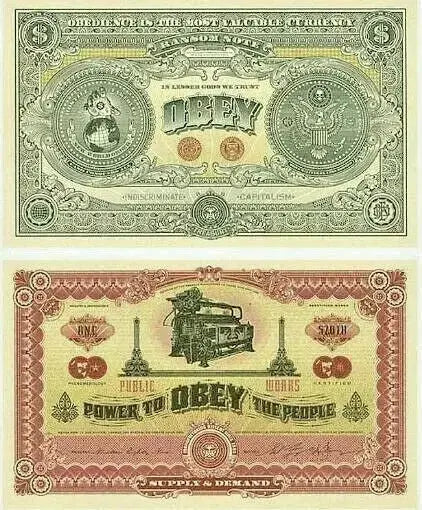
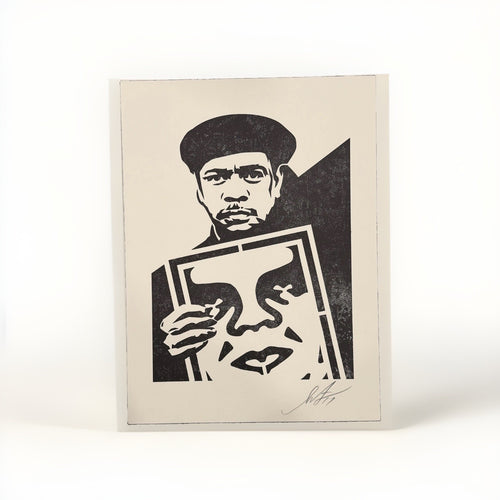
Shepard Fairey is one of the most recognizable political artists of the last three decades. He built his name on the OBEY Giant street-art campaign in the late 1980s and 1990s — a deliberately ambiguous propaganda experiment about obedience, advertising, and attention — and then became a household name in 2008 with the Hope portrait of Barack Obama, which grew into one of the defining political images of its era.
What makes his catalog compelling for collectors is that the political message is the product. Fairey's prints function as visual arguments, and over the years his subjects have spanned a consistent set of activist themes:
- Electoral participation and democracy — voting-drive imagery, get-out-the-vote posters, and campaign-adjacent portraits.
- Peace and anti-war messaging — recurring doves, peace iconography, and militarism critiques.
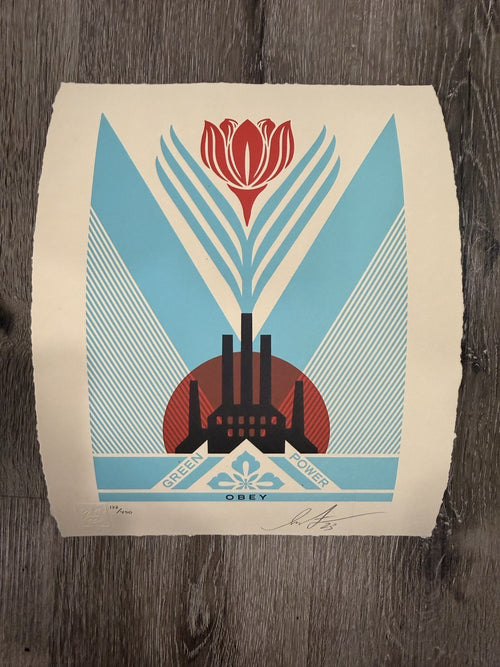
- Climate and environmental advocacy — earth-, energy-, and sustainability-themed editions.
- Civil rights, equality, and social justice — portraits and slogans supporting marginalized communities and protest movements.
- Public health and awareness — imagery produced for causes and fundraisers, including AIDS awareness and community health efforts.
- Media literacy and dissent — the OBEY lineage, which critiques propaganda even as it borrows its visual language.
Because these themes recur across decades, a collector is really evaluating where a given print sits inside a large, interconnected body of work — and how strongly it captures a moment. That context is the backbone of value.
It also helps to understand Fairey's method, because it shapes what you are actually collecting. His political prints borrow the visual grammar of twentieth-century propaganda — bold flat color (his signature red, cream, and black), strong central portraits or icons, decorative borders, and slogan-driven layouts — and turn it toward causes he supports or systems he critiques. That deliberate echo of Constructivist and agitprop design is why his work reads as instantly "political" even before you register the subject. For a collector, it means the strongest pieces are usually the ones where image and message are most tightly fused: a portrait that became shorthand for a movement, or a slogan that outlived the campaign that produced it. Peripheral or purely decorative editions, however attractive, tend to trail those anchor images in both recognition and price.
The five factors that determine a Fairey print's value
When you assess any Fairey political print, run it through five lenses. No single factor decides value on its own; they compound.
1. Edition type: signed and numbered vs. open or unsigned
Edition structure is usually the single biggest driver of price. Fairey releases work in several formats, and the difference between them is significant:
- Hand-signed, numbered limited editions — signed in pencil and numbered (for example, a numbered position out of a stated edition). These are the most sought-after and hold value best.
- Signed open editions — signed but not numbered, or produced in larger quantities. Still desirable, but more available.
- Unsigned open editions and prints — affordable and widely distributed; a great way to own an image, but slower to appreciate.
- Larger fine-art formats — hand-finished works, screenprints on wood or metal (HPM — hand-painted multiples), and collaborations, which sit at the top of the market.
The practical takeaway: confirm precisely which edition format you are being offered. "Signed and numbered" versus "open edition" can mean a large difference in both price and long-term appreciation. If a seller cannot tell you the edition type clearly, treat that as a yellow flag.
2. Rarity and edition size
Smaller editions are, all else equal, more collectible. Many of Fairey's most coveted political prints were released in limited numbers and sold out quickly on release day, which is why the secondary market for them is active. When weighing rarity, consider:
- Stated edition size — smaller runs concentrate demand.
- Release channel — timed online "drops," benefit editions, and event-only releases can be scarcer than standard catalog prints.
- Variants — color variants, artist-proof (AP) or printer's-proof designations, and special papers can be rarer than the standard edition.
- Survivorship — political posters were often used, folded, or posted, so clean surviving examples of older work are scarcer than the original print run implies.
Rather than memorize specific edition numbers (which vary release to release), verify the exact stated edition size for the specific print in front of you against a reliable reference before you assign it a "rarity premium."
3. Condition
Condition can swing value dramatically, especially for older political work that lived on the street. Evaluate the physical object carefully:
- Surface — look for creases, folds, scuffs, and ink rubbing. Screenprints show handling.
- Paper health — check for foxing (spotting), toning/yellowing, water stains, and light damage.
- Edges and corners — dings, tears, and trimmed margins reduce value; full original margins are preferred.
- Framing history — prints hinged with acid-free materials and UV glazing fare better; tape residue or mat burn is a negative.
- Restoration — professional flattening or repairs should be disclosed; undisclosed restoration is a problem.
Ask for high-resolution photos in raking light and, for higher-value pieces, a condition report. "Mint" and "near-mint" examples justify premiums; anything with visible damage should be priced accordingly.
4. Cultural significance
Two prints in identical condition and edition size can carry very different values because one captures a more iconic moment. Cultural weight is real, if harder to quantify. Consider:
- Landmark status — images tied to a defining campaign or movement (the Hope lineage being the obvious example) carry outsized recognition.
- Historical timing — prints released in direct response to a specific election, protest, or event have documentary value.
- Exhibition and publication history — work shown in institutions or reproduced in major books gains stature.
- Series importance — a print that anchors a well-known series or theme tends to outperform peripheral pieces.
5. Provenance — the decisive factor for Fairey
For most artists, provenance is one factor among several. For Fairey it is arguably the factor, because of how his authentication works (covered in the next section). Strong provenance means a documented, believable chain of custody: who released it, who sold it, and who has owned it since. Purchase records, original release confirmations, gallery invoices, and consistent seller history all build the case. Weak or absent provenance is the most common reason to walk away.
| Factor | What to check | Value impact |
|---|---|---|
| Edition type | Signed + numbered vs. signed open vs. unsigned | Very high |
| Rarity / edition size | Stated run size, variants, proofs, release channel | High |
| Condition | Creases, foxing, margins, framing, restoration | High |
| Cultural significance | Iconic status, timing, exhibition history | Medium–High |
| Provenance | Documented chain of ownership + reputable source | Decisive for Fairey |
How Shepard Fairey authentication actually works
This is where many new collectors get tripped up, so it deserves a clear answer: Shepard Fairey does not issue certificates of authenticity for his prints, and there is no artist-run authentication service or board that stamps his work. Authentication of a Fairey print is "silent" — it rests on provenance and the reputation of the seller, not on a COA from the artist's studio.
That has several practical consequences:
- Be skeptical of "official artist COA" claims. A certificate purporting to come from Fairey or a Fairey "authentication authority" is a reason for more caution, not less, because that is not how his market works.
- Trust the chain, not the paper. The strongest assurance is a clean provenance trail from a release you can verify, sold through dealers and galleries with a track record.
- Buy the seller as much as the print. With silent authentication, the credibility of the person or gallery you are buying from does a lot of the work a COA would do for other artists.
- Compare to known references. Confirm the image, colorway, paper, size, and signature placement against a reliable catalog or index of Fairey releases before purchase.
Importantly, do not mix authentication chains between artists. Fairey's silent model is specific to him. Other names we handle work differently — for example, DEATH NYC prints ship with their own certificate and gold seal, KAWS and BE@RBRICK collectibles rely on packaging, holograms, and verifiable certificates such as TrueCOA where applicable, and signed music memorabilia relies on established third-party authenticators. Applying another artist's authentication expectations to a Fairey print — or vice versa — is a common and costly mistake.
What a healthy Fairey provenance trail looks like
- A clear identification of the exact print (title, year, edition format, size).
- A credible account of the original release (how and where it was first sold).
- Documentation where it exists — original purchase records, gallery invoices, or consignment paperwork.
- A reputable current seller who stands behind the piece and accepts scrutiny.
- Consistency across all of the above — the story, the object, and the references should agree.
How to buy — and how to think about value
Once you understand the five factors and the silent-authentication reality, buying becomes a disciplined process rather than a gamble.
Where to buy
- Reputable dealers and galleries — the safest route for silent-authentication artists, because their reputation is the guarantee.
- Official release drops — buying on release day (when available) gives you the cleanest possible provenance: you are the first owner.
- Established auction houses and vetted secondary platforms — workable if condition and provenance are clearly documented.
- Open marketplaces — usable, but require the most diligence on provenance, condition photos, and seller history.
How to value what you're looking at
Value a Fairey political print by triangulating comparable sales — the same or closely related edition, in similar condition — rather than anchoring on a single listing. Because prices vary widely by edition and condition, think in ranges, not fixed numbers:
- Unsigned open editions tend to be the most accessible entry point.
- Signed open editions carry a premium over unsigned versions of the same image.
- Signed, numbered limited editions sit higher again, especially for iconic subjects and small runs.
- Hand-finished works, HPMs, and major collaborations occupy the top of the market.
Actual figures move with the specific print, its condition, and the moment — so use current comparable sales and market context rather than a rule of thumb. For a broader view of how contemporary print values behave over time, our Financial Insights resource is a useful companion when you're pressure-testing a price.
A few habits separate confident buyers from hopeful ones. First, weight recency: the market for contemporary prints can move quickly, so a sale from years ago is weaker evidence than a comparable sale from the last several months. Second, adjust for condition honestly — a "sold" price you found almost certainly reflects that specific example's condition, which may be better or worse than the one you're considering. Third, treat outliers with suspicion in both directions; one unusually high result does not set a new floor, and one bargain does not mean you're overpaying elsewhere. Finally, factor in the friction of resale — fees, shipping, and the time it takes to find the right buyer — so your sense of value reflects what a piece is realistically worth to you, not just its headline number.
None of this requires you to become a full-time appraiser. It simply means anchoring your decision in evidence rather than enthusiasm, and being willing to pass when the provenance, condition, or price doesn't hold up. With Fairey specifically, the discipline of verifying edition type and provenance before you fall in love with an image is what protects you.
A practical evaluation checklist
- Identify the exact print — title, year, edition format, size, and colorway. Match it against a reliable reference such as our Shepard Fairey index.
- Confirm the edition type — signed and numbered, signed open, or unsigned? Get this in writing.
- Verify rarity — stated edition size, proofs/variants, and release channel.
- Inspect condition — request raking-light photos; look for creases, foxing, toning, trimmed margins, and framing damage.
- Assess cultural significance — how central is this image to Fairey's political work and to its moment?
- Scrutinize provenance — who released it, who sold it, and can the chain be substantiated?
- Vet the seller — reputation and willingness to answer questions matter more here than a certificate.
- Be wary of "official Fairey COA" claims — remember authentication is silent; provenance is king.
- Triangulate value — compare recent sales of the same or similar edition in similar condition.
- Buy from a source you'd return to — the best protection is a dealer who stands behind the piece.
Frequently asked questions
Does Shepard Fairey provide a certificate of authenticity?
No. Shepard Fairey does not issue his own certificates of authenticity, and there is no artist-run authentication board for his prints. Authentication is "silent," meaning it rests on documented provenance and the reputation of the dealer or gallery you buy from. Be cautious of any listing claiming an "official Fairey COA," because that is not how his market works.
What is the most important thing when buying a Fairey political print?
Provenance and seller reputation. Because there is no artist COA, a clean, believable chain of ownership from a credible source is the single strongest form of assurance — more so than for artists who authenticate through certificates or third-party services.
Are signed Shepard Fairey prints worth more than unsigned ones?
Generally, yes. Hand-signed prints — especially signed and numbered limited editions — typically command a premium and hold value better than unsigned open editions of the same image. Edition type is usually the biggest single driver of price, alongside rarity and condition.
How can I tell if a Fairey print is a good investment?
Look for the combination of a signed, low-edition format, an iconic or historically significant image, excellent condition, and strong provenance. Then triangulate value using recent comparable sales rather than a single listing. No single factor guarantees appreciation, but pieces that score well across all of them tend to be the most durable.
Where should I buy Shepard Fairey political prints?
For silent-authentication artists like Fairey, reputable dealers and galleries are the safest route, followed by official release drops (which give you first-owner provenance) and well-documented auction or secondary sales. Open marketplaces can work but require the most diligence on condition and provenance.
How do I check the condition of a Fairey print before buying?
Request high-resolution photos in raking light and, for higher-value pieces, a formal condition report. Check for creases, folds, foxing, toning, water damage, trimmed margins, and framing issues such as tape residue or mat burn. Full original margins and undamaged surfaces justify premiums.
Buy & authenticate with confidence
Evaluating a Shepard Fairey political print comes down to disciplined checks — edition type, rarity, condition, cultural significance, and above all provenance — paired with a clear understanding that Fairey's authentication is silent and rests on dealer trust rather than an artist certificate. If you apply the checklist above and buy from a source that stands behind its work, you can collect his political prints with real confidence. Explore our authenticated Shepard Fairey collection, go deeper with the Shepard Fairey buyer's guide, and browse the full Fairey index to identify and compare specific prints. For broader collecting fundamentals, visit our collector hub and library of buyer's guides.