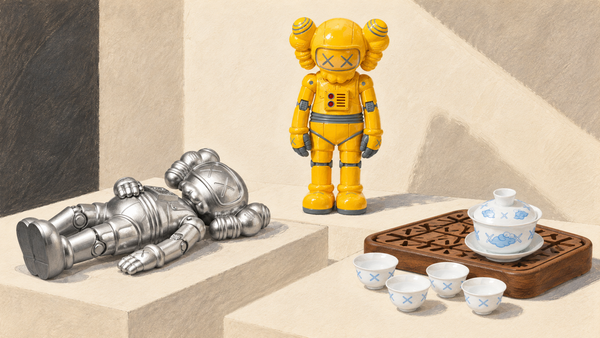
For collectors navigating the expansive universe of KAWS, understanding the historical context and standout releases from specific years is crucial. In this article, we delve into the Gauntlet Gallery KAWS Figurines Index for 2006 to identify which figures from that pivotal year rise to the top and why they continue to capture collector interest. This is a select guide, focusing on the highest-ranking entries in our index, and does not claim to encompass every KAWS release from 2006. Our aim is to provide a precise, collector-to-collector perspective on these significant pieces, framing their index values as reference points rather than guaranteed appraisals or resale estimates.
Understanding the Gauntlet Gallery KAWS Figurines Index
The Gauntlet Gallery KAWS Figurines Index serves as a comprehensive collector reference, meticulously tracking historical data points for various KAWS releases. It is designed to offer insights into the relative standing and historical significance of figures within the collecting community, based on observed market activity and available information. It is imperative to understand that an index value is a reference point derived from past observations, not an appraisal, a guarantee of future value, or a resale price. Market dynamics for collectible art toys are fluid, influenced by numerous factors beyond historical data, including condition, provenance, and current demand.
Each entry in our index includes several key data points: 'evidence' (the observed index reference value or range), 'method' (how the evidence was gathered, e.g., 'obs' for observed directly, 'pool' for pooled data), 'confidence' (our assessment of the data's robustness, 'r' for robust, 'y' for yellow/caution), and 'sales' (the number of observed sales contributing to the data). A 'pool' method, especially when combined with 'y' confidence or a low 'sales' count, indicates that the data relies on a broader aggregation of information, potentially including estimates or less direct observations, and should be considered with appropriate caution. This transparency is vital for collectors making informed decisions.
Our index is a tool for historical context and comparative analysis, aiding collectors in understanding the landscape of KAWS releases. It should always be used in conjunction with thorough personal research and, where appropriate, expert consultation.
The Top KAWS Figures of 2006: A Closer Look
The year 2006 was significant for KAWS, marking a period of evolving collaborations and foundational releases that would shape his trajectory in the art toy world. Based on the Gauntlet Gallery KAWS Figurines Index, the following figures represent the top entries from that year, reflecting their historical standing and collector interest:
| Rank | Name | Colorway | Maker | Size | Index Reference Value |
|---|---|---|---|---|---|
| 1 | Skull Kun — Red | Red | Medicom / OriginalFake / Bounty Hunter | 7 in | $2,098 |
| 2 | The Twins — Pink | Pink | Medicom (KAWS x Todd James / REAS) | 8.25 in | $260–$875 |
| 3 | Pushead Companion — Silver | Silver | OriginalFake / Medicom x Pushead | 10.5 in | $318–$999 |
Deep Dive into the 2006 Standouts
Each of these figures carries a distinct narrative and significance within KAWS's body of work, offering collectors unique points of interest.
Skull Kun — Red (Rank 1)
Topping our 2006 index is the Skull Kun — Red figure, a 7-inch piece resulting from a notable collaboration between Medicom, OriginalFake, and Bounty Hunter. Its index reference value of $2,098, derived from an 'obs' (observed) method with 'r' (robust) confidence based on 1 recorded sale, places it at the pinnacle for the year. This figure's high standing reflects its unique position as an early collaborative effort involving multiple influential entities in the designer toy scene. The Skull Kun design itself is a distinctive departure from KAWS's more widely known Companion or BFF figures, showcasing a different facet of his collaborative spirit and aesthetic exploration during this formative period. For collectors, the Skull Kun — Red represents a piece of KAWS history that highlights his engagement with diverse creative partners and his willingness to reinterpret existing motifs within the art toy landscape. Its robust index value, even with a single observed sale, suggests a strong historical recognition of its significance.
The Twins — Pink (Rank 2)
Following closely, The Twins — Pink, an 8.25-inch figure produced by Medicom in collaboration with Todd James (REAS), holds the second rank. With an index reference range of $260–$875, based on an 'obs' method with 'y' (yellow/caution) confidence from 5 observed sales, this piece illustrates the dynamic nature of early KAWS collaborations. The Twins figures are particularly interesting as they represent a direct artistic dialogue between KAWS and Todd James, two influential figures in contemporary art and street culture. The 'y' confidence, while indicating a degree of caution, is balanced by the observation of 5 sales, providing a broader base of historical data compared to the Skull Kun. The Pink colorway adds to its distinctiveness, often appealing to collectors who appreciate specific aesthetic choices within KAWS's diverse palette. This figure is a testament to the cross-pollination of ideas that defined much of KAWS's early output, making it a noteworthy item for those interested in the artist's collaborative journey and the broader context of urban art.
Pushead Companion — Silver (Rank 3)
Securing the third position is the Pushead Companion — Silver, a 10.5-inch figure from OriginalFake and Medicom, created in collaboration with the iconic artist Pushead. Its index reference range of $318–$999, derived from a 'pool' method with 'y' (yellow/caution) confidence and 0 recorded sales, requires a careful interpretation. The 'pool' method signifies that its index value is based on aggregated historical data, which may include estimates or less direct observations, rather than confirmed individual sales. The 'y' confidence further advises caution, particularly given the absence of direct sales data in the index. Despite this, the Pushead Companion holds significant historical weight due to the involvement of Pushead, whose distinctive graphic style has left an indelible mark on punk, metal, and skate cultures. This collaboration brought a unique, often darker and more intricate aesthetic to the classic Companion silhouette, making it a highly sought-after piece for collectors who value the fusion of KAWS's design with Pushead's iconic artistry. The figure's ranking, even with pooled evidence, underscores its recognized importance within the KAWS collecting sphere, reflecting its cultural resonance and the enduring appeal of such cross-disciplinary projects.
The Enduring Appeal of 2006 KAWS Releases
The figures from 2006, as highlighted by our index, offer a fascinating glimpse into a crucial period of KAWS's artistic development. This era saw the artist solidify his presence in the art toy world, moving beyond limited graffiti releases to more structured, yet still highly experimental, collaborations with established makers and fellow artists. Collectors are often drawn to these early pieces for several reasons:
- Historical Significance: They represent foundational moments in KAWS's career, showcasing his evolving style and initial forays into diverse collaborative projects.
- Collaborative Depth: The partnerships with entities like Bounty Hunter, Todd James, and Pushead underscore KAWS's ability to integrate his vision with other influential creative forces.
- Distinctive Designs: Many 2006 releases possess unique characteristics that differentiate them from later, more mass-produced figures, appealing to those seeking rarity and artistic individuality.
- Condition and Provenance: As with any collectible, the condition of these older figures and their documented history (provenance) significantly impact their desirability.
“Collecting KAWS figures from this era is not merely about acquiring objects; it is about preserving a tangible record of a pivotal moment in contemporary art and design, where street art sensibilities began to profoundly influence the collectible toy market.”
The appeal lies in owning a piece of this artistic journey, understanding the context of its creation, and appreciating the craftsmanship involved in these early Medicom and OriginalFake productions. For a broader understanding of KAWS collecting, consider exploring our KAWS Figurines Index.
Authenticity and Provenance for Vintage KAWS
When considering the acquisition of KAWS figures from 2006 or earlier, the importance of authenticity and provenance cannot be overstated. Given the age of these releases, collectors must exercise diligence. Unlike some newer releases, older KAWS figures do not come with a universal artist-issued Certificate of Authenticity (COA). Therefore, a multi-faceted approach to verification is essential.
Key considerations for authenticating vintage KAWS figures include:
- Provenance: A clear and documented history of ownership, ideally tracing back to the original purchase, is invaluable. This can include original receipts, emails, or photographic evidence from reputable sources.
- Original Packaging: The presence of original packaging, complete with any stickers, labels, or inserts, provides crucial clues. Familiarity with the packaging styles and details from 2006 productions is vital.
- Release Details: Understanding the specific release details for the figure in question—its maker, size, colorway, and any unique markings—is fundamental. Discrepancies here can be red flags.
- Physical Inspection: A thorough physical examination of the figure itself is paramount. This includes assessing the quality of the sculpt, paint application, materials, and any specific artist or maker marks. Fakes often exhibit inferior craftsmanship, incorrect colors, or subtle differences in proportion.
Newer KAWS releases lean on hologram stickers, packaging quality, and documented release records for authentication; for figures released in 2006, relying on traditional methods of verification, combined with expert opinion, is often the most reliable path for older pieces. For a comprehensive guide on identifying counterfeit KAWS figures, we recommend consulting our detailed article: How to Spot Fake KAWS Figures: A Complete Guide.
FAQ: Frequently Asked Questions
How are Gauntlet Gallery KAWS Figurines Index values determined?
Gauntlet Gallery KAWS Figurines Index values are determined through a rigorous process of observing historical market activity, including past sales data, reputable collector discussions, and expert insights. Each entry includes an 'evidence' field, which provides the observed index reference value or range; a 'method' field, indicating whether the data was 'obs' (observed directly) or 'pool' (pooled from various sources); and a 'confidence' rating ('r' for robust, 'y' for caution) reflecting the reliability of the underlying data. The 'sales' count indicates the number of specific transactions contributing to the observed data. It's a historical reference, not a live market price.
Does an index value guarantee a resale price?
No, an index value does not guarantee a resale price. The Gauntlet Gallery KAWS Figurines Index provides historical reference points based on past observations. The actual resale value of a KAWS figure is subject to numerous fluctuating market conditions, including the figure's condition, its provenance, current collector demand, the economic climate, and the specific sales channel. Index values are tools for informed understanding of historical context, not predictions or guarantees of future market performance.
What makes a 2006 KAWS figure particularly collectible?
2006 KAWS figures are particularly collectible due to their historical significance as early releases during a pivotal period in KAWS's career. Many feature notable collaborations with other artists and brands, showcasing unique designs that predate some of his more widely recognized later works. Their relative scarcity compared to more recent productions, combined with the artistic and cultural impact of the collaborations, contributes to their enduring appeal. Collectors often value these pieces for their place in the artist's evolving narrative and the distinct aesthetic they represent.
Navigating the KAWS Collector's Landscape
The 2006 KAWS figures discussed here represent just a fraction of the artist's prolific output, yet they stand as significant markers in his journey. For collectors, understanding these early releases provides invaluable context for appreciating the broader KAWS universe. Whether you are a seasoned collector or new to the world of KAWS, informed decision-making is paramount. We encourage you to continue exploring the rich history and diverse offerings within the KAWS collection. Dive deeper into the figures that resonate with you, research their backgrounds, and appreciate the artistry involved. For further exploration of KAWS figures and collecting resources, please visit our KAWS Figurines Index, consult our comprehensive KAWS Buyer's Guide, or browse our curated selection of KAWS collectibles and figurines. Happy collecting!