When a Piece of Paper Is Worth More Than the Rocket
There is a moment in every serious collector's education when they stop thinking about space memorabilia as souvenirs and start thinking about it as primary source material.
That shift changes everything.
A signed crew photograph is a nice object. A flight-certified checklist with mission commander annotations is a historical document — and the market treats those two things very differently. One appreciates with the fame of the astronaut. The other appreciates with the scarcity of the historical moment itself.
Understanding why some space items trade like documents rather than collectibles is the single most important conceptual upgrade a collector in this category can make.
The Document Logic of Space Collecting
Think about how the market prices a letter signed by Abraham Lincoln versus a photograph of Abraham Lincoln.
The letter — especially one with substantive content written in his own hand — commands multiples. Not because it is older or rarer in an abstract sense. Because it is evidence. It participated in history. It was present when decisions were made.
Space artifacts operate on an identical logic.
A flown document — meaning a piece of paper that traveled to the Moon, orbited Earth during a specific mission, or sat on the instrument panel of a spacecraft — is not simply autographed. It is primary source material for one of the defining technological achievements of the twentieth century. The market prices it accordingly.
This is why an Apollo-era onboard checklist with mission-specific crew annotations can trade at a level that surprises collectors who only track the signed photograph market. The checklist was there. The photograph was produced afterward.
What "Flown" Actually Means
The word "flown" gets used loosely in casual sales and that looseness costs buyers money.
In proper market terminology, "flown" means the item was aboard a crewed or uncrewed spacecraft during an actual mission. Not transported to the launch site. Not present in the control room. Not carried by the astronaut in a personal bag that was left on the ground.
Certified flown status typically requires:
- NASA documentation — original or certified agency records establishing the item's manifest or crew-carry authorization
- Chain of custody — documented transfer from NASA custody, often through official programs that permitted crew to retain small personal items
- Authentication letter from a recognized specialist — not a generalist autograph service but a specialist in space material; in this market, Zarelli specialist letters carry significant weight alongside BAS, JSA, and PSA/DNA review
If you cannot establish all three, you have an item with a story. You do not have a certified flown piece. And the market prices the difference at multiples.
The Three Classes of Space Documents
Not all paper is equal. Serious collectors track three distinct classes of space-related documents, and each class has different authentication requirements and market behavior.
Class One: Mission-Flown Paper
The highest tier. Checklists, flight plans, navigation data cards, star charts, and technical documents that traveled aboard the spacecraft. These items carry the most rigorous authentication burden and command the strongest market response.
The provenance chain for Class One items typically runs: mission → NASA custody → crew personal property disposition → documented first sale → subsequent transfers. Every gap in that chain is a valuation discount. A clean, unbroken chain is where the serious premium lives.
Apollo-era Class One documents are particularly significant because the program has closed history. No new primary material enters the market. Supply is fixed. This is a fundamental difference from living artists or ongoing programs where new material is continuously produced.
Class Two: Mission-Support Documents
Ground-control documentation, flight director logs, engineering signoff sheets, training materials used in actual mission preparation, and internal NASA correspondence directly tied to specific missions.
These did not fly. But they participated in mission decision-making at the institutional level. Authenticated mission-support documents — particularly those with handwritten annotations from named flight directors or senior engineers — trade significantly above generic NASA paper.
The analogy is not Lincoln's personal letters versus a telegram sent in his name. It is closer to Lincoln's handwritten speech drafts versus the final printed proclamation. Both are historically significant. The handwritten draft with edits shows process. The market prices process.
Class Three: Program-Era Documents
Technical manuals, engineering specifications, press kits, training documents, and internal reports from the Apollo, Mercury, and Gemini programs that are historically significant but not mission-specific. These represent the institutional knowledge base of the space program.
This is the entry tier for document collecting, but it is also where some of the most interesting material sits for the research-oriented collector. Annotated training documents signed by astronauts who later flew the missions referenced in those documents occupy an interesting middle position — they blur the line between Class Two and Class Three.
Why Authentication Is More Complex Here Than Anywhere Else
In the broader autograph and memorabilia market, authentication is primarily a question of signature verification. Did this person sign this item?
Space document authentication adds two additional layers that most authentication services are simply not equipped to evaluate.
Layer One: Provenance Establishment
For flown material, authentication requires establishing not just who signed something but where it physically was during a specific window of time. That is a historical research problem, not a handwriting analysis problem.
This is why generalist autograph services — even respected ones — are insufficient as the sole authentication for high-value space documents. A PSA/DNA or BAS authentication confirms the signature. It does not confirm the flight status. Those are separate questions requiring separate expertise.
Zarelli specialist evaluation exists precisely because the space memorabilia market recognized this gap. The specialist letter addresses flight status, provenance chain, and historical context in ways that a signature-focused service cannot.
Layer Two: Document Integrity
Original mission documents are not photocopies, reproductions, or facsimiles. The paper itself — weight, composition, printing method, form number, and condition relative to expected mission use — is part of the authentication question.
Mission checklists show specific kinds of wear. Pages that were actually used during spaceflight show handling patterns consistent with use in a pressurized suit environment. Documents that have been stored flat for decades without mission use show different condition profiles.
Can a generalist authenticator evaluate all of this without deep familiarity with the specific document types from specific missions?
The answer is self-evidently no. Which is why the authentication stack for high-value space documents runs: BAS or JSA or PSA/DNA for signature verification, Zarelli or equivalent specialist letter for flight status and document integrity, and independent provenance research where the chain requires gap-filling.
The Role of NASA's Own Records
One resource that separates serious space document collectors from casual buyers is direct engagement with NASA's archival record.
NASA maintains extensive documentation of mission manifests, crew personal item authorizations, and equipment accountability records. These records are in principle accessible through the Freedom of Information Act and through the NASA History Division. In practice, the accessibility varies by program era and record type.
For Apollo-era material, significant records have been declassified and archived. The National Archives and Records Administration holds substantial NASA documentation. Major auction houses handling high-value Apollo material typically commission independent research into these records as part of lot preparation.
When you are evaluating a significant space document purchase, the presence of documented NASA record cross-referencing is a positive signal. Its absence is not automatically disqualifying, but it is a question to ask.
What does the seller know about the document's appearance in NASA's own records, and what has been done to research it?
If the answer is nothing, that tells you something about the seriousness of the research behind the provenance claim.
How Space Documents Trade: The Market Mechanics
Understanding why space documents trade at the levels they do requires understanding what they are competing with at auction.
In the broader historical document market, Apollo-era flown material sits in the same conceptual tier as signed documents from presidents, major war correspondence, and foundational scientific manuscripts. These are primary sources for events that changed history.
The collector base for serious space documents includes institutional buyers — universities, private museums, corporate collections — as well as individual collectors. Institutional buyers bring different price tolerance and longer time horizons than individual collectors, which creates a floor under serious material.
Several factors drive premium pricing in this market:
- Mission significance — Apollo 11 material consistently commands a premium over later Apollo missions because it represents the first lunar landing. The historical hierarchy matters.
- Named crew connection — documents with direct, documented connection to specific crew members, particularly mission commanders, carry higher premiums than generic mission documents
- Annotation density — a checklist with mission-specific handwritten annotations tells more of the story than a clean, unuse copy
- Authentication quality — clean, multi-layer authentication with documented provenance chain trades at a premium to lightly authenticated material in the same subject tier
- Fixed historical supply — unlike living artists or ongoing programs, Apollo is closed; the total universe of genuine primary material is knowable and finite
The Forgery Problem Is Real
The space memorabilia market has a forgery problem, and collectors who underestimate it are the ones who get hurt.
FBI Operation Bullpen, which ran in the late 1990s and early 2000s, is primarily known for its exposure of fraudulent sports memorabilia. But the same criminal networks and methodologies that produced hundreds of millions of dollars in forged sports items also touched other high-value memorabilia categories, including space.
The specific vulnerabilities in space document collecting are somewhat different from the autograph forgery problem in sports. In space documents, the fraud vectors include:
- Period-correct paper with fabricated content presented as mission documents
- Genuine NASA paper from non-mission sources (training, administrative use) presented as flown or mission-support material
- Reproduction documents sold as originals
- Inflated provenance claims attached to genuine but lower-tier documents to justify higher-tier pricing
The last category is the most common and the most dangerous because it involves real documents with real NASA connection being sold with misleading characterization of what that connection actually is.
A training manual used in astronaut preparation is a legitimate historical artifact. It is not a flown mission document. The difference in market value can be substantial. If you are paying flown pricing for training-use paper, you are paying for a story, not a document.
Signed Documents vs. Flown Documents: Two Different Markets
These categories overlap but they are not the same market, and conflating them creates valuation errors in both directions.
A flown document signed by crew members has both attributes. The flight status establishes primary historical evidence. The crew signatures add authentication and personal connection. At the highest tier — a flown Apollo checklist with mission commander handwritten annotations and crew signatures — you have a document that participates in both the historical document market and the premium autograph market simultaneously.
But a document does not need signatures to trade at document-tier pricing. An unsigned but fully authenticated, provenance-clean flown technical document occupies a specific collector niche: serious space history researchers and institutional buyers who prioritize historical integrity over personal connection.
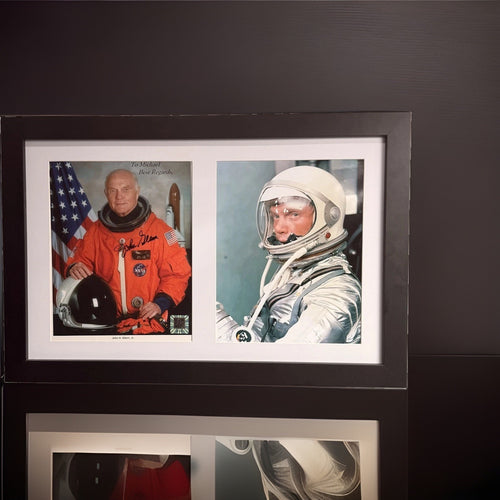
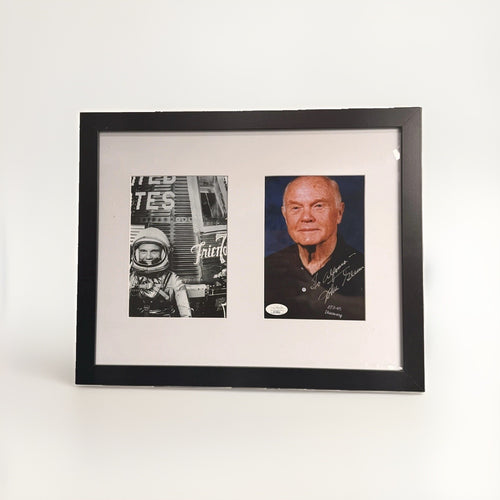
Conversely, astronaut signatures on Earth-side items — photographs, prints, books, commemorative covers — trade in the autograph market with autograph market dynamics. These are not space documents in the primary source sense. They are signed items produced in connection with the space program.
Both are legitimate collector categories. Understanding which market you are buying in is essential to evaluating whether you are paying a fair price.
First-Day Covers: The Entry Point That Deserves Serious Attention
Astronaut-signed first-day covers represent one of the most accessible entry points into space document collecting with legitimate historical pedigree.
First-day covers — stamped envelopes postmarked on the first day of issue of a commemorative stamp — were carried aboard spacecraft during certain missions with crew authorization. These crew-carried covers (often called "flown covers" or "astronaut personal covers") represent a documented crew carry program that NASA sanctioned.
The authentication requirements for flown covers are meaningful: documented inclusion in crew manifest or authorized crew carry list, postmark evidence, signature verification from recognized services (BAS, JSA, or PSA/DNA), and ideally provenance tracing to the original crew authorization.
This category has its own fraud history — covers presented as flown that were not, or covers with period-correct stamps and postmarks but no genuine mission connection. Provenance research matters here as much as it does for any other category.
But for the collector beginning to think about space documents as historical primary sources, a properly authenticated, provenance-clean flown cover provides a meaningful entry at a more accessible price point than mission checklists or technical documents.
Red Flags
Before you write a check or complete a wire, run through this list. Every one of these is a signal to stop and ask harder questions.
-
"Flown" status supported only by seller's verbal representation with no documentation
- Flight status is a historical fact that can in principle be verified. If verification has not been done, ask why.
-
Authentication from a generalist service presented as complete authentication for flight status
- BAS, JSA, and PSA/DNA verify signatures. They do not certify flight status. A document claiming flown status needs specialist evaluation, not just signature authentication.
-
Provenance chain that begins with an anonymous private seller
- The chain has to start somewhere. "Acquired from a private collector" with no prior documentation is a gap, not a provenance. Gaps compress value; they do not eliminate it, but they must be priced accordingly.
-
Condition inconsistent with claimed use
- Mission documents show mission use. If an item claimed as a used mission checklist looks like it was stored flat and never touched, that is a question, not reassurance.
-
Pricing at the top of the market without authentication at the top of the standard
- Premium pricing requires premium authentication. If the seller is asking Class One prices for an item with Class Three authentication, that gap needs explanation.
-
Documents from collections that cannot be independently traced
- The space memorabilia market has seen collection fraud — invented collections with fabricated histories used to launder provenance for items that have none. If a collection cannot be independently verified to exist, treat its provenance claims with skepticism.
-
Pressure to decide quickly or "lose the opportunity"
- Serious historical material rewards careful due diligence. Sellers who rush buyers are typically sellers who do not want due diligence completed.
-
No Zarelli or equivalent specialist letter for high-value flown claims
- If you are paying significant money for flown status, the flight status needs to be evaluated by someone who specializes in evaluating flight status. Full stop.
Bottom Line
Space memorabilia trades like historical documents when it is historical documents — when the item was present for, and participated in, one of the defining technological events of modern history.
That framing does real work for collectors because it points directly toward what matters: authentication of historical fact, not just authentication of signatures. Provenance that establishes presence, not just ownership. Specialist expertise that can evaluate document integrity alongside handwriting.
The collectors who build the strongest positions in this market are not the ones chasing the most famous astronaut signatures. They are the ones who understand that a piece of paper that flew to the Moon and back is primary evidence for one of the most significant journeys in human history — and they collect it accordingly.
Authentication standard: BAS, JSA, or PSA/DNA for signatures. Zarelli specialist evaluation for flight status and document integrity. Independent provenance research for significant purchases. All three layers for anything where flight status is driving significant value.
If the item genuinely is what it is represented to be, it will survive that scrutiny. And if it cannot survive it, you needed to know that before the wire cleared.
Frequently Asked Questions
What is the difference between a "flown" space document and a regular NASA document?
A flown document physically traveled aboard a spacecraft during an actual mission — to the Moon, in Earth orbit, or through a specific mission profile. A regular NASA document, regardless of its historical significance, was created and remained on Earth. The market treats flown status as a fundamental valuation driver because flown documents are primary physical evidence of the mission itself. The total supply of genuine flown material from any given mission is permanently fixed.
Do I need a Zarelli letter specifically, or will any specialist authentication work?
The Zarelli specialist letter has become a recognized standard in the market specifically because the space memorabilia collector community identified the gap between generalist signature authentication and the specialist knowledge needed to evaluate flight status and document integrity. Other credentialed space historians or recognized specialists in space material can provide meaningful evaluation. What you should not accept as complete authentication for flown status claims is a generalist autograph service certificate alone — even from respected services like BAS, JSA, or PSA/DNA — because those services authenticate signatures, not flight status.
How important is the specific mission when evaluating Apollo document value?
Mission significance is a primary valuation driver. Apollo 11 material — the first lunar landing — commands consistent premium positioning over later Apollo missions in the market. Within the program, missions with specific historical significance (Apollo 13's survival story, for example) carry premium positioning relative to other missions from the same era. Mission position within the historical narrative matters to both individual collectors and institutional buyers, and that matters to price.
Can I verify flight status through NASA records myself?
In principle, yes. NASA maintains archival records of mission manifests and crew personal item authorizations, and significant records are accessible through the National Archives and Records Administration and the NASA History Division. In practice, navigating these records requires research skills and familiarity with how NASA organized its documentation across program eras. For significant purchases, commissioning independent archival research — or working with a dealer who has done that work and can show you the documentation — is worth the investment. Reputable auction houses handling major Apollo material typically include this research in their lot preparation.
What should I think about first-day covers as an entry point into space document collecting?
Properly authenticated, provenance-clean flown covers represent a legitimate entry point with real historical pedigree. The crew-carry programs that sanctioned these covers during specific missions created a documented category of flown material at a more accessible price point than mission checklists or technical documents. The authentication requirements are meaningful — you still need to establish crew carry authorization, verify signatures through recognized services, and trace provenance. And the category has its own fraud history. But for a collector building toward the document market, a solid flown cover is a better entry than a generic signed photograph because it begins to develop the provenance research skills the higher tier requires.
Why does annotation matter so much in pricing mission documents?
Annotations are evidence of active use. A checklist with handwritten mission-specific notes from the crew shows the document functioning as a working tool during the mission. That annotation density is historical content — it shows process, decision-making, and the actual human work of spaceflight. A clean, unuse copy of the same document is interesting. An annotated copy is compelling. The market prices compelling content at a premium because both individual collectors and institutional buyers respond to documents that tell a story through their own evidence.
Is the space document market affected by the same forgery risks as the broader memorabilia market?
Yes, and in some ways the fraud vectors are more complex. The FBI's Operation Bullpen exposed the scale of forgery operations in the broader memorabilia market, and those same criminal methodologies touched space material. The specific risks in space documents include period-correct paper with fabricated content, genuine NASA administrative paper misrepresented as mission-specific material, and inflated provenance claims attached to authentic but lower-tier documents. The last category — real documents with misleading characterization — is particularly common and particularly costly for buyers who do not understand the distinction between the three document classes.
How does the institutional buyer presence affect the space document market for individual collectors?
Institutional buyers — universities, private museums, corporate collections with heritage programs — create a meaningful floor under serious authenticated material. They bring longer time horizons and different price tolerance than individual collectors, and they are typically focused on historically significant material rather than celebrity signature value. This means that for the highest-quality authenticated space documents, the market has a depth that pure collector markets sometimes lack. For individual collectors, the implication is that authenticated, provenance-clean material with strong historical significance will have a buyer community that extends well beyond other individual collectors — and that institutional interest can accelerate market movement on genuinely significant pieces.