Reading a Beckett LOA Number: What the Format Actually Tells You
You bought a signed guitar. The seller included a Beckett LOA. You looked at the certificate number, nodded like you understood it, and moved on.
Most collectors do exactly that.
The problem is the number itself is a data point. It tells you things — if you know how to read it. And if you don't, you're treating one of the most important fields on the document like a serial number on a refrigerator.
This guide is about changing that.
We're going to walk through what Beckett Authentication Services (BAS) cert numbers actually encode, what the format variations mean, how to use the verification portal correctly, and — critically — what a cert number alone cannot tell you. Because that last part is where a lot of experienced collectors still get burned.
Why Beckett LOAs Matter More in Music Than Anywhere Else
In sports memorabilia, you've got PSA, JSA, and Beckett competing across roughly the same tier. Each has its defenders and its critics. The market is fractured but functional.
Music memorabilia is different.
Beckett — specifically the Roger Epperson REAL tier within BAS — sits at the top of the specialist pyramid for music autographs. Epperson spent decades building a reference database of signatures from rock, pop, and classical artists that simply doesn't exist in the same depth at competing firms. When a signed Beatles piece comes to market at serious auction, a Beckett LOA (ideally with Epperson attribution) carries more weight than a JSA Full or a PSA/DNA sticker on the same item.
That doesn't mean other authenticators are useless in music. It means you need to understand the hierarchy before you weight the cert number you're looking at.
FBI Operation Bullpen — the late-1990s federal investigation that exposed widespread forgery in sports and music memorabilia — revealed that forgers didn't just fake signatures. They faked certificates. They faked cert numbers. They created documents that looked indistinguishable from legitimate authenticator output to the untrained eye.
The authentication industry's response, over the following two decades, was to build verification infrastructure that goes beyond the paper document. Beckett's online verification portal is part of that infrastructure. So is the cert number format itself.
So what does the number actually tell you?
The Basic Structure of a BAS Cert Number
Beckett Authentication Services cert numbers are not random strings. They follow a structured format, and the format has evolved over time as Beckett expanded its services and integrated acquisitions.
At the most fundamental level, a BAS cert number is an alphanumeric identifier that encodes the following information:
- Service tier prefix — indicating whether the document is a full Letter of Authenticity (LOA), a Basic cert, a witnessed signing cert, or a graded slab cert
- Sequential issuance block — the core numeric sequence that places the cert in chronological context within its service tier
- Check character or validation suffix — a trailing element used for database verification
The exact prefix conventions have shifted as Beckett has reorganized its authentication divisions. Early BAS certs from the pre-integration era carry different prefixes than certs issued after Beckett consolidated its grading and authentication arms. This matters because vintage certs — particularly on high-value music pieces from the 1990s and early 2000s — may carry legacy formats that look unfamiliar even to experienced collectors.
A cert from that era is not automatically suspicious. But it requires verification against the legacy records database, not just the current portal.
LOA vs. Basic: The Distinction That Changes Everything
Before you parse a single digit of the number, you need to confirm which document type you're actually holding. Beckett issues two main authentication documents for autographs:
- BAS LOA (Letter of Authenticity): A full written opinion document. An authenticator — named on the letter — has examined the item and is going on record with a professional opinion. The LOA describes the item, the signature, and the basis for the authentication conclusion. This is the document that carries weight in the market.
- BAS Basic (sticker/tag cert): A tamper-evident sticker or holographic tag applied to the item with a corresponding cert number. This is a processing record, not a written opinion. It confirms the item passed through Beckett's system. It does not necessarily carry the same analytical depth as an LOA.
This is the same structural distinction JSA makes between its JSA Full LOA and JSA Basic cert — a difference that the market sometimes collapses incorrectly, treating a Basic cert as equivalent to a Full LOA when pricing or evaluating a piece.
Are you looking at an LOA, or are you looking at a sticker?
The answer changes the floor price, the resale trajectory, and frankly the level of confidence you should carry as a buyer.
For music memorabilia at serious value levels, you want the LOA. Full stop.
Reading the Number: A Field-by-Field Breakdown
Let's get specific about what to look for when you have a cert number in front of you.
Step 1: Identify the Prefix Block
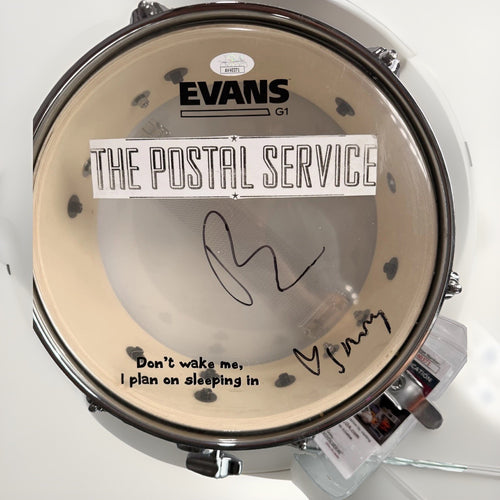
The leading characters before the numeric sequence tell you the service tier. On genuine BAS documents, the prefix is consistent within a given era of issuance. If you're looking at a music LOA from a major rock autograph — a signed album, a signed drum head, a concert poster — the prefix should correspond to the LOA tier, not the Basic or witnessed-signing tier.
Discrepancies between the document type described on the paper and the prefix encoded in the number are a red flag. Not a death sentence for the cert, but something that requires a call to Beckett's verification line, not just a portal search.
Step 2: Map the Sequential Block Against Expected Issuance Context
The numeric core of the cert number is sequential. That means higher numbers were issued later. This creates a testable consistency check: the sequential number should be plausible given what you know about when the item was signed and when it was submitted for authentication.
Here's where collectors frequently miss something important.
If you have a piece that was allegedly signed in a specific era — say, a classic rock artifact from the early 1980s — but the cert number falls in a sequential block that Beckett's records indicate wasn't reached until significantly later, that's a timeline inconsistency. It doesn't automatically mean fraud. Items get submitted for authentication years or decades after signing. But it means you need to understand the provenance gap and satisfy yourself that the delay is explainable.
Conversely, a cert number that was issued well before an item's alleged signing date is a serious problem. That's not a gap — that's a contradiction.
Step 3: Confirm the Check Character or Suffix
The trailing element of the cert number functions as a validation anchor. On authentic BAS documents, this element must match the record in Beckett's database exactly. One transposed digit, one altered character, and the verification fails.
Forgers who fabricate cert numbers from scratch often get the prefix and the numeric block approximately right by studying genuine examples. The check character is where fabricated numbers tend to break down — because without access to the algorithm or the database, there's no reliable way to generate a valid check character for a fake sequential number.
This is also why PSA's certification-verification warnings specifically flag partial-number matches as a fraud indicator. A number that verifies "partially" in a portal is not a success. It's a red flag dressed up as a pass.
Using the BAS Verification Portal Correctly
Beckett's online verification system is the first line of defense. But it's only as useful as your process for using it.
Here's the correct procedure:
-
Enter the full cert number exactly as it appears on the document.
- No spaces, no truncation, no interpretation
- If the number is partially obscured on your copy, get a better copy before verifying
- Photograph the number before entering it, so you have a record of exactly what you submitted
-
Confirm the returned record matches the item you're evaluating.
- A successful portal lookup returns the item description associated with that cert number
- If the returned description doesn't match your item, the cert has been reused or the item has been swapped
- This is a documented fraud vector: a genuine cert on a lower-value item gets photographed, the number gets attached to a higher-value item, and the portal "passes" because the number is real
-
Check the signer record against your item.
- The portal should return the name of the signer(s) associated with the cert
- Verify it matches exactly — not "approximately," not "close enough"
-
Note the authenticator on record if the portal discloses it.
- For high-value music pieces, you want to confirm whether the Roger Epperson REAL designation is attached
- Not all BAS music LOAs carry the Epperson attribution — but for classic rock, British Invasion, and iconic pop signatures at serious price points, you should understand who signed off
-
If the portal returns a "not found" result, do not assume forgery immediately.
- Legacy certs from the pre-integration era may not be in the current portal
- In those cases, contact Beckett's customer authentication line directly with the full cert number and item description
- Document the date, time, and representative name for your records
What happens when the portal passes but something still feels wrong?
Trust that instinct. The portal is a database check, not a holistic evaluation. It tells you the number exists and what it was originally issued for. It does not re-evaluate the physical signature or the document's integrity on your submission date.
The Roger Epperson REAL Tier: What It Adds
Within Beckett's music authentication division, the Roger Epperson REAL designation represents the specialist upper tier. Epperson has operated as one of the most respected music autograph authenticators in the field, and his integration into BAS brought a depth of artist-specific reference material that distinguishes high-tier BAS music LOAs from general market alternatives.
When evaluating a music LOA cert number, the question of Epperson involvement is practically relevant, not just academic. A BAS LOA with Epperson attribution on a significant Beatles, Rolling Stones, or classic rock piece carries different market weight than a BAS LOA without it.
This isn't a slight against other BAS authenticators. It's an acknowledgment that specialization matters in music autographs, where the signature variation across a single artist's career can span decades and thousands of documented examples — and where the forgery tradition is particularly deep.
FBI Operation Bullpen and subsequent investigations demonstrated that music forgeries were often produced by individuals with significant art skill and enough surface knowledge to fool general-market graders. Specialist examiners with deep artist-specific reference files are a different challenge for forgers to beat.
The cert number doesn't tell you explicitly whether Epperson was involved. The LOA document itself should name the authenticating examiner. But when the cert number leads you to the portal record, note the service tier designation, and if it matters at your price point, confirm the examiner attribution directly with BAS.
Format Variations to Know
Beckett's authentication history includes several organizational transitions that produced format variations collectors encounter in the wild:
| Era / Format Type | Characteristics | Verification Path |
|---|---|---|
| Early BAS LOA (pre-consolidation) | Longer alphanumeric strings; different prefix conventions; printed on earlier document templates | Direct contact with BAS legacy records; portal may not return results |
| Current BAS LOA | Standardized format; consistent prefix block; QR code on document links to portal record | Online portal + QR scan; both should return consistent records |
| BAS Basic Sticker / Tag | Shorter number; holographic tamper-evident sticker; no accompanying written opinion | Online portal; note this is processing confirmation, not full LOA |
| Witnessed Signing Cert | Specific prefix indicating Beckett representative witnessed the signing event | Online portal; often tied to private signings or conventions |
| Beckett Graded Slab Auth | Combined grading/authentication cert; item encapsulated; cert number on slab label | Online portal; slab integrity must also be assessed separately |
The format variation you'll encounter most often in music memorabilia is the distinction between the current LOA format and early pre-consolidation LOAs. Significant music pieces — particularly anything signed by artists who were active before the mid-2000s and authenticated closer to the signing date — may carry legacy format certs.
Legacy does not mean suspect. Some of the most thoroughly examined pieces in the music market carry legacy BAS cert numbers because they went through authentication when the examiner had access to the signer in a living context, or when the paper trail was fresher. The key is knowing which verification path applies.
How This Compares to JSA and PSA/DNA
A working knowledge of Beckett cert numbers is most useful when you understand how the format compares to the other major authenticators operating in music memorabilia.
JSA (James Spence Authentication) uses a similar tiered structure with the JSA Full LOA at the top and JSA Basic at the lower processing tier. The JSA Full LOA is a written opinion; the JSA Basic is a sticker certification without the full analytical write-up. For music, JSA Full is credible but sits generally below BAS/Epperson in specialist market perception for classic rock and legacy artists.
PSA/DNA operates with sticker-and-letter cert formats and has a strong presence in sports crossover signings — think athlete-musician or sports-adjacent entertainment items. PSA's certification-verification warnings are notably explicit about partial-number matches being fraud indicators, which is useful guidance for buyers regardless of which authenticator they're evaluating.
The operational principle is the same across all three: the number on the document must match the portal record exactly, and the portal record must match the item in your possession. Divergence at any point breaks the chain.
For space memorabilia — a related category that surfaces in music crossover collections (think signed mission patches or astronaut items that appear alongside entertainment memorabilia) — all three (BAS, JSA, PSA) are relevant, with the addition of a Zarelli specialist letter for significant NASA items.
What the Cert Number Cannot Tell You
This is the section most cert guides skip. They walk you through what the number encodes and leave you with the impression that a passing portal lookup closes the loop.
It doesn't.
Here's what a verified cert number, even a perfectly legitimate one, does not establish:
- It doesn't authenticate the item in your hands. It authenticates the item that was submitted when that number was issued. If the physical item has been substituted, the cert number still passes.
- It doesn't confirm the current physical condition of the item. A piece may have been restored, altered, or damaged after authentication.
- It doesn't address provenance before the authentication date. Where was the item before it went to Beckett? Who owned it? How was the signing documented?
- It doesn't resolve disagreements between authenticators. BAS and JSA have issued conflicting opinions on the same pieces. A BAS LOA doesn't automatically override a rejection elsewhere. Know whether your piece has been passed and rejected, or only passed.
- It doesn't establish market value. A legitimate LOA confirms the signature is genuine. It says nothing about edition status, condition grade, cultural significance, or what a buyer will actually pay.
If the cert number is just a starting point, what's the full picture?
The cert number opens a door. Behind the door is: the written LOA text, the provenance documentation, the item's physical integrity, the signing context, and — for anything at serious value — ideally a second opinion from a specialist in the specific artist.
Red Flags
Before you commit to any music signed piece, run this checklist against the cert documentation:
-
The cert number doesn't fully verify in the portal.
- Partial matches are not passes
- "Close" numbers are forgeries or transposed digits; neither is acceptable
-
The portal record doesn't match the item description.
- If the cert was issued for a different item than what you're buying, the cert has been misappropriated
- This is a documented swap fraud vector, not a theoretical one
-
The document type is Basic but the item is priced as if it carries a Full LOA.
- Know the difference; don't pay LOA money for a sticker cert
-
The sequential number is inconsistent with the claimed timeline.
- A cert number issued well after the alleged signing date with no provenance explanation for the gap
- A cert number that predates the alleged signing — that's not a gap, that's impossible
-
The LOA names no specific authenticating examiner.
- Generic attribution without examiner identification reduces accountability
- For high-value music pieces, you want to know who actually evaluated this
-
The physical document shows signs of alteration.
- Laser-printed alterations, bleed-through from correction, misaligned fields
- Post-Bullpen forgers learned to fabricate cert paper; document integrity is part of the evaluation
-
The seller cannot produce the original LOA — only a photocopy or scan.
- Photocopies cannot be verified for physical integrity
- High-value transactions should include original documentation; if the seller doesn't have it, understand why before proceeding
-
No provenance documentation accompanies the cert.
- A BAS LOA is stronger when it arrives with a backstory: purchase receipts, signing photographs, estate documentation, prior auction records
- A cert floating alone with no context isn't automatically fake, but it's a thinner case than it could be
Bottom Line
A Beckett LOA cert number is not a rubber stamp. It's a structured data point with a specific format that encodes service tier, issuance sequence, and a validation anchor — and every one of those elements is independently checkable.
Collectors who treat the number as decoration are leaving money and protection on the table. Collectors who know how to read it, verify it correctly, cross-reference the portal record against the physical item, and understand the distinction between LOA and Basic cert are operating with a meaningful informational edge.
For music memorabilia specifically, that edge matters more than in almost any other category. The forgery tradition is deep, the specialist hierarchy within BAS is real and consequential, and the gap between a competent general authentication and a Roger Epperson REAL evaluation is not trivial for classic rock and legacy artist material.
Read the number. Verify the number. Confirm the item matches the record. And then keep asking questions, because the number is the beginning of due diligence, not the end of it.
FAQ
What's the difference between a BAS LOA and a BAS Basic cert?
A BAS LOA (Letter of Authenticity) is a written opinion document. A named Beckett authenticator has examined the item and produced a formal written conclusion. A BAS Basic cert is a tamper-evident sticker or tag that confirms the item passed through Beckett's processing system. The Basic cert is a processing record; the LOA is an analytical opinion. For music memorabilia at meaningful price points, you want the LOA. The market prices them differently, and for good reason.
Can I verify an older BAS cert that doesn't show up in the online portal?
Yes. Legacy certs from the pre-consolidation era may not be indexed in the current online portal. The correct path is direct contact with Beckett's customer authentication line, with the full cert number and item description ready. Document your inquiry — date, time, representative name, and the result of the call. For significant purchases, get that confirmation in writing from Beckett if possible.
What does Roger Epperson REAL mean on a BAS music LOA?
It designates that Roger Epperson — one of the most respected music autograph specialists in the field — was the examining authenticator for that piece within the BAS framework. Epperson's specialist depth in artist-specific signature databases, particularly for classic rock and British Invasion material, gives his attribution additional market credibility beyond a standard BAS LOA. For significant music pieces, Epperson involvement is a relevant factor in market perception and pricing.
A portal lookup returned a "pass" but the item description on file doesn't match what I'm buying. Is that okay?
No. Absolutely not. A description mismatch is a major red flag. What it tells you is that the cert number is genuine — but it was issued for a different item. The cert has been misappropriated and attached to your item. This is a documented fraud vector where a lower-value authenticated piece provides a real cert number that gets recycled onto a higher-value fake. A passing portal result only means anything if the returned record matches the item you're holding exactly.
Does a valid BAS LOA mean I should stop asking questions about the piece?
No. A valid LOA confirms the signature passed a professional authentication evaluation at the time of submission. It does not address whether the item in your hands is the same item that was submitted, what the provenance chain looks like before authentication, the current physical condition, or whether other authenticators have issued conflicting opinions on this specific piece. The LOA is a strong positive data point. It's not a complete due diligence package by itself.
How do I tell from the cert number alone whether a Beckett authenticator or specifically Epperson evaluated a music piece?
You typically can't determine examiner attribution from the cert number alone. The LOA document itself should name the examining authenticator. The cert number, when entered in the portal, may return a service tier designation that indicates whether the Epperson REAL tier was applied — but for explicit examiner confirmation, check the LOA text and, if necessary, verify directly with BAS. For high-value music transactions, don't rely on inference. Call and confirm.
Is a Beckett LOA automatically better than a JSA Full LOA for music pieces?
For classic rock, British Invasion, and legacy pop artist material, BAS with Epperson attribution generally carries stronger specialist market perception than JSA Full. Both are credible; neither is worthless. But they're not equivalent at the top of the market for those specific categories. For more recent or pop-crossover signings where Epperson's deep-history reference files are less relevant, the gap narrows. Know your artist, know the relevant specialist hierarchy, and calibrate accordingly rather than treating all LOAs as interchangeable.
What should I do if I suspect a BAS cert number has been fabricated outright, not reused from another item?
The first step is a full portal verification — if the number returns no record at all, that's a strong indicator of fabrication rather than reuse. The second step is to contact Beckett directly and report the specific number. BAS maintains records and can confirm whether a given number was ever issued. If you're in a transaction context and suspect fraud, preserve all documentation — photographs of the item, the cert, and the seller's communications — before taking further steps. Post-FBI Operation Bullpen, authentication fraud in memorabilia is taken seriously by law enforcement, and documented evidence matters.