The Format Gap Is Real: Why Signed Vinyl Beats Signed CD Value by a Factor of Five
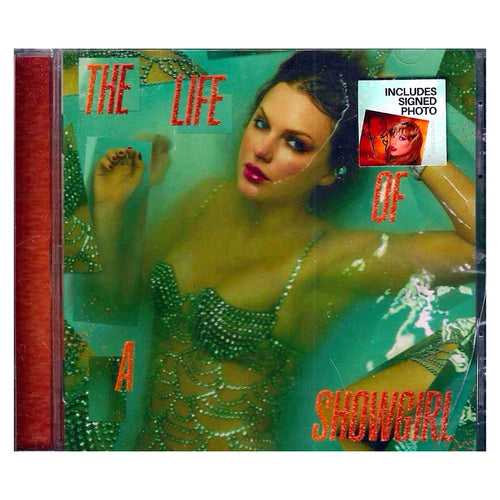
A signed CD sits in a jewel case. A signed vinyl album commands a wall.
That single sentence captures most of what you need to know about the valuation gap between these two formats in the signed music memorabilia market. But if you're buying, selling, or building a serious collection, you need the full picture — because the gap is not a myth, not a trend, and not going away.
We're talking about a consistent, measurable performance differential. Signed vinyl regularly outperforms its CD counterpart at auction and in private sale by a factor of roughly five to one on comparable pieces. Sometimes more. The reasons are structural, not sentimental.
Let's break it down.
The Physical Argument: Size Is Not Vanity
A standard 12-inch LP sleeve gives a signature roughly 144 square inches of display real estate. A standard jewel case booklet gives it somewhere between 9 and 25 square inches, depending on how the artist signs and where.
Does surface area really affect value?
Yes. Dramatically.
A large, expressive signature on a gatefold sleeve is a visual object. It reads across a room. It commands wall space. It functions as art in a way that a cramped booklet scrawl simply cannot. Collectors and interior design-conscious buyers both understand this intuitively, which is why bidding behavior at major houses reflects it consistently.
The LP format also demands that an artist engage with the piece more fully. The album cover is itself an artifact — designed, art-directed, culturally loaded. When an artist signs across that artwork, they're entering into a visual conversation with imagery that already carries meaning. That interaction produces something more complex than a signature on a molded plastic case.
The Gatefold Premium
Within the vinyl category, gatefold sleeves carry their own sub-premium. Two full panels, often with interior photography, lyrics, or liner notes. A signature inside a gatefold — especially with a personalization or inscription — tells a story about a moment of genuine engagement between artist and recipient.
Original pressings on gatefold sleeves are the top tier. Reissues can hold value, but provenance documentation needs to be tighter to justify comparable pricing.
Scarcity Economics: CDs Were Printed to Infinity
The CD era, roughly mid-1980s through the late 2000s for physical dominance, was the era of mass manufacture. Labels pressed millions of units. Surplus stock sat in warehouses, then discount bins, then was liquidated. The supply of unplayed, mint-condition CDs for almost any major artist is effectively inexhaustible.
Vinyl pressings, particularly original pressings from the 1960s through the early 1980s, exist in finite quantities that are actively declining as copies are played, damaged, or simply lost over decades. First pressings of landmark albums in genuinely high-grade condition are rare objects regardless of whether they carry a signature.
Add a well-authenticated signature to a rare pressing and you've compounded scarcity on top of scarcity.
What happens when you add a signature to something that was already nearly impossible to find in pristine condition?
The ceiling on value becomes very difficult to estimate conservatively.
The Reissue Question
Not all signed vinyl is created equal. A signature on a recent reissue pressing carries meaningfully less structural value than the same signature on an original pressing from the album's initial release year. This is where authentication documentation needs to establish not just the signature's legitimacy but the pressing's identity.
Matrix numbers, label variations, and sleeve printing details all matter. Serious buyers verify pressing provenance separately from signature authentication. If a seller can't speak to both, that's a problem.
Authentication Infrastructure: Where the Two Formats Diverge Further
Here's where the gap widens in a way most casual collectors don't anticipate.
The authentication ecosystem for music memorabilia has matured significantly around high-value objects. The three primary authenticators operating at institutional level are Beckett Authentication Services (BAS), JSA (James Spence Authentication), and PSA/DNA. For music specifically, Roger Epperson REAL operates as the specialist tier within BAS — the standard serious market participants reference when provenance needs the deepest possible scrutiny.
All three services will authenticate signatures on both formats. But the practical reality is that high-value authentication — the full Letter of Authenticity with extensive research, provenance tracing, and specialist review — is economically justified on vinyl at price points where it simply doesn't pencil out on a signed CD.
If a signed CD is worth two hundred dollars at retail, spending the fee for a full JSA LOA versus a JSA Basic stamp changes the economics of the deal. Most signed CDs circulate with the basic stamp or a simple sticker COA from a signing event. That's fine for what it is. But it means the documentation tier is lower, which in turn suppresses secondary market confidence and resale value.
Signed vinyl at serious price points typically carries the full authentication treatment. That paper trail compounds value at every subsequent transaction.
Understanding the JSA Basic vs. LOA Distinction
This is worth slowing down on because collectors conflate these two constantly.
A JSA Basic certification means an authenticator examined the signature and found it consistent with genuine examples in their reference database. It's a pass/fail determination rendered relatively quickly. It's meaningful. It's not the same as a full LOA.
A JSA Letter of Authenticity involves a more comprehensive examination, written documentation of the reasoning, provenance research where applicable, and a signed letter that travels with the item. When a piece goes to major auction, this is the tier that auction house specialists want to see. For music memorabilia specifically, the LOA is where Roger Epperson REAL's expertise within BAS becomes the gold standard reference.
Signed vinyl, because it commands prices that justify the cost, tends to carry LOAs. Signed CDs tend to carry Basic certs or nothing substantial. That documentation gap directly influences resale performance.
PSA Certification-Verification Warnings
PSA has issued explicit warnings about third-party sellers representing items as PSA-authenticated when the certification has been tampered with, transferred from another item, or simply fabricated. The PSA online verification system allows buyers to cross-reference any cert number against PSA's database in real time.
Never skip this step. A PSA sticker that doesn't verify against a current active record in their system is worthless, and potentially evidence of fraud. This applies to both formats, but the fraud pressure is higher on high-value vinyl where margins justify counterfeiting efforts.
The FBI Bullpen Precedent: Why Provenance Pressure Matters
FBI Operation Bullpen, which ran through the late 1990s and early 2000s, prosecuted one of the largest sports and entertainment autograph fraud rings in American history. Hundreds of thousands of forged signatures had entered the market attached to authentication documents from fraudulent third-party companies.
The operation's legacy reshaped how serious authenticators approach music memorabilia, including signed vinyl. The lesson the market absorbed was permanent: a COA from an unknown or non-institutional source is not authentication. It's paper.
In the signed vinyl category, where pieces can change hands for significant sums, buyers who didn't internalize the Bullpen lesson have paid for it in devalued or worthless collections. Pieces carrying only generic COAs, even handsomely printed ones from companies with official-sounding names, routinely fail when subjected to institutional review.
This history has pushed serious vinyl buyers toward the institutional authenticators almost exclusively. The result is a two-tier market: well-authenticated signed vinyl with verifiable provenance on one side, and a gray zone of questionable pieces on the other.
Which tier do you want to be buying in?
Cultural Weight: The Album as Artifact vs. The CD as Product
There is a cultural dimension to this that is easy to dismiss and wrong to ignore.
The vinyl LP was the dominant format during the periods that produced most of what popular culture regards as canonical music. The albums that shaped rock, soul, jazz, and hip-hop history exist in the public imagination as LP covers. The artwork, the physical object, the ritual of handling it — these are inseparable from the cultural meaning of the music itself.
When you hold a signed original pressing of a landmark album, you're holding an object that carries that cultural weight. The signature connects you, materially and directly, to the person who made something that mattered.
A signed CD of the same album, even if the CD pressing is identical in audio content, doesn't carry the same cultural freight. The CD was a convenience format. The LP is where the mythology lives.
This isn't nostalgia. It's market psychology operating at scale, which makes it a real valuation factor regardless of how you personally feel about the aesthetics of the formats.
The Vinyl Revival Has Extended the Runway
The vinyl resurgence of the past fifteen-plus years has not gone unnoticed by collectors. New buyers entering the market understand vinyl as a prestige format. They grew up buying reissues at record stores, attending Record Store Day events, treating the format as intentional and premium rather than obsolete.
That generational expansion of the vinyl collector base has added demand pressure at exactly the time when supply of authenticated, high-grade signed originals has continued to tighten. Basic supply and demand economics do the rest.
Artist-Specific Dynamics: Not All Signatures Perform Equally
The five-to-one ratio is an approximation across the market. Artist-specific factors can push the differential higher or lower.
Living vs. Deceased Artists
For living artists who still appear at signings, attend events, or participate in fan engagement programs, the supply of fresh signatures entering the market is ongoing. This holds the ceiling lower on both formats. The gap narrows somewhat because neither format benefits from true scarcity of the signature itself.
For deceased artists, the signature supply is permanently fixed. Every authenticated signature that exists is one of a finite number that will ever exist. In this category, the format premium on vinyl tends to be more pronounced because the combination of a finite signature supply and a finite supply of high-grade original pressings produces a genuinely constrained asset.
Band vs. Solo Signatures
Fully signed albums — all members of a band, on an original pressing — occupy a separate category entirely. The logistical complexity of assembling complete band signatures, particularly for groups that are no longer intact, creates a premium that can dwarf the standard format differential.
Signed CDs with full band signatures exist and are collectible. But a fully signed original LP pressing of a canonical band album, well-authenticated, represents a convergence of factors that the CD format simply cannot replicate at equivalent cultural weight.
Signing Context Matters
How a signature was obtained — its provenance story — affects value independent of format. A signature obtained through a fan mail program carries less cachet than one signed at a specific documented event, which in turn carries less cachet than one signed at a studio session, recording anniversary event, or in the presence of a known witness who can support the chain of custody.
Vinyl signed at a significant, documented event outperforms both a randomly provenance'd vinyl piece and any CD signed in comparable circumstances.
Condition Grading: How Format Affects the Math
Physical condition interacts with format in ways that further explain the valuation differential.
CD condition is binary for most practical purposes. The disc either plays or it doesn't. The jewel case is intact or cracked. The booklet is clean or marked. There are condition grades for CDs, but the range between "fine" and "mint" doesn't carry the premium spread that vinyl condition grades command.
Vinyl condition grading — Mint, Near Mint, Very Good Plus, Very Good, and below — has an enormous effect on price. The spread between a Near Mint original pressing and a Very Good Plus original pressing of the same album can be multiples of value, not percentage points. That granularity creates more ceiling room for pristine examples.
A pristine original pressing with a clean, confident signature in high-grade ink condition is a genuinely exceptional object. The condition of the signature itself factors in — fading, bleed-through, smearing all affect value. Vinyl, particularly when properly stored in an archival inner sleeve and outer sleeve, preserves both the pressing and the signature better over time than a jewel case booklet, which can yellow, crack, and degrade.
Red Flags: What to Watch for When Buying Signed Vinyl
The premium attached to signed vinyl makes it a target for fraud and misrepresentation. These are the warning signs that should stop any transaction cold.
-
Generic or unknown COA sources
- COAs from companies that are not BAS, JSA, or PSA/DNA should be treated as unverified until institutional review confirms the signature.
- Operation Bullpen demonstrated precisely how convincing fraudulent documentation can look. Paper quality and official-looking seals are not authentication.
-
PSA cert numbers that don't verify
- Check every PSA cert number directly against PSA's online verification system before completing any transaction.
- A number that returns no record, returns a different item, or shows as voided is a serious red flag.
-
Authentication tier mismatch for the asking price
- A piece priced at significant market value that carries only a JSA Basic stamp rather than a full LOA should prompt questions about why full authentication was never obtained.
- Sellers who resist third-party authentication requests on high-value pieces are sellers to walk away from.
-
Provenance gaps in the chain of custody
- Every transfer of ownership is an opportunity for substitution or misrepresentation. Gaps in the provenance narrative are not automatically disqualifying, but they require honest acknowledgment and discount for risk.
- Ask for documentation at every link in the chain. Prior auction records, dealer invoices, estate documentation — the stronger the paper trail, the safer the acquisition.
-
Pressing mismatch with the represented era
- A signature allegedly from the original release period on a pressing that matrix numbers and label details identify as a later reissue is a significant discrepancy. Either the signing date or the pressing description is wrong.
- Verify pressing details independently using established discography resources before authenticating the combination of pressing and signature as a unified artifact.
-
Signature placement that seems off
- Experienced authenticators at JSA, BAS, and PSA build reference databases of known genuine signatures including typical placement habits, pen pressure tendencies, and characteristic variations over time.
- A signature that seems oddly placed, unusually clean, or inconsistent with known examples from the same period of the artist's life warrants formal expert review before purchase.
-
In-person signing claims without documentation
- The claim "I got it signed myself at a show in [year]" is common. It's not documentation. Ask for photographs, event tickets, backstage passes, or any supporting material that corroborates the claimed signing context.
- Personal testimony without corroboration, regardless of how sincere the seller seems, is not provenance.
Bottom Line
Signed vinyl outperforms signed CD by roughly five to one because every structural factor in the collectibles market points in the same direction at the same time.
Physical scale, cultural weight, scarcity of original pressings, the economics of proper authentication, condition grade sensitivity, and the sustained demand pressure from an expanding collector base — all of it compounds in favor of the LP format.
This is not a category where the gap is likely to close. The CD format does not carry growing cultural cachet. Original vinyl pressings do not get more plentiful over time. Authentication infrastructure continues to add credibility and transaction confidence to the high end of the vinyl market. The fundamentals here are sound.
If you are allocating budget toward signed music memorabilia, the format decision is not a peripheral consideration. It is the central one.
Buy the vinyl. Authenticate it properly. Verify every cert number. Build the provenance chain from day one, including your own purchase documentation.
The five-to-one differential at resale is not a surprise to people who understood the structure of the market when they bought in.
It's the point.
FAQ: Signed Vinyl vs. Signed CD — What Collectors Ask Most
Q: Is a signed CD ever a better purchase than a signed vinyl for the same artist?
In a small number of scenarios, yes. If an artist did not record during the vinyl era, or if a CD-era album represents their definitive cultural moment — their breakthrough, their most celebrated work — then signed CD can be the correct format simply because no vinyl equivalent exists or carries the same cultural association. Some artists are CD-era artists. For those artists, the CD is the primary artifact by default. That said, this is the exception. For the vast majority of collectible artist categories, vinyl is the dominant format for valuation purposes.
Q: Does the authentication process differ between signed vinyl and signed CD?
The process is the same in structure. BAS, JSA, and PSA/DNA authenticate signatures on both formats using the same methodology: comparison against verified reference exemplars, assessment of pen type and ink behavior, provenance review where documentation is available. What differs is the economic logic of which tier of authentication gets applied. High-value vinyl tends to receive full LOA treatment. Lower-value CDs tend to receive Basic certification. If you're buying a signed CD at a price that justifies full LOA documentation, request it or submit the piece yourself. Don't assume the authentication tier is appropriate just because the seller provided a cert.
Q: What is Roger Epperson REAL and when should I specifically request it?
Roger Epperson REAL is the music memorabilia specialist tier operating within Beckett Authentication Services. Epperson is recognized as one of the foremost specialists in music autograph authentication globally. For significant music memorabilia — high-value signed vinyl, historical music manuscripts, signatures from major or deceased artists — specifically requesting BAS with Roger Epperson REAL review is the highest standard available in the market. If you're acquiring something significant enough to matter at auction, this is the documentation level you want.
Q: How do I verify a PSA cert on a signed vinyl I'm considering buying?
Go directly to PSA's online verification tool and enter the cert number from the label or documentation accompanying the piece. The result should return the specific item that was authenticated, matching the description of what you're looking at. If the cert returns no record, returns a different item description, or shows as voided or flagged, do not proceed with the purchase. PSA has explicitly warned about cert fraud in the signed collectibles market, and the verification step takes less than two minutes. There is no excuse for skipping it.
Q: Does original pressing vs. reissue affect signed value as much as the signature itself?
For most high-demand categories, yes, pressing provenance and signature authenticity are both material to value and neither fully compensates for weakness in the other. A genuine authenticated signature on a late reissue pressing is worth meaningfully less than the same signature on a verified original pressing. And a pristine original pressing with a questionable or unauthenticated signature has limited marketability at top price points despite the pressing's inherent quality. The highest-value pieces are the intersection of both: verified original pressing, verified signature, clean provenance chain. Chase the intersection, not just one variable.
Q: What should I do with signed vinyl I already own that has no formal authentication?
Submit it. The major authenticators accept submissions directly from private collectors, not just dealers. If you have a piece with credible provenance but no formal institutional authentication, the cost of proper certification is almost always recoverable in improved resale value and marketability. A piece that cannot be verified through institutional channels will trade at a discount or fail to sell entirely in serious secondary market contexts. Authenticate before you need to sell, not when a buyer is already at the table with leverage on their side.
Q: Are signed box sets or special editions treated the same as standard LP albums in valuation?
Box sets and limited edition pressings carry their own premium structure within the vinyl category. A signed original box set from a significant release — particularly one with limited original print run documentation — can outperform a standard LP signing significantly. The calculus involves the box set's standalone collectibility as a pressing, the signature's authentication quality, and any additional materials included (inserts, prints, numbered certificates from the original pressing). Treat box sets as a separate sub-category with their own comparable sales analysis rather than extending standard LP valuation formulas directly.
Q: How does the five-to-one ratio hold up for artists who are still actively signing?
For living, actively signing artists, the ratio compresses somewhat. When fresh signatures are entering the market regularly through signings, events, and fan programs, pure signature scarcity isn't driving the premium. The format premium still applies — vinyl still outperforms CD for the physical, cultural, and display reasons that are format-structural rather than signature-scarcity-driven. But the ceiling is lower and the ratio may be closer to two-to-one or three-to-one rather than five-to-one for actively signing artists. The full five-to-one differential tends to manifest most clearly for deceased artists, reunited bands from the vinyl era, or historically significant pieces where original pressing scarcity and signature scarcity both operate simultaneously.