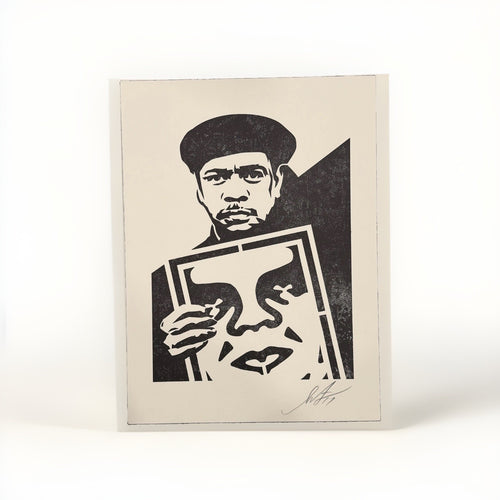
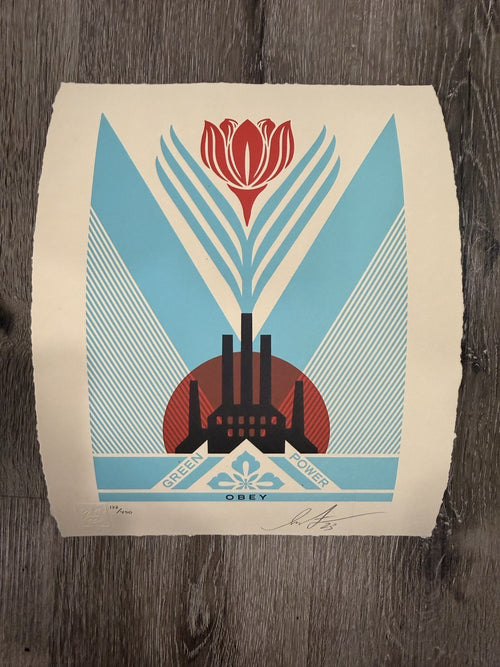
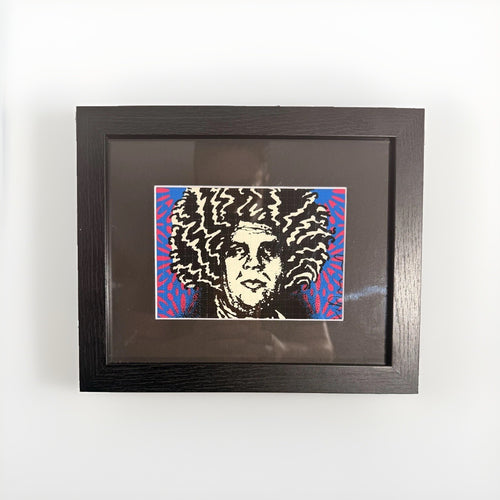
The Gauntlet Gallery Print Index record for Shepard Fairey’s 'Frequency' (2026) serves as a foundational reference point for collectors interested in this particular work. Specifically, the index establishes that 'Frequency' is cataloged under the year 2026, falls within the 'Collaborations and pop culture' category, and is further grouped under the '2026 · Contemporary Era' collection label. Crucially, the index also provides a market reference range of $189–$231, marked with an 'r' confidence label, indicating a reference range rather than a confirmed sale or appraisal. It is paramount for any prospective buyer to understand that while the index offers these valuable data points, it does not authenticate an individual item or confirm its specific characteristics beyond the recorded title and year. Therefore, before making any acquisition decision, a buyer must diligently verify the exact title, any specific variant details, the format, the physical condition of the item, its provenance, and all accompanying documentation. The index year, 2026, functions as a cataloguing record within our system, and buyers should always ensure that the offered item precisely matches the index's description, especially regarding its title and any unique attributes, to avoid conflating it with similarly named or themed works that may exist across Fairey's extensive oeuvre. This meticulous approach is essential for informed collecting.
Understanding the "Frequency" Index Record
Shepard Fairey's prolific output often includes works that resonate with broader cultural themes, and 'Frequency' (2026) is cataloged within this context. The Gauntlet Gallery Print Index aims to provide a structured overview of these releases, offering collectors a consistent framework for research. For 'Frequency,' its placement within the 'Collaborations and pop culture' category suggests a potential thematic connection to other artists, brands, or significant cultural moments that Fairey has engaged with throughout his career. This categorization is not merely an arbitrary label but often reflects the conceptual underpinnings of the work itself. The '2026 · Contemporary Era' collection label further situates 'Frequency' within a specific chronological segment of Fairey's artistic journey, allowing collectors to track its release alongside other works from that period. It is vital to recognize that the index record is a snapshot of information, a digital fingerprint for a specific print. It does not elaborate on the print's medium, its exact edition size, the precise release date, the original publisher, whether it is signed or unsigned, or its specific provenance. These details, while critical to a print's overall value and authenticity, are beyond the scope of a basic index entry and fall squarely within the buyer's responsibility to investigate. The index serves as a starting point, a confirmed data point for a specific title and year, guiding collectors to the correct reference without providing an exhaustive authentication report for any physical item.
To clarify the distinction between what the Gauntlet Gallery Print Index provides and what a collector must independently verify, consider the following breakdown for 'Frequency' (2026):
| Index Record Detail (Provided) | Buyer Verification Point (Required) |
|---|---|
| Exact Title: Frequency | Confirm the physical item's title matches exactly. |
| Index Year: 2026 | Verify the item's release year aligns with this cataloguing record. |
| Category: Collaborations and pop culture | Understand the context; verify if any specific collaboration details are present on the item or documentation. |
| Collection Label: 2026 · Contemporary Era | Confirm the item's stylistic and historical fit within this era. |
| Market Reference: $189–$231 (confidence 'r') | Assess the item's condition, provenance, and specific attributes against this reference range; understand it is not a guarantee. |
| Verify medium, edition size, signature status, publisher, and specific release date. | |
| Examine the physical condition for any flaws, damage, or restoration. | |
| Obtain and scrutinize all available provenance and documentation. | |
| Seek expert authentication if any doubts persist about legitimacy. |
Navigating the Market Reference for "Frequency"
The market reference range of $189–$231 for 'Frequency' (2026), as noted in the Gauntlet Gallery Print Index with an 'r' confidence label, is a crucial piece of information, yet one that requires careful interpretation. This range represents an aggregated reference point derived from various market activities and is intended to provide a general indication of value within a specific context. It is emphatically not a confirmed sale price, an official appraisal, or a guarantee of resale value. The 'r' confidence label signifies that this is a reference range, suggesting a degree of variability and that specific transactional data might be limited or diverse. Factors that can significantly influence the actual market value of an individual print include, but are not limited to, its precise condition (e.g., presence of creases, tears, fading, or foxing), whether it is signed and numbered by the artist, the quality and integrity of its provenance, and the specific variant or format if multiple exist. A print in pristine, museum-quality condition with impeccable provenance will invariably command a different value than one with condition issues or an unclear history, even if both are technically 'Frequency' (2026). Furthermore, market dynamics are fluid; collector demand, broader economic conditions, and the artist's ongoing career trajectory can all cause fluctuations. Collectors should utilize this index reference as a guidepost for their research, not as a definitive valuation. It prompts further investigation into comparable sales of precisely matched items, taking into account all the aforementioned variables. For a deeper dive into understanding market dynamics and authentication, collectors may find our guide on Shepard Fairey Prints: Authentication and Value Guide particularly useful.
Essential Due Diligence for "Frequency" Collectors
Acquiring any work by Shepard Fairey, including 'Frequency' (2026), necessitates a rigorous approach to due diligence. Beyond confirming the basic index details, a collector must become an investigator, meticulously scrutinizing every aspect of the potential acquisition. The first step involves a thorough physical inspection of the print. Examine the paper for any signs of damage, such as tears, creases, pinholes, or discoloration. Look for evidence of previous framing, such as tape residue or pressure marks. The condition of a print is paramount to its long-term preservation and value. Next, delve into the provenance. A strong provenance provides a clear, unbroken chain of ownership from the artist or original publisher to the current seller. This documentation might include original invoices, certificates of authenticity (COAs) from reputable sources, or exhibition histories. Without robust provenance, the authenticity and history of a print can become questionable, significantly impacting its desirability and market standing. Be wary of vague or incomplete provenance. It is also crucial to verify the specific edition details. While the index provides the title and year, it does not specify the medium (e.g., screen print, lithograph), the exact edition size, or whether the print is part of a special variant series. These details are often found within the print itself (e.g., edition numbers, artist's chop marks) or on accompanying documentation. Conflating different variants or editions can lead to significant misunderstandings of value and rarity. For a structured approach to this research, consider reviewing our article on How to Use the Shepard Fairey Print Index: A Smarter Research Workflow, which outlines effective strategies for leveraging index data. Remember, the goal is to ensure that the item you are considering is precisely what it purports to be, in the condition described, and with a verifiable history.
The Broader Context of Fairey's Collaborations and Pop Culture Works
Shepard Fairey's 'Frequency' (2026) is categorized under 'Collaborations and pop culture,' a broad and dynamic segment of his artistic output. This classification is significant because Fairey has consistently engaged with popular culture, music, politics, and various brands throughout his career, often through collaborative projects. These collaborations can range from album art and movie posters to partnerships with social justice organizations or commercial entities. Understanding this context helps to frame 'Frequency' within Fairey's larger artistic narrative. Works in this category often carry an additional layer of cultural resonance, drawing on existing iconography or contributing to contemporary discourse. The specific nature of the collaboration, if any, for 'Frequency' would be a key detail for collectors to uncover, as it could influence the print's thematic depth and its appeal to specific collecting niches. For instance, a collaboration with a renowned musician might attract music memorabilia collectors, while a partnership with a social movement could appeal to those interested in art with a political message. These nuances are not captured in the basic index entry but are vital for a comprehensive understanding of the work's place within Fairey's oeuvre and the broader art market. Exploring the full range of Fairey's work can be done by browsing our Shepard Fairey collection, which offers a wider perspective on his diverse projects.
Preserving Your "Frequency" Print
Once 'Frequency' (2026) has been acquired and its authenticity and condition thoroughly verified, the next critical step is its preservation. Proper care is not merely about maintaining its aesthetic appeal but also about safeguarding its long-term integrity and value. Prints, especially those on paper, are susceptible to environmental damage.
Here are essential considerations for preserving your print:
- Archival Framing: Always opt for museum-quality, archival framing. This includes acid-free matting, backing, and UV-filtering glass or acrylic to protect against light damage and chemical degradation.
- Environmental Control: Store or display your print in a stable environment. Avoid direct sunlight, excessive humidity, extreme temperature fluctuations, and areas prone to pests. Ideal conditions are typically around 68-72°F (20-22°C) with 45-55% relative humidity.
- Handling: Always handle prints with clean, cotton gloves to prevent transferring oils and dirt from your skin. Support the print evenly to avoid creasing or tearing.
- Storage: If not framed, store prints flat in acid-free archival boxes or folders, interleaved with acid-free tissue paper.
Collecting art, particularly contemporary prints by influential artists like Shepard Fairey, is an endeavor that combines passion with meticulous research. The true satisfaction comes not just from ownership, but from the deep understanding of each work's context, its journey, and its place within the broader artistic landscape. Every print tells a story, and it is the collector's privilege to uncover and preserve that narrative.
Frequently Asked Questions about Shepard Fairey Prints
How does the index year '2026' relate to the actual release date of 'Frequency'?
The 'index year' of 2026 for 'Frequency' in the Gauntlet Gallery Print Index is primarily a cataloguing designation used for organizational purposes within our system. It signifies the year the work was indexed or the year it is associated with in our records, which often aligns with the artist's stated release year. However, it is not a substitute for the precise release date, which might include a specific month and day. Collectors should always seek out and verify the exact release date from official sources or reliable documentation associated with the print, as this can sometimes be relevant for historical context or specific market analyses. The index year provides a reliable anchor for initial research, but further detail is always recommended.
Can the market reference range for 'Frequency' change over time?
Absolutely. The market reference range of $189–$231 for 'Frequency' (2026) is a dynamic data point, not a static valuation. Art markets are influenced by a multitude of factors, including shifts in collector demand, the artist's ongoing career developments, broader economic trends, and the availability of similar works. As new sales data becomes available, or as the market sentiment evolves, this reference range can and likely will adjust. The Gauntlet Gallery Print Index strives to update these references periodically, but collectors should always conduct real-time market research and consider consulting with art market professionals for the most current insights. The 'r' confidence label specifically highlights this fluidity, indicating that the range is a reference point subject to market forces.
What is the significance of 'Collaborations and pop culture' for 'Frequency'?
The categorization of 'Frequency' (2026) under 'Collaborations and pop culture' within the index is significant because it places the work within a distinct thematic and conceptual framework of Shepard Fairey's career. Fairey is renowned for his engagement with and appropriation of popular culture, often using its imagery to comment on social, political, and commercial themes. If 'Frequency' is indeed a collaboration, understanding the specific partner—be it another artist, a musician, a brand, or a social cause—is crucial. This context can illuminate the print's narrative, its intended audience, and its place within Fairey's broader artistic and activist agenda. It suggests that the work is likely to be more than a standalone image, but rather a piece that interacts with external cultural elements, enriching its meaning and potentially its appeal to collectors interested in specific cultural intersections.
Furthering Your Collection and Research
The journey of collecting Shepard Fairey's work is an ongoing process of discovery and informed decision-making. The Gauntlet Gallery Print Index, with its detailed records like that for 'Frequency' (2026), is designed to empower collectors with accurate foundational information. We encourage you to utilize this resource not just as a lookup tool, but as a springboard for deeper investigation. By understanding what the index provides and what remains for your personal verification, you can approach each potential acquisition with confidence and clarity. Continue to explore Fairey's diverse catalog, engage with the collector community, and always prioritize thorough research. For the latest insights into Fairey's releases and market trends, keep an eye on our editorial content, including updates like the Shepard Fairey 1H 2026 Release Scorecard, which can offer broader context for works from that period. Your dedication to due diligence ensures the integrity and enjoyment of your collection for years to come.