Key Pop Artists to Collect: Warhol, Fairey, KAWS, Murakami & More
If you are asking which pop artists to collect, the most reliable starting roster is Andy Warhol, Shepard Fairey, KAWS, Takashi Murakami, DEATH NYC, Mr. Brainwash, and — as a pop-adjacent anchor — Banksy. Together they span the movement from its 1960s origins through today's street-and-toy-driven "post-pop" market. Each offers a genuine entry point for new collectors — signed screenprints, open and limited editions, or collectible figures — and, crucially, each has its own authentication chain. Getting that chain right is what separates a confident purchase from an expensive mistake. Below, we break down what each artist is known for, where a first-time buyer can realistically start, and exactly how verification differs from one name to the next.
This guide is intentionally focused on how to collect rather than on quoting prices, because the numbers move constantly and vary enormously by edition, condition, signature, and provenance. What does not change is the logic of authentication — and that is where we spend most of our attention.
How to Read This Guide
Pop art is not one thing. It is a lineage: Warhol and his 1960s peers established the visual language of mass-media repetition and bright, flat color; a later generation — Fairey, KAWS, Murakami, Banksy — absorbed that language and pushed it into street art, branding, and designer collectibles. When collectors ask "which pop artists should I collect," they are usually asking two questions at once: whose work do I want on my wall, and which of these can I buy safely as a beginner.
We answer both. For each artist you will find three things: what they are known for, a realistic entry point (the format most accessible to a new collector), and the authentication method that applies specifically to that artist. The single most important rule in this entire guide is this: authentication chains do not mix. A certificate model that is correct for one artist can be a red flag for another. Never apply Banksy's rules to a KAWS figure, or DEATH NYC's rules to a Warhol print.
Andy Warhol: The Classic Foundation
Andy Warhol is the cornerstone of any pop-art collection and the artist against whom every later figure is measured. His silkscreen portraits — Marilyn, the soup cans, flowers, celebrity and political subjects — defined the idea that fine art could borrow directly from advertising, packaging, and celebrity culture. For collectors, Warhol represents blue-chip stability: deep scholarship, a mature secondary market, and broad name recognition.
What Warhol Is Known For
Screenprints and portfolios produced during his lifetime, plus a large body of posthumous editions and reproductions issued by the estate and licensees. This distinction — lifetime versus posthumous, original edition versus later reproduction — is the heart of Warhol collecting. Two images can look identical while occupying completely different tiers of the market.
Entry Point for New Collectors
Most beginners enter Warhol through prints and editions rather than unique works. Because the range is so wide, the practical entry point is a documented edition where the paper, printer, publisher, and edition size are all known and consistent with recognized references. Posters and licensed reproductions are the most affordable tier and can be a legitimate decorative starting point — provided they are described honestly as reproductions and not as original prints.
How Warhol Authentication Works
Warhol authentication is provenance- and documentation-driven. The former Andy Warhol Art Authentication Board was dissolved years ago and no longer issues opinions, so today verification rests on paper trails, catalogue raisonné references, and independent expertise. For higher-value Warhol works, collectors increasingly pair traditional provenance with a modern digital Certificate of Authenticity from the selling dealer that ties the physical piece to its documentation. When you shop our Warhol material, that is the model we use — a documented COA plus verifiable provenance. What you should not expect is a single living "authority" stamping approval; that mechanism no longer exists for Warhol. Explore the broader movement on our pop art collection.
Shepard Fairey: Street Art Meets Fine Print
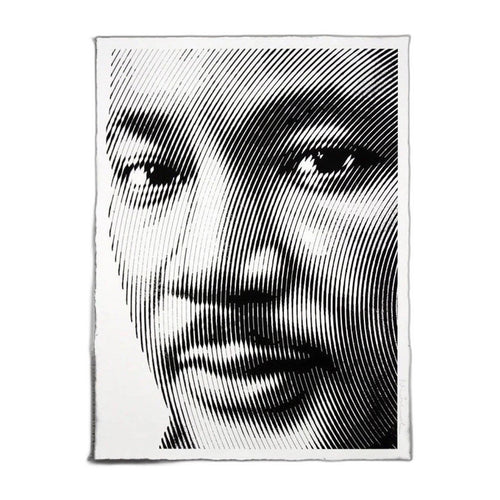
Shepard Fairey — the artist behind OBEY and the iconic "Hope" portrait — is arguably the best value entry point in the entire pop lineage. His high-contrast, propaganda-influenced graphic style is instantly legible, his output is prolific, and his signed screenprints trade actively enough to give new collectors real comparables to study.
What Fairey Is Known For
Bold red, cream, and black stenciled portraits and political graphics; the OBEY Giant campaign; and a steady stream of numbered screenprint editions released directly to the public. Fairey's work bridges street-poster aesthetics and studio printmaking, which is exactly why it resonates with collectors who want pop energy without blue-chip pricing.
Entry Point for New Collectors
Signed, numbered screenprints are the classic Fairey entry point. Many editions were released affordably at launch and remain accessible on the secondary market. For a first purchase, look for a signed and numbered impression on the correct paper stock, with clean margins and no trimming. Our Shepard Fairey collection is organized to help beginners compare editions side by side.
How Fairey Authentication Works
Fairey authentication is silent — meaning there is no third-party certificate service or artist-run authentication board issuing per-piece COAs. Verification instead relies on the physical object itself: the pencil signature and edition numbering, the correct paper and printing characteristics, dated releases, and provenance back to a reputable source. This is a critical distinction: because there is no official Fairey COA program, a piece arriving with an unfamiliar third-party "certificate" should raise scrutiny, not lower it. The right verification is connoisseurship plus provenance, not a certificate. When we sell Fairey, we authenticate silently and stand behind the piece on that basis.
KAWS: Designer Toys and Fine Art Editions
KAWS (Brian Donnelly) sits at the intersection of fine art, street art, and designer collectibles. His "Companion" figure — with its X-ed-out eyes and gloved, cartoon-inflected body — is one of the most recognizable images in contemporary art, and his vinyl figures gave a generation of new collectors an accessible on-ramp into the market.
What KAWS Is Known For
Vinyl and painted figures (the "Companion" and "BFF" families), screenprint editions, and large-scale sculpture and painting. For collectors, the vinyl figures and print editions are the practical focus; the unique paintings and monumental sculptures sit at the top of the market.
Entry Point for New Collectors
Open- and limited-edition vinyl figures are the most common KAWS entry point, followed by signed print editions. When buying figures, condition and completeness matter enormously: the original box, any inserts, and an undamaged surface are part of the value. Browse our KAWS collection to see how figures and prints are catalogued.
How KAWS Authentication Works
KAWS is the one name on this list where a modern, technology-backed certificate is the norm. We authenticate KAWS with a TrueCOA blockchain Certificate of Authenticity — a tamper-proof on-chain record that links the physical figure to its documentation. This matters because the KAWS figure market is a frequent target for counterfeits and unauthorized "bootleg" versions. The combination of a documented COA and an on-chain record gives collectors a repeatable way to confirm a piece — something a photograph alone cannot provide. Do not confuse this with the Fairey model: KAWS gets a certificate-backed chain; Fairey does not.
Takashi Murakami: Superflat and the Smiling Flower
Takashi Murakami is the leading figure of Japan's "Superflat" movement, blending traditional Japanese painting, anime and manga aesthetics, and Warholian mass production. His grinning, rainbow-petaled flower motif is one of the most reproduced images in contemporary pop and a natural companion to KAWS on a collector's wall.
What Murakami Is Known For
Vividly colored offset lithograph and screenprint editions, the ubiquitous smiling-flower imagery, character-driven work, and high-profile fashion and music collaborations that pushed his aesthetic deep into mainstream culture. His editions are produced in a range of sizes and formats, giving collectors many access points.
Entry Point for New Collectors
Signed, numbered offset print editions are the standard Murakami entry point — widely produced, visually striking, and available across a broad range. For a first purchase, focus on signed and numbered impressions in excellent condition, with the color fully saturated and the sheet undamaged. Murakami editions pair naturally with the rest of a pop collection you can browse across our art index.
How Murakami Authentication Works
Murakami editions are authenticated primarily through signature, numbering, and provenance, supported by a dealer Certificate of Authenticity that documents the specific edition. As with Warhol and Fairey, the emphasis is on verifying the physical object and its paper trail rather than deferring to a single external authority. Confirm the signature and edition number, match the format to a recognized reference, and buy from a source that provides clear documentation and stands behind it.
DEATH NYC: Accessible Pop Mashups
DEATH NYC is a prolific contemporary pop artist known for dense, collage-style mashups that fuse luxury-brand logos, cartoon characters, and pop-culture icons into small, affordable signed editions. For many new collectors, DEATH NYC is a first-ever art purchase — which makes getting the authentication model right especially important.
What DEATH NYC Is Known For
Small-format signed prints, typically produced in dated, limited runs, that remix recognizable pop and luxury imagery. The appeal is accessibility: bright, familiar, and priced as an entry-level collectible.
Entry Point for New Collectors
The signed limited-edition prints are the entry point — DEATH NYC is built around the beginner buyer. Look for a hand-signed, numbered sheet from a dated edition. Because these pieces circulate widely, buying from a dealer who verifies each one is the safest route. See current pieces in our DEATH NYC collection.
How DEATH NYC Authentication Works
DEATH NYC uses a specific and recognizable chain: a Certificate of Authenticity accompanied by a gold seal affixed to the work or its documentation. When you verify a DEATH NYC piece, you are matching the signed print to its COA and confirming the gold seal — together, not in isolation. This is a distinct model. Do not expect a blockchain certificate (that is the KAWS chain) and do not expect silent authentication (that is Fairey). The DEATH NYC signal is COA plus gold seal, full stop.
Mr. Brainwash and Banksy: The Street-Art Wing
The final grouping covers two artists who anchor the street-art side of pop — one an accessible, high-energy entry point, the other the most tightly controlled authentication regime in the entire market.
Mr. Brainwash: High-Energy Entry Point
Mr. Brainwash (Thierry Guetta) rose to prominence through the street-art documentary Exit Through the Gift Shop and produces exuberant, spray-and-splash reworkings of pop icons. His signed editions are an accessible entry point for collectors who want maximal pop energy. Authentication centers on signature, edition details, and provenance, typically supported by a dealer certificate — closer to the Fairey/Murakami connoisseurship-plus-documentation model than to any external board.
Banksy: Pop-Adjacent, and a Category of One for Authentication
Banksy is not a pop artist in the strict art-historical sense, but his stenciled, mass-culture-critiquing imagery sits squarely in pop's lineage, and collectors constantly group him with this roster. He belongs here with one enormous caveat about verification.
Banksy authentication is handled exclusively by Pest Control, the artist's official authentication body. For prints and works that require certification, Pest Control is the only recognized authority — no dealer COA, no gallery letter, and no third-party service substitutes for it. This is the single most important authentication fact in the entire guide, and the reason we treat Banksy as pop-adjacent rather than folding him into the general roster: his verification rules are unlike everyone else's. If you are considering a Banksy that should be certifiable, the only question that matters is whether it is (or can be) authenticated by Pest Control. Everything else is secondary.
The Pop-Art Collector's Comparison Table
The table below summarizes the roster at a glance. Read the authentication column carefully — it is the part that changes most from artist to artist, and the part most often gotten wrong.
| Artist | Known For | Entry Point | Authentication |
|---|---|---|---|
| Andy Warhol | Silkscreen portraits, soup cans, celebrity & pop imagery; the blue-chip foundation | Documented prints/editions; licensed posters at the entry tier | Provenance + documentation, modern dealer COA; no living authentication board |
| Shepard Fairey | OBEY, "Hope," bold propaganda-style graphic prints | Signed, numbered screenprints | Silent — signature, edition, paper & provenance; no third-party COA program |
| KAWS | "Companion" & "BFF" figures, vinyl toys, print editions | Open/limited-edition vinyl figures; signed prints | Dealer COA + TrueCOA blockchain certificate |
| Takashi Murakami | Superflat, smiling flowers, anime-influenced editions | Signed, numbered offset print editions | Signature, numbering & provenance with dealer COA |
| DEATH NYC | Small-format pop & luxury-logo mashup prints | Signed, dated limited-edition prints | COA + gold seal (matched together) |
| Mr. Brainwash | High-energy spray-and-splash reworkings of pop icons | Signed editions | Signature, edition & provenance with dealer certificate |
| Banksy (pop-adjacent) | Stencil street art critiquing mass culture | Certified prints (where available) | Pest Control only — no substitutes |
Building a Coherent Pop-Art Collection
Once you understand the roster and its authentication logic, the next question is how to assemble pieces into a collection rather than a pile of unrelated purchases.
Start With One Artist, Then Widen
A focused approach beats a scattered one. Picking a single artist — Fairey and DEATH NYC are the most beginner-friendly on cost and availability — lets you learn one authentication model deeply before adding a second. Once you are fluent in, say, silent Fairey verification, adding KAWS (COA + TrueCOA) or Murakami (signature + provenance) becomes a deliberate expansion rather than a leap into the unknown.
Condition and Documentation Are the Value
Across every artist here, two variables drive long-term value more than almost anything else: condition and documentation. A signed, numbered print with clean margins and full color, sold with clear provenance and the correct certificate for that artist, is worth materially more than the same image trimmed, faded, or arriving with no paper trail. For figures, the original box and inserts are part of the object. Treat documentation as inseparable from the artwork itself.
Buy From Sources That Match the Right Chain
The recurring theme of this guide is that each artist has a correct verification chain — and a good dealer applies the right one. Be wary of any seller who offers a generic "certificate of authenticity" for an artist whose real model is silent (Fairey) or externally controlled (Banksy). Matching the chain to the artist is the clearest sign you are dealing with someone who knows the material. For a deeper walk-through of how we approach verification and market context across artists, see our collector hub and our financial insights resources.
Frequently Asked Questions
Which pop artist is the best entry point for a beginner?
Shepard Fairey and DEATH NYC are the most accessible entry points for new collectors. Both offer signed, affordable editions with active secondary markets, and both let you learn a single authentication model before broadening your collection. Fairey teaches silent, connoisseurship-based verification; DEATH NYC teaches the COA-plus-gold-seal model.
Do all pop artists use the same certificate of authenticity?
No — and this is the most important thing to understand. Authentication chains differ by artist and must never be mixed. Warhol relies on provenance and documentation with a modern dealer COA; Fairey is silent with no third-party COA program; KAWS uses a dealer COA plus TrueCOA blockchain verification; DEATH NYC uses a COA with a gold seal; and Banksy is certified exclusively by Pest Control. A certificate that is correct for one artist can be a warning sign for another.
How is Banksy authenticated?
Banksy is authenticated exclusively by Pest Control, the artist's official authentication body. For works that require certification, no dealer certificate, gallery letter, or third-party service is a valid substitute. If you are buying a Banksy that should be certifiable, confirm that it is (or can be) authenticated by Pest Control before anything else.
Are KAWS vinyl figures a real art investment or just toys?
KAWS figures occupy a genuine collectible market, not merely a toy category, which is exactly why counterfeits are common. Authenticity, condition, completeness (original box and inserts), and the correct verification chain — a dealer COA paired with a TrueCOA blockchain certificate — determine whether a figure holds value. Treat the box and documentation as part of the piece.
Should I buy prints or original works when starting out?
Prints and editions are the standard entry point for every artist in this guide. Signed, numbered editions give new collectors accessible pricing, clearer comparables, and a more transparent authentication process than unique works. Focus on condition, correct paper or format, a legible signature and edition number, and the right certificate chain for that specific artist.
What matters most when verifying a pop-art print?
Match the verification method to the artist, then check the physical object: signature and edition numbering, correct paper stock or format, condition and margins, and unbroken provenance. Confirm that any certificate matches the artist's actual chain — silent for Fairey, COA-plus-TrueCOA for KAWS, COA-plus-gold-seal for DEATH NYC, Pest Control for Banksy, and documentation-driven provenance for Warhol and Murakami.