The Canvas Wins. Here's Why KAWS Paintings Outperform Sculptures Long-Term.
Everyone who followed KAWS in the early 2000s bought toys.
That was the entry point. The BE@RBRICK. The vinyl companion. The limited drop you stayed up for. It made sense then, and it still makes sense as a conversation piece sitting on a shelf.
But if you've been watching the secondary market with any real attention over the past decade, you've noticed something the casual collector keeps missing: when it comes to long-term value retention, KAWS paintings — original canvases, works on paper, and significant print editions with documented provenance — are doing something the sculptures can't replicate.
They're building institutional gravity.
This isn't a knock on the toy market. It's a recognition of how the fine art infrastructure actually works, and why KAWS paintings are increasingly benchmarked against blue-chip contemporary artists rather than designer collectibles.
Let's talk about what's actually driving this.
Understanding the Two KAWS Markets (Yes, There Are Two)
KAWS — Brian Donnelly — operates across two very different commercial ecosystems simultaneously, and most collectors conflate them at their own expense.
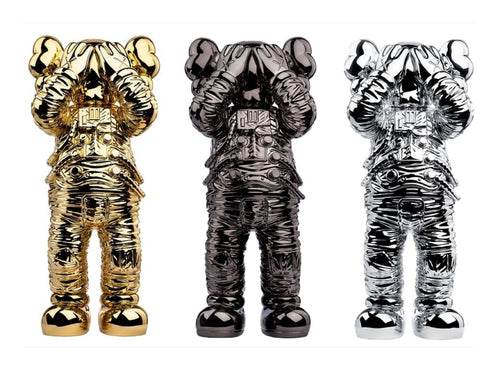
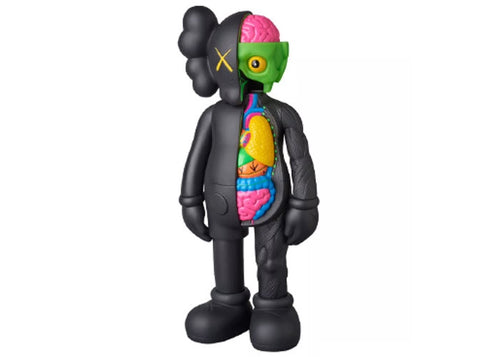
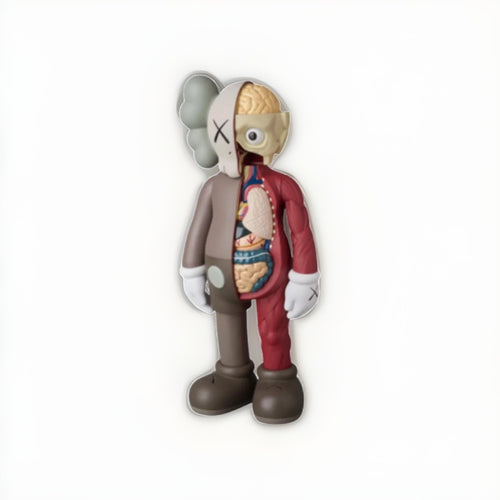
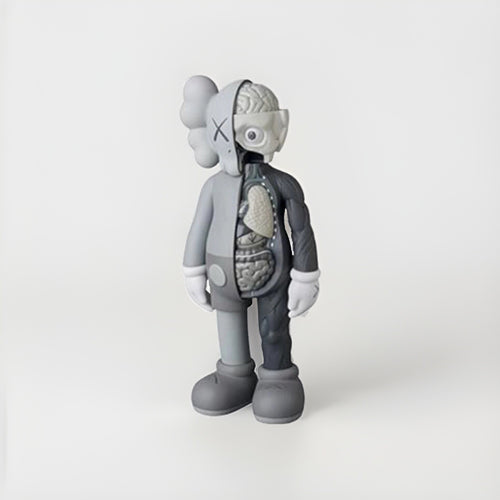
The first is the collectible market: BE@RBRICKs, vinyl companions, plush figures, limited drops through KAWSONE and retail partners like Uniqlo, AllRightsReserved, and Medicom Toy. This market is enormous, global, liquid, and highly dependent on hype cycles, resale platform dynamics, and edition scarcity games.
The second is the fine art market: original canvases, works on paper, significant painting editions, and works that pass through major auction houses, blue-chip galleries, and museum acquisition pipelines.
These two markets operate on different timelines, different collector bases, and different valuation logic.
So why does so much KAWS conversation treat them as the same thing?
Because the surface aesthetics overlap. The Companion character shows up in both. The skull motifs, the X-eyes, the crossed-out pop iconography — all present in both markets. But the underlying mechanics of value creation diverge sharply once you zoom out to a ten-year horizon.
The Collectible Market: Hype Has a Ceiling
Vinyl figures and BE@RBRICKs are subject to what the secondary market calls edition dilution pressure. KAWS has been extraordinarily prolific in the collectible space. New drops create excitement. They also create competition for the same collector dollar.
A 400% BE@RBRICK from 2016 isn't obsolete, but it's competing for shelf space — literally and metaphorically — with whatever dropped last month. When the hype cycle cools on a particular colorway or character variant, prices compress.
That's not catastrophic. It's just the nature of the collectible market. These pieces were designed for that ecosystem.
Original paintings were not.
The Fine Art Market: Scarcity Is Structural
KAWS canvases are genuinely scarce in a way the toy market can never replicate. You cannot manufacture more original paintings. The supply is fixed at whatever Brian Donnelly has put on canvas over his career.
And that career — from the mid-1990s graffiti interventions through the gallery breakthrough of the early 2000s — produced a body of work that institutional buyers, museum curators, and serious private collectors are actively pursuing.
That pursuit creates a fundamentally different price dynamic than the collectible market. When a major canvas comes to market, it isn't competing with last month's drop. It's competing with a shrinking pool of available works from an artist whose institutional profile keeps rising.
The Album Record: Why That Moment Changed Everything
Any serious conversation about KAWS paintings value has to acknowledge the landmark auction result for The KAWS Album — his 2005 painting directly referencing the Beatles' Sgt. Pepper's Lonely Hearts Club Band, reimagining the iconic album cover with Companion characters replacing the figures.
That work sold at auction in Hong Kong for a figure that shocked many Western collectors who had been treating KAWS primarily as a collectible artist with a gallery side project.
It shouldn't have been shocking.
The signals were there. The work had critical pedigree. The provenance was documented. The subject matter — a direct, considered engagement with one of the most recognized images in popular culture — demonstrated exactly the kind of art-historical self-awareness that institutional buyers respond to.
What the Album result did was recalibrate the ceiling. It told the market that KAWS canvases weren't being evaluated in isolation from the broader contemporary art conversation. They were in it.
Collectors who had bought original works years earlier suddenly understood what they were holding differently. Not a collectible with a painting hobby attached. A painting career with a collectible economy attached.
That's a completely different asset, isn't it?
What Drives Long-Term Painting Value: The Four Pillars
When we look at why KAWS paintings outperform sculptures on a long horizon, it comes down to four structural factors. These aren't unique to KAWS — they apply across contemporary art — but KAWS paintings satisfy all four in ways the sculpture market doesn't.
1. Institutional Validation
Museum exhibitions, scholarly catalogues, and institutional acquisitions do something the secondary market cannot do on its own: they anchor an artist's work within art history.
KAWS has seen significant institutional attention, including retrospective-scale exhibitions and works entering permanent collections. Every time that happens, it raises the floor for what an original canvas is worth. Institutions don't acquire BE@RBRICKs for their permanent collections. They acquire paintings.
That institutional validation creates a reference point that auction houses, insurance appraisers, and estate planners can use. Try getting a serious appraisal for a KAWS companion figure and you'll quickly learn how differently the fine art infrastructure treats it versus a canvas.
2. Provenance Depth
A KAWS canvas that passed through a recognized gallery, was exhibited, was published in a catalogue, and has a clean chain of ownership is a different object — legally and commercially — than a collectible with an original box.
Provenance depth adds value in compounding ways. Each legitimate transaction, each exhibition record, each publication reference adds to the documentary history of the work. Over twenty years, a well-provenanced canvas accumulates a paper trail that becomes part of its commercial identity.
Most sculptures and vinyl figures don't generate that kind of documentation. The original packaging matters. The hologram sticker matters. The Medicom release record matters for earlier pieces. But none of that is the same as a decade's worth of exhibition history and scholarly reference.
3. Authentication Infrastructure
This one matters enormously, and it's worth spending real time on.
KAWS paintings operate within the fine art authentication framework. For KAWS works specifically, there is no single universal certification system — gallery documentation, publisher records, and documented provenance represent the authentication standard for authorized editions and sanctioned works.
For original canvases, the authentication chain runs through gallery records, provenance documentation, and in some cases direct artist confirmation through established channels.
In the sculpture and collectible market, you're relying on original packaging, hologram stickers, and Medicom release records — all of which can be faked, lost, or separated from the piece.
What happens to a BE@RBRICK's value when the original box is missing?
It drops meaningfully. The authentication infrastructure for collectibles is partly physical, and physical things get separated from their objects.
A canvas's authentication lives in its paper trail, its exhibition history, its gallery records. That's harder to separate from the work — and harder to fake convincingly at the level where serious buyers operate.
This is not a small point. The FBI's Operation Bullpen — which dismantled one of the largest sports and entertainment memorabilia forgery rings in history — demonstrated exactly how fragile physical authentication markers are when sophisticated forgers are involved. The lesson translates to any collectible market. Documentation trails that live in independent institutional records are structurally more robust than authentication that depends on accompanying physical items.
4. Collector Base Demographics
The collector base for KAWS paintings increasingly overlaps with the collector base for blue-chip contemporary art broadly: high-net-worth individuals, family offices, institutions, and collectors who are building lasting collections with generational intent.
This collector base buys on different timelines. They're not flipping on a twelve-month hype cycle. They're holding. And when they sell, they're selling into auction environments — Sotheby's, Christie's, Phillips — that generate the kind of public price records that influence subsequent valuations.
The collectible market's buyer base is younger, more liquid, more responsive to trend cycles. That's fine for what it is. But it doesn't create the same long-term price floor.
The Sculpture Argument: What the Bulls Get Right (And Wrong)
To be fair, the case for KAWS sculptures isn't without merit. Let's give it its due.
Large-scale KAWS sculptures — the monumental companion installations, the inflatable works, the bronze editions with serious institutional placement — have performed well at auction and carry genuine art-world weight. These are not the same thing as a vinyl figure. When we say "KAWS sculptures," we need to be precise about what tier we're discussing.
A small edition bronze from a significant body of work, properly authenticated, with exhibition history, can absolutely hold and build value. It has many of the same structural advantages as a painting: fixed supply, institutional validation potential, provenance depth.
The problem is that most collectors talking about KAWS sculptures aren't talking about those pieces. They're talking about the vinyl and plush market.
And the vinyl market, however much fun it is to participate in, has a structural ceiling that the painting market doesn't have. The edition sizes are often larger than they appear once you account for global distribution. The hype cycle creates volatility that long-term holders find uncomfortable. And the authentication infrastructure, while improving, is still more fragile than the fine art paper trail.
Would you rather hold an asset whose value depends on maintaining a complete physical package, or one whose value is documented in institutional records that exist independently of what you keep in a box?
Print Editions: The Middle Market Worth Watching
There's a third category that often gets overlooked in the painting vs. sculpture debate: significant KAWS print editions.
Not every screen print or offset. The significant ones — works on paper from important bodies of work, editions with low print runs, works that were published in conjunction with major gallery shows or institutional exhibitions.
These occupy an interesting middle position. They're more accessible than original canvases on the entry side. They're more scarce than most vinyl editions. And they benefit from the same authentication infrastructure as paintings: edition numbers, publisher records, gallery documentation.
A well-chosen KAWS print from a significant moment in his career, properly authenticated with full provenance documentation, can outperform vinyl figures in the same price tier over a multi-year horizon.
This is worth understanding if you're building a KAWS position from a mid-market entry point. The canvas is the long-term anchor. But the right prints can serve a similar structural function at a lower buy-in.
What the Secondary Market Data Tells Us
Without citing specific auction results — which fluctuate and can be cherry-picked in either direction — the directional pattern across the major houses is consistent:
- Original KAWS canvases have demonstrated a long-term price trajectory that outpaces inflation meaningfully over decade-plus holding periods.
- Significant works on paper from important moments in the career have shown strong retention and appreciation.
- Large-scale sculpture from recognized institutional editions has performed comparably to painting in some cases.
- Vinyl and toy market performance is highly variable: some landmark pieces have held value well, many have softened significantly from hype-cycle peaks, and the overall volatility is substantially higher than the painting market.
The pattern is not surprising to anyone who follows how fine art markets function. Scarcity, institutional validation, and collector base demographics predict long-term value better than short-term demand spikes.
KAWS canvases score well on all three measures. Most of the vinyl market scores well on none.
How to Evaluate a KAWS Painting Before You Buy
If you're considering entering the KAWS canvas market, here's the evaluation framework that experienced buyers use:
-
Provenance chain
- Can the seller document where the work has been since it left the studio or gallery?
- Exhibition history, publication records, previous auction appearances — all of these add value and credibility.
- Red flag: a "private collection" provenance that can't be elaborated on at all. Legitimate private collections still generate paper trails.
-
Authentication documentation
- For recent editions, verify the certificate and edition details independently against the issuing gallery's or publisher's records.
- For older works, gallery records and catalogue references should be present.
- PSA certification-verification warnings apply here: a third-party cert that hasn't been independently cross-verified against the issuing organization's database is not adequate authentication.
-
Period and body of work
- Where does this work sit in KAWS's career chronology?
- Works from recognized important series or periods carry a premium that's justified by the art-historical record.
- Not all canvases are equivalent. Period and subject matter matter.
-
Condition
- Condition reports from recognized conservators carry weight. Undisclosed condition issues have a way of surfacing at resale and compressing value dramatically.
- Ask for a condition report as a matter of course on any significant purchase.
-
Seller/source credibility
- Who is the gallery or dealer? What is their record in the KAWS market specifically?
- Are they willing to stand behind their provenance documentation?
- A reputable source that has sold significant KAWS works through traceable auction or private sale records is a different counterparty than a first-time seller with a great story.
Red Flags
The KAWS market — precisely because it attracts both the fine art world and the streetwear/collectible world — is a target-rich environment for fraud, misrepresentation, and wishful provenance construction.
Before any significant purchase, watch for these:
- Provenance that begins at "private collection" with no prior history. Original canvases came from somewhere before a private collection. Gallery receipts, exhibition records, or at minimum a credible story that can be partially verified should exist.
- Authentication claims that rely solely on a single third-party certificate without cross-verification. As the PSA certification-verification warnings make clear, certificates can be fabricated. Verify independently against the issuing organization's records.
- Pricing that's significantly below comparable auction results. The fine art market doesn't have fire sales. When a KAWS canvas is priced dramatically below market, the question isn't "how lucky am I?" It's "what's wrong with this?"
- Sellers who are resistant to condition reports or third-party verification. Legitimate sellers of significant works expect due diligence. Resistance to it is a tell.
- Works missing documentation they should have. For KAWS works that were issued with certificates or edition paperwork, documentation that can't be verified is not a minor problem. It's a serious authentication concern.
- Claimed exhibition history that can't be verified in publicly available catalogue records. Museum and gallery exhibitions leave paper trails. If an exhibition claim can't be found in a catalogue, a press record, or an institutional archive, be skeptical.
- Conflation of print editions with original paintings. Some sellers in less regulated markets describe significant prints as "paintings." Know the difference. A hand-signed screen print and an original canvas are different objects with different valuation logic.
- Works offered through social media direct message with urgency pressure. This one should be self-explanatory, but it keeps catching people. The KAWS fine art market does not close in 24 hours because of another interested buyer.
Bottom Line
The case for KAWS paintings over sculptures in the long-term value conversation isn't complicated once you understand the two markets you're actually looking at.
Vinyl figures and BE@RBRICKs are great entry points, genuine cultural objects, and legitimate fun. They're not the same as original canvases — not structurally, not institutionally, and not in terms of the collector base that determines long-term pricing.
KAWS canvases sit inside the fine art infrastructure. That infrastructure — institutional acquisition, provenance documentation, auction house placement, scholarly publication — creates compounding value in ways the collectible market can't replicate.
The Album result wasn't an anomaly. It was a data point in a longer story about what KAWS's painting career is actually worth to the global contemporary art market.
If you're building a KAWS position with a ten-year horizon, the canvas is the anchor. Everything else is decoration.
Buy accordingly.
Frequently Asked Questions
Q: Are KAWS prints considered "paintings" for valuation purposes?
No, and the distinction matters significantly. An original KAWS canvas is a unique work. A print edition — even a significant, low-edition screen print — is a multiple. Multiples are valued differently, insured differently, and sell into different buyer pools. That said, significant KAWS print editions from important moments in his career can be strong long-term holds. They're just a different category than original paintings, and conflating them is a mistake that will cost you either at purchase or at resale.
Q: What authentication should I expect on a KAWS original canvas?
For an original canvas, the authentication chain should run through gallery records, exhibition documentation, and provenance history. If a seller is offering an original canvas with authentication that consists only of a generic third-party certificate and nothing else, that's insufficient — and worth treating as a red flag until the provenance chain is properly documented.
Q: Why do KAWS BE@RBRICKs sometimes sell for more than small prints at auction?
Short-term demand spikes driven by edition scarcity and collector community enthusiasm can absolutely push specific BE@RBRICK colorways above comparable print editions in the near term. The point isn't that BE@RBRICKs never appreciate — some landmark pieces have performed extremely well. The point is that over ten-plus year horizons, the structural drivers of value — institutional validation, fixed supply, provenance depth — favor canvases over the collectible market as a category. Individual data points in either direction don't change the structural argument.
Q: How important is condition for KAWS paintings compared to KAWS sculptures?
For paintings, condition is critical and professionally assessable. A conservator's condition report on a canvas gives you specific, documentable information about the work's state that directly affects valuation. For vinyl figures and toys, condition is partly about physical state and partly about the completeness of the accompanying materials — original packaging, boxes, accessories. The difference is that a painting's condition history can be tracked and treated by conservation professionals. A toy with box damage has damage that can't really be remediated without affecting authenticity. Both matter; they matter differently.
Q: Does the KAWS painting market have geographic differences in demand?
Yes, and this is worth understanding if you're thinking about where and when to sell. The Asian market — particularly Hong Kong auction results — has been a significant driver of KAWS painting prices, especially for works that engage with pop culture iconography that resonates across Western and Asian collector bases simultaneously. The Album result is the landmark example of this dynamic. Western auction results have been strong as well, but the global nature of KAWS's collector base means that timing a sale to the right auction geography can meaningfully affect your result.
Q: What's the difference between a KAWS sculpture that holds value and one that doesn't?
The sculptures that perform well long-term tend to share characteristics with strong paintings: small edition sizes from recognized important moments in the career, institutional placement history, provenance depth, and serious gallery or auction house representation. Monumental works or significant bronze editions with those characteristics are a different asset class than vinyl collectibles. The problem is that most collectors don't have access to that tier of KAWS sculpture. They're in the toy market, which has very different dynamics. Know which market you're actually in.
Q: How do I verify that a KAWS work's certificate is legitimate?
Don't rely on the physical certificate alone. Cross-reference the certificate and edition details against the issuing gallery's or publisher's records independently of what the seller provides. This is the same principle that applies to any third-party authentication: PSA certification-verification warnings exist precisely because presented certificates can be fabricated. The issuing organization's own verification system is your baseline, not the paper in your hand.
Q: Is now a good time to buy KAWS paintings, or has the market already run?
We don't time markets, and anyone offering you a confident answer to this question is selling something. What we can say is that the structural factors supporting KAWS painting values — institutional validation, fixed supply of original canvases, a collector base with generational holding intent — don't reverse on short timescales. Market cycles affect timing and short-term pricing. They don't change the long-term structural argument. If you're buying with a ten-year horizon, the question of whether we're in a hot or cool moment in the cycle is less important than whether you're buying a well-provenanced, properly authenticated work at a price that reflects the market honestly.