How to Tell if a KAWS Figure Is Real: The Full Authentication Guide
The most reliable way to tell if a KAWS figure is real is to buy from a reputable source in the first place and to insist on documented provenance. For eligible KAWS releases, authentication is anchored by a third-party Certificate of Authenticity through TrueCOA, a blockchain certificate you can verify online. Beyond that, look for original packaging in the right condition, a clean chain of ownership, and pricing that makes sense for the edition. If a figure is dramatically cheaper than the market, arrives with no paperwork, or has packaging that feels off, treat those as red flags and slow down before you buy.
KAWS — the studio name of American artist Brian Donnelly — is one of the most collected and, unfortunately, one of the most counterfeited names in contemporary collectibles. Companion, BFF, Chum, Accomplice, and the many seasonal colorways trade actively on the secondary market, which means the incentive to fake them is high. This guide walks through how professional dealers approach KAWS authentication so you can buy with confidence, whether you are picking up your first vinyl figure or adding to a serious collection. For the piece-specific checklist, keep our KAWS authentication guide open alongside this article.
Start With the Source, Not the Object
Here is the single most important principle in collecting, and it applies to KAWS more than almost any other name: authentication starts before the figure is in your hands. Who you buy from does more to protect you than any inspection you can perform after the fact. A trusted dealer, a reputable auction house, or a gallery with a real return policy and a reputation to defend is worth far more than a marginally lower price from an anonymous seller.
Counterfeiters invest heavily in making fakes look convincing in photos. What they cannot easily fake is a legitimate business that stands behind what it sells, documents where a piece came from, and offers recourse if something is wrong. When you buy from a reputable source, you are effectively outsourcing the hardest part of authentication to someone whose livelihood depends on getting it right.
What "reputable source" actually means
- An established dealer or gallery that specializes in contemporary art and designer collectibles, with verifiable history and reviews.
- A recognized auction house that catalogs provenance and guarantees authenticity within its terms.
- A seller who welcomes questions about provenance, condition, and documentation rather than deflecting them.
- A clear, honest return policy. Sellers confident in their inventory do not fear returns.
At Gauntlet Gallery, every KAWS piece we handle is vetted before it reaches a collector, which is exactly why the "buy the source first" rule sits at the top of this guide. You can browse authenticated inventory in our KAWS collection, and if you are still learning the market, our KAWS buyer's guide covers what drives value across releases.
The KAWS Authentication Standard: TrueCOA
For KAWS figures, the backbone of modern authentication is a third-party Certificate of Authenticity issued through TrueCOA, a blockchain certificate any future owner can verify online. This matters because it moves authentication off of a seller's word and onto an independent, verifiable record.
What TrueCOA does
A third-party COA program like TrueCOA creates a documented, checkable record tied to a specific object. Rather than a printed card that anyone could photocopy, the value is in the independent verification — you are confirming the certificate against a real registry rather than trusting a slip of paper on its own. When a KAWS figure comes with a TrueCOA certificate, you gain a reference point that exists outside the transaction itself.
Where NFC verification fits
NFC (near-field communication) is the same tap-to-verify technology used in contactless payments. In the KAWS market it applies to a specific slice of the catalog: KAWS:HOLIDAY releases from roughly 2022 onward, produced by AllRightsReserved, include an NFC authentication chip that links the figure to its release. Two important caveats a serious collector should understand:
- Most KAWS releases carry no NFC chip. Outside the recent HOLIDAY series, figures rely on packaging, foot stamps, the hologram sticker, and documented release records rather than a tag. The absence of NFC on a piece does not by itself mean it is fake — it depends on the release.
- NFC is a layer, not a magic wand. It works best in combination with a third-party COA and clean provenance, not as a lone data point.
The takeaway: for KAWS, the gold standard is a TrueCOA certificate backed by provenance. That combination is what our KAWS authentication guide details on a release-by-release basis, and it is why we do not rely on a single tell in isolation.
Provenance: The Paper Trail That Protects You
Provenance is the documented history of an object — who owned it, where it was acquired, and how it moved from the original release to the piece in front of you. In authentication, provenance is not a nice-to-have; it is often the deciding factor.
What strong provenance looks like
- Original purchase records or receipts from the release, retailer, or an earlier reputable sale.
- A coherent ownership chain that a seller can explain without gaps or contradictions.
- Matching documentation — the COA, packaging, and any registry record all describe the same piece and colorway.
- Dealer or auction records from prior transactions that corroborate the story.
When provenance is thin or missing, you are not necessarily looking at a fake — but you are taking on more risk, and you should price and verify accordingly. A reputable seller will have thought about provenance before you even ask.
Packaging, Box, and Condition — In General Terms
Original packaging matters for KAWS both for authentication context and for value, but it is important to be precise about how to use it. Packaging is corroborating evidence, not a standalone verdict, and you should be cautious about anyone who claims a single packaging detail proves authenticity.
General principles for evaluating packaging and condition
- Completeness. Legitimate releases typically arrive with their intended packaging and inserts. Missing packaging lowers value and removes a layer of context, even when the figure itself is genuine.
- Consistency. The packaging, the figure, and the documentation should all agree — same release, same colorway, same details. Mismatches are a reason to ask more questions.
- Condition honesty. Vinyl figures can show shelf wear, sun fading, or handling marks. A trustworthy seller describes condition plainly and photographs it, rather than hiding it.
- Overall build quality. Genuine KAWS production reflects a consistent manufacturing standard. Obvious sloppiness — in the object or its packaging — is worth pausing on.
Notice what this section deliberately does not do: it does not hand you a list of secret box codes or micro-details that supposedly "always" reveal a fake. Counterfeiters read those lists too, and specific tells drift over time. The durable approach is completeness, consistency, honest condition, and — above all — verification through COA, documented release records, and provenance. For the current, release-specific detail our team tracks, rely on the KAWS authentication guide rather than any static checklist you find floating online.
Why a Real Authentication Service Beats DIY
It is tempting to think you can authenticate a KAWS figure yourself with enough online research. For a serious purchase, that confidence is usually misplaced. Here is why professional, third-party authentication consistently outperforms DIY inspection.
| Factor | DIY inspection | Third-party authentication (TrueCOA) |
|---|---|---|
| Reference data | Relies on scattered forum posts that may be wrong or outdated | Independent record tied to the specific object |
| Counterfeit tracking | You are always a step behind evolving fakes | Verification is structural, not a moving tell |
| Objectivity | Wishful thinking can bias your read | Independent of the transaction |
| Recourse | Little to none if you are wrong | Documented record supports resale and disputes |
| Resale confidence | Future buyers may still doubt the piece | Verifiable authentication travels with the object |
There is also a resale dimension collectors underrate. A figure backed by a third-party COA is easier to sell later, because the next buyer inherits the same verifiable record you did. DIY "I looked at a lot of photos" does not transfer. Authentication that lives with the object does.
Red Flags of a Counterfeit KAWS Figure
You do not need secret insider tells to avoid most fakes. The majority of counterfeits are caught by a handful of common-sense red flags. If you see several of these together, walk away — or at minimum, demand third-party verification before you commit.
The most common warning signs
- Priced too good to be true. If a figure is dramatically below its established market range, ask why. Genuine, in-demand KAWS releases hold value; deep discounts on "brand new" pieces are the classic bait for counterfeits.
- No provenance and no documentation. A seller who cannot explain where the piece came from, and offers no COA or verifiable record, is asking you to buy on faith.
- Packaging that feels off. Incomplete, mismatched, or inconsistent packaging — or packaging that does not agree with the figure and paperwork — is a reason to slow down.
- Evasive sellers. Reluctance to answer questions about authentication, provenance, or condition, or pressure to buy quickly, is a behavioral red flag as loud as any physical one.
- No returns, no accountability. Anonymous sellers with no return policy and no track record remove your only safety net.
- Claims that skip verification. "Trust me, it's real" is not authentication. Insist on a verifiable third-party record where the release supports one.
None of these alone is proof of a fake, but they stack. One missing element might be innocent; three or four together mean the risk has moved decisively against you. Discipline here — being willing to pass — is what separates collectors who get burned from those who do not. If you want to understand how pricing anomalies read against the real market, our Financial Insights resource provides market context so you can judge whether a "deal" is actually a deal.
Which KAWS Figures Get Faked Most — and Why Context Matters
Authentication is easier when you understand what you are actually looking at. KAWS has released an enormous range of vinyl figures over the years, and counterfeiters concentrate their effort where demand and prices are highest. Knowing the landscape helps you calibrate how much scrutiny a given piece deserves.
The recognizable KAWS figure families
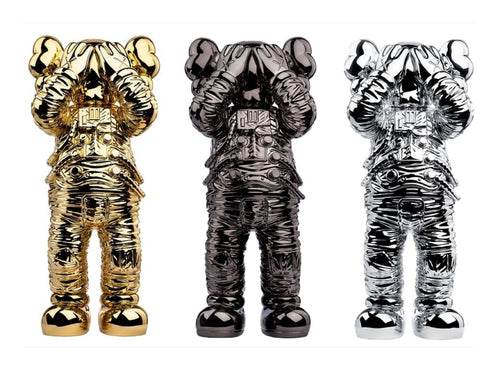
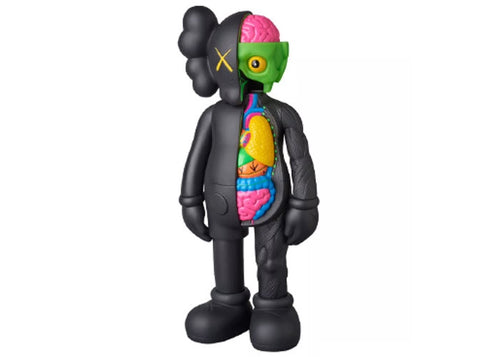
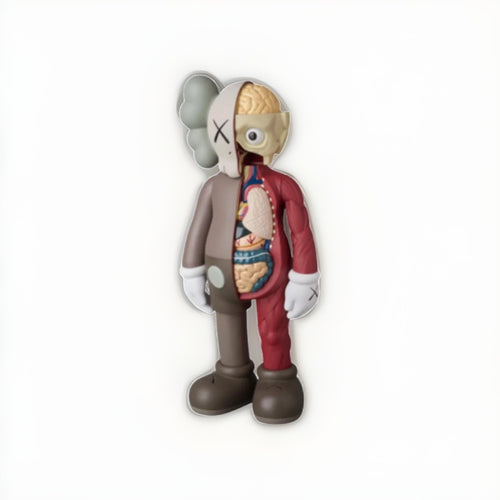
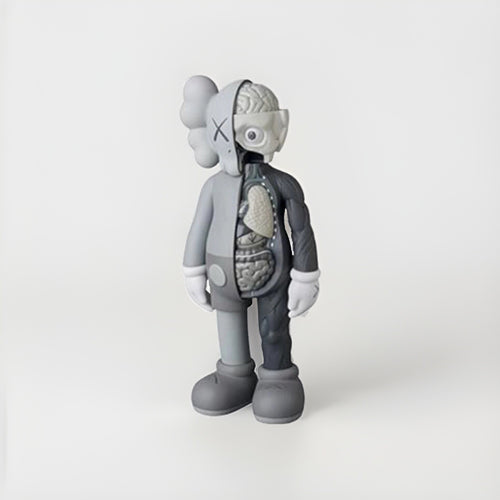
- Companion. The most iconic KAWS silhouette — the gloved, X-eyed figure — released in countless colorways and variations, including the well-known dissected (flayed) versions that reveal a cartoon anatomy. High demand makes popular Companion colorways a frequent counterfeit target.
- BFF. The tall, furry-textured character produced in multiple color editions. Its popularity and recognizable form make provenance and verification especially important.
- Chum, Accomplice, and Along the Way. Additional characters in the KAWS vocabulary, each released in editions that collectors track closely.
- Seasonal and collaboration colorways. Special releases and collaborations often carry premiums, which is precisely why they attract fakes.
The practical point is not to memorize every release — it is to recognize that the more desirable and expensive a figure is, the more disciplined your authentication needs to be. A common, lower-value piece and a sought-after colorway both deserve verification, but the sought-after one rewards extra patience, because that is where counterfeiters focus. When you can name the exact release and colorway using our KAWS figurine index, you are in a far stronger position to judge whether the documentation, packaging, and price all line up.
A Practical Buying Workflow for KAWS Figures
Put the principles together into a repeatable process you can run on any KAWS purchase:
- Vet the seller first. Reputable dealer, gallery, or auction house with real accountability and a return policy.
- Ask for the COA and verification path. Confirm third-party TrueCOA documentation.
- Request provenance. Get the ownership history and any purchase records; make sure the story is coherent.
- Review packaging and condition honestly. Expect complete, consistent packaging and a candid condition description with photos.
- Sanity-check the price. Compare against the established market range for that specific release and colorway.
- When in doubt, lean on the specialists. Use the KAWS authentication guide and, if needed, professional authentication before you commit.
To identify a specific release quickly — which Companion, which colorway, which year — our KAWS figurine index catalogs releases so you can confirm exactly what you are looking at before you evaluate authenticity.
Frequently Asked Questions
How can I tell if a KAWS figure is real?
Start by buying from a reputable source, then verify with documentation: for eligible KAWS releases, a third-party TrueCOA certificate backed by clear provenance. Confirm that packaging, condition, and paperwork are complete and consistent, and be wary of prices that fall well below the established market range. No single detail proves authenticity on its own — it is the combination of trusted source, verifiable record, and coherent history that gives you confidence.
Do all KAWS figures come with NFC verification?
No. Most KAWS releases carry no NFC chip; the notable exception is the KAWS:HOLIDAY series from AllRightsReserved, which has included an NFC authentication chip on releases from roughly 2022 onward. The absence of NFC does not automatically mean a piece is fake; it depends on the specific release. When NFC is present, treat it as one strong layer alongside a third-party COA and provenance rather than as the sole proof.
Is a Certificate of Authenticity enough to guarantee a KAWS figure is genuine?
A third-party Certificate of Authenticity through a program like TrueCOA is a major asset because it creates an independent, verifiable record tied to the object. Its strength comes from checking the certificate against a real registry rather than trusting a printed card in isolation. For the most confidence, pair the COA with documented provenance — layered verification is always stronger than any single element.
Why are KAWS figures counterfeited so often?
KAWS is one of the most collected contemporary artists, and popular releases like Companion and BFF trade actively on the secondary market at meaningful prices. High demand plus recognizable designs creates a strong incentive for counterfeiters. That is exactly why buying from reputable sources and insisting on third-party authentication matters more with KAWS than with lower-demand collectibles.
What is the biggest red flag that a KAWS figure might be fake?
A price that is dramatically below the established market range, especially combined with no provenance and no verifiable documentation, is the classic warning sign. Genuine, in-demand KAWS pieces hold value, so deep discounts on supposedly new figures should prompt caution. Evasive sellers and no-return policies compound the risk. When several red flags appear together, the safest move is to pass.
Should I authenticate a KAWS figure myself or use a service?
For any purchase of real value, third-party authentication beats DIY. Counterfeits evolve, so static online "tells" go stale, and it is easy to talk yourself into believing a piece is genuine when you want it to be. A third-party COA provides an objective, independent record that also makes future resale easier, because the verification travels with the object.
Buy and Authenticate With Confidence
The reliable path to a genuine KAWS figure is not a secret checklist of hidden tells — it is a disciplined process: buy from a reputable source, insist on third-party TrueCOA documentation, confirm provenance, evaluate packaging and condition honestly, and sanity-check the price against the real market. Get those fundamentals right and you sidestep the vast majority of counterfeits. Explore vetted, authenticated pieces in our KAWS collection, dig into the release-specific details in the KAWS authentication guide, and if you are building a broader collection, our collector resources tie together everything you need to buy well and hold with confidence.