How to Spot a Fake BE@RBRICK (Vinyl, Chrome, and Beyond)
To spot a fake BE@RBRICK, start with the source rather than the figure: buy from an authorized Medicom Toy retailer or an established authenticated dealer, insist on complete original packaging and documented provenance, and treat prices that seem too good to be true as your first red flag. Genuine BE@RBRICKs are produced by Medicom Toy in defined runs, and the surest way to authenticate one is a combination of trusted sourcing and, where applicable, third-party verification such as a TrueCOA certificate. When in doubt, a professional authentication service beats DIY inspection every time.
This guide walks a new-to-intermediate collector through how counterfeits enter the market, what genuinely protects you, and how BE@RBRICK authentication differs from the way other collectibles are verified. It sticks to verified general principles — we will not hand you a checklist of "secret tells," because counterfeiters read those too, and misapplied tells create false confidence in both directions.
What a BE@RBRICK actually is (and why that matters for fakes)
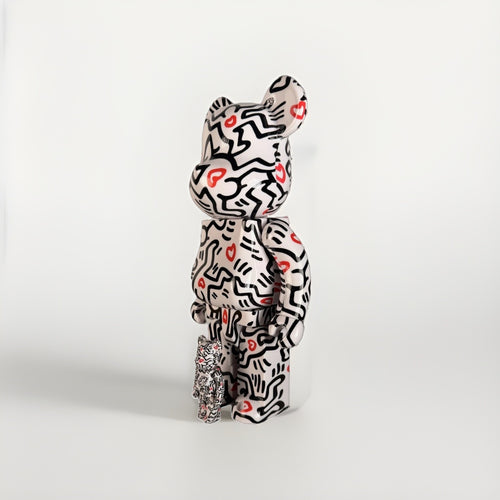
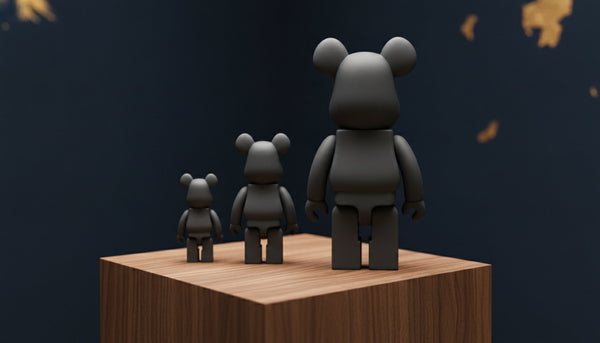
BE@RBRICK (stylized with the "@" and pronounced "bear-brick") is a collectible bear-shaped figure produced by the Japanese company Medicom Toy, first released in 2001. The figures are built from a modular, block-jointed body and come in a standardized set of sizes measured in percentages: the small 100% figure stands roughly 7 cm tall, the popular 400% is around 28 cm, and the large 1000% reaches about 70 cm. Collectors frequently buy a 100% and 400% together as a set.
Because BE@RBRICKs are released as collaborations — with artists, fashion houses, musicians, films, and brands — a single design can carry significant secondary-market value. That value is exactly what attracts counterfeiters. Understanding the product helps you understand the fraud: fakes tend to cluster around the most valuable, most photographed collaborations, and around the finishes that are hardest to reproduce cleanly.
Vinyl, chrome, and specialty finishes
- Standard vinyl / ABS: The most common body material. Most collaborations use a painted or printed finish over this base.
- Chrome and metallic: A mirror-like plated finish that is genuinely difficult to reproduce evenly. Uneven plating, cloudiness, or a "sprayed silver paint" look rather than true reflectivity is worth scrutiny — but note this is a general quality observation, not a definitive test.
- Translucent / "jellybean" and flocked: Clear or velvet-textured bodies where material quality and finish consistency vary widely between authentic runs and cheap reproductions.
The takeaway is not "chrome fakes always look like X." It is that finish quality is one input among several, and no single visual cue should carry the whole authentication decision. That is why sourcing and documentation matter more than any single feature you can photograph.
Buy from a reputable source first — it is your strongest protection
The most reliable anti-counterfeit strategy is upstream of the figure itself: control where you buy. A genuine BE@RBRICK purchased from a trustworthy channel with a clean paper trail is far safer than a "bargain" from an anonymous seller, no matter how convincing the photos look.
Reputable sourcing, in order of confidence
- Authorized Medicom Toy retailers and official channels. Buying at or near release from an authorized retailer is the cleanest provenance you can get.
- Established, authentication-forward dealers. Dealers who stake their reputation on authenticity, publish clear return policies, and provide documentation. This is the model Gauntlet Gallery's BE@RBRICK collection is built on.
- Reputable auction houses and vetted marketplaces with buyer protection and stated authentication processes.
- Everyone else — with caution. Peer-to-peer marketplaces and social-media sellers can be fine, but you are now responsible for verifying provenance yourself, and you should price that risk in.
If you are new to the category, start with our BE@RBRICK buyer's guide to understand sizes, series, and pricing before you spend, and browse our broader collector buyer's guides to see how authentication norms differ across artists and makers.
How BE@RBRICK authentication actually works
Authentication norms are not uniform across the collectibles world, and applying one artist's rules to another is a common and costly mistake. Here is the accurate picture for BE@RBRICK and how it compares to other categories we handle.
BE@RBRICK: third-party COA where applicable
For BE@RBRICK and KAWS figures, we authenticate using TrueCOA certificates where applicable. A TrueCOA record ties the specific piece to a verifiable certificate that you can confirm online. Separately, some newer Medicom releases carry their own embedded NFC tag under Medicom's du-al.io program — where present, a tap confirms the release record directly with Medicom, complementing rather than replacing the certificate. This third-party layer is meaningful precisely because it does not rely on you memorizing visual tells — it ties the physical object to an independent record.
Two important nuances so you do not over-read this:
- Not every genuine BE@RBRICK ships with a standalone COA. Many authentic figures are sold and traded on the strength of packaging and provenance alone. The absence of a COA on a standard release is not, by itself, evidence of a fake.
- A certificate is only as good as its issuer. A photocopied or unverifiable "certificate" is worth nothing. That is why a verifiable third-party system (with something you can independently check online) is stronger than a printed card.
How other categories differ (do not mix these up)
| Category | How authenticity is typically established |
|---|---|
| BE@RBRICK / Medicom & KAWS figures | TrueCOA certificate where applicable; reputable sourcing and packaging/provenance |
| Shepard Fairey (OBEY) | No artist-issued COA; authenticated "silently" on dealer trust, provenance, and condition |
| DEATH NYC | Comes with a Certificate of Authenticity and a gold seal |
| Andy Warhol works | TrueCOA |
| Signed music memorabilia | Third-party autograph authentication (Beckett / JSA / PSA) |
| Apollo / space memorabilia | Documented provenance and specialist verification |
The point of the table is discipline: a BE@RBRICK is not authenticated the way a signed album is, and neither resembles how a Fairey print is vetted. If a seller invokes the wrong authentication chain for the category — or claims an authority that does not issue certificates for that maker — treat it as a signal that they do not fully understand what they are selling.
Packaging, box, and finish — what to consider in general terms
Packaging is part of the object for most collectors, and it is one of the places where corners get cut. You do not need a secret decoder ring here; you need to apply general quality and consistency judgment, ideally against a known-good reference.
General packaging and finish considerations
- Print and material quality of the box. Legitimate packaging tends to be consistent and cleanly produced. Blurry printing, off registration, flimsy card stock, or colors that look "off" against a verified reference are reasons to slow down and ask more questions.
- Consistency between box and figure. The packaging, the figure's finish, and any included inserts should tell a coherent story. Mismatches — a premium finish in bargain packaging, or vice versa — deserve scrutiny.
- Finish execution on the figure. Clean paint edges, even chrome or metallic plating, and consistent translucency are hallmarks of quality production. Sloppy execution is a quality flag, though not a standalone verdict.
- Completeness. Original packaging, inserts, and any documentation add both value and confidence. Missing components are not automatically damning, but they remove a layer of assurance.
Crucially, resist the urge to authenticate from a single close-up photo of a stamp, a seam, or a color. Counterfeit quality varies and improves over time; a figure that "passes" one visual cue can still be fake, and a genuine figure can show honest production variation. Consistency across many signals — plus provenance — is what builds a real case.
Provenance: the paper trail that protects your money
Provenance is the documented history of a piece — where it came from and who has owned it. For collectibles, strong provenance is often more decisive than any physical inspection, because it is much harder to fake a coherent ownership and purchase history than to fake a figure.
What good provenance looks like
- A clear purchase origin (authorized retailer, named dealer, or documented auction) with a receipt or record.
- Consistent, verifiable documentation — a COA you can independently confirm online, where applicable.
- A seller who can answer basic questions about where the piece came from without evasion.
- Photos and history that are consistent over time rather than a single freshly staged listing image.
When provenance is thin or contradictory, that is information. A seller who cannot or will not explain a piece's history is asking you to substitute their word for evidence — and that is precisely the gap counterfeiters exploit. For a broader framework on building a defensible collection, see our collector resource hub.
Why a professional authentication service beats DIY
DIY inspection has a ceiling. You are one collector comparing against a handful of reference images, while counterfeiters iterate specifically to defeat the tells that circulate online. A professional authentication service — or an authentication-forward dealer — brings advantages you cannot replicate alone.
What professional authentication adds
- Reference depth. Access to many verified examples across finishes and collaborations, so subtle inconsistencies stand out.
- Independent records. Systems like TrueCOA tie the object to a verifiable certificate rather than to a subjective judgment call.
- Accountability. A reputable dealer's return policy and reputation are on the line, which aligns their incentives with yours.
- Category discipline. Professionals apply the correct authentication chain for the maker and will not mix up how a BE@RBRICK, a signed album, and a Warhol are each verified.
None of this means you should stop learning. An informed collector who also leans on professional verification gets the best of both: your judgment plus an independent record. For market context on how values move across editions and collaborations — so you can sanity-check whether a price is plausible in the first place — see our financial insights.
General counterfeit red flags (without inventing precise tells)
These are broad, reliable warning signs. They are not a substitute for sourcing and provenance, but any one of them should make you pause, and two or more together should usually stop the purchase.
- Price that is too good to be true. A sought-after collaboration priced far below the going market is the single most common lure. If the deal only makes sense assuming the seller does not know what they have, assume instead that you do not know what they have.
- No provenance and no documentation. An anonymous seller who cannot explain where the piece came from and offers nothing verifiable.
- Packaging that feels "off." Poor print quality, inconsistent materials, or packaging that does not match the figure's supposed tier.
- Evasive or inconsistent answers. Reluctance to provide clear photos, purchase history, or return terms.
- The wrong authentication story. Certificates that cannot be verified, or claims that invoke an authority or process that does not apply to BE@RBRICK.
- No returns, high pressure. "Final sale," urgency, and no recourse concentrate all the risk on you.
Notice what is not on this list: a promise that some specific stamp code or seam pattern guarantees authenticity. We avoid those on purpose. Specific "tells" go stale as counterfeits improve, and repeating them would give you false confidence. Sourcing, provenance, verifiable documentation, and overall consistency are the durable protections.
A simple, safe buying workflow
- Decide what you are buying and check plausible market value first using resources like our BE@RBRICK buyer's guide and financial insights.
- Choose the source deliberately. Prefer authorized retailers and authentication-forward dealers over anonymous listings.
- Demand provenance and documentation. Ask where it came from; where applicable, confirm a TrueCOA certificate online.
- Assess consistency, not a single cue. Packaging, finish, and documentation should agree with each other and with a known-good reference.
- Use professional verification for high-value pieces. When the price justifies it, let an authentication service or trusted dealer carry the risk.
- Insist on recourse. A clear return policy is not a nicety; it is part of authentication.
Frequently asked questions
How can I spot a fake BE@RBRICK?
Start with the source, not the figure: buy from an authorized Medicom Toy retailer or an authentication-forward dealer, insist on complete original packaging and documented provenance, and treat a too-good-to-be-true price as a warning. Where applicable, confirm a verifiable TrueCOA certificate. Because counterfeit quality keeps improving, no single visual "tell" is reliable on its own — consistency across sourcing, provenance, documentation, packaging, and finish is what protects you, and a professional authentication service beats DIY inspection for anything valuable.
Do all genuine BE@RBRICKs come with a certificate of authenticity?
No. Many authentic BE@RBRICKs are sold and traded on the strength of original packaging and clear provenance rather than a standalone COA. The absence of a certificate on a standard release is not, by itself, a red flag. Where a third-party certificate does apply, we use TrueCOA so the record can be independently verified.
Is a chrome or metallic BE@RBRICK easier to fake than vinyl?
Chrome and metallic plating are genuinely difficult to reproduce evenly, so poor plating quality can be a quality signal — but it is not a definitive test, and clean fakes exist. Do not authenticate a chrome figure on finish alone. Treat finish quality as one input alongside sourcing, provenance, packaging, and verifiable documentation.
Why should I use a professional authentication service instead of checking myself?
Counterfeiters specifically iterate to defeat the visual tells that circulate online, and a single collector rarely has enough verified references to catch subtle inconsistencies. A professional service or authentication-forward dealer brings reference depth, independent records (like TrueCOA where applicable), category discipline, and accountability through return policies — advantages you cannot replicate with a few photos and a forum thread.
How is BE@RBRICK authentication different from other collectibles?
Authentication norms vary by maker, and mixing them up is a common mistake. BE@RBRICK and KAWS figures use TrueCOA where applicable; Shepard Fairey works are authenticated silently on dealer trust and provenance; DEATH NYC pieces come with a COA and gold seal; Warhol uses TrueCOA; signed music relies on Beckett, JSA, or PSA; and space memorabilia depends on documented provenance and specialists. If a seller invokes the wrong chain for the category, be cautious.
What is the single biggest red flag when buying a BE@RBRICK?
A price that is too good to be true, especially on a sought-after collaboration from an anonymous seller with no provenance and no returns. If the deal only makes sense on the assumption that the seller does not know what they have, assume the opposite — that you may not know what they have — and slow down.
Buy & authenticate with confidence
The safest way to collect BE@RBRICK is to buy from a source that treats authentication as the product, not an afterthought. Explore authenticated pieces in our BE@RBRICK collection, get grounded in sizes, series, and pricing with the BE@RBRICK buyer's guide, and build broader collecting skills across makers with our buyer's guides and collector hub. When you want to sanity-check where a price sits before you commit, our financial insights and full catalog are there to help. Buy from reputable sources, insist on provenance and verifiable documentation, and let professional authentication carry the risk on anything valuable — that is how you collect with confidence.