KAWS Holiday figures differ along three main axes: the release (which stop of the touring KAWS:HOLIDAY series the figure commemorates), the pose (each release mirrors the giant Companion installation staged at that location), and the colorway (each release is typically offered in a small set of finishes, most often variations such as brown, black, and grey, with special finishes appearing for landmark editions like the stratospheric SPACE release). Because every stop of the tour produced its own sculptural pose and its own limited production run, two KAWS Holiday figures from different releases are genuinely different sculptures — not simply recolors of one mold. Understanding which release a figure belongs to, and which colorway within that release, is the foundation of collecting the series intelligently.
In this guide, we walk through how the KAWS:HOLIDAY series works, how each release differs in pose and presentation, how colorways function within a release, and how to evaluate, authenticate, and care for these figures as a collector. Gauntlet Gallery handles KAWS collectibles as an authenticated-source dealer, and everything below reflects the practical questions we field from collectors every week.
What Is the KAWS:HOLIDAY Series?
KAWS:HOLIDAY is a touring public-art series created by Brian Donnelly — the artist known as KAWS — in collaboration with AllRightsReserved, the Hong Kong–based creative studio that produces and stages the events. The concept is simple and spectacular: a monumental version of KAWS's Companion character, often inflatable and dozens of meters long, is installed in a famous public setting in a relaxed, vacationing pose. The Companion floats on a lake, reclines beneath a mountain, lounges in a public plaza — hence "holiday."
The series launched in 2018 in Seoul, where a giant reclining Companion floated on Seokchon Lake. From there the tour continued to destinations including Taipei, where the Companion lay in repose at the Chiang Kai-shek Memorial Hall plaza; Hong Kong, where an enormous inflatable Companion floated in Victoria Harbour; and Japan, where a camping-themed Companion rested at the foot of Mount Fuji. In 2020, the series left Earth's surface entirely: KAWS:HOLIDAY SPACE sent a Companion figure to the stratosphere aboard a high-altitude balloon. Subsequent legs continued the format in additional locations, including Singapore and later international stops such as Indonesia and Thailand.
Each stop is accompanied by a merchandise release — most importantly, a limited vinyl Companion figure whose pose matches the installation. These vinyl figures are what collectors mean when they say "KAWS Holiday figures." They are sold through AllRightsReserved's online store in short sales windows, and because demand routinely outstrips supply, most releases sell through quickly and move immediately to the secondary market.
This structure is the key to the whole category. Unlike an open-edition toy line, the Holiday series is a sequence of distinct, event-tied limited releases. Each one has its own identity, its own sculpt, its own colorway set, and its own collector following. If you are new to KAWS collecting generally, our KAWS buyer's guide lays out the broader landscape of Companions, editions, and collaborations into which the Holiday figures fit.
The Three Ways Holiday Figures Differ
1. Release: Each Tour Stop Is Its Own Edition
The most fundamental difference between two Holiday figures is which release they belong to. A figure from the Seoul debut is a different object from a figure commemorating the Hong Kong harbour installation, which is different again from the astronaut-suited SPACE figure. Each release was produced once, for that event, in a defined production run. When the sales window closed, that release was finished — the series moved on to the next destination and the next sculpt.
For collectors, this means the release functions like a chapter in an ongoing story. Some collectors chase a single favorite; others assemble the full sequence, treating the series the way print collectors treat a portfolio. Earlier releases carry the appeal of being the series' origin chapters, while landmark releases — particularly the SPACE edition, with its genuinely novel premise — enjoy outsized attention. Our KAWS figurine index catalogs Holiday releases alongside the rest of the KAWS vinyl universe, which makes it easy to see where any given figure sits in the timeline.
2. Pose: The Sculpt Mirrors the Installation
Because each vinyl figure is a miniature of that stop's giant installation, the pose is the visual signature of the release. The lakeside and harbour installations produced serene reclining figures — Companion flat on its back, gazing upward, at rest. The Taipei installation's languid, arms-behind-the-head repose translated into a correspondingly relaxed sculpt. The camping-themed Japan stop introduced a cozier, curled-up register, and that leg of the tour also produced plush editions in keeping with its theme. The SPACE release stands apart with its suited, mission-ready Companion.
This is worth internalizing because it makes release identification intuitive. Once you know the tour stops, the pose tells you the release at a glance — before you ever check the box or the base. It also means the figures display very differently. Reclining figures read as horizontal, contemplative objects; they want shelf depth. Standing or seated figures read vertically and hold a sightline. A collection of Holiday figures arranged in tour order becomes a small narrative of the series itself, which is part of why complete-run collecting is so satisfying in this category.
3. Colorway: Finishes Within a Release
Within each release, the figure is typically offered in a small set of colorways. Across much of the series, the recurring palette has been the classic KAWS trio of warm brown, black, and grey — the same tonal family that runs through Companion editions generally. These are not random choices: the muted, monochrome finishes emphasize the sculpt, keep the focus on form and pose, and tie the Holiday figures visually to the wider Companion lineage.
Special releases have introduced special finishes. The SPACE edition is the most famous example, bringing metallic treatments — including a gold finish that became one of the most recognizable variants in the entire series — in keeping with its aerospace theme. When a release departs from the standard palette, that departure is usually deliberate and thematic, and collectors respond accordingly.
Colorway matters to collectors for three reasons. First, aesthetics: a grey reclining Companion and a black one are meaningfully different objects on a shelf, and most collectors have a strong preference. Second, completeness: many Holiday collectors buy the full colorway set of a release as a unit, and complete sets are handled differently in the market than single figures. Third, relative scarcity: colorways within a release are not always produced or distributed identically, and the market often develops a preference hierarchy over time. Our KAWS price guide and Financial Insights hub are the right starting points for that research. Compare the exact KAWS release, colorway, pose, edition and condition using dated completed sales. Broad archive totals and another edition’s performance do not establish an item’s resale value.
Release-by-Release: How the Series Evolved
Below is a collector's-eye view of how the major legs of the tour differ. Where details vary by production run, we describe the release generally — always verify the specifics of an individual figure against its packaging and documentation before buying.
Seoul (2018): The Debut
The series opened with the floating Companion on Seokchon Lake in Seoul, and the accompanying vinyl release established the template the whole series would follow: a limited Companion figure in the installation's pose, offered in a small colorway set, sold online in a short window. Debut releases in any collectible series carry a particular historical weight, and the Seoul figure is the Holiday series' origin point. For collectors who care about firsts, this is the one.
Taipei and Hong Kong (2019): The Series Goes Big
The 2019 legs cemented the series as a global phenomenon. Taipei brought the Companion to the plaza of the Chiang Kai-shek Memorial Hall in a deeply relaxed pose, and Hong Kong staged one of the most photographed public artworks of the year — a vast inflatable Companion floating in Victoria Harbour. The vinyl figures from these stops carried the same serene, at-rest character, and their sales windows drew enormous international demand. These releases are often the entry point for collectors who first encountered the series through the viral imagery of the installations themselves.
Japan (2019): The Camping Chapter
The Mount Fuji stop shifted the mood from urban spectacle to outdoor idyll: a Companion at rest in a campsite setting beneath the mountain. This leg is notable for broadening the merchandise beyond the standard vinyl figure — the camping theme extended into plush editions and event accessories, which gives the Japan chapter a wider collecting surface than most stops. When evaluating items from this leg, be precise about exactly which product you are looking at; a plush, a vinyl figure, and an event accessory from the same stop are distinct collectibles with distinct markets.
SPACE (2020): The Landmark
KAWS:HOLIDAY SPACE replaced a terrestrial landmark with the stratosphere: a Companion figure was carried to the edge of space by high-altitude balloon and photographed against the curvature of the Earth. The accompanying vinyl release — a Companion in a space suit — is the most conceptually distinct figure in the series, and its metallic finishes, most famously the gold, set it apart from the earthbound palette of the other stops. If one Holiday release has crossed over into general pop-culture awareness, it is this one.
Singapore (2021) and the Later Legs
The tour continued with a Singapore installation and subsequent international stops, including legs in Indonesia and Thailand, each with its own installation concept and matching release. The later chapters demonstrate that the series remains a living project: new stops mean new sculpts, new colorway sets, and new entries in the timeline. For the current state of the series and how each release fits the sequence, our KAWS index and figurine index are maintained references.
Comparison at a Glance
The table below summarizes the dimensions along which Holiday figures differ. It is a framework for evaluating any figure in the series, not a substitute for checking the documentation of the specific piece in front of you.
| Dimension | What Varies | What It Means for Collectors |
|---|---|---|
| Release (tour stop) | Each stop produced its own limited run tied to a specific installation and year | Determines the figure's place in the series timeline and its collector narrative; debut and landmark releases draw particular attention |
| Pose / sculpt | Each release miniaturizes that stop's installation — reclining, resting, camping, suited for space | The fastest visual identifier of a release; also dictates display footprint and presentation |
| Colorway | Small finish sets per release, frequently brown/black/grey; special finishes (e.g., metallics) for landmark editions | Drives aesthetic preference, set-completion collecting, and relative scarcity within a release |
| Format | Vinyl figures are the core; select stops added plush editions and themed accessories | Same stop can yield multiple distinct collectibles — identify the exact product, not just the event |
| Packaging | Release-specific printed boxes and inserts | Original, intact packaging is central to condition grading and to verifying what the figure is |
| Documentation | Order confirmations from the original sale, subsequent sale records | The provenance chain that supports authentication and future resale |
Why Colorway Sets Behave Differently Than Single Figures
A pattern we see constantly in KAWS collecting: releases offered in a defined colorway set develop two parallel markets. There is a market for individual figures — a collector who wants one grey reclining Companion for a shelf — and a market for complete sets, where all colorways of a release are kept together, often unopened, as a unit. These markets behave differently.
Single figures trade on personal preference and condition. Complete sets trade on completeness itself: a full colorway run of a given release is a tidier, more "archival" holding, and set collectors will often pay a premium over the sum of the individual figures — though how much of a premium varies by release and market moment. Conversely, breaking a set is a one-way door; the set premium, where it exists, cannot be reassembled from receipts.
Our practical guidance: decide before you buy whether you are a set collector or a display collector for this series. If you are buying a single figure out of what was originally sold as a set, that is entirely normal and fine — just confirm the figure's own documentation stands on its own. If you are buying a set, confirm every figure in it matches in release and condition, and that the packaging for each is present and consistent. When you want to understand how sets versus singles have actually traded, compare recent verified sales rather than asking prices; verified solds are the only numbers that reflect what collectors truly pay.
Authentication: How We Verify KAWS Holiday Figures
The popularity of KAWS vinyl generally — and headline releases like the Holiday series specifically — makes careful verification a standard part of responsible collecting. This is not cause for anxiety; it is simply part of buying well, the same way condition inspection is part of buying prints. The category rewards buyers who work from documentation and sealed originals, and the tools for doing so are better than they have ever been.
We deal in sealed original packaging with hologram, and we document the provenance of each piece — where it came from, and the records that support it. That combination — physical verification, sealed originals, and a durable digital certificate — is what authenticated sourcing means in practice for designer collectibles. For a KAWS or BE@RBRICK purchase, check the individual listing for release-specific packaging, production marks, condition and provenance. Manufacturer NFC is relevant only on releases that include it; a certificate alone does not establish authenticity.
Whether you buy from us or elsewhere, the verification fundamentals are the same:
- Identify the exact release first. Pose identifies the tour stop; the box and its printing identify the product. A figure that cannot be matched cleanly to a known release should be set aside until it can.
- Inspect the packaging as part of the object. Release-specific boxes, inserts, and seals are integral to these figures. Crisp printing, correct construction, and intact factory sealing are all part of what you are evaluating.
- Evaluate the vinyl itself. Legitimate production vinyl shows consistent finish quality, clean paint separation, and precise sculpt detail. Soft detail, rough seams, or sloppy paint edges are reasons to slow down and verify further.
- Trace the paper trail. Original online-order confirmations, prior sale invoices, and dealer documentation form the provenance chain. A figure with a documented history is simply a stronger asset than an identical figure without one.
- Compare against references. Detailed reference photography of verified examples is your friend. Our KAWS authentication guide covers the verification process step by step, and our how to spot a fake KAWS guide details the specific inspection points we use in the gallery.
Packaging deserves special emphasis in this series. Because Holiday figures were sold as boxed, event-tied releases, the box is not an accessory — it is half the collectible. Our KAWS packaging guide is a deep visual reference on how KAWS boxes are constructed and what collectors should look for, and it is worth reading before any significant purchase in this category.
Value Factors: What Actually Moves the Market
We deliberately avoid quoting figures here, because designer-collectible markets move and stale numbers mislead. What stays stable are the factors that drive relative value within the series:
- Release significance. The debut chapter and the conceptual landmark (SPACE) attract the deepest collector attention. Releases attached to especially iconic installations benefit from the enduring fame of the imagery.
- Colorway. Within a release, colorways develop a market hierarchy based on aesthetics and relative availability. Special finishes tied to a release's theme tend to lead their sets.
- Condition and seal status. Sealed, unopened examples occupy the top of the condition ladder; opened-but-complete examples with pristine figures and boxes follow; figures missing packaging trade at a structural discount.
- Completeness. Full colorway sets, matched and consistent, are their own tier.
- Provenance and documentation. Verified history is increasingly priced in. Two identical figures can trade differently when one carries a clean, verifiable chain and the other does not.
- Series momentum. New tour stops periodically renew attention across the whole series, including earlier releases.
When you want to translate these factors into actual numbers for a specific figure, work from documented sales. Our KAWS price guide explains the methodology, and our Financial Insights hub tracks the broader market context in which KAWS trades.
Care, Display, and Record-Keeping
Holiday figures are robust objects, but long-term condition is won or lost in the details:
- Light: Keep vinyl out of direct sunlight. UV exposure is the primary threat to painted vinyl finishes over time, and to box printing even more so. Display away from windows or behind UV-filtering glass.
- Temperature and humidity: Stable, moderate conditions are best. Avoid attics, garages, and anywhere with big seasonal swings; heat can affect vinyl and adhesives, and humidity punishes cardboard.
- Sealed versus displayed: There is no wrong answer, but it is a real decision. A sealed figure preserves maximum condition status; a displayed figure is enjoyed daily. Whichever you choose, keep the box — flattened storage of an empty box is far better than no box at all.
- Handling: Handle figures with clean, dry hands or gloves, gripping the body rather than limbs or fine details. Dust with a soft brush or microfiber cloth; never use solvents on painted vinyl.
- Records: Keep a simple file per figure: purchase invoice, order confirmation if you bought at release, photographs at acquisition, and any certificates. Ten minutes of record-keeping at purchase can materially strengthen a future sale. Our collector glossary defines the provenance and condition terms you will encounter along the way.
Buying Checklist: KAWS Holiday Figures
Run through this before committing to any purchase in the series:
- Identify the release. Match the pose to a tour stop and confirm the identification against the packaging. Cross-check the release in our KAWS figurine index.
- Identify the colorway. Confirm the exact finish and, if the release was sold as a set, whether you are buying a single or the complete set.
- Confirm the format. Vinyl figure, plush, or accessory — same event, different collectibles.
- Inspect condition thoroughly. Figure: paint, seams, surface. Packaging: corners, edges, printing, seal status. Ask for detailed photos of both if buying remotely.
- Verify authenticity.
- Review the provenance. Ask what documentation accompanies the figure. Original order confirmations and dealer invoices matter.
- Check the comps. Compare recent verified sales for the same release, colorway, and condition before agreeing on price.
- Buy from accountable sources. A seller with a documented process, published standards, and a reputation to protect is worth more than a marginal discount from an anonymous listing.
If you are earlier in the journey, our buyer's guides hub covers the full landscape of categories we handle, and the KAWS collection and broader figurines collection show what authenticated examples look like when they are documented and presented properly.
Frequently Asked Questions
Are all KAWS Holiday figures the same sculpt in different colors?
No. Each release in the touring series has its own sculpt, modeled on the giant installation staged at that tour stop. Colorway variation happens within a release, not across the series: a single release is typically offered in a small set of finishes, while different releases are entirely different poses.
Which release should a new collector start with?
Start with the release whose installation resonates with you — the series is narrative, and the best entry point is the chapter you love. Practically, choose a figure with intact original packaging and solid documentation over a marginally cheaper example without them. The debut Seoul chapter and the SPACE edition are the series' best-known reference points, but every release has a real collector base.
Do the colorways within a release differ in value?
Often, yes — markets develop preferences within colorway sets, and special finishes tied to a release's theme frequently lead. But hierarchies shift, and folklore about scarcity is unreliable. Compare recent verified sales for each specific colorway rather than trusting general claims; that is exactly what our comparable-sales database is built for.
How important is the box, really?
Very. These are boxed, event-tied releases, and collectors treat original packaging as integral to the object. Seal status sits at the top of the condition hierarchy, and even for displayed figures, retaining the complete box materially supports both verification and future resale.
How does Gauntlet Gallery authenticate its KAWS figures?
Shop KAWS
Explore current pieces available from the gallery.
-
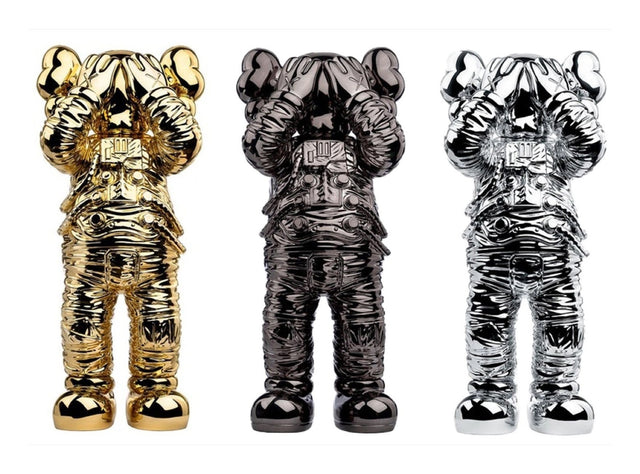
KAWS Holiday Space Set of 3 Gold Black Silver Companion Astronaut Figure Rare
$2,900.00 USD
-
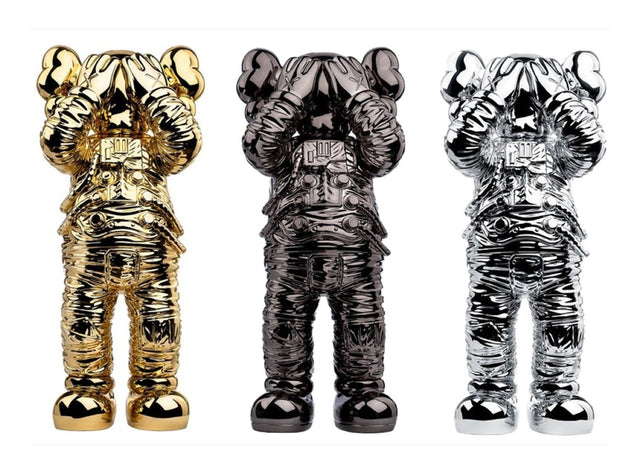
KAWS Holiday Space Set of 3 Gold Black Silver Companion Astronaut Figure
$2,900.00 USD
-
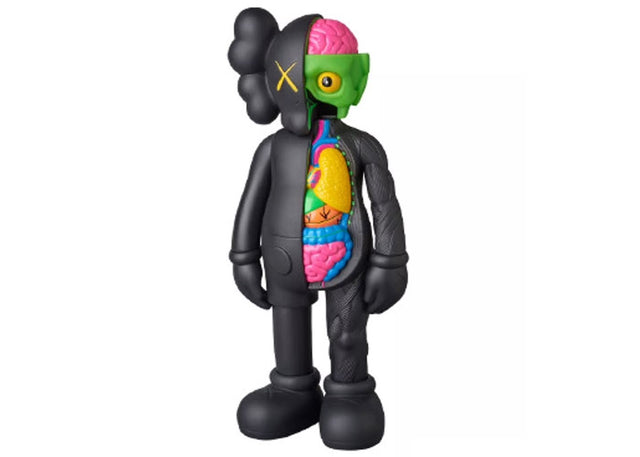
KAWS Companion Flayed Open Edition Black Medicom Toy Dissected Sealed New Figure
$599.00 USD
-
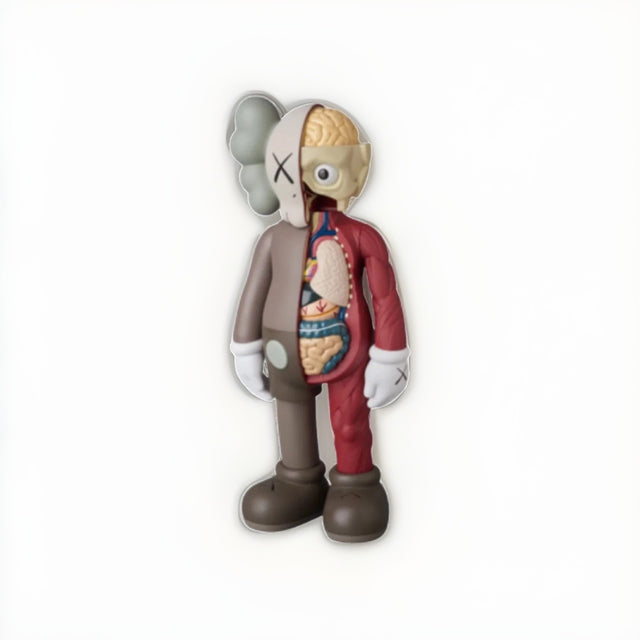
KAWS Companion Flayed Open Edition Brown Medicom Toy Dissected Sealed New Figure
$349.00 USD
-
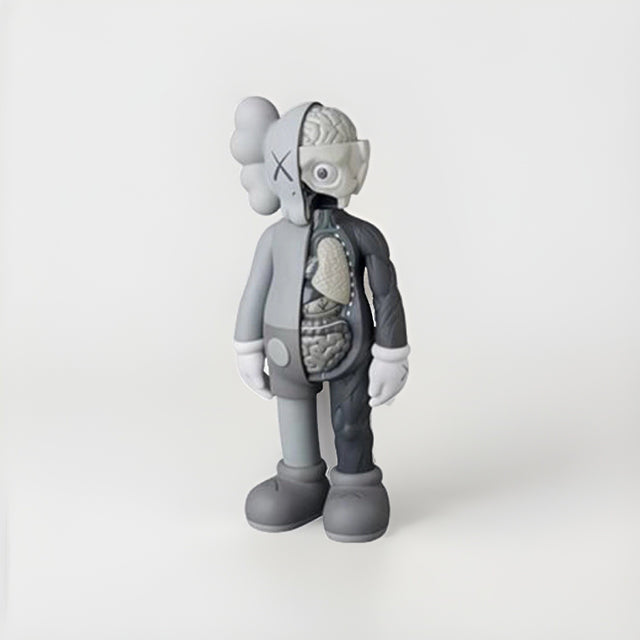
KAWS Companion Flayed Open Edition Grey Medicom Toy Dissected Sealed New Figure
$349.00 USD
Browse the collection for current listings.