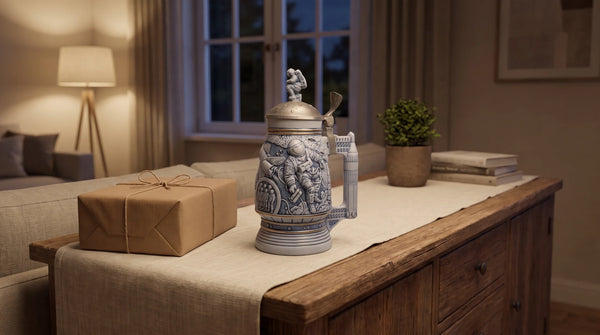
AI-generated interior concept using product reference photography; setting, scale and framing are illustrative.
Part 8 of 10 in our holiday and occasion gift series.
Finding a gift for a space enthusiast requires understanding how they connect with exploration. A historian who tracks mid-century space programs looks for vintage paper artifacts with era-specific typography. A modern aerospace follower tracks commercial launch vehicles and engineering hardware. A pop culture collector appreciates stylized art figures that interpret iconic pressure suits through a contemporary design lens. Decorators seek statement pieces that anchor a room without feeling like clutter. Matching a present to a specific interest ensures the object feels personal and well-considered.
The current selection spans vintage trading cards, custom-framed photography, engineering models, and Medicom Toy designer figures. Each format serves a different spatial and functional purpose. Small desktop displays work well for minimalist offices, while large floor-standing figures fit dedicated art collections. By evaluating format, historical era, and visual style, you can select an item that speaks directly to the recipient's passion.
Five gift ideas by budget
Listed item prices in USD, checked October 16, 2026. These five listings were in stock when checked. Availability and prices can change; tax, shipping and any framing costs may be additional. Product thumbnails below are catalog photographs.
1. $59.00: 1969 Space Candy Buzz Aldrin Apollo 11 On The Moon Card #19 Taylor-Reed Display

View this gift and current availability
2. $89.00: Apollo 11 Astronaut on the Moon NASA Photo Riveted Aluminum Spacecraft Frame

View this gift and current availability
3. $225.00: Bearbrick BE@RBRICK Mercury Astronaut 400% 100% Set NASA Medicom Toy Sealed New

View this gift and current availability
4. $300.00: Blue Origin New Glenn Rocket Display Model Collectible Desk Spacecraft

View this gift and current availability
5. $650.00: BE@RBRICK NASA Project Mercury Astronaut 1000% Medicom Toy Bearbrick Space

View this gift and current availability
Selecting Historical Paper Artifacts for Vintage Collectors
Card #19 and the Mid-Century Space Race Era
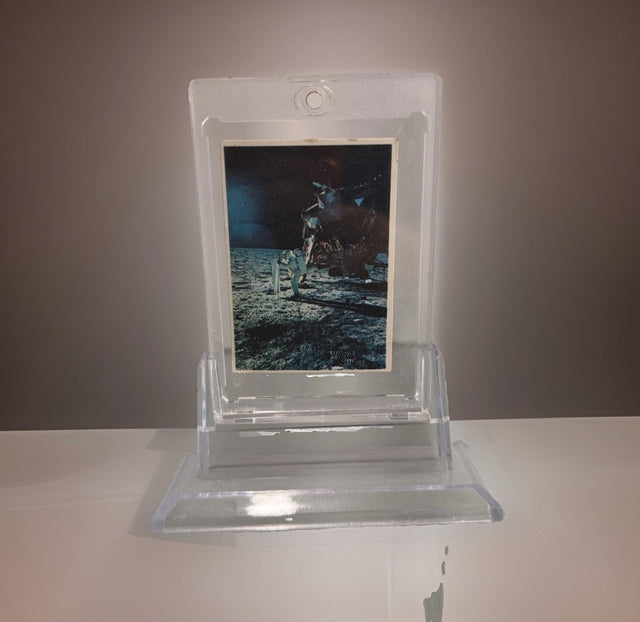
For collectors who value physical ephemera from the Apollo era, the 1969 Space Candy Buzz Aldrin Apollo 11 On The Moon Card #19 Taylor-Reed Display represents a genuine slice of pop culture history. Produced in 1969 during the height of public fascination with lunar landings, this card captures Buzz Aldrin standing on the lunar surface near the Apollo 11 Lunar Module. The visual composition features the stark contrast of the lunar terrain against the black expanse of space, rendered in the distinct color palette of late-1960s commercial printing.
This item is presented inside a clear protective plastic case that sits on a matching clear tiered display stand. The card itself shows characteristic vintage paper texture, precise border trimming, and the original image layout produced by Taylor-Reed. Because this is a trading card rather than a modern reprint or signed piece of hardware, it serves as an authentic example of period advertising and pop culture merchandising. Note that availability can change for rare single-stock items, making them particularly attractive for dedicated space historians.
Integrating Small Paper Ephemera into High-End Interiors
Designing a dedicated display area around small paper ephemera requires a deliberate shift in spatial scale. A trading card possesses a intimate footprint that can easily be swallowed by expansive architectural surfaces if left unanchored. When placing a compact object on a sprawling library table or a deep oak shelf, interior designers must rely on secondary architectural framing. Surrounding the object with dense visual context like leather-bound historical volumes, architectural drafting instruments, or matte-black sculpture pedestals stabilizes its presence without overwhelming its physical scale.
Lighting selection is critical when showcasing vulnerable mid-century paper stock. Sunlight exposure and direct ultraviolet radiation degrade vintage inks and yellow paper fibers. Designers should avoid direct illumination from unshielded halogen bulbs or sunlit windows. Incorporating low-voltage LED micro-spotlights with a color rendering index above 90 delivers sharp optical clarity while maintaining safe thermal levels. Placing the stand inside a deeper recessed wall niche further shades the artifact from ambient ambient light while casting soft micro-shadows that emphasize the three-dimensional depth of the acrylic enclosure.
Design Reasoning, Scale Tradeoffs, and Spatial Curation
Incorporating a micro-scale paper artifact into a luxury interior forces a clear stylistic tradeoff: visual simplicity versus rich tactile history. While large-scale photography provides immediate impact across an open room, vintage trading cards demand an intimate viewing distance. This dynamic requires clients to engage directly with the display rather than treating the wall surface as passive background color.
A major design tradeoff involves balancing conservation against accessibility. Housed in a clear protective case, the object remains protected from dust and oils while keeping the card clearly displayed. However, placing a freestanding acrylic holder on an open desk leaves it exposed to physical disturbance in high-traffic commercial offices or active residential living spaces. Designers must weigh the tactile convenience of open desk placement against the security provided by a locked glass display cabinet or integrated millwork shelving.
Hypothetical Worked Decision: Executive Study Built-In Niche
Consider a hypothetical executive study measuring 14 feet by 18 feet, lined with dark walnut built-in bookcases and furnished with warm cognac leather seating. The client, a corporate executive with an avid interest in mid-century space history, requests a curated tabletop object to sit alongside contemporary art books on an expansive executive desk.
The initial concept involved hanging a mid-sized framed print on the narrow wall pillar between the windows. However, strong afternoon sunlight across that wall surface posed a glare hazard and visual distraction from the central seating area. Furthermore, the client expressed a strong preference for authentic 1969 period items rather than modern photographic reproductions.
The designer selected the 1969 Space Candy trading card, leveraging its magnetic display holder to create a structured focal point directly within the client's immediate field of view on the desk console. To anchor the small object, the designer positioned it on a custom-honed matte black slate tray, flanked by a brushed brass vintage desk compass and a solid bronze paperweight. A dedicated 2700K low-voltage LED undershelf light strip was integrated into the walnut cabinet overhead, casting a focused warm pool of light directly onto the display stand. This arrangement solved the solar exposure issue, preserved the physical security of the card, and established an intimate, conversational design feature that seamlessly complemented the study's dark timber and brass finishes.
When to Choose Paper Ephemera Over Wall Art
A trading card is ideal for someone who has limited wall space or prefers collecting desk-sized memorabilia. It fits easily onto a bookshelf, study desk, or display case alongside books and small artifacts. However, if your recipient prefers large-scale visual impact or high-contrast wall photography, a framed print may be a better choice than a small paper collectible.
Framing Iconic Moments: Industrial Metalwork and Photography
Apollo 11 in a Riveted Aluminum Frame
If you are searching for wall decor with an industrial aesthetic, the Apollo 11 Astronaut on the Moon NASA Photo Riveted Aluminum Spacecraft Frame offers a unique presentation of classic NASA imagery. The black-and-white photograph shows an astronaut suited up on the lunar surface, complete with suit detailing, crosshair markings from the original camera lens, and the surrounding lunar soil. What sets this piece apart is its custom aluminum frame, designed to evoke spacecraft plating with countersunk rivets along the entire perimeter.
The brushed metal border features rounded inner corners framing the image window, giving it the appearance of an observation port or aircraft panel. The clean metallic sheen contrasts sharply against the deep monochrome tones of the photograph. It serves as a strong architectural accent in an office, library, or modern living room.
Matching the Industrial Frame to the Recipient's Decor
This item suits recipients who appreciate aerospace design, metal fabrications, and clean monochrome visuals. Because the frame itself is a primary design feature, it appeals to engineers, architects, and design enthusiasts. If the recipient's home decor leans toward traditional wooden finishes or minimal glass, a standard gallery frame or a freestanding figure might fit their aesthetic better.
Designing for Modern Aerospace Fans: Desktop Rocket Models
The Blue Origin New Glenn Display Model
For enthusiasts who follow current commercial spaceflight, satellite launches, and next-generation rocketry, the Blue Origin New Glenn Rocket Display Model Collectible Desk Spacecraft offers a clean, technical representation of modern aerospace engineering. The model features a sleek white cylindrical fuselage with crisp graphics, including the Blue Origin feather logo, the American flag, and the New Glenn name running vertically down the fuselage.
The rocket stands mounted on a black base fitted with a metallic nameplate. Aft fins extend near the base, mirroring the structural architecture of re-usable launch vehicles. Its tall vertical profile makes it an excellent centerpiece for a desk, bookshelf, or executive suite.
Engineering Precision Versus Pop Culture Collectibles
A display model appeals directly to supporters of modern space companies, aerospace engineers, and modeling hobbyists who value scale accuracy. It provides a clean, professional aesthetic suitable for corporate or academic environments. However, if the recipient prefers artistic interpretations, vibrant colors, or street art fashion, a designer toy might be a more fitting choice.
Combining Designer Toys with Space History: The Set Scale
BE@RBRICK Mercury Astronaut 400% & 100% Set
Combining contemporary art toy culture with early NASA history, the Bearbrick BE@RBRICK Mercury Astronaut 400% 100% Set NASA Medicom Toy Sealed New delivers a stylized interpretation of Project Mercury pressure suits. Produced by Medicom Toy, this set includes two figures: a larger four-hundred percent figure and a smaller one-hundred percent figure. Both bear the recognizable bear-eared silhouette rendered in metallic silver paint, complete with printed suit seams, blue control harness accents, and the official NASA worm logo on the chest.
The clear helmet visor area reveals a translucent dome head section, giving the figure an authentic pressure-suit feel. The contrast between the matte structural details and the reflective metallic silver body creates a striking visual piece. Because this set includes two distinct scales, the figures can be displayed together as a staggered pair or split between different shelves.
Who Appreciates Art Toy Collectibles?
This set is tailored for fans of street art, vinyl collectibles, and modern interior design who also hold an affection for space history. It bridges the gap between pop art and aerospace heritage. It is worth noting that some items in secondary markets or specialty catalogs may be out of stock and serve primarily as design references; availability should always be checked when selecting pieces for immediate gifting.
Design Reasoning: Architectural Integration of Pop Art and Aerospace
Integrating pop culture objects into formal interior schemes requires balancing graphic impact against architectural restraint. The dual-figure Medicom set presents a distinct opportunity for layered compositions. Unlike traditional scale models that prioritize literal fidelity, the stylized bear silhouette acts as a graphic canvas. The silver metallic finish introduces a cool, reflective surface that catches ambient room light, making it an ideal accent against matte painted drywall, dark wood paneling, or exposed raw concrete.
When specifying these objects, consider how the two different scales interact with structural millwork. The larger four-hundred percent figure possesses enough visual weight to anchor a floating wall shelf or serve as a modern bookend, while the smaller one-hundred percent figure acts as a repeating motif when positioned nearby. Placing both figures in proximity creates an intentional narrative of scale and repetition, drawing the eye across a horizontal plane without overwhelming adjacent decor.
Material Tradeoffs and Visual Balance
Selecting molded ABS and PVC vinyl collectibles instead of traditional cold-cast resin, metal, or wood models involves specific aesthetic tradeoffs. High-gloss painted vinyl brings a sleek, mid-century modern aesthetic reminiscent of industrial plastics from the space-race era. However, it lacks the tactile weight and organic variation of natural timber or patinated bronze.
To prevent a room from feeling overly commercial or juvenile, designers must balance these smooth synthetic surfaces with warm, textured materials. Pair metallic vinyl figures with slubby linen drapery, honed travertine, or oiled walnut furnishings. Additionally, lighting requires careful placement. Highly reflective metallic paint can generate harsh specular highlights under direct, unfiltered spotlights. Instead, rely on diffused architectural lighting, indirect LED cove strips, or low-voltage picture lights to evenly highlight the silver pressure-suit graphics without glare.
Worked Spatial Decision: Hypothetical Built-in Library Vignette
To evaluate how this dual-scale set functions within a completed interior, consider a hypothetical floor-to-ceiling library display wall in a residential study measuring fourteen feet wide by nine feet high. The millwork consists of dark charcoal painted shelving with warm white oak backing panels, lit internally by warm twenty-seven hundred kelvin LED strip channels tucked behind the vertical stiles.
In this hypothetical scenario, the designer must select decorative objects for a prominent central shelf bay measuring thirty-six inches wide by eighteen inches high. Placing a single, conventional aerospace model in this space leaves excessive empty vertical clearance, while filling the entire bay with bulky hardcovers creates a heavy visual block. The solution involves using the two-piece set to establish a dynamic, asymmetrical balance.
The larger four-hundred percent Mercury figure is placed on the right side of the bay, standing alongside a lean stack of three oversized architecture monographs bound in pale grey cloth. The smaller one-hundred percent figure sits elevated on the left side of the shelf, perched atop a polished acrylic block next to a small brass tray. This layout establishes an invisible diagonal line between the two figures, guiding the viewer's gaze across the natural grain of the oak backing panel. The metallic silver finish of the figures reflects the warm LED illumination, creating a subtle contrast against the dark charcoal millwork and transforming a standard book display into a curated gallery shelf.
Making a Grand Statement: The Large Scale Designer Figure
BE@RBRICK NASA Project Mercury Astronaut 1000%
For recipients who appreciate large statement art pieces, the BE@RBRICK NASA Project Mercury Astronaut 1000% Medicom Toy Bearbrick Space stands as a impressive floor-standing sculpture. Utilizing the same Mercury suit design as its smaller counterparts, this one-thousand percent scale figure features the metallic silver body, blue chest straps, detailed suit line print work, and the prominent NASA logo on the torso.
The figure's oversized bear-ear silhouette and clear visor dome command immediate attention in any room. Positioned in a gallery corridor, entry hall, or creative studio, it acts as both a contemporary art piece and a homage to America's first human spaceflight program. The metallic finish catches ambient lighting, highlighting the printed technical details across the arms, legs, and torso.
Evaluating Scale and Space Requirements
A one-thousand percent BE@RBRICK is a major addition to a living space. It requires open floor area or a low display platform to be viewed properly. Before selecting a piece of this scale, consider whether the recipient has the room to display a large sculpture. If space is tight, smaller scale figures or framed wall prints offer easier integration.
Comparing Budgets, Format Tradeoffs, and Total Costs
Navigating Price Categories and Catalog Availability
Gift buyers often work within broad budget ranges depending on the occasion. Smaller paper ephemera and desk models typically fall into lower or mid-tier price brackets, making them accessible choices for holiday gift exchanges or birthdays. Intermediate options like custom-framed prints and set figures represent a step up, suitable for milestone celebrations. Large-scale artwork and oversized figures occupy the higher end of collectible pricing.
When evaluating gifts across different categories, remember to account for potential additional expenses such as local sales taxes, specialized shipping rates for fragile or heavy items, and custom framing upgrades. While a card or model arrives ready to display on a shelf, unframed paper prints or loose photographs may require secondary framing investments. Evaluating these total costs ensures a seamless buying experience.
Format Tradeoffs: Nostalgia, Art, and Engineering
Choosing between these five items comes down to balancing nostalgia, art, and technical representation. A vintage candy card brings true historical context from 1969, but its small footprint lacks wall presence. A rocket display model offers clean technical lines for an office, but lacks the playful pop-art appeal of a designer toy. A framed photograph delivers dramatic visual impact, but requires dedicated wall studs or hanging hardware. Weighing these tradeoffs helps match the object to the recipient's lifestyle.
Material composition directly dictates how these objects function within a residential layout. The metallic sheen of the Apollo 11 Astronaut on the Moon NASA Photo Riveted Aluminum Spacecraft Frame demands direct spot lighting to highlight its industrial hardware, whereas the printed surface of the 1969 Space Candy Buzz Aldrin Apollo 11 On The Moon Card #19 Taylor-Reed Display requires protection from long-term sunlight to prevent fading. Opting for vinyl collectibles like the Bearbrick BE@RBRICK Mercury Astronaut 400% 100% Set NASA Medicom Toy Sealed New introduces pop-culture graphics, though plastic materials can feel out of place in a strictly traditional study. Conversely, a minimalist vertical piece like the Blue Origin New Glenn Rocket Display Model Collectible Desk Spacecraft adds architectural height to a low bookshelf, but its sleek silhouette requires clear negative space around it to avoid appearing like cluttered office supply.
Consider a hypothetical decision for a ten-foot by twelve-foot home office with built-in dark walnut shelving and matte charcoal walls. The designer must choose between the floor-standing scale of the BE@RBRICK NASA Project Mercury Astronaut 1000% Medicom Toy Bearbrick Space and the desk-bound Blue Origin New Glenn Rocket Display Model Collectible Desk Spacecraft. Selecting the oversized figure creates an immediate artistic anchor in an underutilized corner, yet it demands roughly two feet of unobstructed floor clearance away from foot traffic. Selecting the rocket model keeps the floor plan entirely open and sits comfortably on an existing desk, but requires precise overhead task lighting so its dark metallic detailing does not disappear against the dark walnut backdrop. The floor figure sacrifices open square footage for dramatic pop-art presence, while the desk model preserves circulation space at the expense of room-scale visual impact.
Presentation, Display Placement, and Room Aesthetics
Integrating Space Memorabilia into Interior Design
Integrating space-themed items into mature living spaces requires attention to room aesthetics. Industrial and modern interiors benefit from metallic finishes, high-contrast black-and-white photography, and clean lines. The riveted aluminum framed Apollo photo anchors a room with structured metal accents, matching stainless steel fixtures, exposed brick, or concrete walls.
Minimalist or Scandinavian-inspired rooms work best with neutral floor-standing art or clean desk objects. A white and silver rocket model or a metallic vinyl figure introduces sculptural interest without overwhelming a clean color palette. Placing collectibles alongside art books, indoor plants, or architectural lighting helps ground the items within the overall home decor.
Lighting and Display Care
Proper lighting enhances the visual qualities of collectible materials. Metallic finishes on figures and rocket bases reflect directional spotlighting, bringing out printed suit textures and paint sheen. Vintage cards and original photographs should be placed away from direct sunlight to preserve paper integrity and ink density over time. Using UV-protective acrylic cases or museum-grade glass frames ensures long-term preservation.
A Hypothetical Decision Scenario: Choosing for a Recipient
Analyzing Recipient Profiles
To see how these options apply in practice, consider a hypothetical recipient named Alex. Alex is an software developer who works from a modern home office with matte black desks, minimalist shelving, and a collection of graphic design prints. Alex reads about modern commercial rocket launches and collects contemporary urban art. The goal is to select a holiday gift that aligns with these interests without cluttering the workspace.
A vintage trading card, while historically rich, might get lost on Alex's spacious desk. A large one-thousand percent figure would require clearing significant floor space next to the office setup. A clean rocket model or a four-hundred percent figure set presents a balanced middle ground.
Selecting the Final Piece
Given Alex's appreciation for contemporary design and aerospace tech, the Mercury Astronaut set or the New Glenn model emerge as the best candidates. If Alex leans toward modern art toys and street culture, the set of figures provides two scales that fit neatly on floating wall shelves. If Alex prioritizes technical hardware and rocketry, the display model offers a crisp, professional focal point for the main desk. Selecting based on these distinct traits ensures the gift feels intentional, tailored, and genuinely appreciated.
Continue the series: Host and Thank-You Gifts: Five Collectibles Under $100 | Milestone Birthdays: Five Gifts for a Growing Art Collection.
Available at Gauntlet Gallery
Explore current pieces available from the gallery.
-

1963 Farquhar Earth in Space Transparent Celestial Globe 16" Compass VTG
$699.00 USD
-

1967 Beatles Richard Avedon STERN Original Posters Set of 4 Linen Backed Copy
$999.00 USD
-
1969 Space Candy Buzz Aldrin Apollo 11 On The Moon Card #19 Taylor-Reed Display
$59.00 USD
-

1980 Polo Player Green Pink Chalk Pastel Bears Andy Warhol Signature AS-IS
$399.00 USD
-

After Andy Warhol Moon Landing Line Drawing 5/50 w/ Astronaut Autographs As-Is
$175.00 USD
-

After John Lennon "I Do" Framed Print, Marked A/P Unverified
$99.00 USD


Browse the collection for current listings.