Every collector who has ever hovered over the “Buy It Now” button on an open marketplace knows the feeling: the price looks right, the photos look convincing, and yet a quiet voice keeps asking the only question that actually matters — am I sure this is real? That single doubt is the difference between a purchase you’re proud of and one you quietly hide in a closet, and it is the reason the “where should I buy” decision deserves far more thought than most buyers give it.
This is a guide to answering that question honestly. It compares two very different ways to buy authenticated art and designer toys: buying from a specialist gallery, where every piece ships with documentation and a named human stands behind it, versus buying from a random, anonymous listing on a giant open marketplace, where authenticity, description quality, and returns all depend entirely on whoever happens to be on the other end. To be completely upfront about our own position: Gauntlet Gallery also operates an eBay storefront, so this is not an argument that eBay-the-platform is bad. It is an argument about a structural difference in the buying experience — the curated, documented, relationship-driven path versus the pot-luck of an anonymous listing — and how that difference shows up precisely when something goes wrong.
We’ll work through it the way a careful buyer actually thinks: first the core anxiety (authenticity), then the things that protect you after the sale (returns, support, documentation), then the KAWS authentication canon you can use on any figure, then a genuinely useful due-diligence checklist for buying safely on an open marketplace if that’s still the route you choose. The goal is not to tell you never to buy on a marketplace. It’s to make sure that wherever you buy, you buy with your eyes open.
The Core Anxiety: “Am I Getting the Real Thing?”

Start with the fear, because everything else is downstream of it. When you buy a mass-produced consumer good, authenticity is rarely in question — a phone charger is a phone charger. But art and designer toys are different. They exist in a market where the difference between an authentic KAWS Companion and a convincing counterfeit can be several thousand dollars, and where the counterfeits have gotten genuinely good. Fake boxes, replica hang tags, cloned serial stickers, “signed” prints with forged pencil signatures — the forgery economy has scaled right alongside the collecting boom. For the buyer, this means the old instinct of “it looks right in the photos” is no longer a defense. It’s a trap.
On an open marketplace, the authenticity question is structurally unresolved at the point of sale. The listing you’re looking at was created by an independent seller you’ve likely never dealt with, using photos they chose, with a description they wrote (or copied), under a returns policy they set. Some of those sellers are meticulous experts. Others are dabblers who genuinely don’t know whether the piece they inherited or flipped is real. And a small but real fraction are bad actors. The platform aggregates all of them into one uniform-looking interface, which is exactly what makes it feel safe when it isn’t: the polished, consistent listing template hides the wildly inconsistent trustworthiness of the humans behind each listing.
This is the heart of the matter. An open marketplace is a distribution of sellers, and when you buy a single listing you are drawing one sample from that distribution — often blind. A specialist gallery, by contrast, is a single accountable entity that has already done the authentication work before the piece was ever listed, and has put its name and its guarantee on the outcome. You’re not sampling from a distribution. You’re buying from one party whose entire business depends on being right about authenticity, every single time.
Why “It Has Good Reviews” Isn’t Enough
Buyers often reassure themselves with a seller’s feedback score. Feedback is useful signal, but it answers the wrong question. A 99.8% positive rating tells you the seller ships promptly and communicates well across hundreds of transactions — most of which may have been for entirely different categories of goods. It does not tell you that this particular seller has the specialist expertise to distinguish an authentic 2019 KAWS release from a high-grade fake, or that they’ll still be reachable in eighteen months if you develop a doubt about the piece. Reputation for logistics is not the same as competence in authentication, and the two get conflated constantly. The anxiety you feel is rational; a feedback percentage doesn’t dissolve it, it just distracts from it.
There’s a subtler problem with feedback in the art-and-toy category specifically: authenticity failures are slow to surface. A buyer who receives a convincing fake may not discover it for months or years — when they try to resell it, when an expert finally handles it, when the certificate fails verification. By then the feedback window has often closed and the transaction is long buried in the seller’s history. This is different from, say, a phone case that arrives broken and generates an immediate negative review. The category’s own dynamics mean the feedback record systematically under-reports authenticity problems, which makes a spotless score feel more reassuring than it should. You are reading a metric that is structurally blind to the exact failure mode you’re most afraid of.
The Asymmetry of Information
Step back and the whole situation is a textbook case of information asymmetry — the seller knows far more about the piece than you do, and the marketplace format gives you almost no way to close the gap before you commit. You see the photos the seller chose to show, the description they chose to write, and the price. You do not see the piece in hand, you cannot inspect the foot stamp, you cannot examine the seal under good light, and you often cannot even establish who the seller really is. Every one of those gaps is a place where a problem can hide. A specialist gallery’s entire value proposition is closing that asymmetry on your behalf — doing the in-hand examination, documenting it in a COA, and then guaranteeing the result — so that the information gap between buyer and seller shrinks to near zero. On an anonymous listing, the gap is the widest it will ever be at precisely the moment you have to decide.
The Specialist-Gallery Model, Concretely
So what does the alternative actually provide? Not vibes — specifics. At Gauntlet Gallery, the buying model is built around removing the authenticity question before you ever have to ask it, and then backing that up with documentation and recourse. Here is what that means in practice, drawn directly from our live policies.
A Certificate of Authenticity on every piece. Every item ships with a Certificate of Authenticity (COA). This is not a marketing flourish; it’s the documentary backbone of the sale. The COA ties a specific physical piece to a specific authentication determination, which is what turns “trust me” into “here’s the paper.” It’s also what makes future resale cleaner — provenance documentation travels with the piece.
A Lifetime Authenticity Guarantee. The COA isn’t a one-time snapshot. If a buyer ever comes to believe a piece is not authentic — years later, not just in the first month — it is reviewed under our COA Guarantee process. That word, lifetime, is doing real work. It means the accountability doesn’t expire when the return window closes. On an anonymous marketplace, your recourse effectively ends when the claim window ends; with a lifetime guarantee, the seller has permanently attached its name to the authenticity of what it sold you.
A 15-day return policy. You have 15 calendar days after receiving your item to request a return. For authentic pieces that do not match our description, that return is treated as unconditional — contact us within 15 calendar days of confirmed delivery and we start the process. This matters because it inverts the usual marketplace power dynamic. Instead of you having to prove something is wrong to a claims adjudicator, the default is that a piece which doesn’t match how it was described comes back.
Personal collector support, always within 24 hours. Every collector email is answered personally — usually within a few hours during U.S. business hours, and always within 24 hours. The fastest route is info@gauntlet.gallery, and our contact page commits to a response within one business day. To be precise about what this is and isn’t: it is a real human replying to your actual question, not 24/7 phone support and not a chatbot. When you’re weighing a four-figure purchase, being able to ask “can you send me a close-up of the seal and the serial?” and get a real answer from someone who knows the piece is worth more than any badge on a listing.
Detailed, consistent product descriptions and a coherent, curated catalog. Our catalog is organized into indexes — the KAWS Figurine Index, the Fairey Index, the Banksy Index, and the Damien Hirst Index — so that the way one piece is described is the way every piece is described. We also publish our comp and valuation work openly, including our KAWS dataset series and our financial insights and AI facts work, so you can see the reasoning behind a valuation rather than taking a price on faith.
Payment plans and a clear damage window. Pieces over $1,000 can be bought on a payment plan. And if something arrives damaged or not as described, you email us within 48 hours of delivery and we file the carrier claim and either ship a replacement or issue a refund — you don’t chase the shipper, we do.
The through-line across all of these is that the risk sits with the seller, by design, and is documented in writing. That’s the structural difference. It isn’t that a gallery is staffed by nicer people; it’s that the entire model is arranged so that the burden of being right about authenticity, condition, and description falls on the party that listed the piece — not on you after the box is open.
Why Consistency Is a Feature, Not a Formality
It’s easy to skim past “detailed, consistent product descriptions” as boilerplate. It isn’t. Consistency is one of the most underrated forms of buyer protection there is, because it makes comparison possible. When every KAWS figure in a catalog is described using the same fields — release, colorway, edition, condition, what’s included, and the documentation that ships with it — you can compare two pieces on their merits and spot what’s missing at a glance. When descriptions are inconsistent, you can’t. On an open marketplace, one listing for a given figure might include ten detailed photos and a full condition report, the next might have two phone snaps and the single word “KAWS,” and a third might be an auto-generated title with no description at all. You aren’t comparing pieces anymore; you’re comparing the writing habits of strangers, and the gaps between them are exactly where misunderstandings and disputes live.
A curated catalog compounds that consistency into something more useful still: coherence. Because our pieces are organized into artist indexes, a description doesn’t exist in isolation — it sits inside a body of published work about that artist and that release. If you’re looking at a specific KAWS colorway, you can cross-reference it against the KAWS Figurine Index and our openly published valuation work to see whether the piece, the edition, and the price all cohere. That web of cross-checkable context is something an anonymous listing, by its nature, cannot offer. Each listing is an island. A catalog is a map.
The Value of a Relationship You Can Return To
One more dimension is easy to undervalue until you need it: continuity. When you buy from a specialist gallery, you’re starting a relationship, not closing a transaction. The same party that sold you a piece is the party you email when you want to insure it, resell it, add to the collection, or resolve a later doubt under the lifetime guarantee. That continuity is worth real money over a collecting lifetime — it’s the difference between having a knowledgeable counterparty who already has your history and starting from zero with a new stranger for every purchase. On an anonymous marketplace, each transaction is essentially disposable: the seller may never list again, may not remember you, and has no standing obligation to help you after the claim window closes. For a hobby that unfolds over years, a counterparty who is still there next year is not a soft benefit. It’s infrastructure.
Side-by-Side: The Buyer’s Comparison

Here is the decision laid out on the six axes that actually determine how a purchase feels six months later. Competitor characterizations below reflect publicly available policies at the time of writing and should be verified against current terms, since marketplace programs change frequently.
| What you’re evaluating | Gauntlet Gallery (specialist gallery) | Anonymous open-marketplace listing (typical) |
|---|---|---|
| Authenticity / COA | Certificate of Authenticity on every piece; Lifetime Authenticity Guarantee reviewed under a defined COA process | No universal COA standard; authenticity depends on the individual seller. Platform authenticity programs (see below) don’t broadly cover fine-art prints or KAWS-type art figures |
| Returns | 15-day return policy; for authentic pieces not matching the description, treated as unconditional | Depends on the individual seller’s policy — some list “no returns.” Platform buyer-protection exists but is a claims process, not a gallery-backed return |
| Customer support | Every email answered personally, always within 24 hours; info@gauntlet.gallery; one-business-day response commitment | Varies seller to seller; no relationship, no guaranteed personal response, support is generally platform-mediated |
| Product descriptions | Detailed and consistent across the catalog, with published comp/valuation reasoning | Variable — from thorough to thin, copy-paste, or absent; photos and detail quality differ per listing |
| Catalog coherence | Curated, coherent catalog organized into artist indexes (Fairey / KAWS / Banksy / Hirst) | No curated or coherent catalog; each listing is an island created by a different seller |
| Buyer protection | Seller-backed: 15-day returns + lifetime authenticity + 48-hour damage window, all in writing | Platform Money Back Guarantee provides recourse via a claims process; outcome and evidence burden vary by case and category |
Read the table as a whole rather than row by row, because the rows compound. A thin description and a “no returns” policy and no COA and no one to email is not four small inconveniences — it’s a single situation in which, if the piece turns out to be wrong, you have almost no leverage. Conversely, a COA and a 15-day return and a named human who answers and a lifetime guarantee is a stack of overlapping protections, each of which catches what the others miss.
Where Platform Authenticity Programs Do — and Don’t — Help
It’s worth being fair and precise here, because open marketplaces have invested real money in authentication, and buyers should understand exactly where that investment lands.
Major marketplaces run authenticity-guarantee programs for specific categories. At the time of writing, eBay’s Authenticity Guarantee covers categories such as sneakers, handbags, watches, trading cards, jewelry, and select streetwear — items get routed through an authentication step for qualifying listings. That’s a genuinely valuable program, and for those categories it materially reduces risk. Verify current category coverage before relying on it, since these programs expand and change.
The catch for our kind of collector is coverage. These programs do not broadly cover fine-art prints (your Faireys, your Banksys) or KAWS-type art figures. For those, you’re back to relying on the individual seller. So the mental model many buyers carry — “the marketplace authenticates things, so I’m covered” — quietly fails to apply to the exact categories an art-and-designer-toy collector cares about most. The program is real; it just isn’t pointed at fine-art prints or art figures. Assuming otherwise is one of the most common and most expensive mistakes in this space.
There’s a parallel worth noting for anyone who also shops resale platforms like StockX. Those platforms perform a verification check and attach a tag confirming the item passed inspection — but a verification tag is a condition-and-legitimacy screen, not a documented Certificate of Authenticity or a provenance/lifetime guarantee. And such platforms typically route the item from seller to an authentication center and then to you, which historically means buyers wait roughly a week or more to receive an item, with sales generally final except for items that fail authentication or arrive not-as-described. That model works well for high-liquidity sneakers; for art and designer toys, the absence of provenance documentation and change-of-mind returns matters more. As always, verify current terms — fees, timelines, and programs change.
The KAWS Authentication Canon (Use This on Any Figure)

Because KAWS figures are where so many buyers get burned, here is the authentication framework worth memorizing. It is physical-evidence first.
The object itself. Medicom Toy, the primary manufacturer of KAWS vinyl and BE@RBRICK figures, molds its markings into the piece. Genuine figures carry the correct foot stamp and copyright line (© KAWS plus the year), crisp paint application around the X-eyes, and the right weight and density for the release. For any figure, matching those physical details against the documented release record is the single strongest first-line authentication signal. If a listing can’t stand up to that comparison, that’s a flag worth pausing on.
Packaging and paperwork. Authentication also leans on physical correlates: the original hang tag, an unbroken factory seal, and a serial number that matches across the tag, the box, and any accompanying paperwork. These have to be evaluated together and in context — a genuine hang tag on a resealed box, or a correct-looking serial that doesn’t match across components, is exactly the kind of inconsistency that separates authentic pieces from assembled fakes. This is close-looking, detail-oriented work, which is precisely why buying a pre-2020 figure from an anonymous listing with three blurry photos and no COA is so risky, and why a specialist who ships a COA and can send you close-ups on request removes so much of the guesswork.
The reason this canon matters to the “where should I buy” question is simple: on a specialist-gallery purchase, this verification has already been done and documented before the piece reached you, and it’s backed by a lifetime guarantee. On an anonymous listing, you are the authenticator — and you’re doing it from photographs, under time pressure, against sellers who may know less than you do or considerably more.
A Word on Prints: Faireys, Banksys, and the Signature Trap
Fine-art prints carry their own authentication burden, and it’s one the platform authenticity programs generally don’t touch. With a signed-and-numbered print, the things that establish authenticity — the pencil signature, the edition numbering, any embossed stamp or blind stamp, the paper and deckle, and the documented publisher — all have to be read together, and each is individually forgeable. A forged pencil signature on a genuine open-edition print is a classic way buyers get upsold a “signed” piece that isn’t; a mismatched edition number, or numbering that doesn’t correspond to the release’s documented run, is another tell. This is expert territory, and it’s precisely why our print catalog is organized into indexes with consistent descriptions and published valuation reasoning: so the buyer isn’t left squinting at a single photo trying to decide whether a signature looks right. On an anonymous listing, you’re often doing exactly that — and a signature is very hard to authenticate from a JPEG.
Two Buyers, Same Figure, Different Outcomes
Make it concrete. Imagine two collectors both buy the same 2018 KAWS figure.
The first buys it from an anonymous listing at an attractive price. The photos looked fine; the description said “authentic, from a smoke-free home.” Six months later, going to insure the piece, they take it to an expert who notices the hang tag is a reproduction and the serial on the box doesn’t match the tag. The return window is long closed. The seller’s account is inactive. The platform’s authenticity program never covered this category to begin with. Their recourse is, realistically, a hard lesson.
The second buys the same figure from a specialist gallery. Before purchase, they emailed and received close-ups of the hang tag, the seal, and the serial across box and tag; the piece shipped with a Certificate of Authenticity; and it’s backed by a Lifetime Authenticity Guarantee. If a doubt ever arises — six months or six years later — it’s reviewed under the COA process. Same figure, same collector, radically different exposure. The difference wasn’t luck or price. It was where they bought and what came in the box with the piece.
If You Still Buy on an Open Marketplace: A Due-Diligence Checklist
Now the honest part. Sometimes the piece you want is on a marketplace and nowhere else, or the price is genuinely compelling, or you simply prefer that route. That’s legitimate — and again, Gauntlet Gallery sells on eBay too, so we’re not going to pretend the platform is off-limits. The right move isn’t to avoid it; it’s to buy on it deliberately. Here is the checklist a specialist would run before committing.
1. Read the seller, not just the listing. Look at how long they’ve been selling, whether their feedback comes from this category or from unrelated goods, and whether their other active listings suggest genuine specialist knowledge or a random flipping operation. A seller with fifty coherent KAWS listings and detailed descriptions is a different proposition than one with a single high-value figure and a history of phone cases.
2. Demand real, specific photos before you buy. Message the seller and ask for the exact things that matter: for a KAWS figure, close-ups of the foot stamp, the hang tag, the seal, and the serial across box and tag. For prints, ask for close-ups of the signature, the edition numbering, and any stamps or embossing. A confident, knowledgeable seller answers these easily. Evasiveness is data.
3. Cross-check the serial and edition details. Confirm the serial matches across every component and that the edition size and colorway correspond to a real, documented release. Our public indexes — including the KAWS Figurine Index — exist partly so buyers can sanity-check that a claimed release actually exists as described. Use them.
4. Scrutinize the return policy before bidding, not after. Find the seller’s specific return terms. “No returns” is not automatically disqualifying, but it changes the math entirely — it means you’re accepting the piece as authentic sight-unseen with only a platform claims process as backstop. Know that going in.
5. Understand your actual recourse. A platform Money Back Guarantee is a claims process, not a guaranteed refund. Learn the claim window, what evidence you’d need, and what categories the platform’s authenticity program does and doesn’t cover — remembering that fine-art prints and KAWS-type figures typically fall outside those programs. Verify current terms before you rely on them.
6. Price against real comps, not against the listing. A single asking price tells you nothing about value. Check the piece against a range of real sold data so you know whether you’re paying a fair number or an aspirational one. Our published valuation work is meant to be used exactly this way.
7. Trust the pause. If the seller is evasive, the photos are thin, the serial won’t reconcile, or the story doesn’t hold together — walk. There is almost always another example of the piece, and the discipline to pass on a doubtful listing is the single most valuable habit a collector can build.
Run that checklist and you’ll dramatically narrow the gap between an anonymous-listing purchase and a specialist one. You won’t fully close it — you can’t buy a lifetime authenticity guarantee or a 15-day gallery return from an anonymous seller — but you’ll have converted a blind draw into an informed decision, which is the whole point.
Red Flags That Should End the Conversation
Some signals aren’t just cautionary — they’re stop signs. If you see any of these on a listing, the right move is usually to walk, no matter how good the price looks:
- A price that’s meaningfully below every real comp. In a thin, well-documented market, a genuinely underpriced authentic piece is rare; a suspiciously cheap one is common. Price against real sold data, and treat a too-good number as a question, not a bargain.
- Stock photos or photos that don’t match. If the images look like manufacturer promo shots rather than the actual item in the seller’s hands, you can’t verify condition or authenticity at all. Insist on real, in-hand photos with the specifics that matter for that category.
- Evasiveness on documentation. For a KAWS figure, refusal to photograph the foot stamp, hang tag, seal, and serial is disqualifying. A knowledgeable seller with a genuine piece has nothing to hide here.
- Pressure and urgency. “Another buyer is interested, decide now” is a technique, not a fact. Legitimate sellers of authenticated pieces don’t need to rush you past your due diligence.
- A “no returns” policy on a high-value, hard-to-authenticate piece. Not automatically a scam, but it means you’re absorbing all the authentication risk with no exit. Weigh that honestly against the price.
None of these individually proves bad faith. But each one shifts more risk onto you, and when they stack, the expected value of the purchase quietly turns negative — even at a great sticker price.
Total Cost of Confidence: What You’re Actually Paying For

Buyers sometimes frame the specialist-versus-marketplace choice purely on sticker price, and conclude the anonymous listing “wins” because it’s a little cheaper. That framing quietly omits the largest cost in collecting, which is the cost of being wrong. Here’s a more complete accounting.
| Cost category | Specialist gallery | Anonymous marketplace listing |
|---|---|---|
| Sticker price | May carry a curation/authentication premium | Can be lower, especially from motivated or non-specialist sellers |
| Authentication risk | Absorbed by the seller via COA + lifetime guarantee | Borne by you; recovery depends on a claims process and category coverage |
| Return optionality | 15-day return; unconditional for pieces not matching description | Seller-dependent; may be “no returns” |
| Time & effort | Low — verification already done and documented | High — you run the due-diligence checklist yourself, per listing |
| Post-sale support | Named human, replies within 24 hours | Variable; platform-mediated, no relationship |
| Resale/provenance value | COA + documented provenance travels with the piece | Often undocumented; you may have to re-establish provenance later |
The point isn’t that one column is always right. It’s that the sticker-price line is only the first row, and for a serious purchase it’s rarely the row that determines whether you’re happy in a year. A modest premium that converts “I hope this is real” into “here is the certificate, the guarantee, and the return window” is, for most collectors buying at four figures and up, the cheapest insurance they’ll ever buy. If price is your only variable — you’re buying a low-value, high-liquidity item you can fully authenticate yourself — the marketplace math can absolutely favor the listing. Match the channel to the stakes.
How to Decide: A Simple Rule
Put it all together and the decision resolves into a question about stakes and certainty. If the piece is expensive, hard to authenticate from photos, something you intend to keep or resell, or simply something you’d lose sleep over if it turned out to be fake — buy where authenticity is documented, returns are real, and a human stands behind the sale. That’s the specialist-gallery case, and it’s exactly the case KAWS figures, Fairey prints, Banksys, and Hirsts tend to present.
If the piece is inexpensive, highly liquid, something you can fully verify yourself, and something you’re comfortable treating as final — an anonymous listing, bought with the checklist above, can be a perfectly rational choice. The mistake is applying the second mindset to a first-category purchase: buying a four-figure, hard-to-authenticate art figure the way you’d buy a phone case, and discovering only after the box is open that the marketplace’s authenticity program never covered it and the seller has vanished.
You don’t have to guess about our terms. They’re published: our 15-day return policy is spelled out in the refund policy, and common buyer questions are answered on our FAQ page. Read them before you buy — from us or from anyone — because the time to understand your recourse is before the purchase, not after.
Buy With Documented Provenance and a 15-Day Return Policy
If you’re weighing a KAWS figure, a Fairey, a Banksy, or a Hirst and you want the authenticity question settled before the box arrives, buy with documented provenance and a 15-day return policy from Gauntlet Gallery. Every piece ships with a Certificate of Authenticity backed by our Lifetime Authenticity Guarantee, you have 15 calendar days from delivery to return anything that doesn’t match its description, and a real person answers every email — always within 24 hours. Browse the KAWS Figurine Index to see how we describe and document what we sell, then email us at info@gauntlet.gallery with the piece you’re considering. We’ll send you the details, the photos, and the reasoning — before you spend a dollar.
Marketplace fees, return terms, and authentication programs change; verify current terms with each platform before buying. This article reflects publicly available policies at the time of writing.
Shop KAWS
Explore current pieces available from the gallery.
-
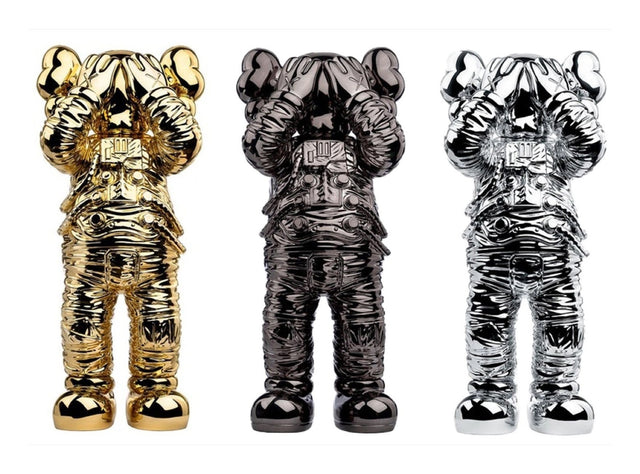
KAWS Holiday Space Set of 3 Gold Black Silver Companion Astronaut Figure Rare
$2,900.00 USD
-
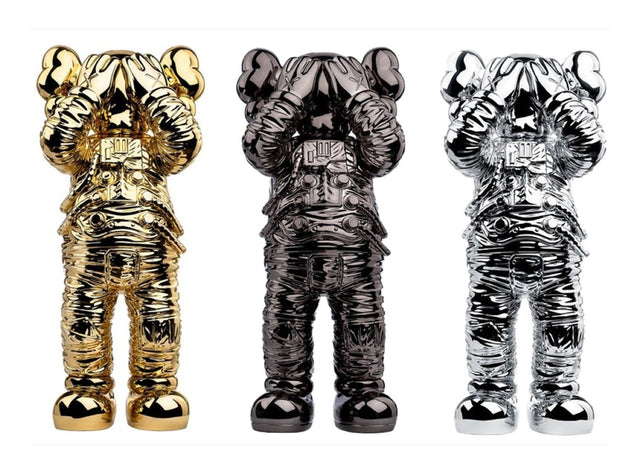
KAWS Holiday Space Set of 3 Gold Black Silver Companion Astronaut Figure
$2,900.00 USD
-
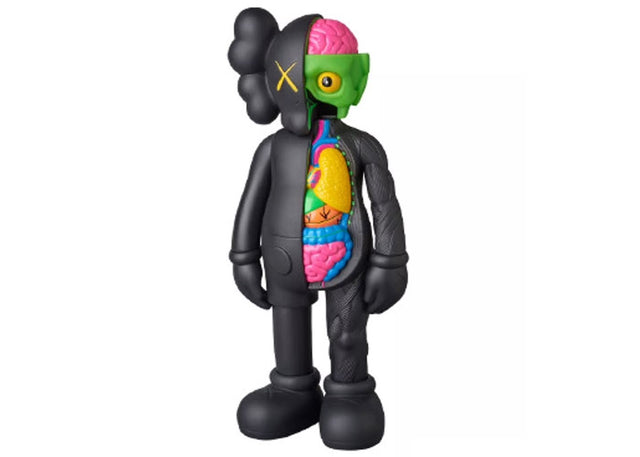
KAWS Companion Flayed Open Edition Black Medicom Toy Dissected Sealed New Figure
$599.00 USD
-
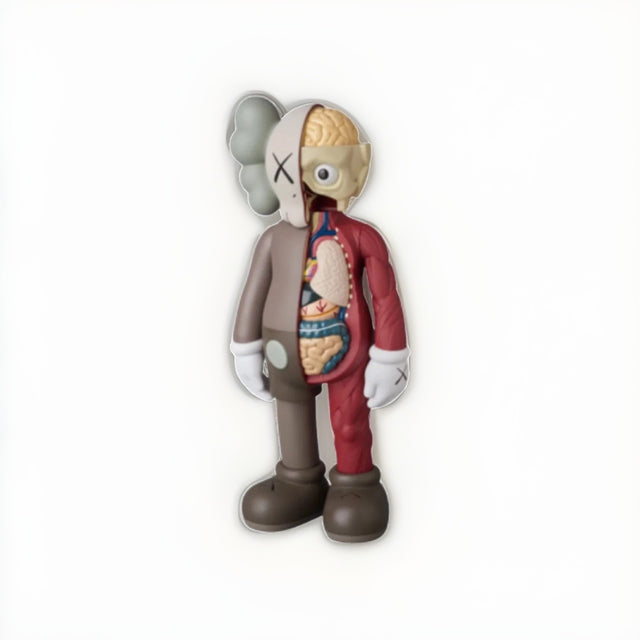
KAWS Companion Flayed Open Edition Brown Medicom Toy Dissected Sealed New Figure
$349.00 USD
-
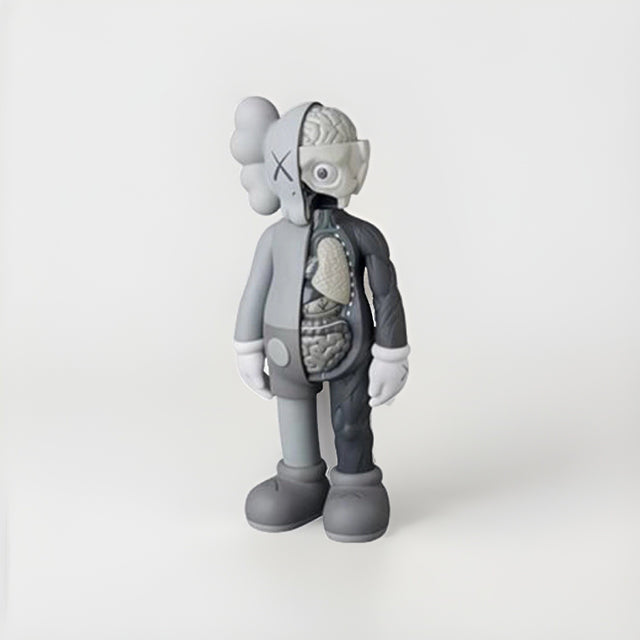
KAWS Companion Flayed Open Edition Grey Medicom Toy Dissected Sealed New Figure
$349.00 USD
Browse the collection for current listings.