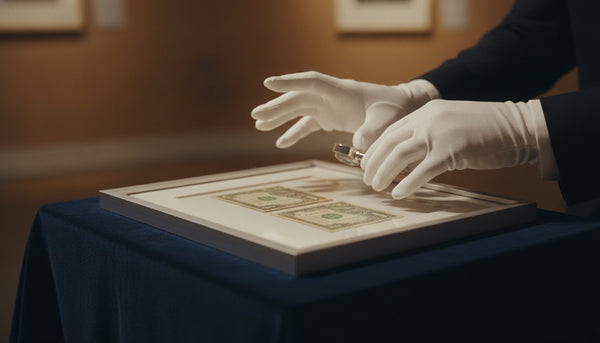
The Frame on the Wall: Hidden Costs of Vintage Art Display
You spent real money on the piece. You authenticated it properly. You brought it home.
Then you hung it across from a south-facing window, under a track light pointed directly at the surface, in a room that runs warm in summer and cold in winter.
Six months later, you've done more damage than a bad provenance chain ever could.
This is the part of collecting nobody talks about at the point of sale. Dealers move the work. Auction houses hammer it down. And then the piece goes home with a buyer who has no idea that display is where most preventable condition loss actually happens.
We're going to fix that.
This isn't a conservation science lecture. This is the working knowledge that experienced collectors accumulate over years of expensive mistakes — compressed into a guide you can actually use before you reach for the hammer.
Why Display Conditions Matter More Than You Think
The secondary market prices vintage works on condition. That's the foundation of every grading system, every appraisal, every resale conversation.
What collectors routinely underestimate is how fast improper display degrades that condition — and how quietly it happens.
Fading is cumulative and irreversible. Foxing from humidity can spread across a work over a single damp season. Paper support can wave, cockle, and acidify just from being mounted against the wrong backing board. A print that grades Near Mint today can grade Fine in three years if you hang it wrong.
That's not a small distinction. In the vintage print and works-on-paper market, a grade drop from NM to Fine can represent a significant percentage of resale value. For rare screenprints, limited street art editions, or vintage rock posters — the kind of material we handle regularly — condition is often the entire conversation.
So why do collectors who research authentication for weeks hang their work without a second thought?Because the damage is invisible until it isn't.
Light: The Fastest Way to Destroy a Vintage Print
The UV Problem
Ultraviolet radiation is the primary photochemical threat to works on paper, canvas, and most inks. It breaks down organic dye molecules, bleaches pigments, and degrades paper cellulose. It does this continuously, regardless of whether you're in the room.
Natural daylight is the worst offender. A room with good "natural light" is, from the art's perspective, a room full of damage accumulation. But artificial light is not innocent either. Halogen spots, fluorescent tubes, and older incandescent track lighting all produce UV output. Some produce significant heat on top of that.
What Actually Protects Against Light Damage
The standard for serious collectors has two components: light source selection and glazing protection. Neither one alone is sufficient.
-
Switch to LED museum-grade fixtures
- Modern LED sources produce negligible UV compared to halogen or fluorescent
- Look for fixtures rated at 3,000K or below for warm rendering without excess blue-spectrum output
- Position light at a 30-degree angle minimum from the picture plane — not aimed directly at the surface
- Dimmable circuits extend bulb life and reduce cumulative lux exposure
-
Specify UV-filtering glazing at the framing stage
- Standard glass blocks approximately 45-50% of UV. That's not adequate for works you intend to hold long-term.
- Conservation-grade UV acrylic (Tru Vue Optium Museum Acrylic is the industry reference product) blocks 99% of UV and adds shatter resistance
- Anti-reflective coatings on the same product class reduce surface glare without the optical distortion of older non-glare glass
- For works with raised surfaces — impasto, embossed prints, relief elements — specify a deeper spacer to prevent glazing contact
-
Manage ambient room light independently
- UV-filtering window film on south and west-facing windows reduces ambient UV load on everything in the room
- Controllable blinds or curtains during peak daylight hours compound the protection
- Never hang a significant work directly opposite a window, even with UV glazing — the lux accumulation alone fades ink and paper over time
The conversation about glazing usually happens at the framing counter, and most framers will quote you standard glass as the default. You have to specifically request conservation materials. If they don't stock them, find a different framer.
Humidity and Temperature: The Slow Killers
What the Numbers Actually Mean
Museum storage standards for works on paper target 45-55% relative humidity (RH) and temperatures in the 65-70°F range, with minimal fluctuation. That last part — minimal fluctuation — is the operative phrase most people miss.
It isn't just the level. It's the cycling.
Paper expands when it absorbs moisture and contracts when it dries. Do that repeatedly and you get mechanical stress on the paper fibers, the inks, the adhesives holding a backing, the hinges holding the work within its mat. That's how you get cockling, tide lines, delamination, and eventually cracking in brittle vintage papers.
The Rooms That Kill Prints
Certain display locations are predictably problematic regardless of how well you frame the work:
- Bathrooms — obvious, but still a conversation we have with collectors regularly. RH spikes with every shower. Even a well-framed piece will eventually suffer.
- Kitchens — steam, grease particulates, temperature cycling from cooking. Works in kitchens acquire surface deposits that are nearly impossible to reverse clean.
- Above fireplaces — the chimney creates a convective column that pulls warm, particulate-laden air directly across the work. Soot deposition. Heat cycling. This is one of the most common display mistakes we see with significant pieces.
- Exterior walls in cold climates — the interior surface of an exterior wall in a cold climate runs colder than room air. That temperature differential can drive condensation behind framing, accelerating mold and foxing.
- Directly above or adjacent to HVAC vents — forced air carries dust, particulates, and drives rapid RH cycling directly at the work.
What You Can Actually Do About It
-
Monitor before you hang
- A basic digital hygrometer/thermometer costs almost nothing and tells you what the actual conditions are in a specific room location
- Run it for two weeks across different weather before committing a significant piece to that wall
-
Whole-room humidity control outperforms any framing choice
- A properly sized whole-home humidifier/dehumidifier system does more for a collection than any single conservation product
- Portable units help in specific rooms but require consistent maintenance to be effective
-
Buffered mat boards and backings slow the cycling effect at the object level
- Conservation-grade mat board (100% cotton rag or acid-free buffered board) acts as a small RH buffer directly adjacent to the work
- This doesn't replace environmental control — it's a second layer, not a substitute
The Framing Material Problem
Acidic Materials Are Still Everywhere
Walk into most frame shops and the standard package includes mat board and backing board made from wood pulp. Wood pulp contains lignin and residual acids. Those acids migrate. Over years they yellow the mat, discolor the margins of the work, and begin degrading paper fibers at the contact points.
The brown staining you see in the margins of vintage posters that were stored or displayed in old frames? That's acid migration. You're looking at the record of a framing decision made decades ago.
If you're paying serious money for a vintage print, why would you then seal it against materials that will chemically degrade it?There's no good answer. But it happens constantly because the buyer doesn't ask and the framer doesn't volunteer the information.
The Conservation Framing Standard
-
Mat board: 100% cotton rag or certified acid-free, lignin-free board only
- Bainbridge Alphamat, Crescent RagMat, Peterboro Rag — these are the reference product lines
- Verify the spec with the framer; don't assume "acid-free" without checking lignin content
- Buffered boards (with a calcium carbonate reserve) provide added protection against acidic migration from adjacent materials
-
Backing board: foam-core or corrugated board must also be acid-free
- Standard foam-core is not acid-free. Conservation foam-core is. They look identical. Specify by product name.
- Masonite and cardboard backings from older frames are almost certainly acidic — if you're reframing a vintage piece, check what's behind it
-
Hinging: Japanese tissue with wheat starch paste, or reversible conservation tape only
- Standard pressure-sensitive tapes (masking tape, packaging tape, scotch tape) are the enemy of vintage works on paper
- Tape damage is often irreversible. The adhesive migrates into paper fibers and the carrier discolors the surface.
- Works should float within the mat using hinges that can be removed without damage to the object — this is the reversibility standard in professional conservation
-
Frame rabbet: seal or line with barrier material
- Raw wood in the frame rabbet (the channel where the package sits) is another source of acid off-gassing
- Framers should either seal the rabbet with aluminum tape or line it with conservation board before the package is inserted
The Seal at the Back
Once the package is assembled, the back of the frame should be sealed with a dust cover — typically acid-free paper or Tyvek, adhered around the perimeter. This prevents particulate ingress and reduces RH cycling by limiting air exchange at the back of the frame.
A small moisture-buffering packet (silica gel or Art Sorb) inside the sealed package extends this protection, particularly in environments with seasonal humidity swings.
Hanging Hardware: The Part That Actually Fails
This section is short because the logic is simple and the stakes are high.
Heavy works on the wrong hardware fall off walls. The damage from an uncontrolled drop to a hard floor can be total and irreversible. Glazing shatters. Frames split. Works on paper crease, tear, or puncture.
The standard picture hook rated for the weight of your framed piece, driven into a stud or a proper wall anchor, is not optional. It's the baseline.
Beyond the baseline:
- Use two-point hanging (two hooks, D-rings at left and right) for any work over a certain size or weight — it distributes load, prevents rotation, and gives you a second point of failure before the piece drops
- Security hangers that lock the wire or strap to the hook are available and worth using for significant pieces
- Gallery-style rail systems (continuous hanging rail mounted at the ceiling or upper wall with adjustable hooks on cables) allow repositioning without new wall penetrations and are the preferred solution for collectors who rotate works frequently
- Check hardware annually — the small brass rings on D-rings and eye screws work-harden with load cycling and can crack without visible warning
More than the rail system. Every time.
Specific Considerations by Medium
Vintage Posters and Works on Paper
The most light-sensitive, humidity-sensitive, and acid-vulnerable category in common collecting. All of the above applies at maximum intensity. Linen-backed vintage posters have an additional consideration: the linen backing itself can yellow and transfer color if it was applied with non-conservation adhesives. When acquiring linen-backed vintage posters, provenance of the backing process matters.
Street Art and Limited Edition Screenprints
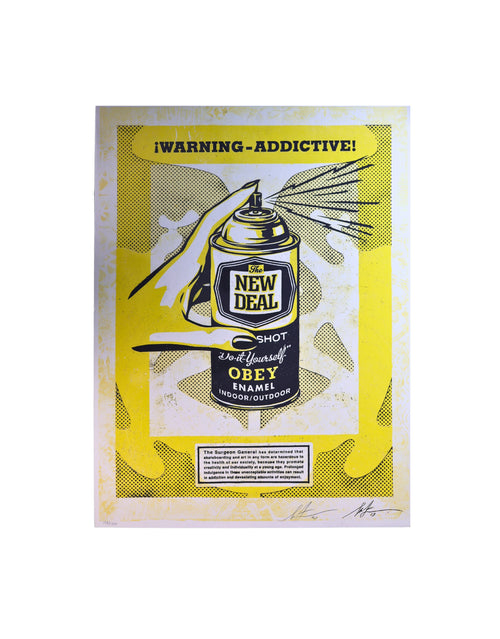
Modern inks on archival paper stock are generally more durable than vintage materials, but the value concentration in rare editions makes display conditions a serious financial consideration. Shepard Fairey editions, Death NYC signed works, and similar material should still receive full conservation framing. For Banksy prints authenticated through Pest Control, the documentation itself needs appropriate storage — the certificate should never be framed with or directly behind the work in the same package. Store it separately in archival sleeves.
Photographs
Chromogenic prints (standard color photographs from the 20th century) are among the most light-sensitive objects commonly displayed. The dye layers fade at different rates, which means the color balance of the image shifts over time under light exposure, not just overall fading. Silver gelatin black-and-white prints are more stable but still require UV protection. For significant photographic works, consider displaying copies or high-quality reproductions in the living environment and storing originals properly.
Canvas Works
Oil and acrylic on canvas face a different set of concerns. Humidity cycling causes the canvas support to expand and contract, which over time causes cracking in the paint layer, particularly in older works with brittle grounds. Canvas also acts as a particulate filter — dust accumulates in the texture and darkens the surface. Keep significant canvas works away from HVAC airflow and dusty environments. Glass or acrylic glazing is not standard for canvas, which means dust management in the room becomes the primary tool.
Insurance and Documentation: The Display Record
This is the part of the display conversation that ties directly back to the authentication canon.
Your insurance policy on significant art works needs to be a scheduled fine art policy, not a homeowner's rider. Homeowner's policies for art coverage have sublimits that will not cover replacement value for serious pieces. A scheduled fine art policy covers agreed value, covers works while in transit, and typically covers accidental damage.
But insurers want documentation. And the documentation for display condition is part of that record.
-
Maintain a condition report at acquisition
- Photograph all four corners, overall recto, overall verso, any existing condition issues
- Note the framing materials if known
-
Document the display environment
- Record room conditions, lighting type, hanging hardware
- This creates a baseline if you ever need to make a claim or sell with condition representation
-
Annual condition checks
- Remove works from the wall once a year, examine under good directional light for any new condition issues
- Check hardware integrity
- Check the dust cover at the back for any signs of moisture penetration
If you ever consign a work for resale, the consigning gallery or auction house will conduct their own condition assessment. The better your own records are, the cleaner that process will be and the fewer surprises you'll encounter in the condition report.
Red Flags: Display Situations That Should Stop You Cold
- The framer quotes you standard glass as adequate for a significant piece. It isn't. Conservation glazing is the standard for anything you care about holding value.
- You can feel warmth on the surface of the work from the lighting fixture. That fixture is too close, too intense, or both. Heat damage and accelerated fading follow.
- The mat has a yellow or brown tinge anywhere near the window of the opening. Acid migration is already in progress. The piece needs reframing immediately.
- You see any tape — any tape at all — holding the work within the mat or to the backing. Unless it's conservation hinging tape applied correctly by a professional, this is a condition issue and a conservation emergency for a valuable piece.
- The room where you're displaying a significant work has visible condensation on windows in winter. That room is running high humidity. The work is being cycled through stress repeatedly.
- The back of the frame is open or covered only with a thin cardboard sheet. No dust seal. No RH buffer. Every environmental fluctuation goes directly into the package.
- The work is displayed in direct sunlight for any part of the day. No glazing product is sufficient to compensate for direct sun exposure on a sustained basis.
- You haven't updated your insurance policy since buying a significant piece. If you haven't scheduled it, it probably isn't covered at replacement value.
Bottom Line
The acquisition is where collectors focus their attention. The display is where condition is actually won or lost.
Conservation framing is not an optional upgrade. For anything you paid serious money for, it's the minimum standard. UV-filtering glazing, acid-free materials throughout the package, proper hinging, a sealed back — these are not luxury specifications. They're the baseline for not actively degrading what you own.
Light management, humidity control, and location selection compound that baseline. Get all of them right and a well-framed piece will hold condition for decades. Get them wrong and you'll spend more on conservation treatment trying to reverse damage than you ever would have spent doing it correctly from the start.
The frame on the wall isn't decoration. It's the first line of active collection management.
Treat it accordingly.
Frequently Asked Questions
Q: Is UV-filtering acrylic always better than conservation glass?
Not always — it depends on the object. Acrylic (like Tru Vue Optium Museum Acrylic) offers superior UV protection, is shatter-resistant, and is lighter for large works. Conservation glass is preferred when the work has raised surfaces that risk static charge pulling fibers or flaking media toward the glazing — acrylic builds static charge in ways that glass does not. Pastels, charcoals, and any work with powdery or loose media should be glazed with anti-static glass, not acrylic. Ask your framer which applies to your specific work.
Q: My vintage poster has been displayed for years in less-than-ideal conditions. Is the damage already done, or is it worth improving the situation now?
Both things are true. The damage accumulated to date is mostly irreversible — fading, acid migration, and mechanical stress don't reverse themselves. But the rate of ongoing damage can be dramatically reduced by improving conditions now. A piece that has experienced some fading will continue to fade much faster in poor conditions than in properly managed ones. Stabilizing what you have is always worth doing. A conservator can also assess whether any current damage is still active (like ongoing acid migration) and recommend treatment to stop it.
Q: How do I find a qualified conservator if I suspect my work needs treatment?
The American Institute for Conservation (AIC) maintains a public Find a Conservator directory at culturalheritage.org. Search by specialty — you want a conservator with works on paper or photographs specialty depending on your object. For street art and modern prints specifically, look for conservators who list contemporary art or modern materials experience. Do not let a framer perform conservation treatment. Framing and conservation are different disciplines.
Q: Does framing behind UV glass mean I don't need to worry about lighting?
No. UV glazing addresses ultraviolet radiation, which is one component of light damage. High lux levels — the overall intensity of light hitting the surface — cause fading and photochemical degradation independent of UV content. A piece behind UV-filtering glazing that receives high-intensity illumination all day will still fade over time. The full approach requires UV protection at the glazing level plus appropriate light levels and fixture selection. Museums set maximum lux levels for display precisely because glazing alone isn't enough.
Q: I've seen vintage posters and prints framed with the image right against the glass. Is that a problem?
Yes, a serious one. Direct contact between the work and glazing creates multiple problems: condensation trapped against the surface can cause tide lines, mold, and the image adhering to the glass over time. That last failure mode is irreversible — the paper literally bonds to the glazing and cannot be separated without destroying the work. A proper mat or spacer that holds the work away from the glazing surface is non-negotiable for any work on paper. If you see a vintage print displayed glass-to-surface, it needs reframing.
Q: What's the best way to store works I'm not currently displaying?
Flat storage in archival boxes (clamshell or drop-front Solander boxes in acid-free materials) is the standard for works on paper. Individual works should be interleaved with acid-free tissue. Store horizontally, not vertically, to avoid the work slumping under its own weight over time. Climate conditions for storage should mirror display conditions — 45-55% RH, stable temperature, away from exterior walls. For framed works in storage, face-to-face with a buffer between glazing surfaces and cardboard corners protecting the frame edges is the working convention.
Q: Does the type of wood in the frame matter for conservation purposes?
It can. Some woods, notably oak and certain other species, off-gas acetic acid over time, which can accelerate acid degradation in the package. The rabbet-sealing step described above — aluminum tape or conservation board lining the channel — addresses this regardless of wood species. More critically, avoid frames with strong off-gassing finishes or paints that haven't fully cured. A brand-new frame with strong solvent smell should be allowed to off-gas fully before housing a significant work. When in doubt, line the rabbet.
Q: How does any of this interact with authentication documentation for my pieces?
Keep all authentication documents — Pest Control certificates for Banksy works, Beckett (BAS) slabs or letters, PSA certifications, JSA LOAs, Death NYC studio COAs, any provenance correspondence — completely separate from the framed work. Never store a certificate in the same frame package or behind the work. Authentication documentation should live in archival polyester sleeves (not PVC, not vinyl) in a separate archival box, ideally with photocopies in a second location. The documents themselves are part of the work's value. Treat them with the same care you give the piece.