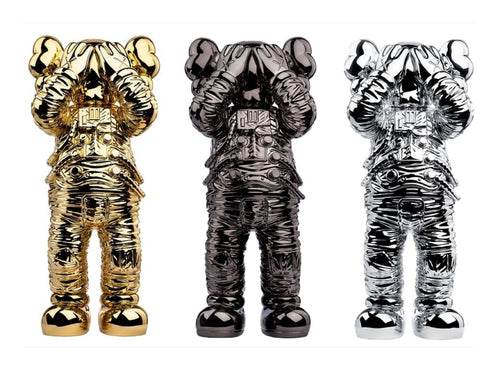
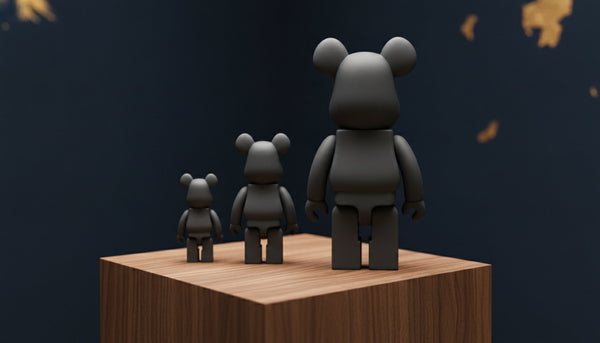
Designer Toys as Interior Sculpture: Styling KAWS and BE@RBRICK at Home
Quick answer
For a design-focused home, choose one KAWS or BE@RBRICK that suits the room's scale, give it space, and treat it as a sculptural object rather than shelf filler. When buying, focus on the exact release, actual-item condition, what is included, documentation where available, and return terms.
A good designer figure changes a room because it carries silhouette, color, and a point of view. It does not need to prove itself with a crowded display. One well-placed object can do more than a shelf full of collectibles.
Start with scale, then choose the figure
Choose the display location before choosing the object. A small figure can work on a desk or a focused shelf. A larger piece needs a console, pedestal, or open floor position where its outline will read from across the room. Tape out the likely footprint and height before you commit. It is the quickest way to avoid a piece that feels lost or oversized.
| Placement | What works | What to avoid |
|---|---|---|
| Entry console | One figure with a clean wall behind it | Books, candles, and smaller objects competing for attention |
| Floating shelf | A compact piece with empty space on both sides | A long row of unrelated figures |
| Living-room focal point | A larger work with its own surface or plinth | Forcing a large piece into a narrow or busy passage |
Use negative space as part of the display
The most reliable styling move is restraint. Put the figure where the eye naturally lands, then remove nearby objects until it has room to read. A black, white, or neutral background will emphasize a colorful work; a strong print behind a monochrome figure can create an intentional conversation. The point is not to match everything. It is to make the relationship feel chosen.
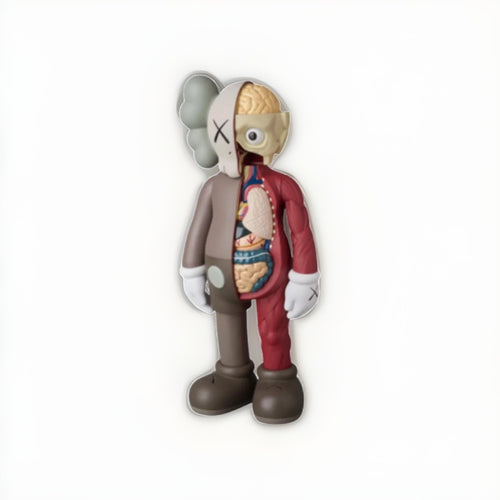
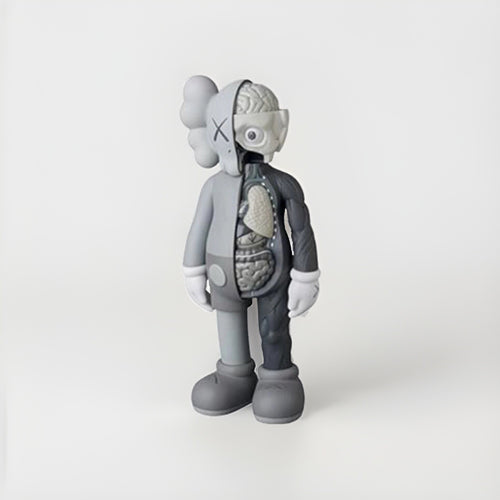
For a first piece, browse by the room's existing palette rather than by trend. The current KAWS, BE@RBRICK, and broader figurines collections make it easier to compare object, color, and scale in one place.
Light, care, and the box matter
Keep vinyl figures out of sustained direct sunlight and away from heat sources. Use a soft dry microfiber cloth for routine dusting, and avoid household sprays or abrasives that can cloud a finish. If the piece is important to you, a case or a protected shelf reduces accidental knocks and dust. Keep the original packaging dry and safe, especially when it is part of the item's presentation or documentation.
Pair figures with art, not clutter
Designer figures often work best near graphic works on paper because the three-dimensional form gives the wall a second layer. A figure beneath a bold print can create a useful conversation between color, line, and shape. Start with one relationship: a figure and one work of art. Add more only when each object still has space to breathe.
Buy the exact object you want to display
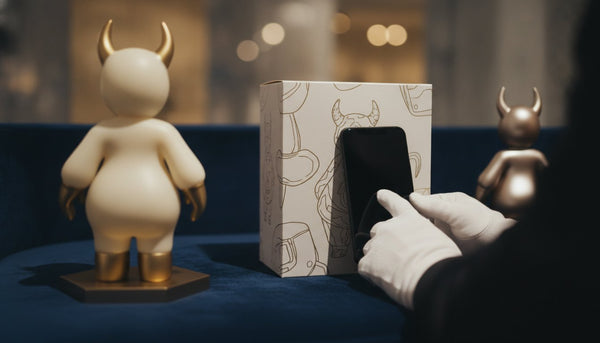
Style should not replace diligence. Before buying, verify the exact release and size, request current photos of the figure and packaging, read the condition description, confirm what is included, and review any documentation offered for that specific listing. A certificate may support the record, but it does not replace a coherent view of the object, its condition, and the seller's terms.
That process keeps the purchase grounded in the thing that will actually sit in your room, rather than a stock image or a vague category claim.
Frequently asked questions
How do I display a KAWS or BE@RBRICK without making a room feel cluttered?
Give one figure a dedicated surface or plinth, leave negative space around it, and keep the background and nearby objects simple.
What should I check before buying a collectible figure for my home?
Confirm the exact release, size, actual-item condition, what is included, available documentation, and the seller's return terms.
Can designer toys work in a grown-up interior?
Yes. Treat the piece as one intentional sculptural object, not as part of a crowded collection. Scale, placement, light, and restraint do most of the work.